


The Royal Hotel | Giannone Petricone Associates Inc. Architects
Giannone Petricone Associates Inc. Architects (GPA) ,发布时间2026-01-30 12:42:46





Client: 247 Main Street Picton LP
Location: Picton, Prince Edward County, Ontario
Size: 31,000 sq.ft.
Status: Complete
Sub-Consultant Team:
Structural, Mechanical, Electrical — EXP
Heritage — ERA Architects Inc.
Landscape — Janet Rosenberg Studio
Art Consultant — Tatar Art Projects
Acoustic Consultant — J.E. Coulter Associates Ltd.
Kitchen Consultant — Trend Foodservice Design & Consulting
Procurement Consultant — P360 Concepts Inc.
Fabricator:
MCM
Unique
Katerina Tompkins
Viso
Credible
CIOT
Punchclock Metalworks
Barlow Woodwork
General Contractor:
Structure Corp
HADY Construction Associates (building shell)
Renderings: Office In Search Of
Photography:
Doublespace
Graydon Herriott
Johnny C.Y. Lam
Jeff McNeill
Greg Pacek
Artist / Graphics:
Graphic Design — BLOK
Art — Greg Pacek
版权声明:本链接内容均系版权方发布,版权属于 Giannone Petricone Associates Inc. Architects (GPA),编辑版本版权属于设计宇宙designverse,未经授权许可不得复制转载此链接内容。欢迎转发此链接。
The Royal Hotel in the historic town of Picton, Prince Edward County (PEC), reimagines a landmark Victorian hotel and reinstates it as the anchor of Picton’s downtown thoroughfare. Over a decade, the hotel was completely transformed and brought back to life as a nexus for both locals and guests of Picton and PEC’s burgeoning food and wine region, becoming a destination for architectural and gastronomic delight. A key challenge was not only restoring the lost luster of The Royal but elevating it to a glorious 21st century version of itself that provokes curiosity and pride in PEC.
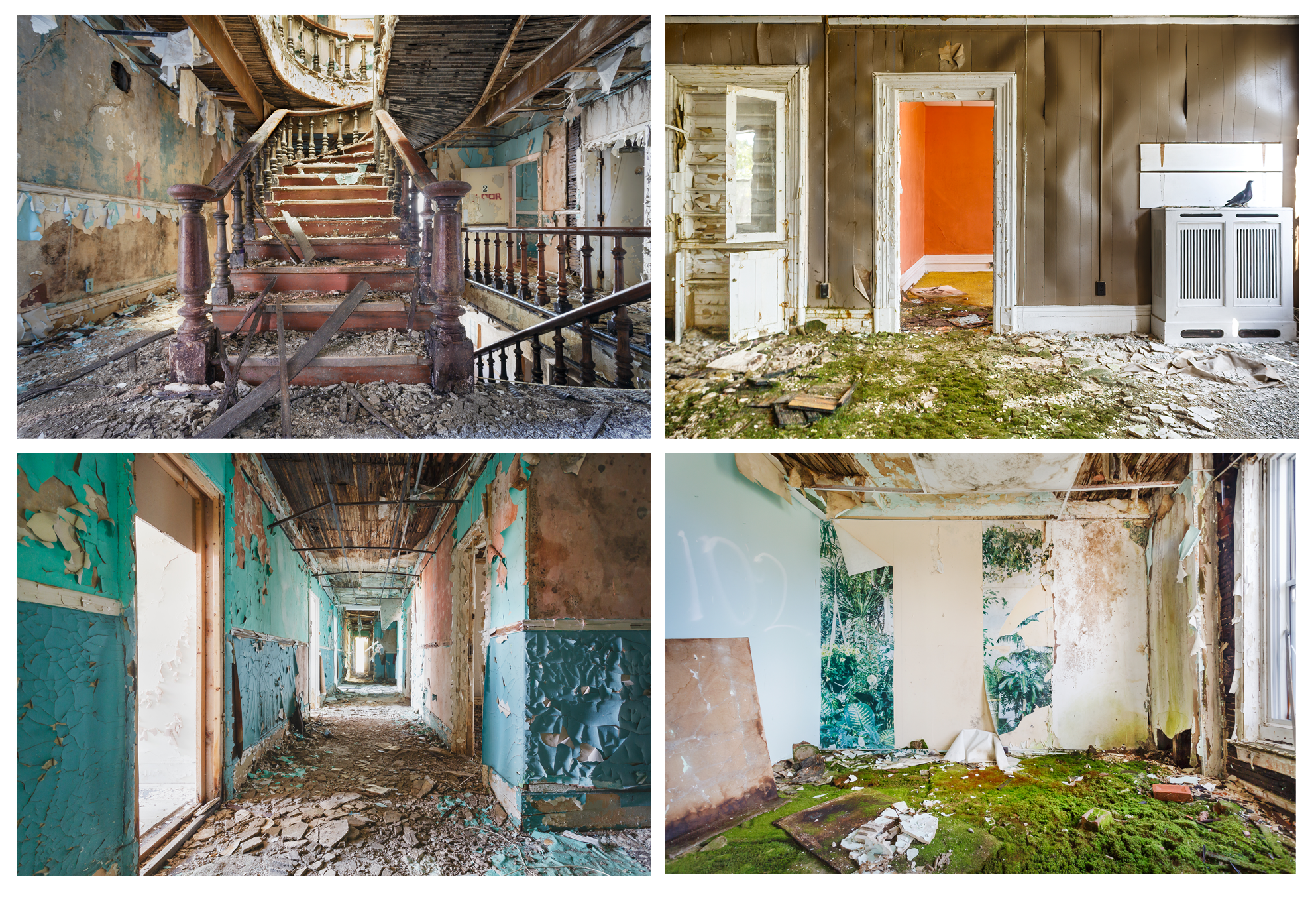
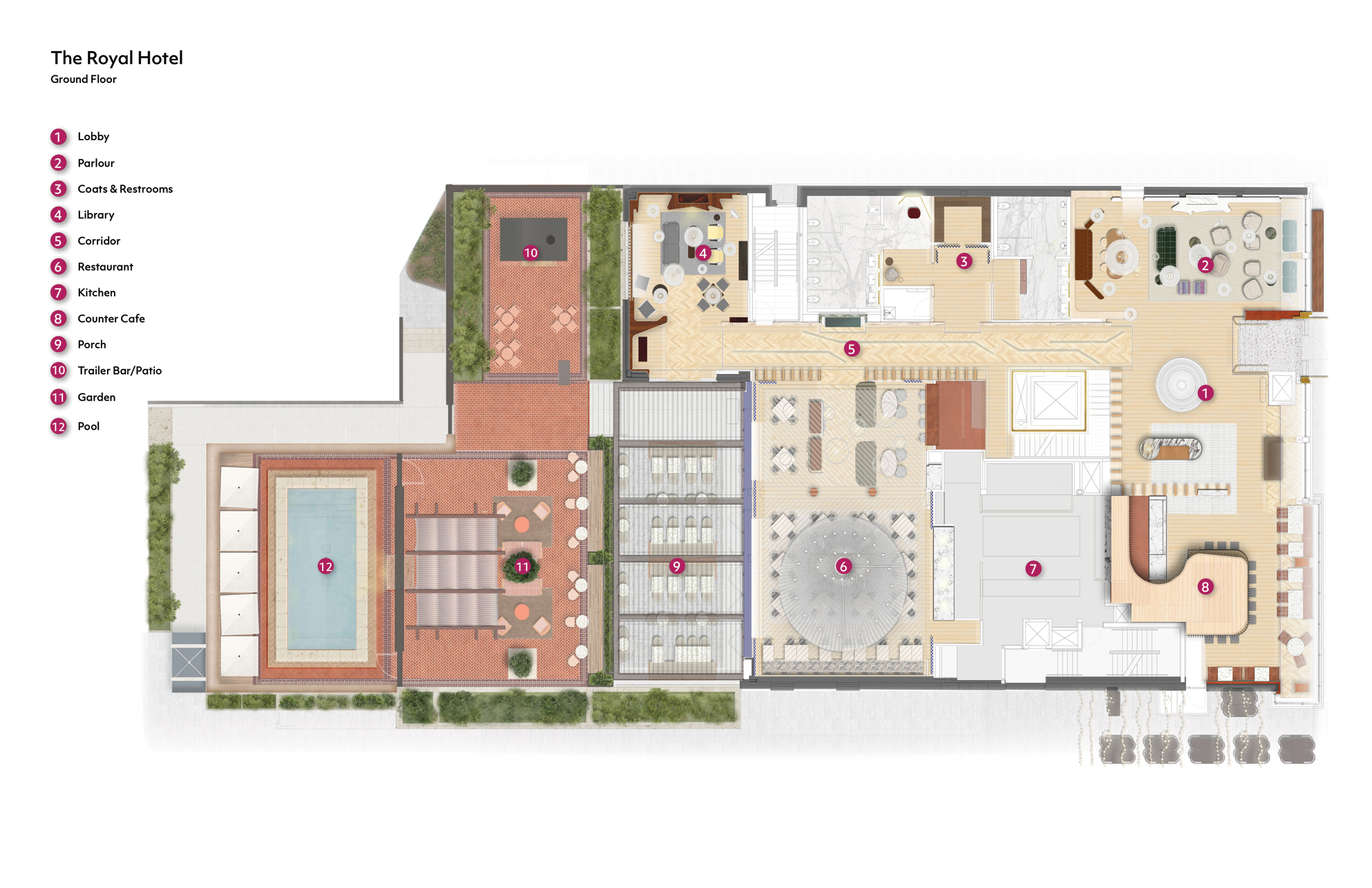
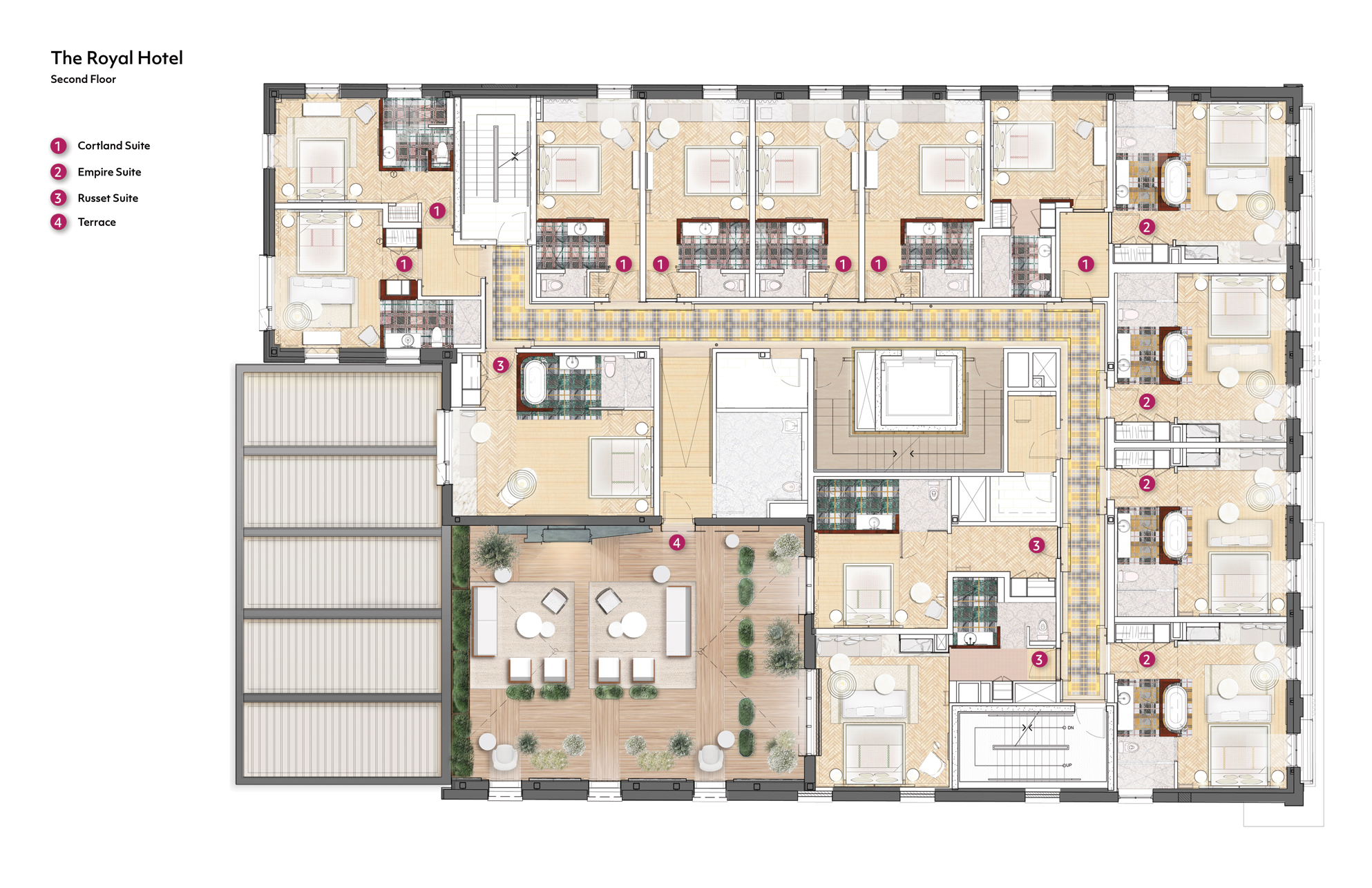
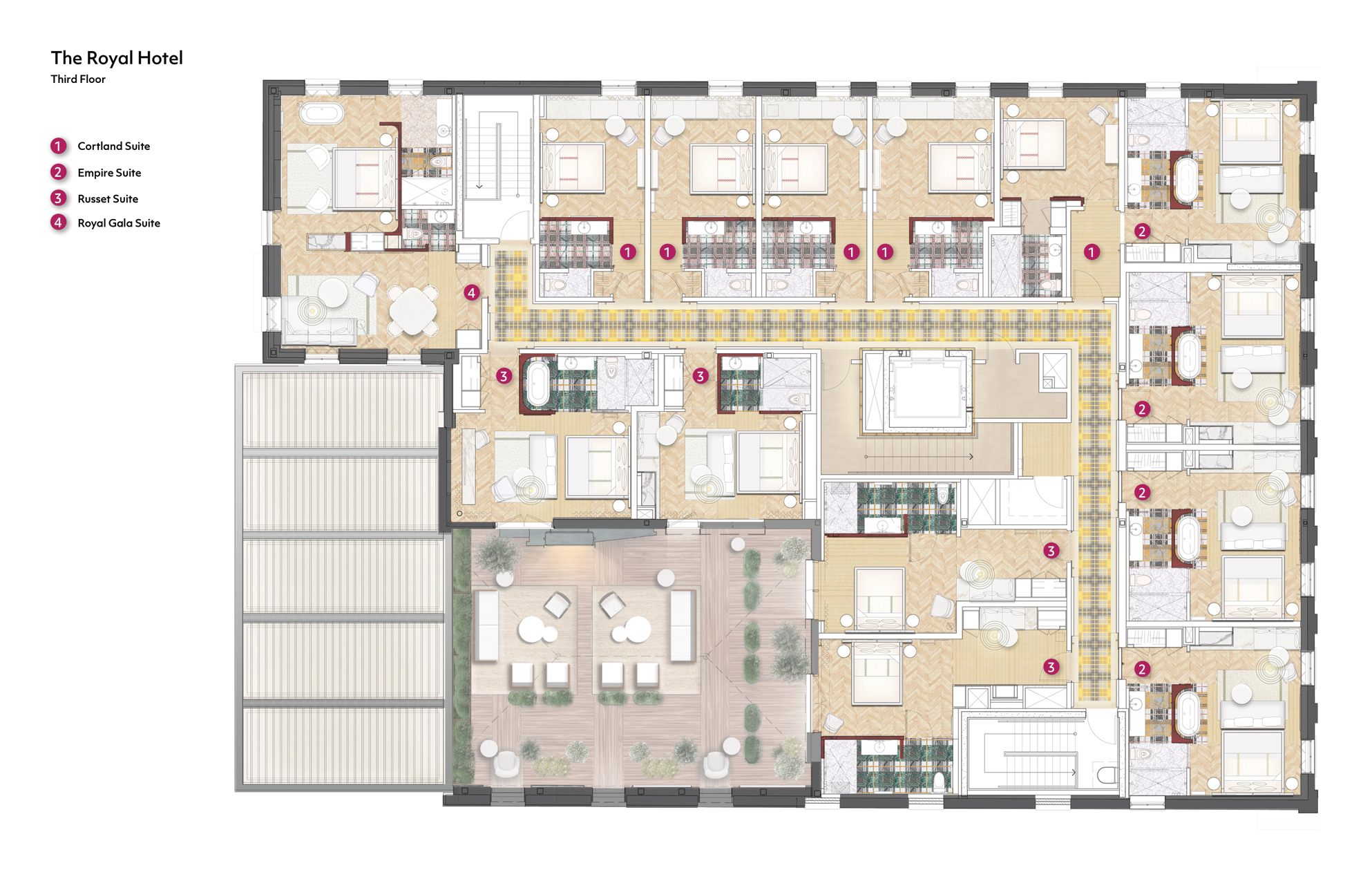
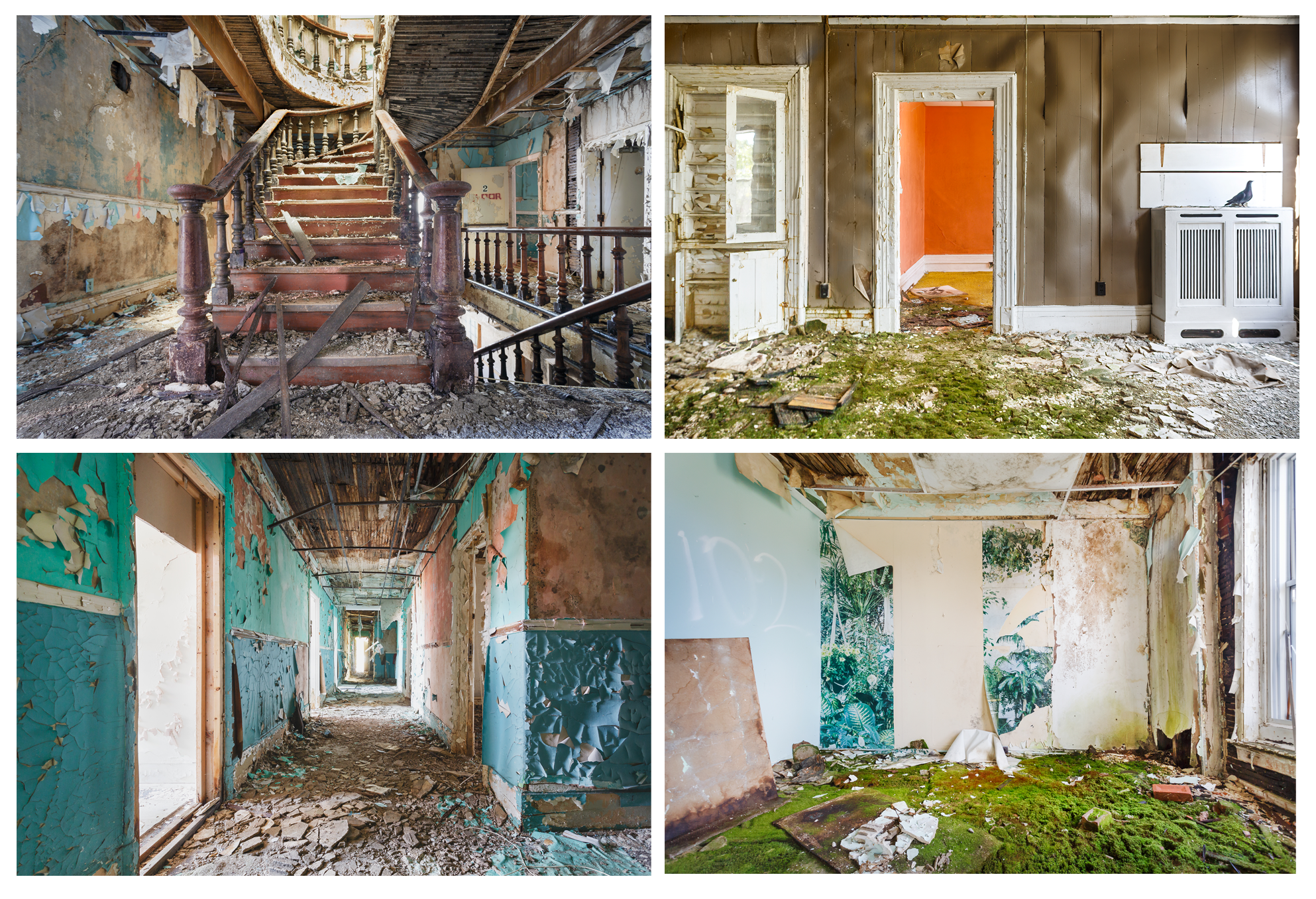
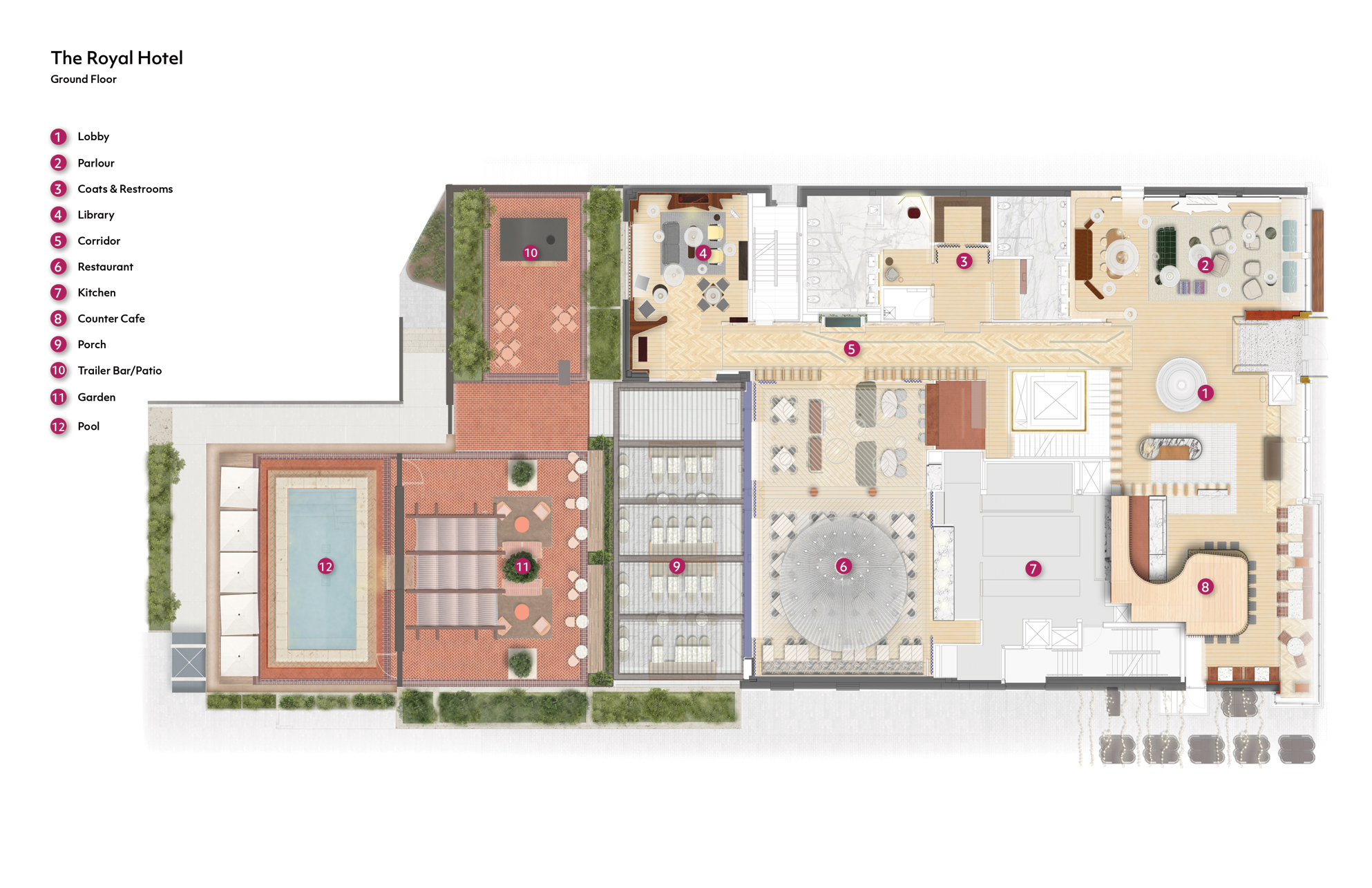
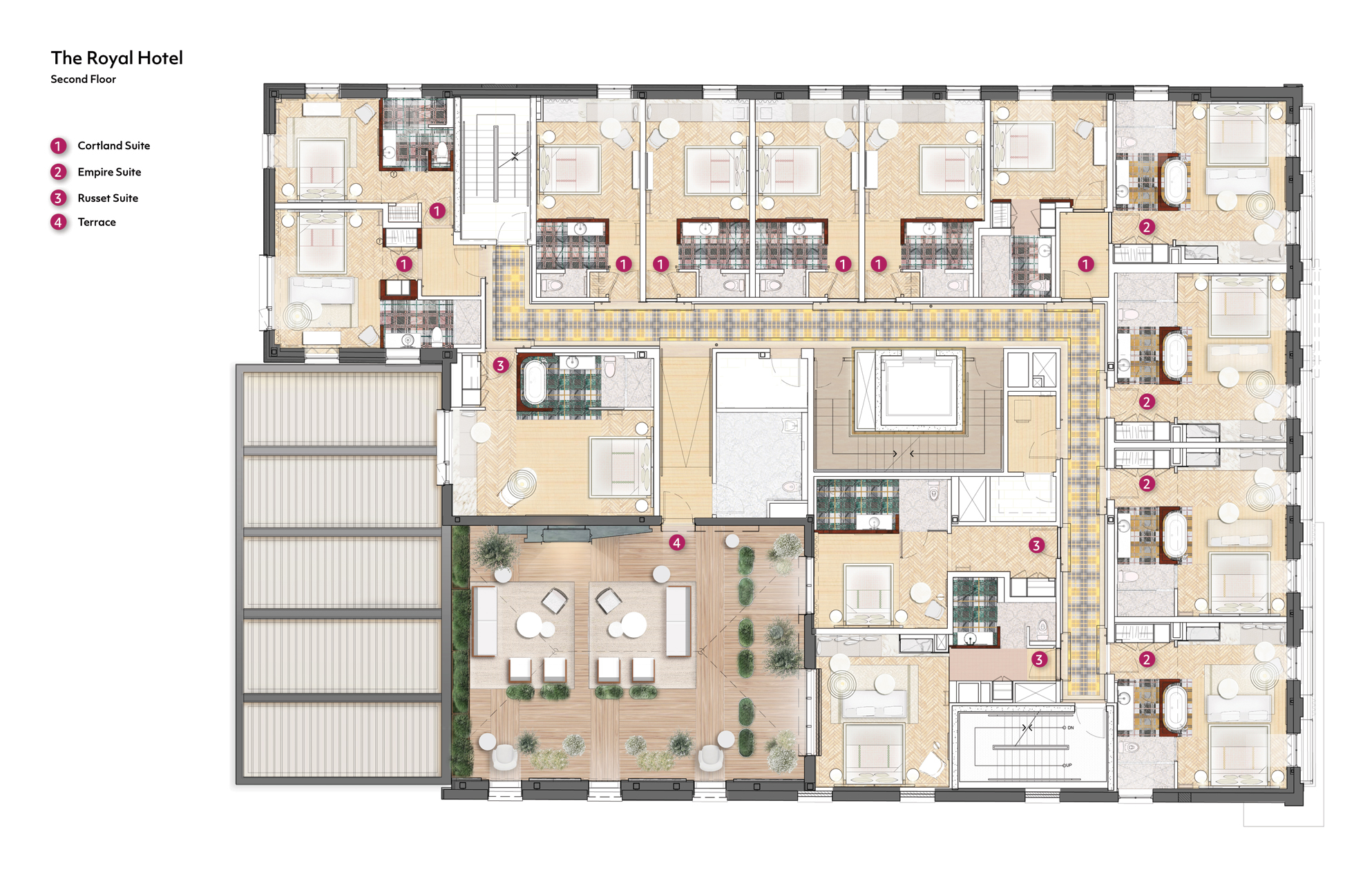
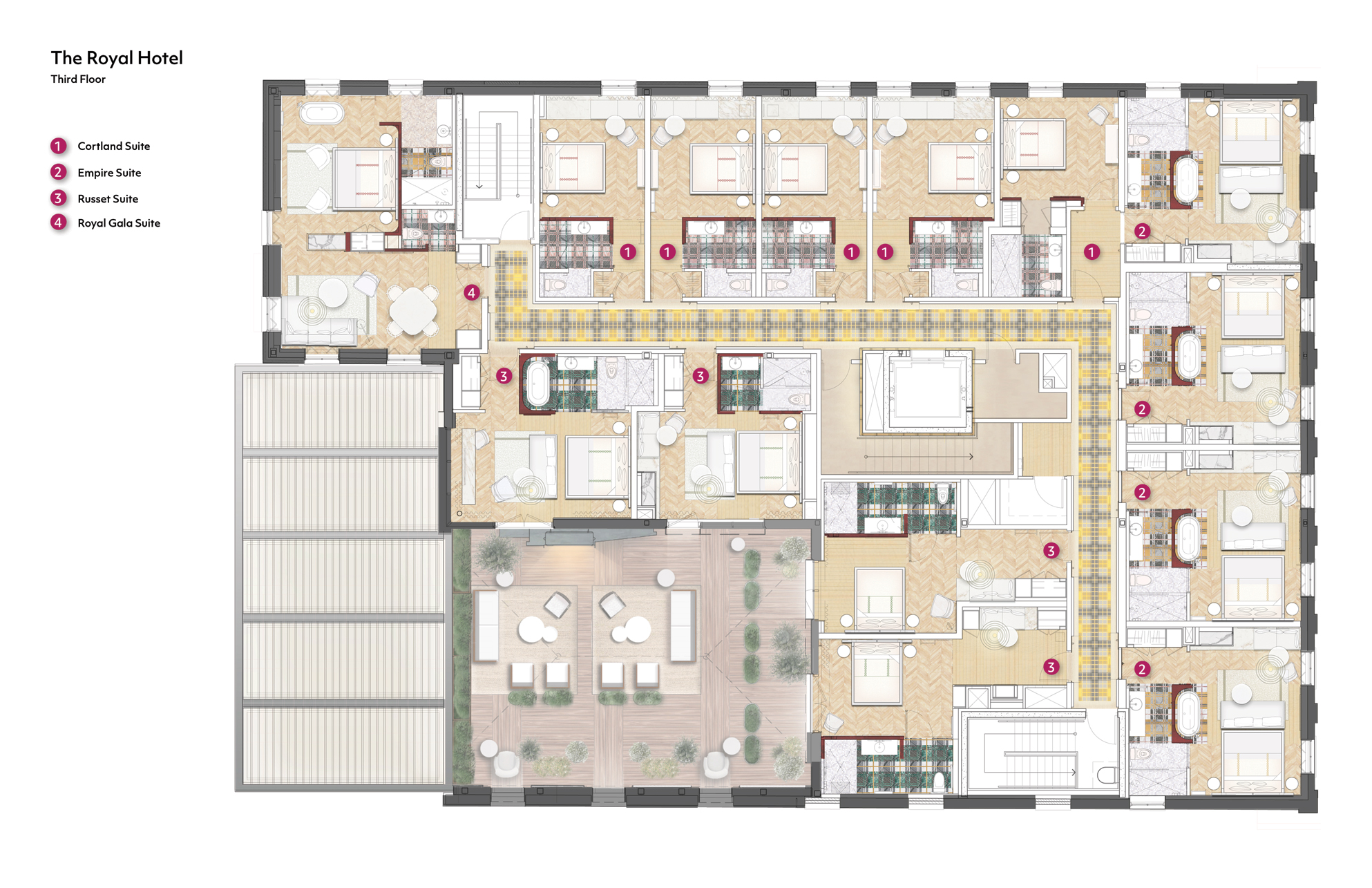
Most hospitality offerings in the County are modest in scale and leverage being in the countryside. The Royal introduces a grander scale of hospitality for both guests and locals, albeit one that still feels connected to the contemporary rhythms of the region. When the project started, the central staircase was lined with a lush carpet of green moss, and early in the planning phase, the roof caved in. The design team began by salvaging and restoring three of the hotel’s brick walls, and reconfiguring the rear to add terraces and open the interior to increased natural light. They established 28 guest rooms, a spa, gym and sauna, as well as a series of hospitality offerings at grade that span from street-front counter to rear garden and pool. The former hotel stables, situated behind the main building, were also rebuilt to establish the Royal Annex, which houses five guest suites suitable for families or extended stays.
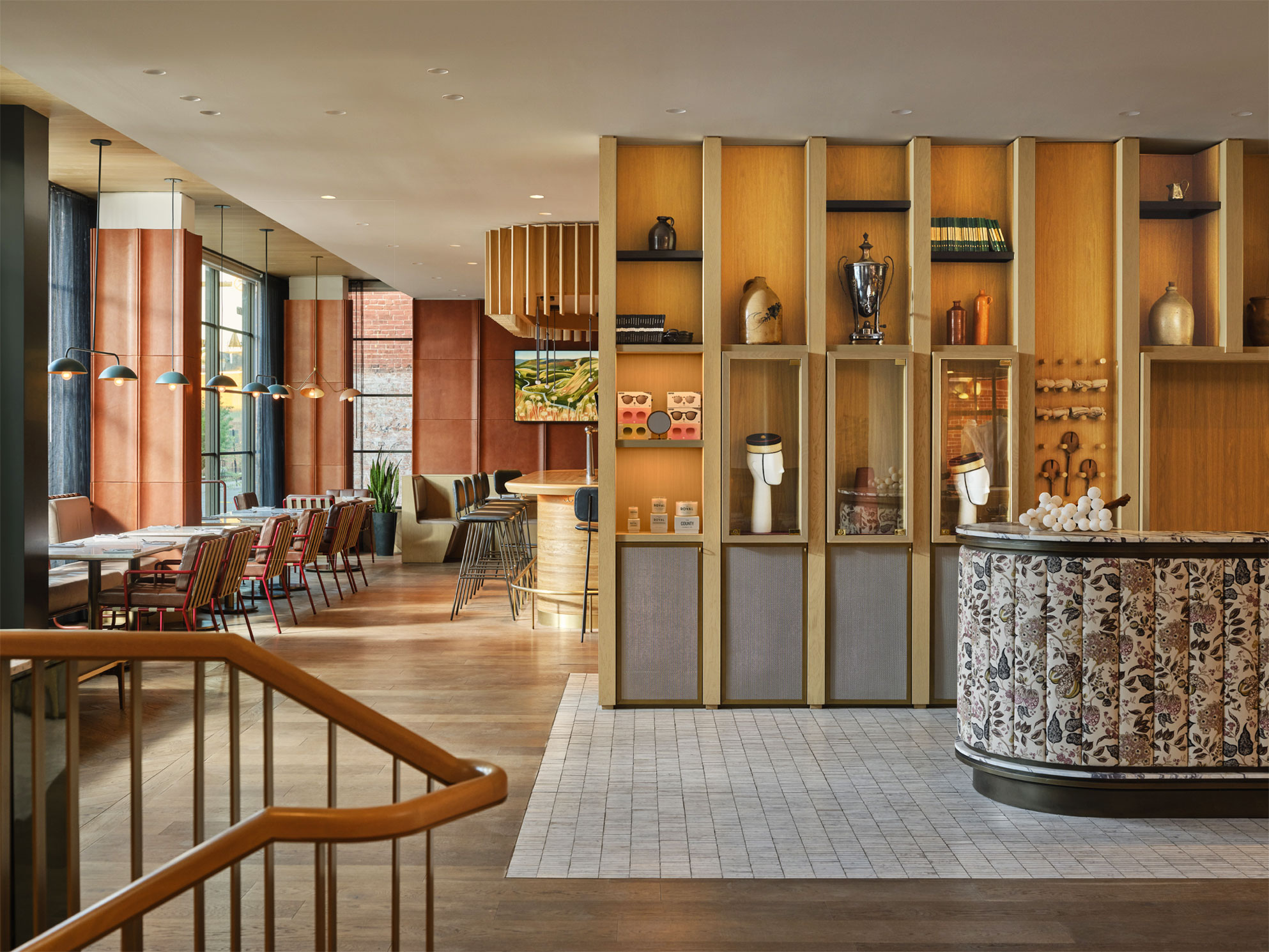
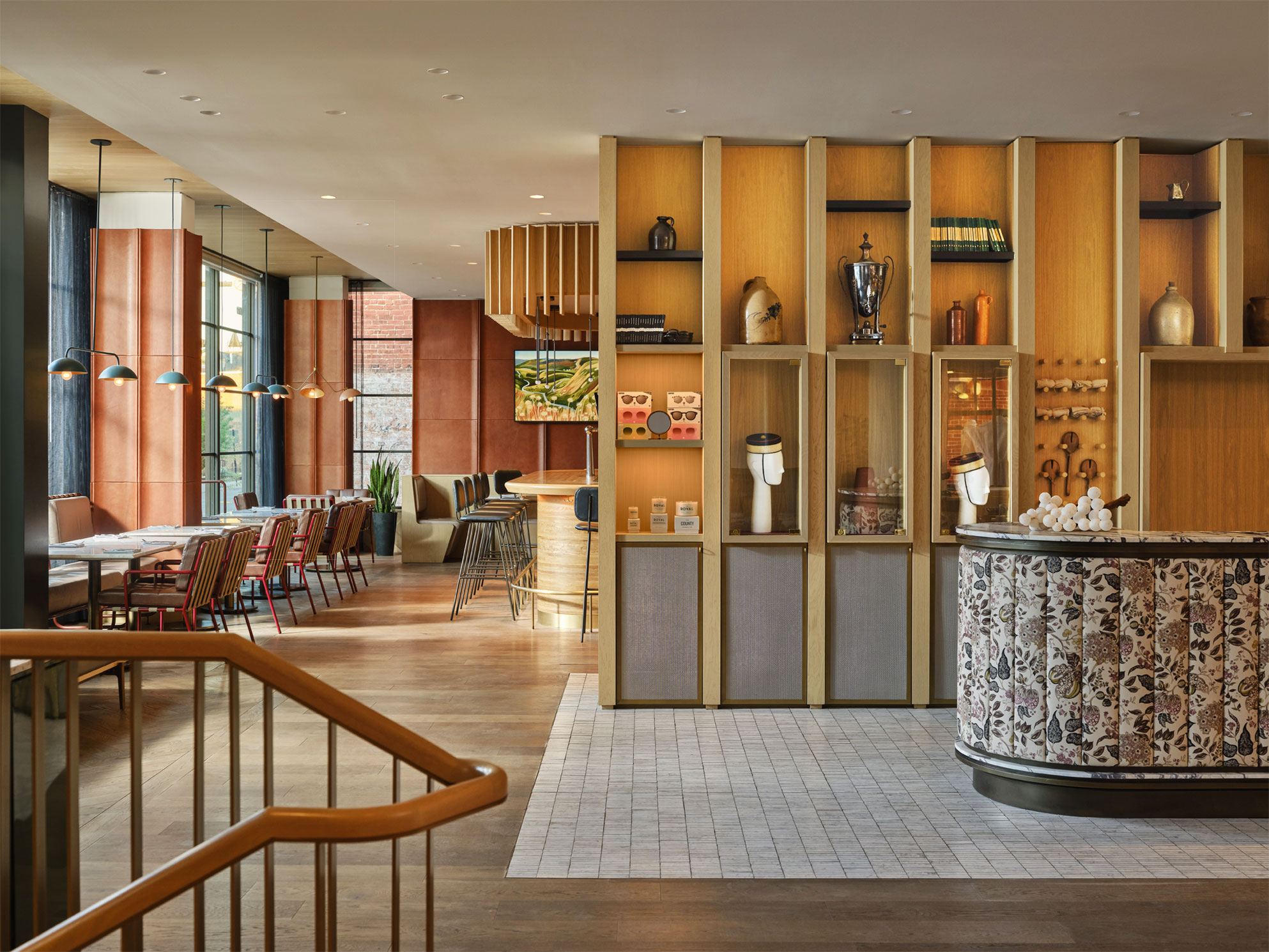
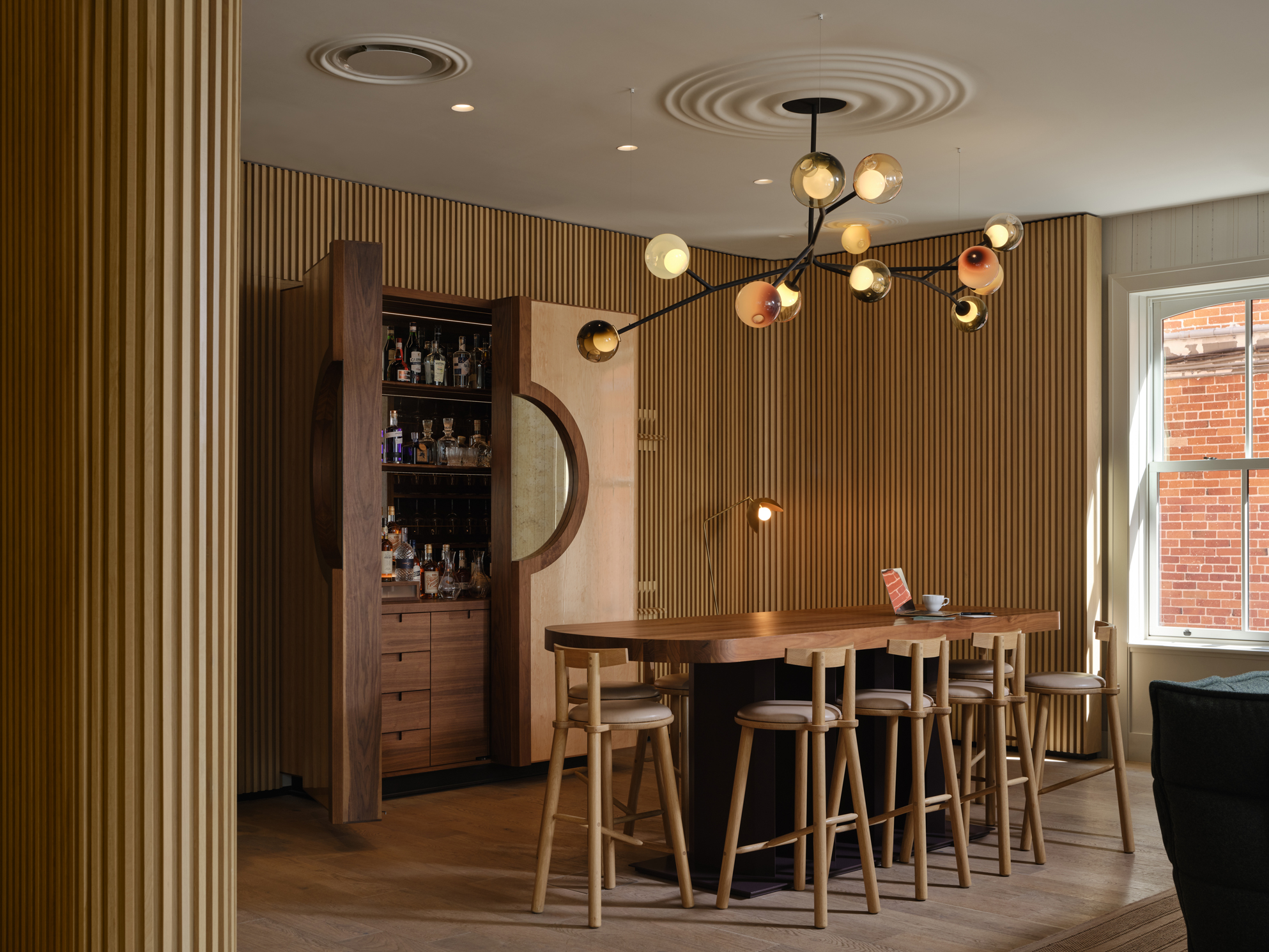
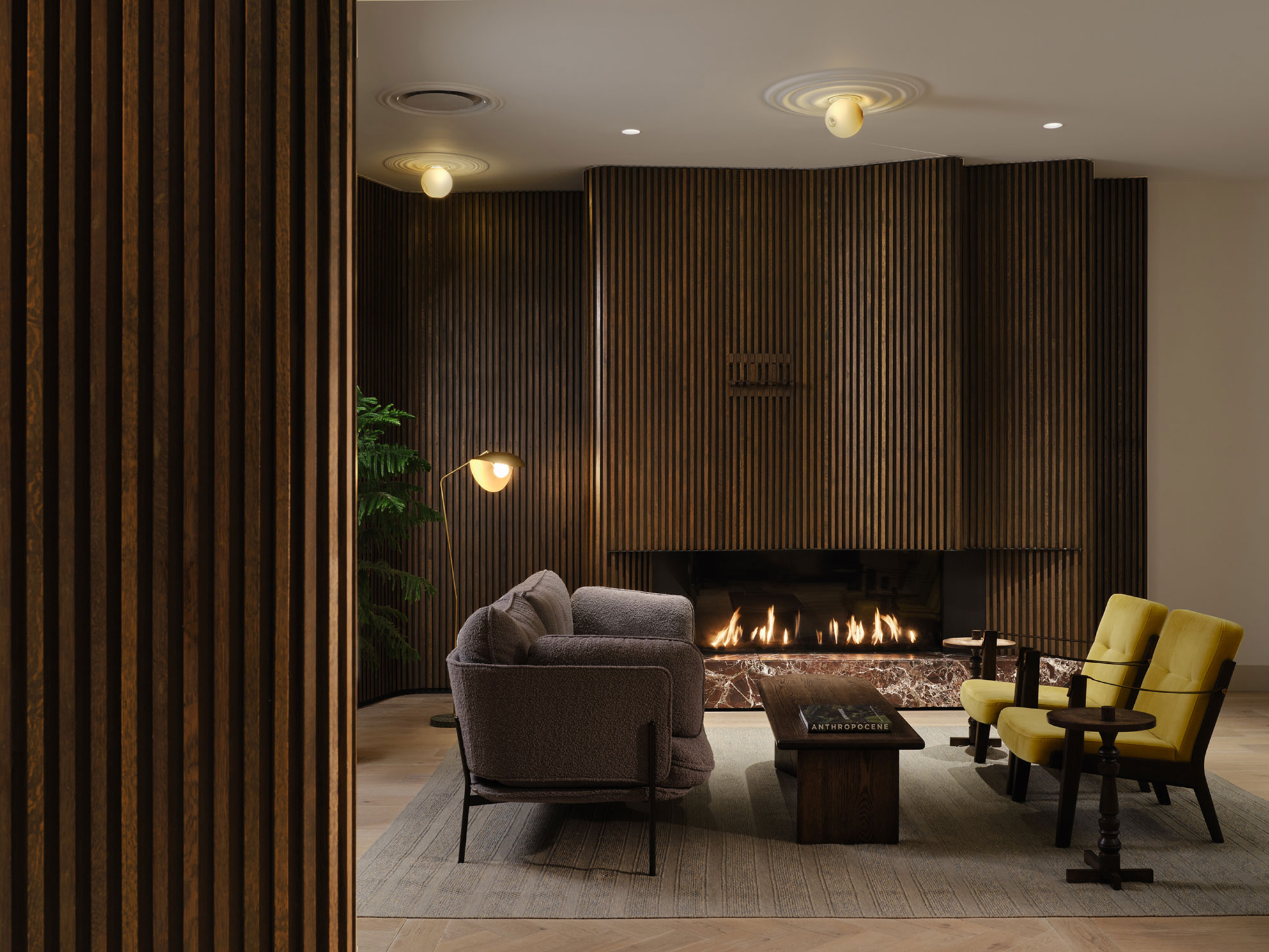
The Royal’s street-front café, parlour, and library must shift from bright and lively during the day to low-lit and atmospheric at night, providing communal spaces for local residents and hotel guests to gather, work and strike up conversations. In place of a grand lobby bar, a custom armoire in the parlour opens to reveal a “shake it yourself” cocktail bar, removing the physical delineations between the hotel’s front and back of house and also creating appropriate functionality for the informality of the locale. The designers put attention into creating a retractable walled porch that enables the fine dining restaurant to expand and contract with the seasons and hotel events. The patio overlooks a landscaped garden terrace with a fourth bar and fireplace patio, beyond which lies a swimming pool.
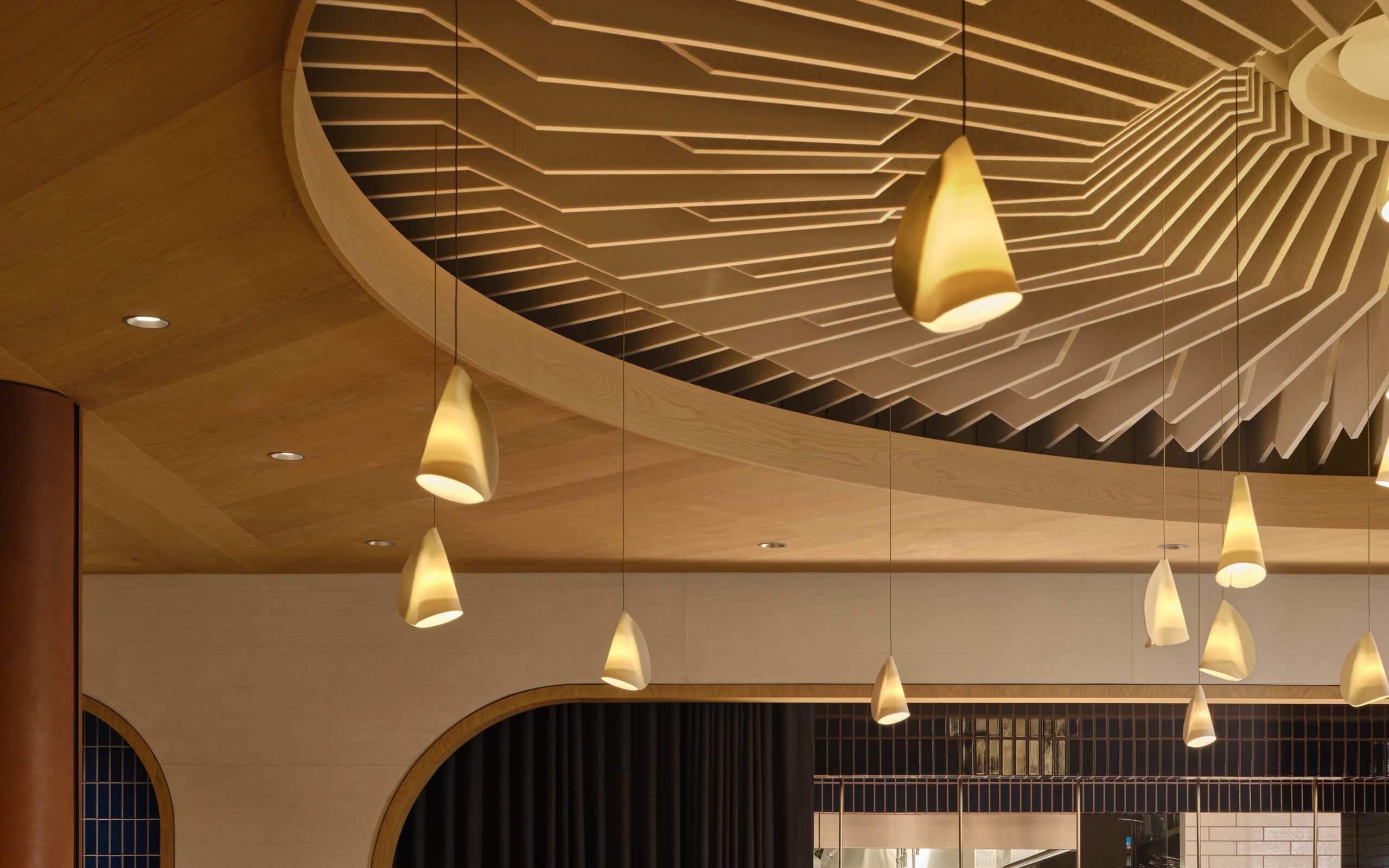
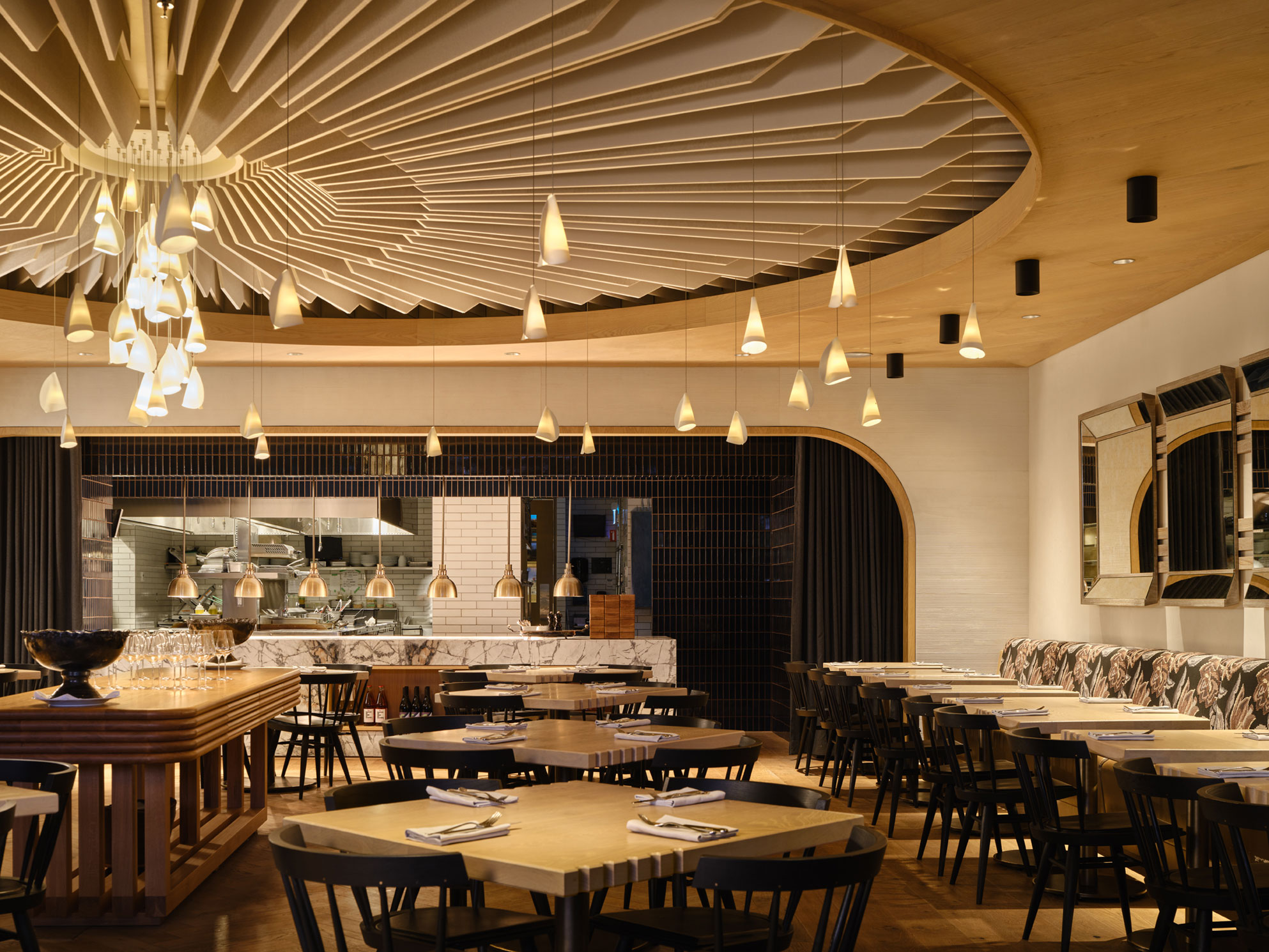
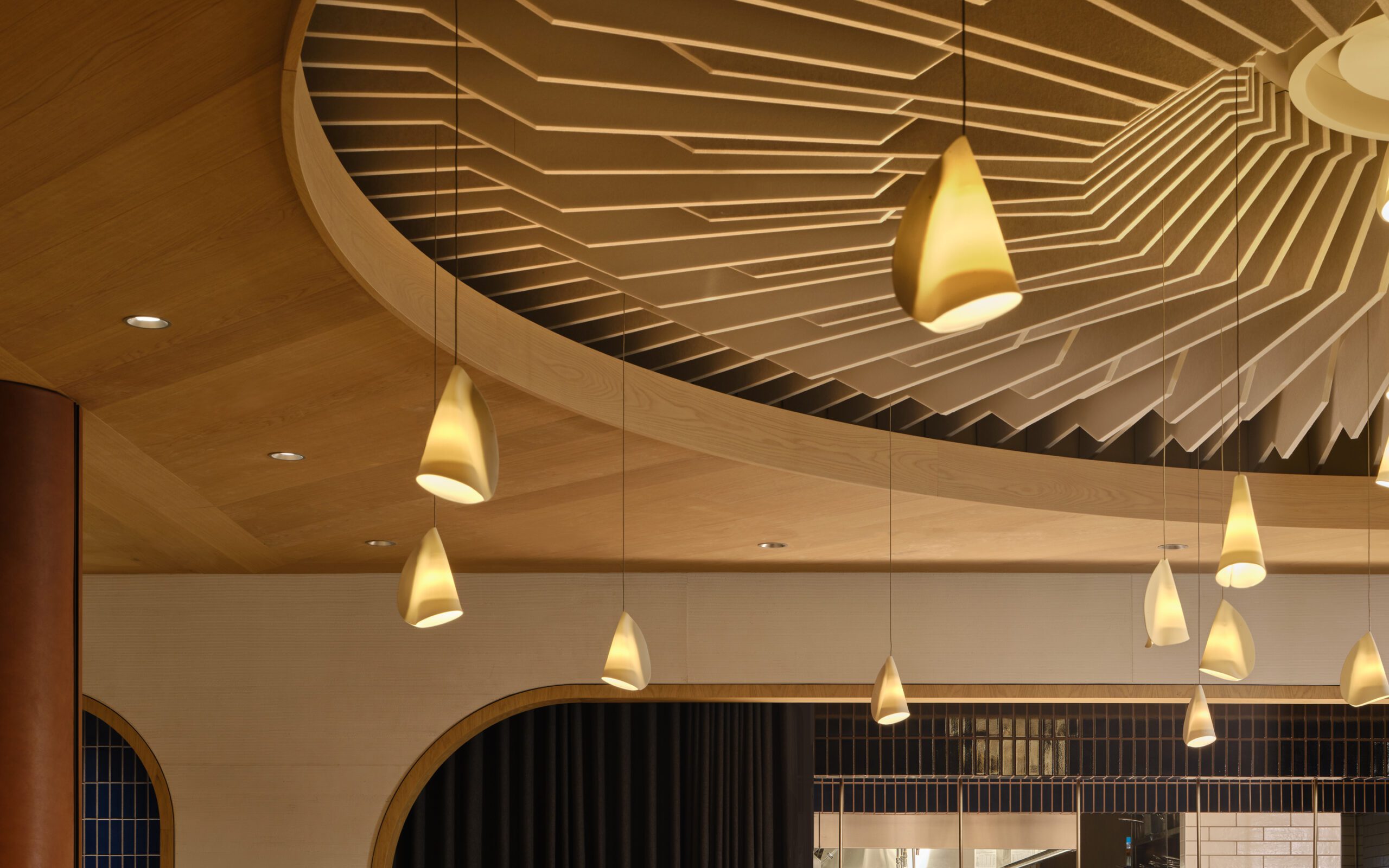
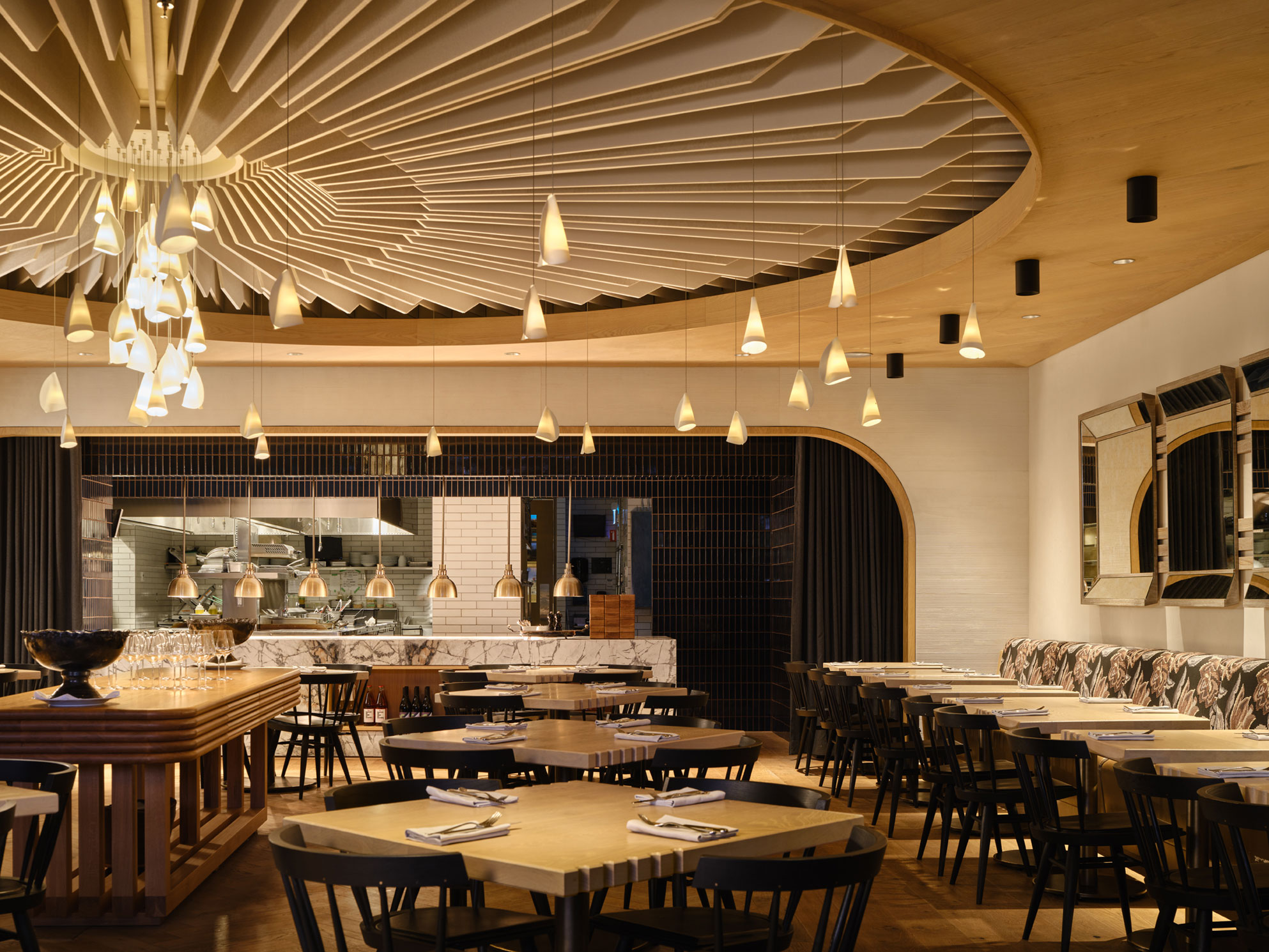
Playing on the expectations of the hotel’s name, history, and context, the design team embraced the quintessential tropes of a Victorian railway hotel by isolating them, abstracting them, and then reinserting them to create a rich contrast between the ‘genteel’ formalities of British tradition and the ‘real’ informalities of rural Ontario. In the hotel’s main dining room, the typical Victorian ceiling rosette is atypically reinterpreted to emulate the underside of a mushroom. Throughout, references to apples, pears, ducks, and chickens punctuate the hotel experience, distancing it from the building’s buttoned-up past and giving it a new currency that signals guests to enjoy a slower, more relaxed approach. It’s this “royal contrast” that sparks curiosity and treats guests to an experience that is transporting yet deeply rooted in the hotel’s local context.
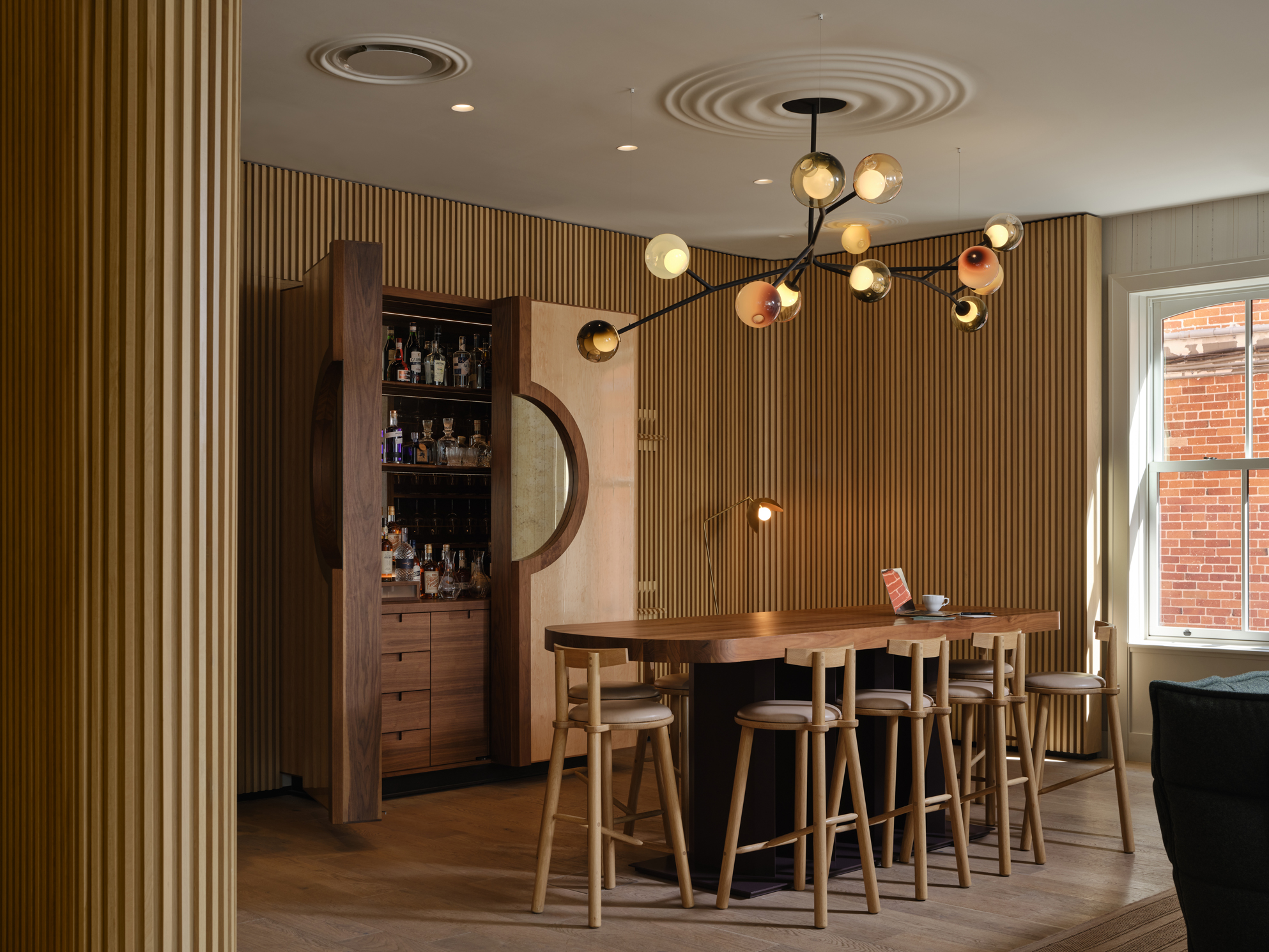
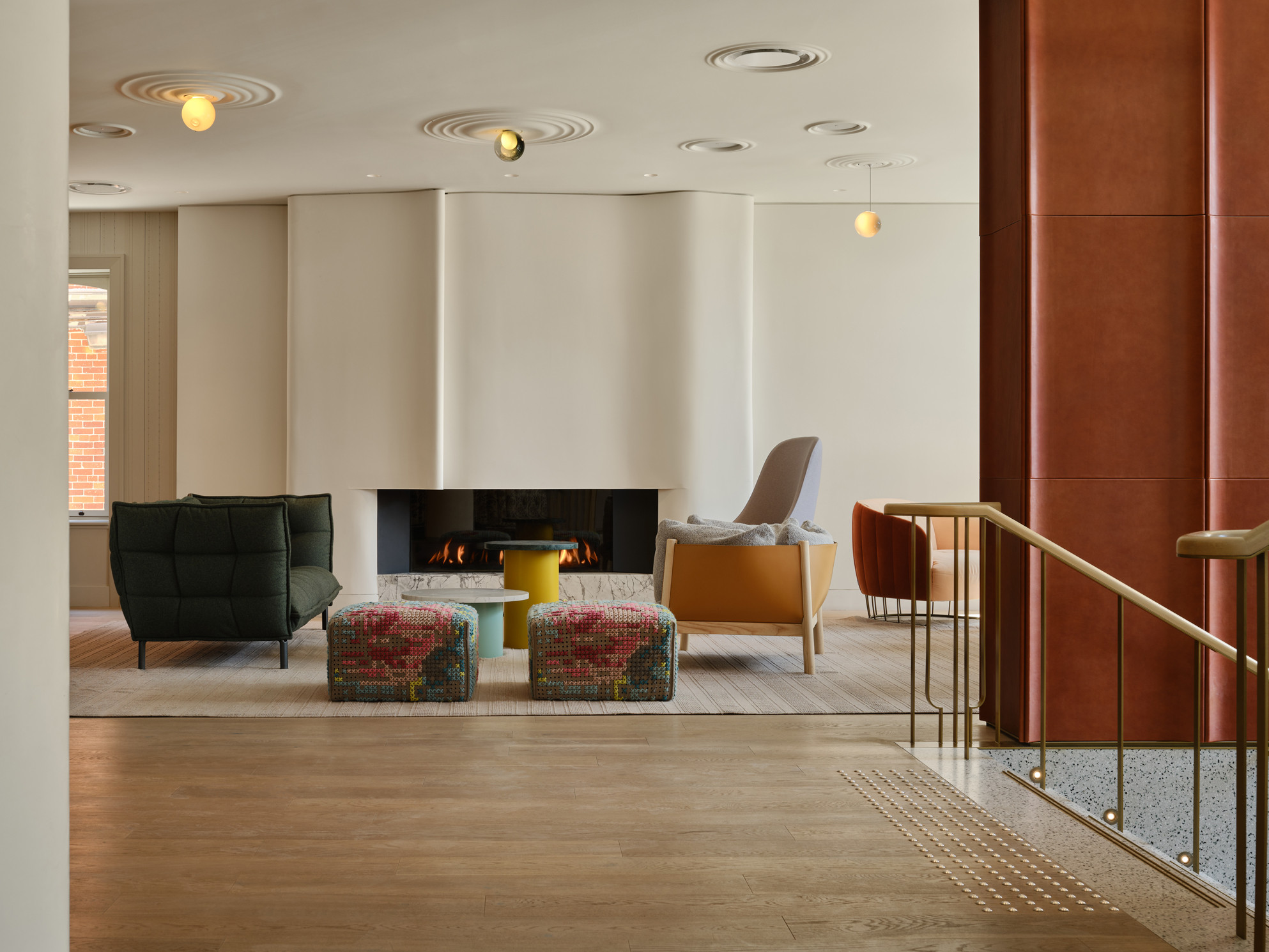
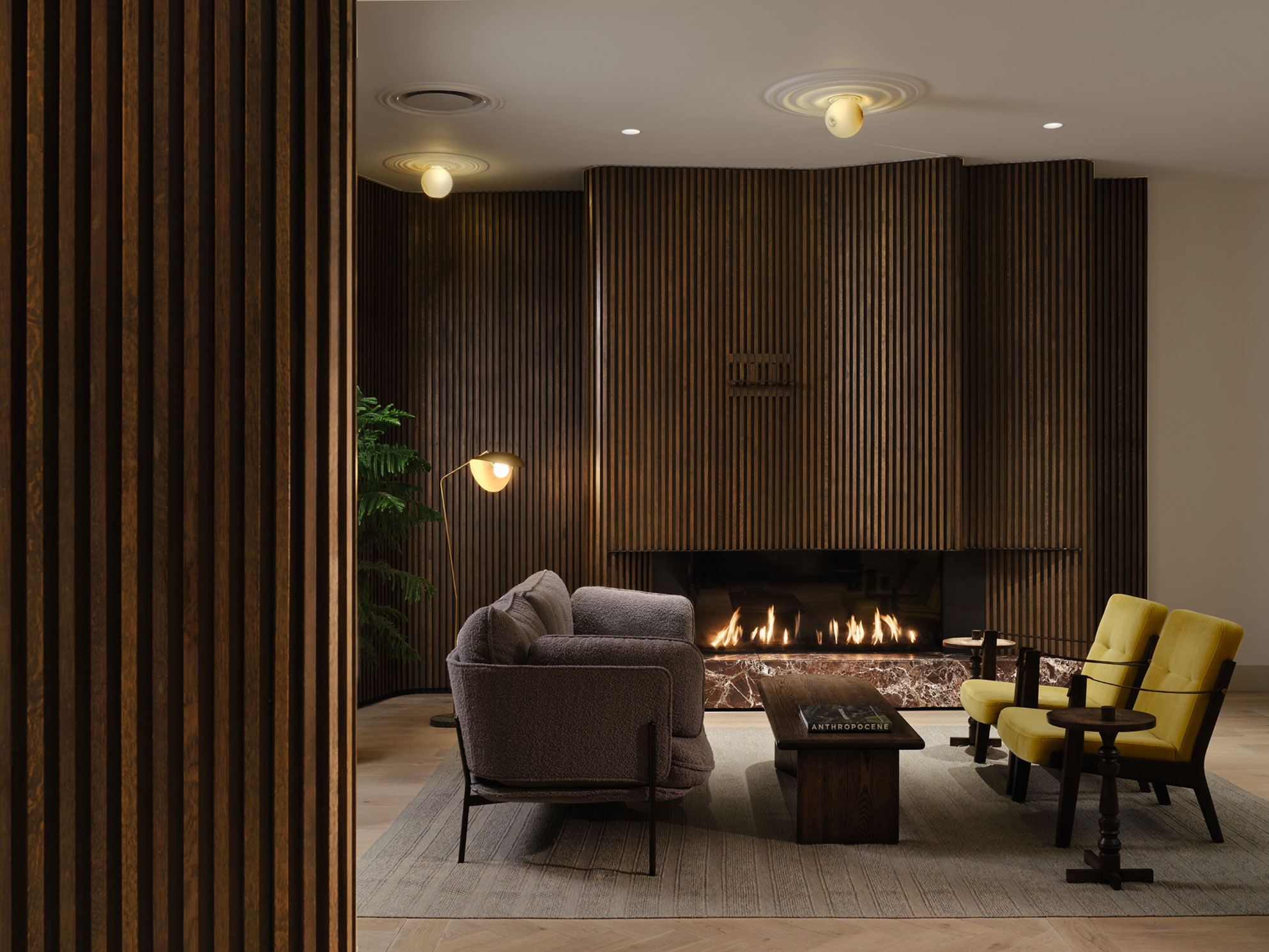
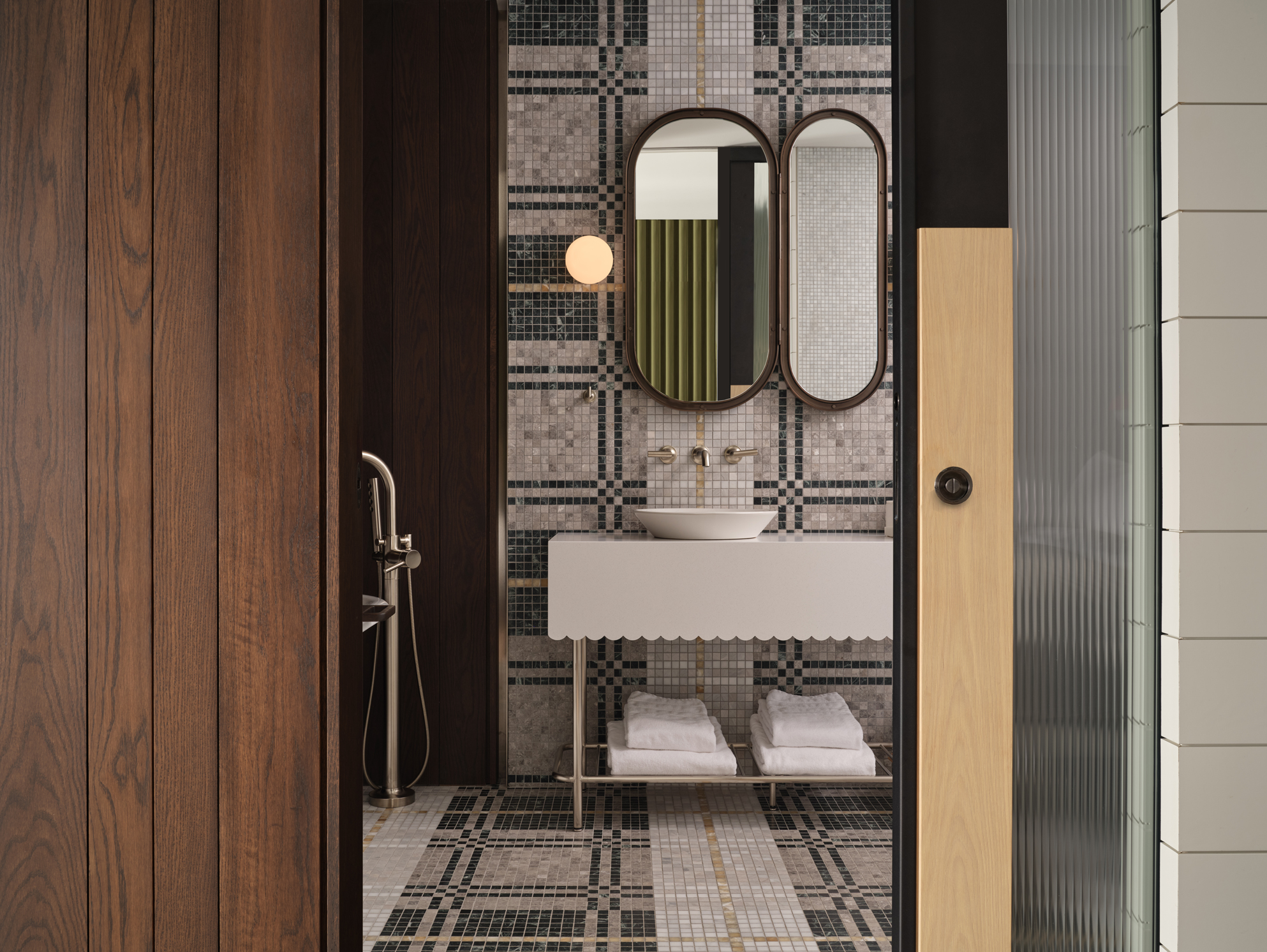
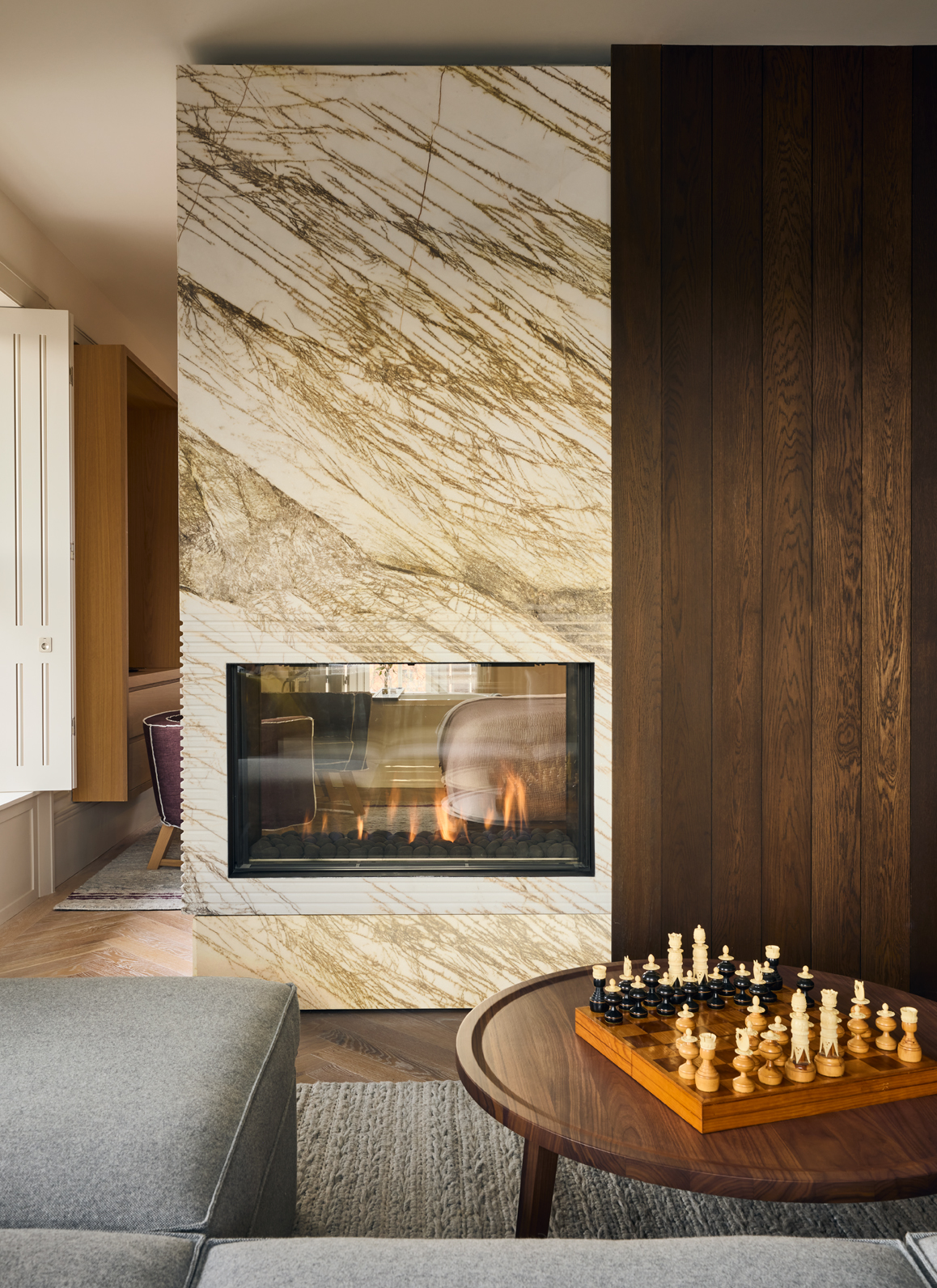
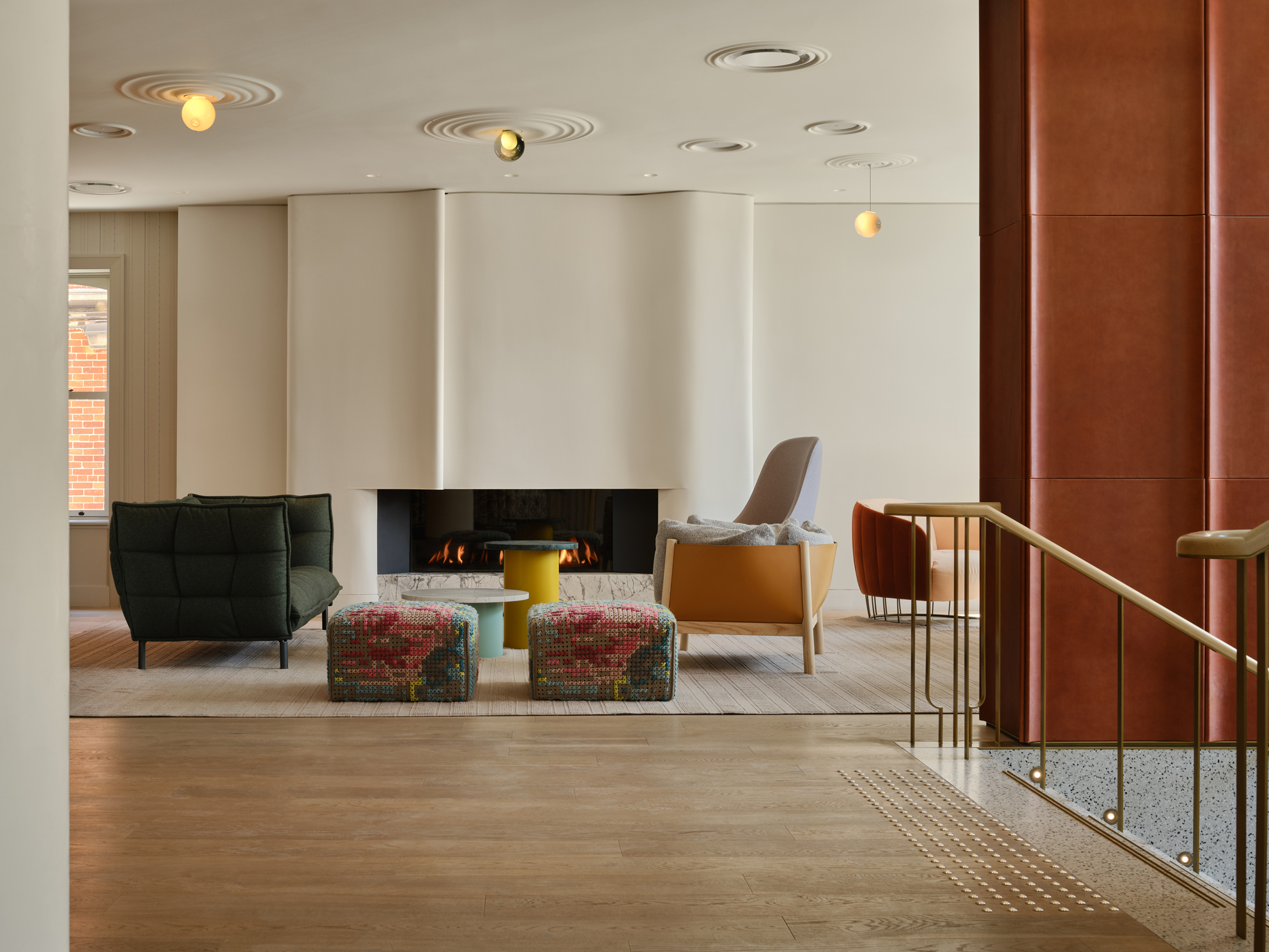
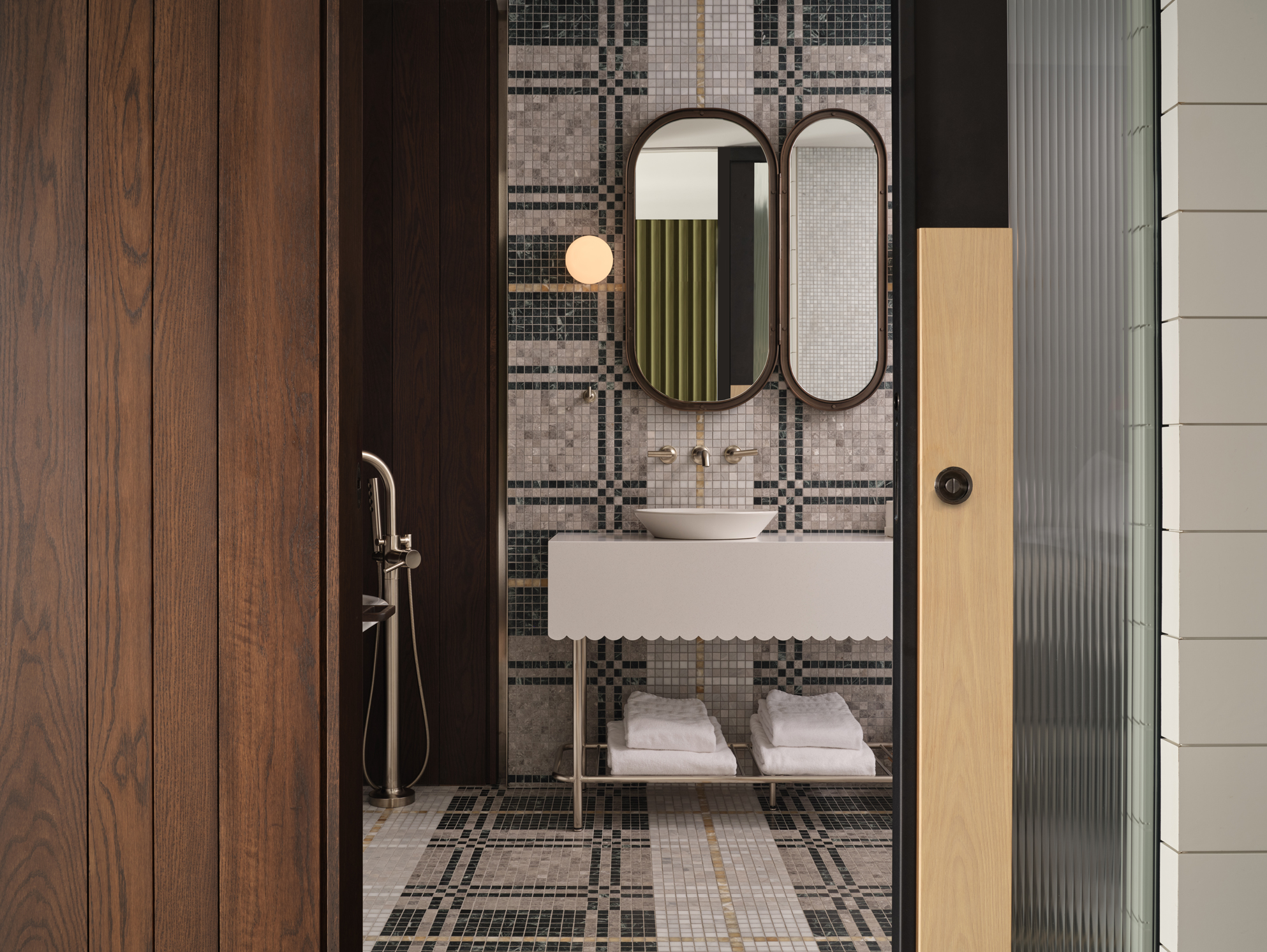
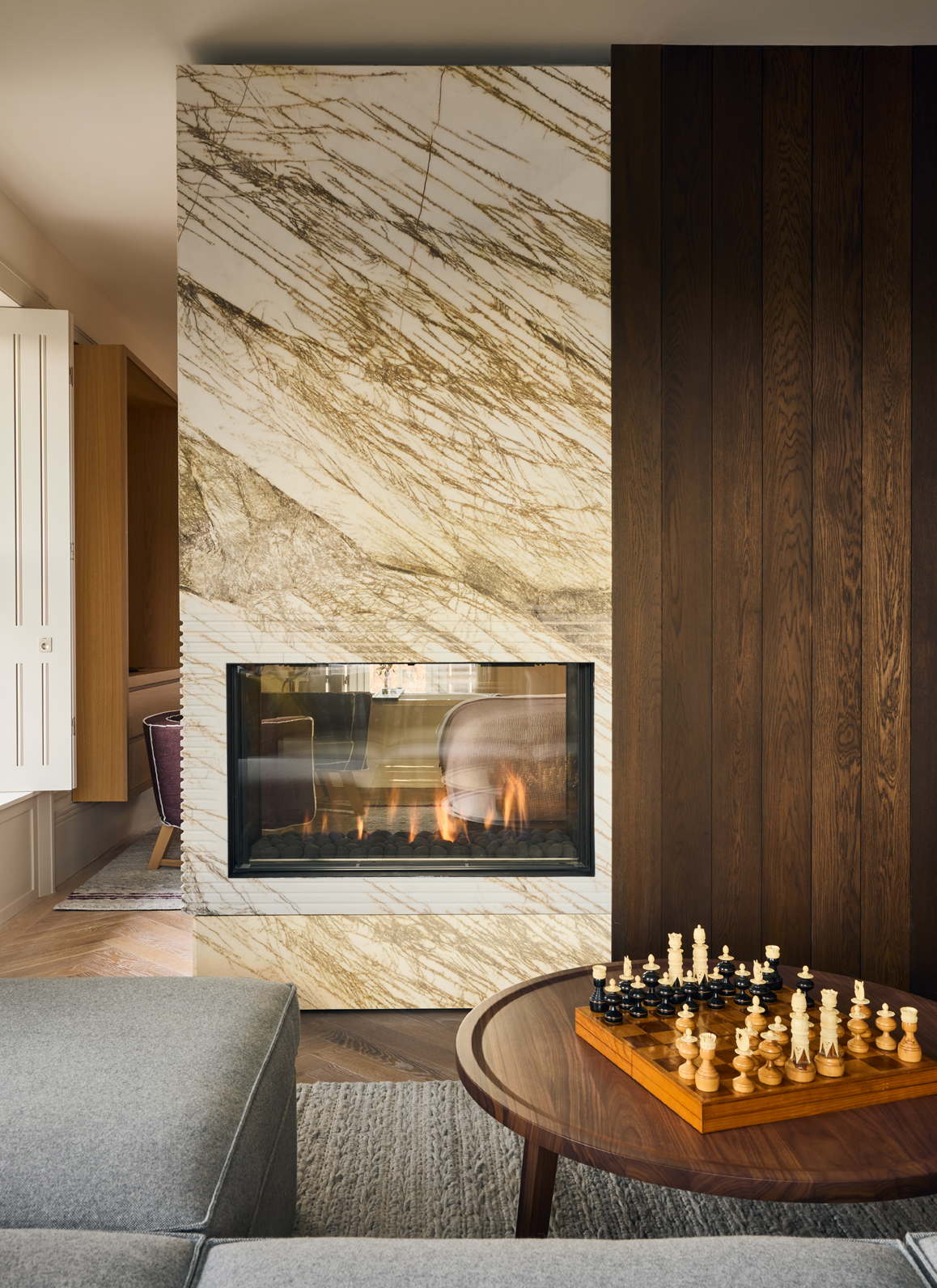
Vestiges of the original hotel’s formal dynamic still find creative expression, but in ways more likely to delight contemporary travellers. Scalloped bathroom vanities in the guest suites, “wrinkles” along the edges of the dining room’s harvest table, and the parlour’s undulating fireplace surround mimic starched linens being pressed into service in surprising new ways. This petrification of traditional Victorian textiles emerges as one of the hotel’s foundational design concepts, guiding key materials and motifs.
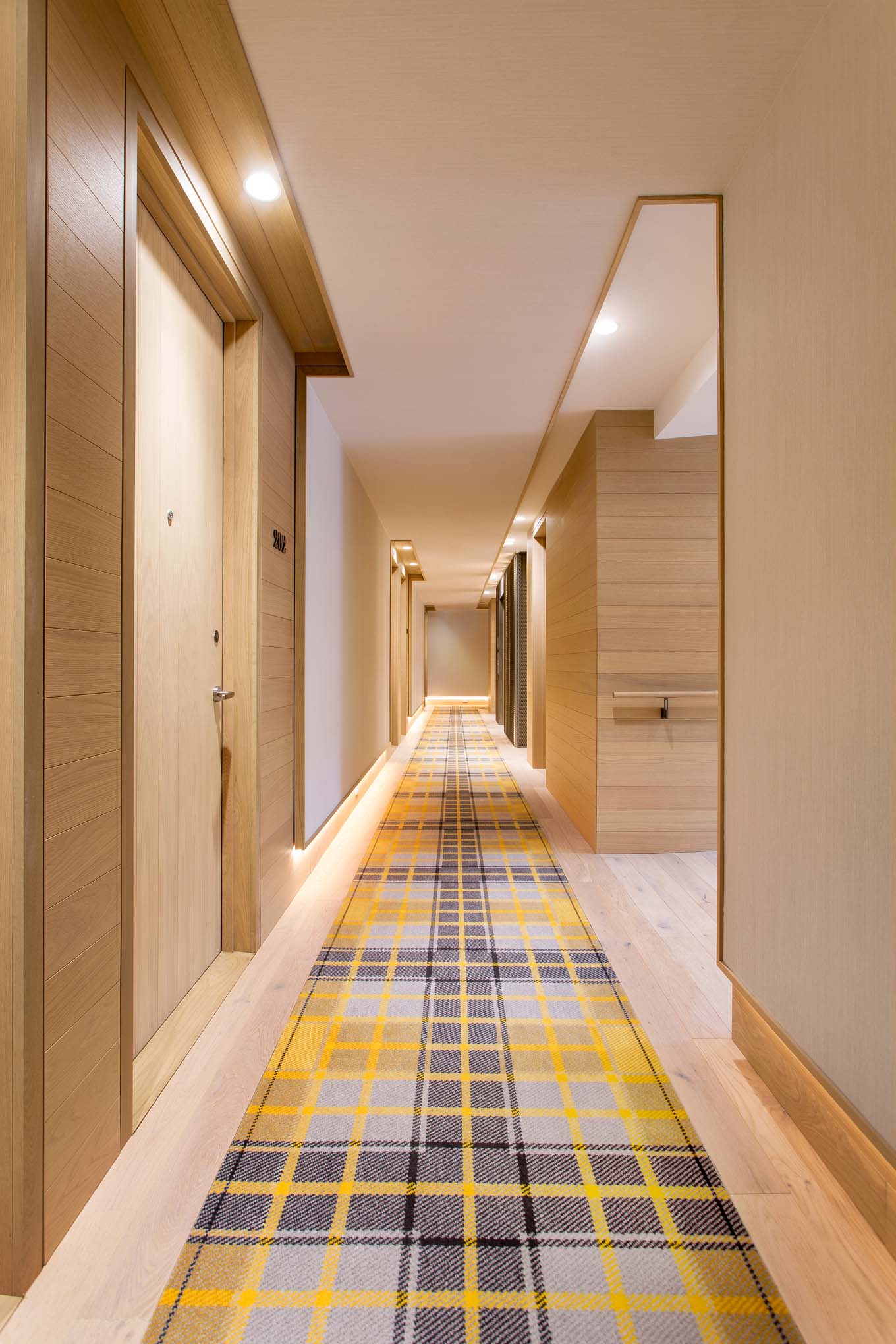
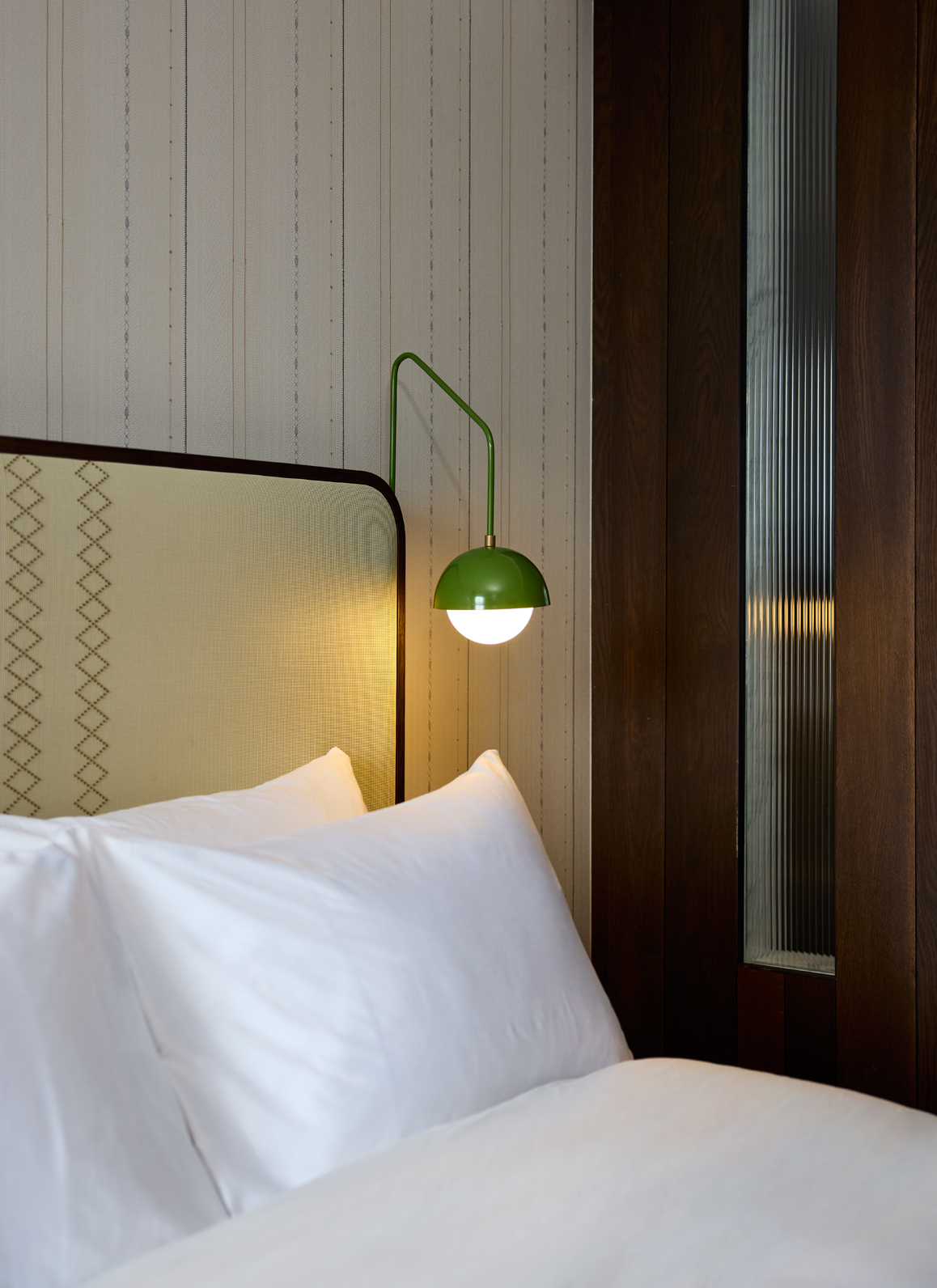
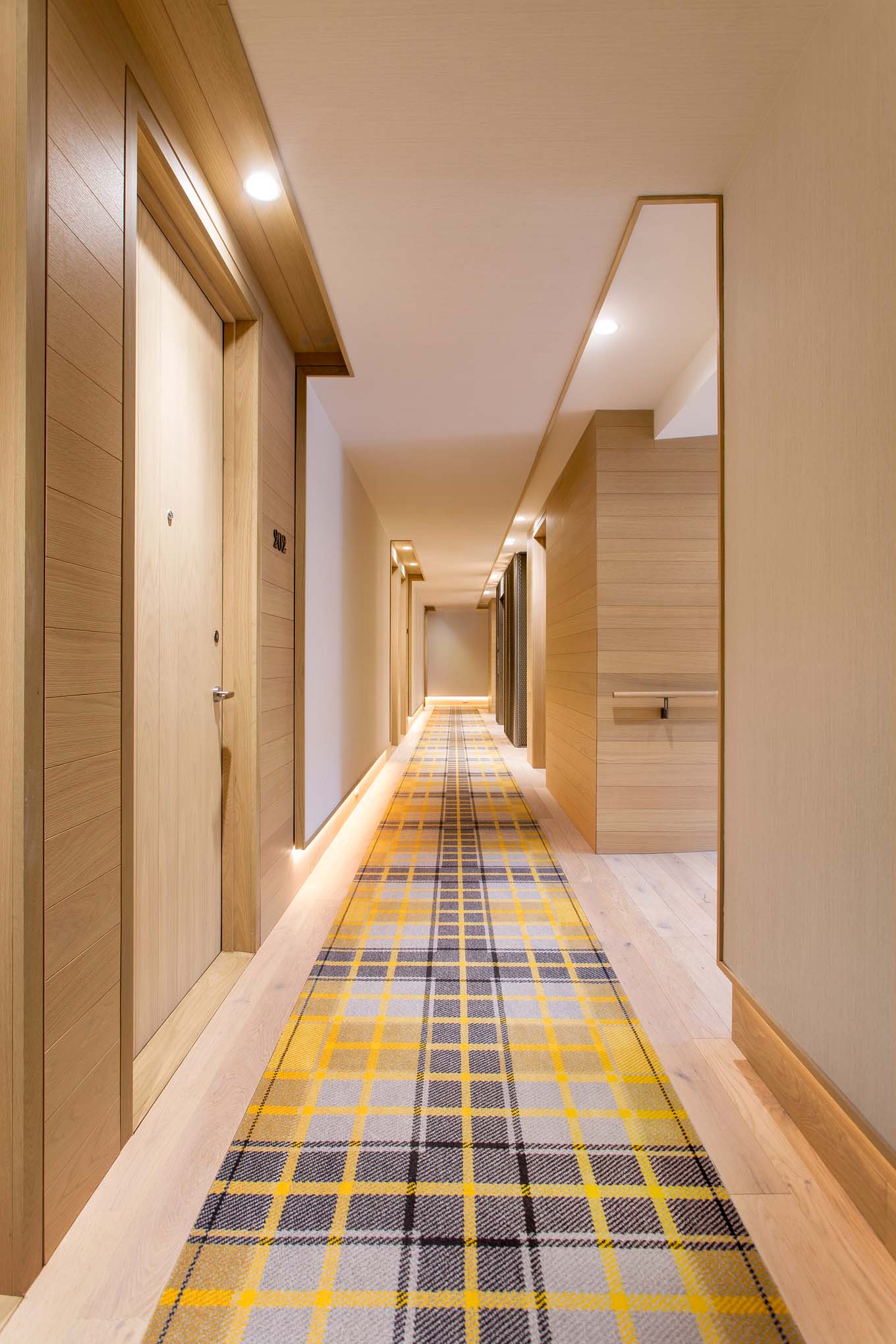
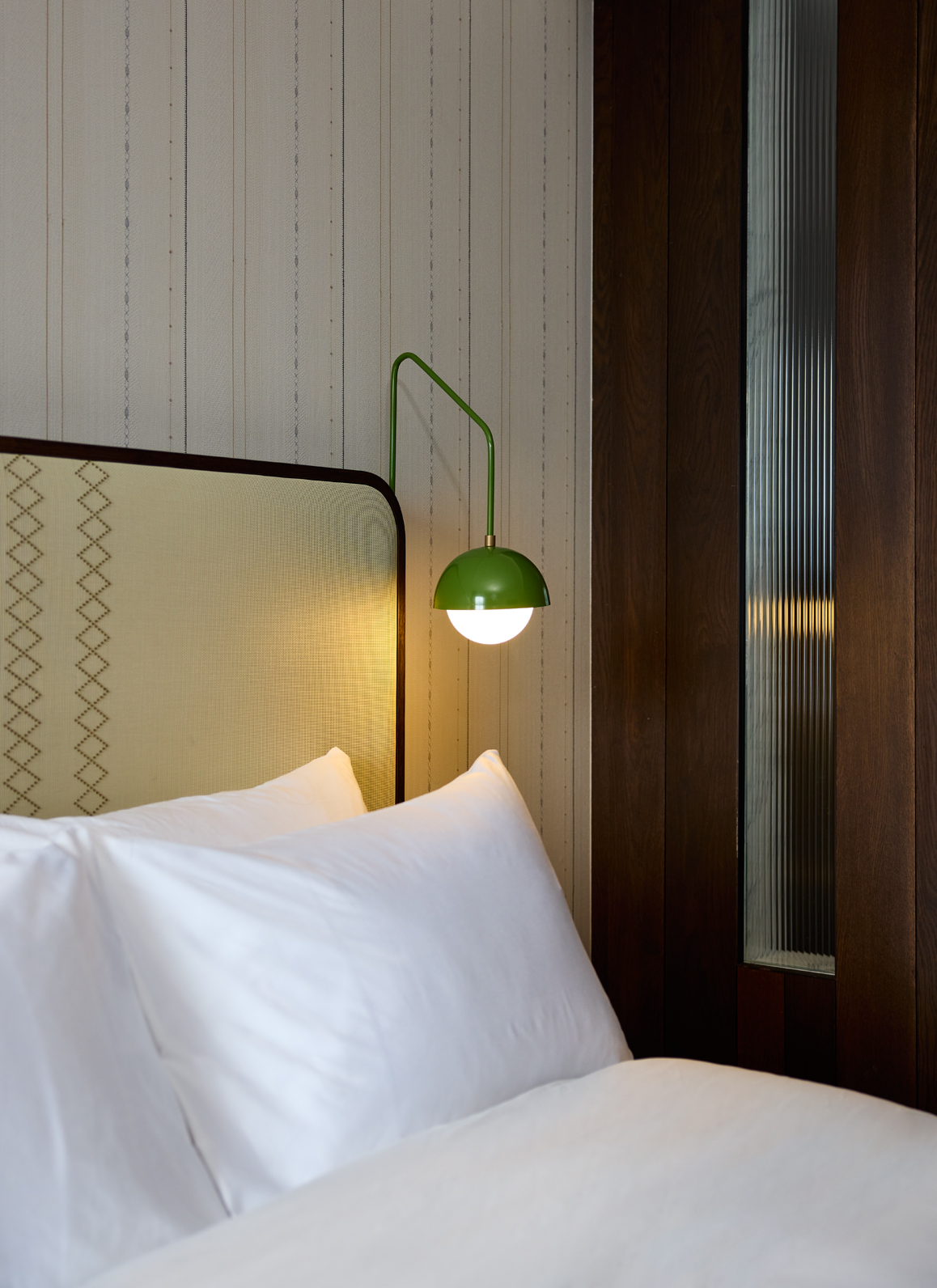
Tartan is rendered in stone mosaic tiles in guest room bathrooms, herringbone white oak flooring inset like a rug guides guests down a hallway, and wood-framed cross-stitched vinyl mesh used for the guest room headboards recalls the decorative threads of unfinished embroidery still stretched and bound by a wooden hoop. The design team’s research into the hotel’s history demonstrated that it was always a quirky place, and the interiors reflect this with a responsive design that’s both aesthetically provocative and intellectually engaging.
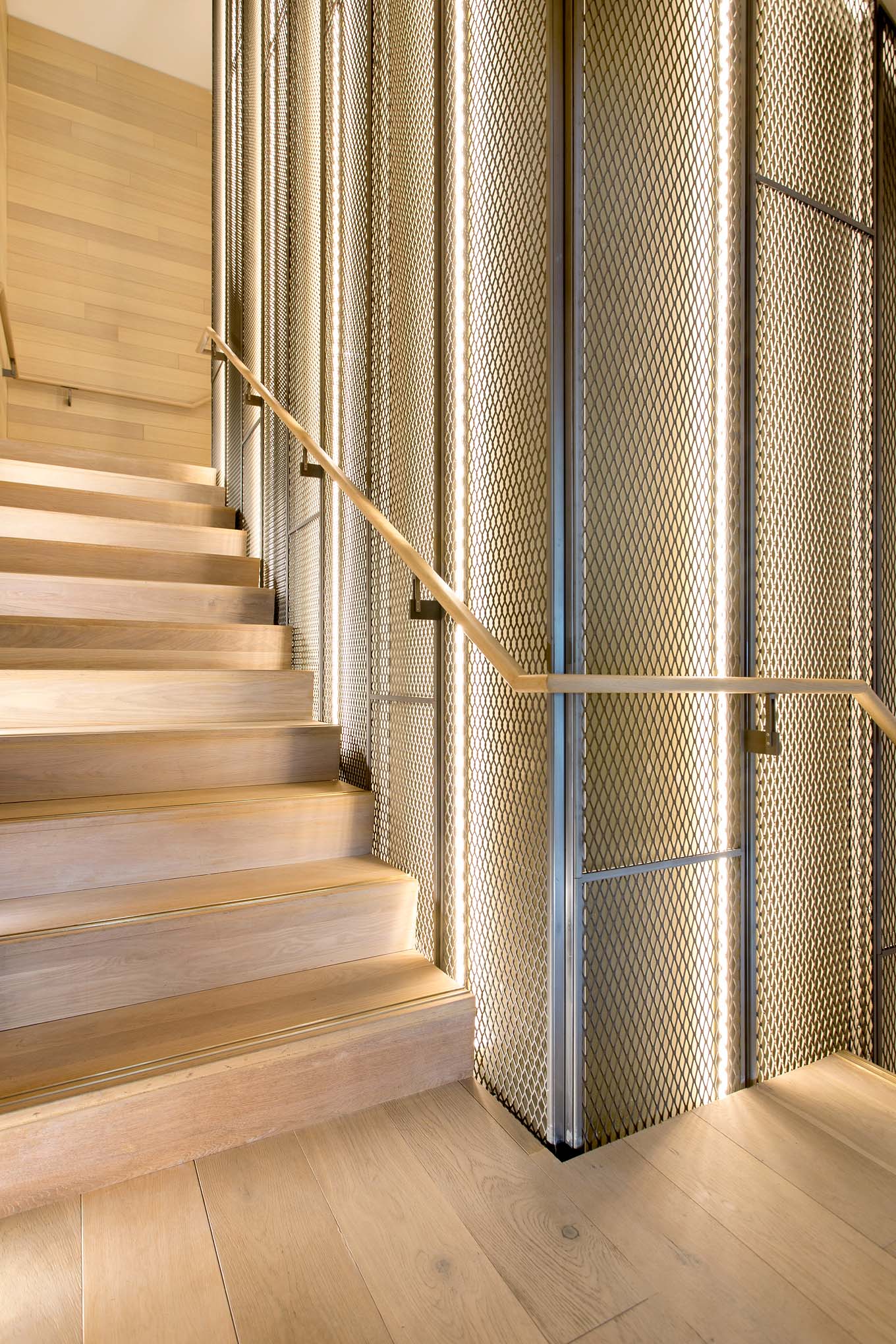
The design team drew inspiration from the building’s former state of deterioration, reimagining it with the utmost refinement to evoke a state of sublime decay. White oak millwork that resembles exposed wall studs, inlaid mosaic tile offset to mimic a rug that has slipped out of place, and rippled ceiling rosettes playfully reference the hotel’s once dilapidated and waterlogged state. The appearance of construction-grade materials and elements seemingly left exposed during the reconfiguration deepen the narrative. Guest room fireplaces are clad in fluted concrete panels as if awaiting their polished marble cladding, and gilded industrial-grade metal is used to reinstate two quintessential Victorian design elements: the hotel’s exterior balustrade and the elevator cages. By embracing the imprint of time on the historic building, The Royal pays homage to its past and future legacy.
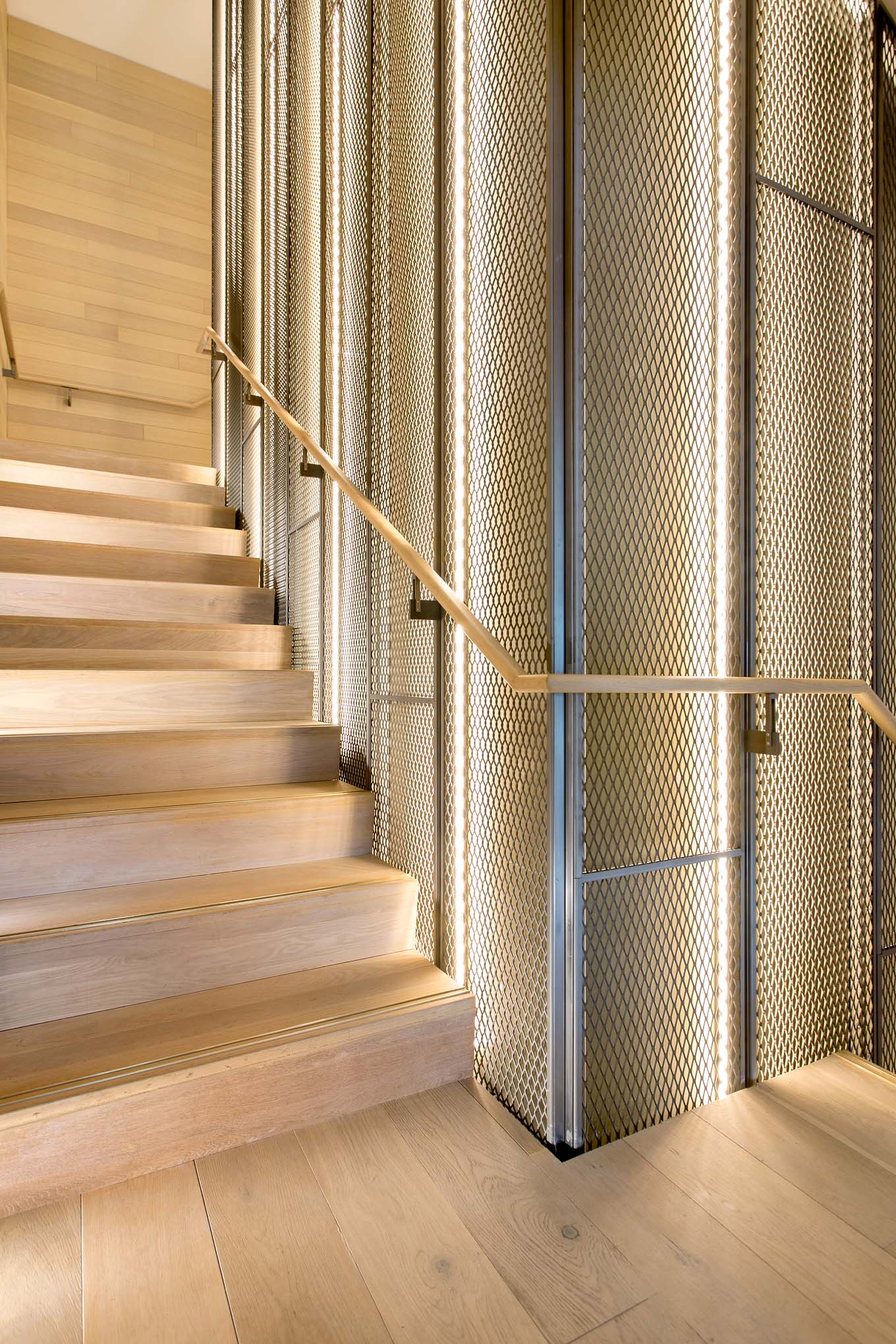
At its best, design is a practice of care and an opportunity to create real, lasting, impactful change. The Royal repurposes a derelict, 19th C. Victorian mercantile building through a process of surgical restoration and state-of-the-art upgrades. The building’s new envelope, including new windows custom designed to emulate the original windows but now with high-performance glazing and seals, exponentially improves the structure’s energy efficiency. The project breathes new life into the vintage structure and allows new interior interventions to work with building environmental systems to increase R‑value and fresh air exchange. The barn-like Royal Annex, a new build on the site of the former stables, is clad in sustainable dark Kebony with a zinc roof; with an art gallery on the ground floor and guest suites for extended stays above, adding fresh functionality within the property’s existing footprint.
The goal is durability — a lasting structure resuscitated to thrive into the next century.
Significantly, the building’s sensitive restoration prompted the local community to establish a historic preservation mandate. The Royal now serves as a benchmark for future heritage conservation efforts in the area, demonstrating how alterations to historic properties and new construction can consider and respect the special character and attributes of their surroundings while elevating its performance and contemporary contribution to Prince Edward County.
The Royal has been featured widely in publications in Canada and the USA, and recently was one of two Canadian projects featured in Conde Nast’s 2023 Hot List. It is also the recipient of several international awards, notably Canada’s 100 Best, AZ Awards, Hospitality Design, and The Restaurant and Bar Design Awards. Since opening its doors to the public, it has received critical acclaim by the Globe and Mail, The Toronto Star, Architectural Record, Canadian Architect, Azure Magazine, Watershed, and The Plan, among others.
松延动力办公总部:从“理性研发场”到“感性社交域”的双层叙事丨北京格微建设工程有限公司
TRECA崔佧成都睡眠艺术馆 | 李想
ECCO创意新空间,一处为创意工作者而生的灵感孵化场丨红山设计

The Royal Hotel | Giannone Petricone Associates Inc. Architects


Heidentempel Pavilion | Christoph Hesse Architects

昆山玉山书房设计,探索新型复合型书店的多种可能性丨GLC(中国)

HAY!YoungBirds! 2020年亚洲优秀青年大赛三强作品《削笔刀》设计师访谈

订阅我们的资讯
切勿错过全球大设计产业链大事件和重要设计资源公司和新产品的推荐
联系我们
举报
返回顶部