

上海德邻公寓优秀历史建筑修缮工程丨UA尤安设计
UA尤安设计
 ,发布时间2025-10-14 10:45:00





项目地点:虹口区四川北路71号2幢
保护级别:上海市第四批优秀历史建筑,保护级别为三类
原建筑设计方:五和洋行
建造时间:1935年,1979-1988年加层
建筑类型:办公、商业
楼层数量:6层
主体结构:钢筋混凝土结构
主要材质:斩假石、泰山面砖、水泥砂浆、钢窗、水磨石、GRC、玻璃幕墙
占地面积:3103.9㎡
修缮设计:2023年
施工状态:已修缮更新完成
业主:上海尤安建筑设计股份有限公司
设计总控:UA尤安设计事业五部
建筑设计:UA尤安设计事业五部
项目总负责:余志峰、王晖
设计团队:王班、王力洋、鲍磊
施工图设计:UA尤安设计综合设计部
景观设计:UA尤安设计事业五部
室内设计:上海曼图、上海风潮
幕墙设计:泰幕工程咨询(杭州)有限公司
灯光设计:徽之度照明
历保顾问:上海建筑装饰(集团)设计有限公司
房屋检测:上海勘察设计院
BIM设计:安徽柏慕恒升建筑科技
施工单位:上海海庆建筑工程有限公司(工程总包),上海建工一建集团有限公司(历保修缮工程)
监理单位:上海建浩工程顾问有限公司建筑摄影:颜洪熙(修缮后)
版权声明:本链接内容均系版权方发布,版权属于 UA尤安设计,编辑版本版权属于设计宇宙designverse,未经授权许可不得复制转载此链接内容。欢迎转发此链接。
德邻公寓位于上海市虹口区北外滩、四川北路 71 号,地处虹口港历史片区与苏州河风貌区交汇处,是上海第四批优秀历史建筑。UA尤安设计以历史修缮与功能焕新相结合,让这座 1935 年的折衷主义历史公寓重获新生。以下系UA尤安设计提供的图文资料:
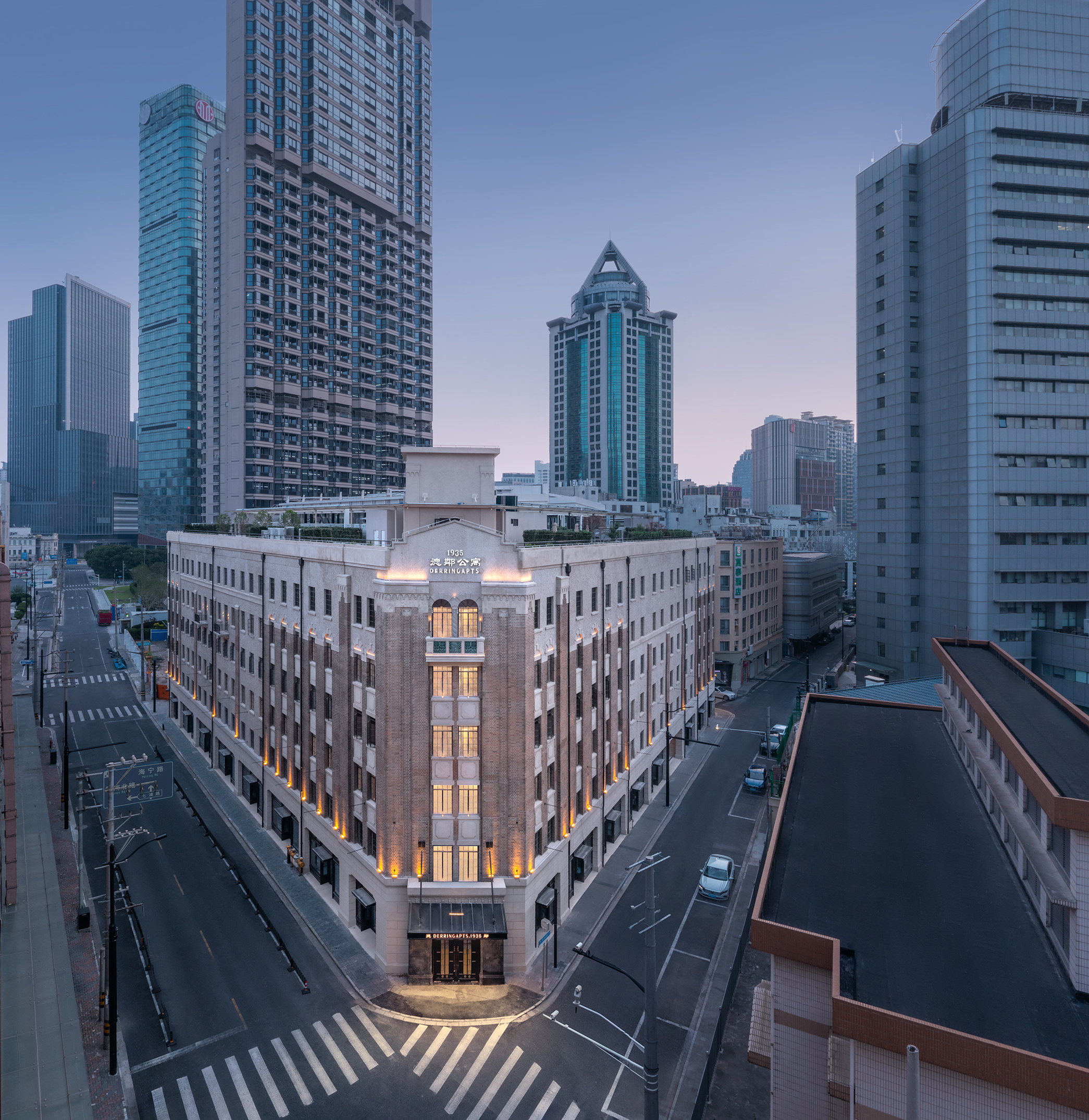
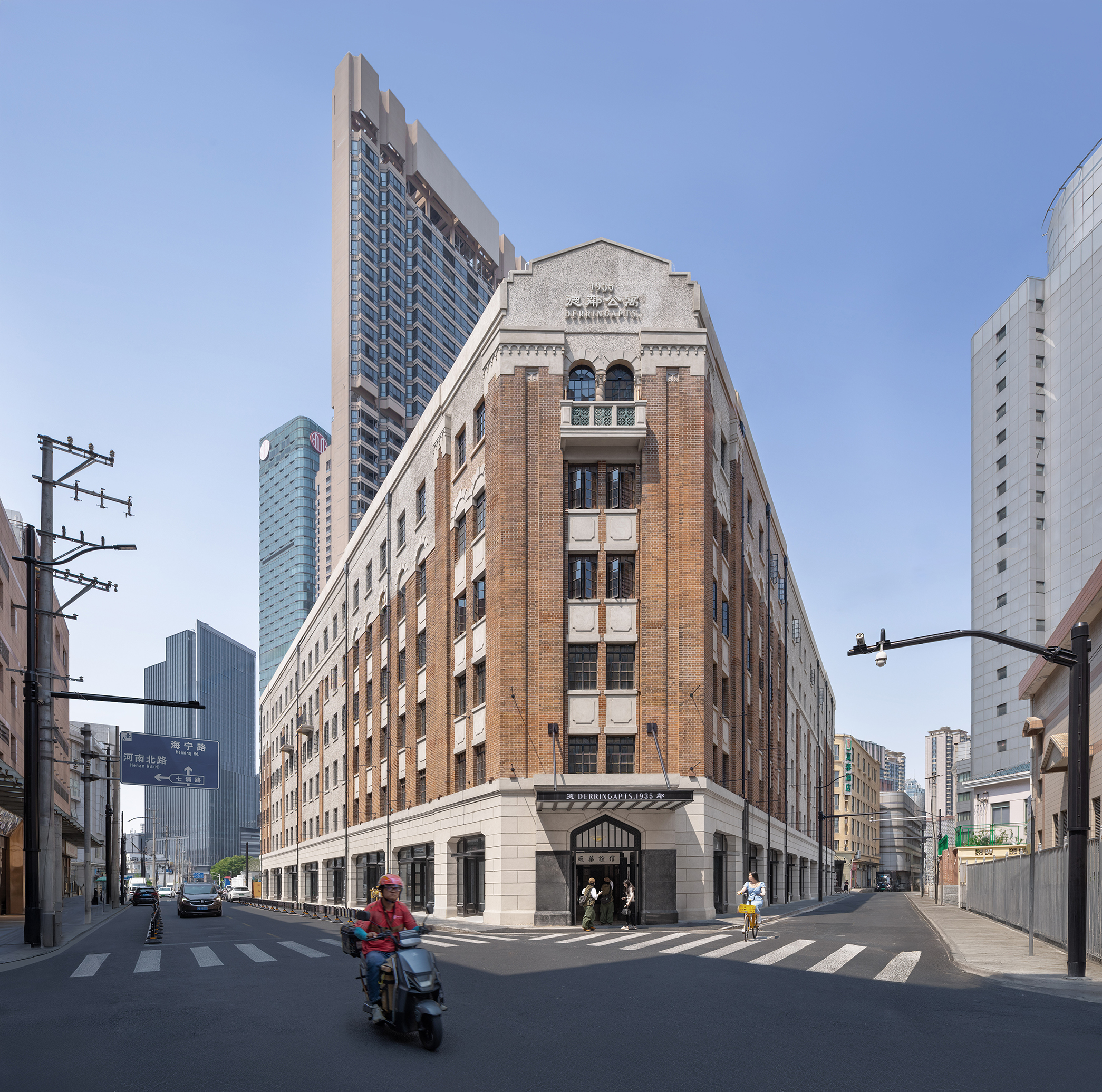
上海德邻公寓坐落于虹口区北外滩区域最西侧,属“一心两片”中的“虹口港历史片区”。依托“一江一河”的城市战略规划背景,这里已经陆续形成了以上海邮政博物馆、河滨大楼、新亚酒店为核心的多处历史文化地标。德邻公寓由俄国建筑师G. 拉比诺维奇设计,始建于1935 年,是上海滩第一批配备电梯的高档公寓。它坐落于苏州河沿岸的历史文化风貌区,具有典型的折中主义建筑特征。虽历经岁月的洗礼和变迁,但结构和形态基本保持了原有的风貌。
2022年12月UA尤安设计开始进行更新改造修缮工作。作为老上海最负盛名的国际公寓,德邻公寓曾汇聚了众多文人墨客,张恨水、张友鸾、陈占元、刘白羽、姜亮夫等文人学者曾在此居住,巴金、郁达夫、叶圣陶、萧乾、章靳以等人也慕名而来,使之成为上海的“文人客厅”。因此,建筑的策划定位在传承建筑的文脉背景的同时,结合自身设计总部的使用需求,打造设计创新前沿阵地,并通过一体化策略,为历史建筑注入新活力,续写德邻公寓新篇章。
本次修缮设计在历保修缮项目中实验性地采用建筑师负责制,在勘察和设计环节全面采用数字信息化技术。自主开发、自主设计、自主运营,为上海历史建筑的保护和开发提供了“资管-设计-运营”一体化的积极案例。2025年,经过修缮后的德邻公寓将重新向公众开放,更新成为办公场所和上海建筑文化交流集聚地,成为面向量质转化时代的新都市生活空间,展现混合文化、市集的办公新形态。
Located at the westernmost edge of Hongkou District's North Bund area, within the "Hongkou Port Historic Area" of the "One Core, Two Zones" plan, Shanghai Derring Apartments stands amidst a growing cluster of historic cultural landmarks. This development is supported by the city's strategic planning framework for the "One River, One Creek," with core sites including the Shanghai Postal Museum, the Embankment Building, and the New Asia Hotel. Designed by Russian architect G. Rabinovich and originally built in 1935, Derring Apartments was among the first high-end apartment buildings in Shanghai equipped with elevators. It is situated within the historic and cultural conservation area along the Suzhou Creek and exhibits typical Eclectic architectural features. Despite the洗礼 of time and various changes, its structure and form have largely retained their original character.
In December 2022, UA Design commenced renovation, restoration, and conservation work. As one of old Shanghai's most renowned international apartments, Derring Apartments once attracted a host of literati and intellectuals. Writers and scholars such as Zhang Henshui, Zhang Youluan, Chen Zhanyuan, Liu Baiyu, and Jiang Liangfu resided here, while figures like Ba Jin, Yu Dafu, Ye Shengtao, Xiao Qian, and Zhang Jinyi were also drawn to visit, cementing its reputation as Shanghai's "Literary Salon." Therefore, the project's vision aims to inherit this architectural and cultural context while integrating the functional requirements of its own design headquarters. The goal is to establish a forefront for design innovation and, through an integrated strategy, inject new vitality into the historic building, writing a new chapter for Derring Apartments.
This restoration project piloted the Architect Responsibility System for historic conservation projects, fully adopting digital information technology throughout the survey and design phases. With independent development, design, and operation, it provides a positive case study for the integrated "Capital Management-Design-Operation" model in the protection and development of Shanghai's historic buildings. In 2025, the restored Derring Apartments will reopen to the public, transformed into office spaces and a hub for Shanghai's architectural culture exchange. It will emerge as a new urban living space for an era focusing on quality transformation, showcasing a novel office format that blends culture and marketplace elements.
01
德邻公寓——历史的回溯
DERRINGAPTS.
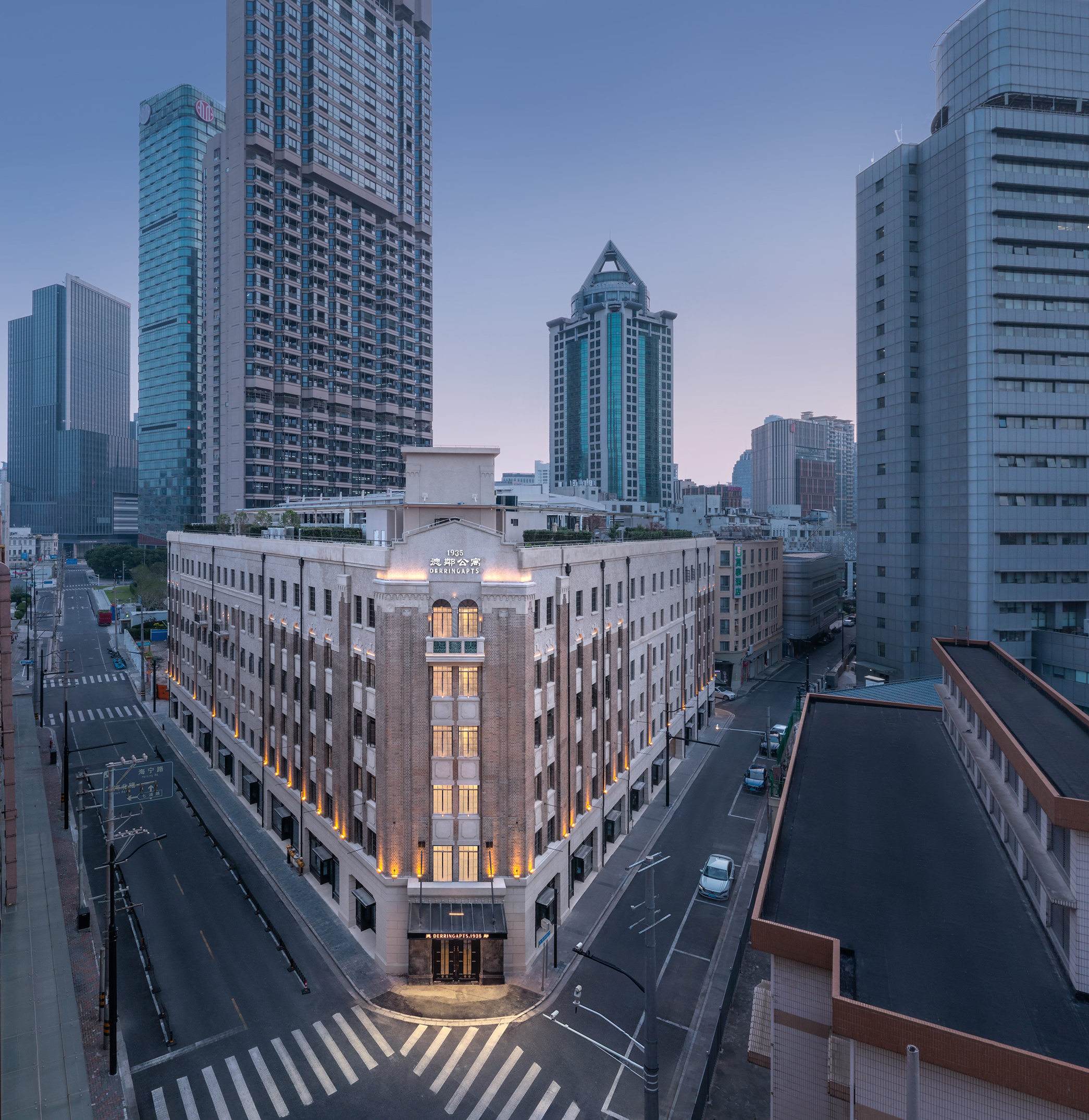
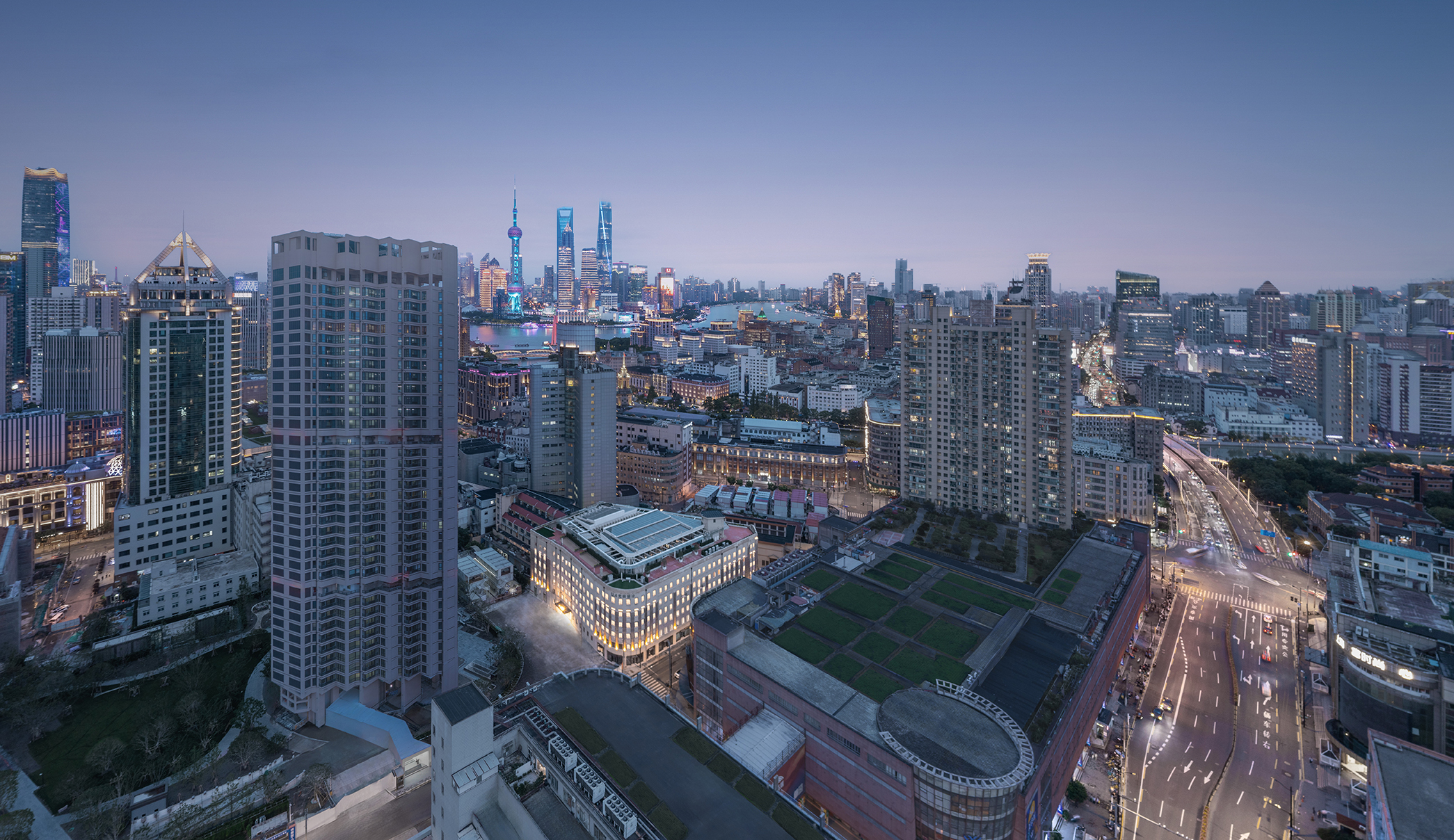
上海德邻公寓坐落于虹口区北外滩区域最西侧,崇明路、江西北路、七浦路交汇处。始建于1935年,建造之时作为公寓住宅,1947年后由上海信谊药厂使用,2011年起改为商业功能,是上海市第四批优秀历史(三类)。2023年UA尤安设计启动进行修缮和更新工作。
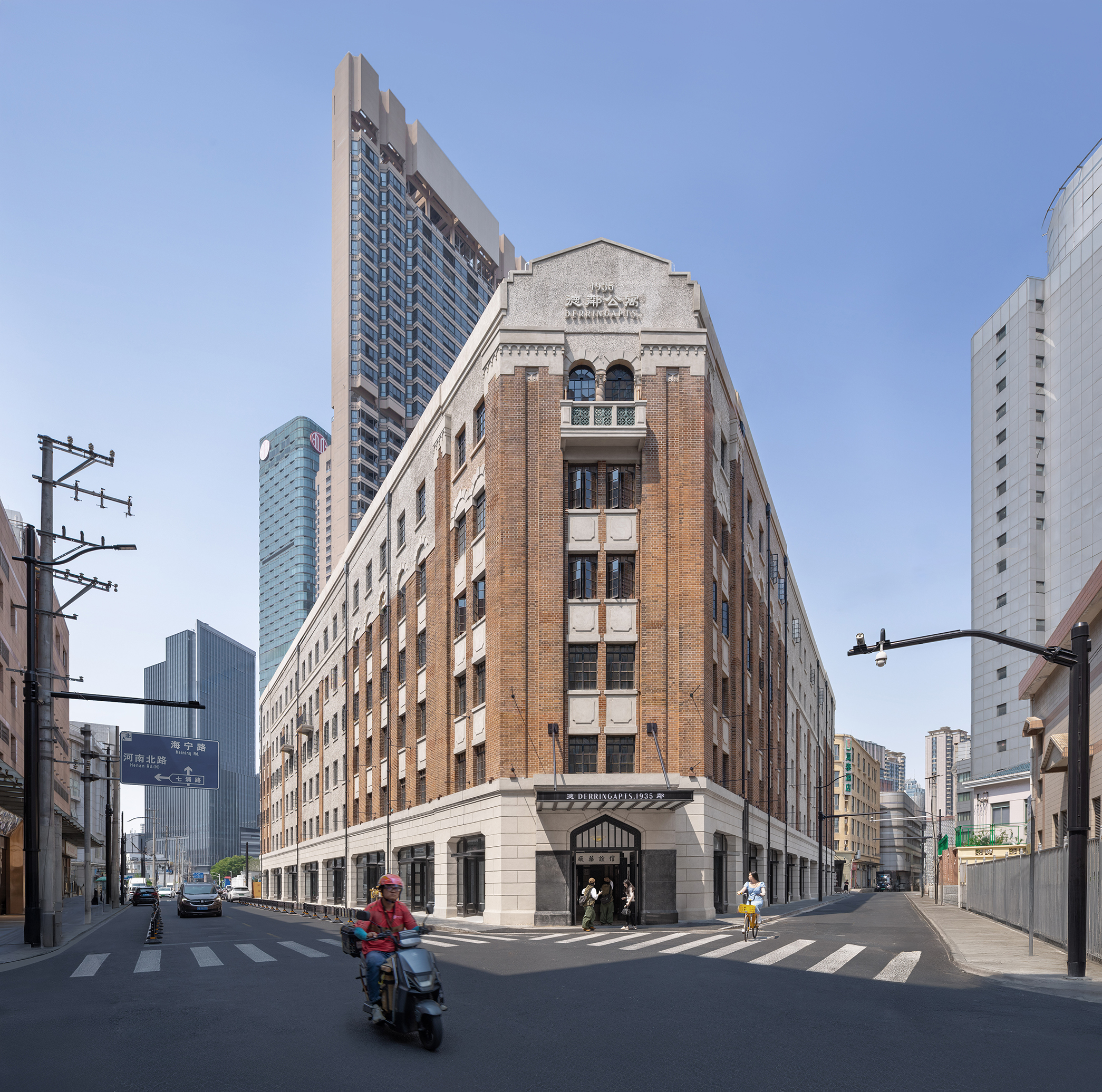
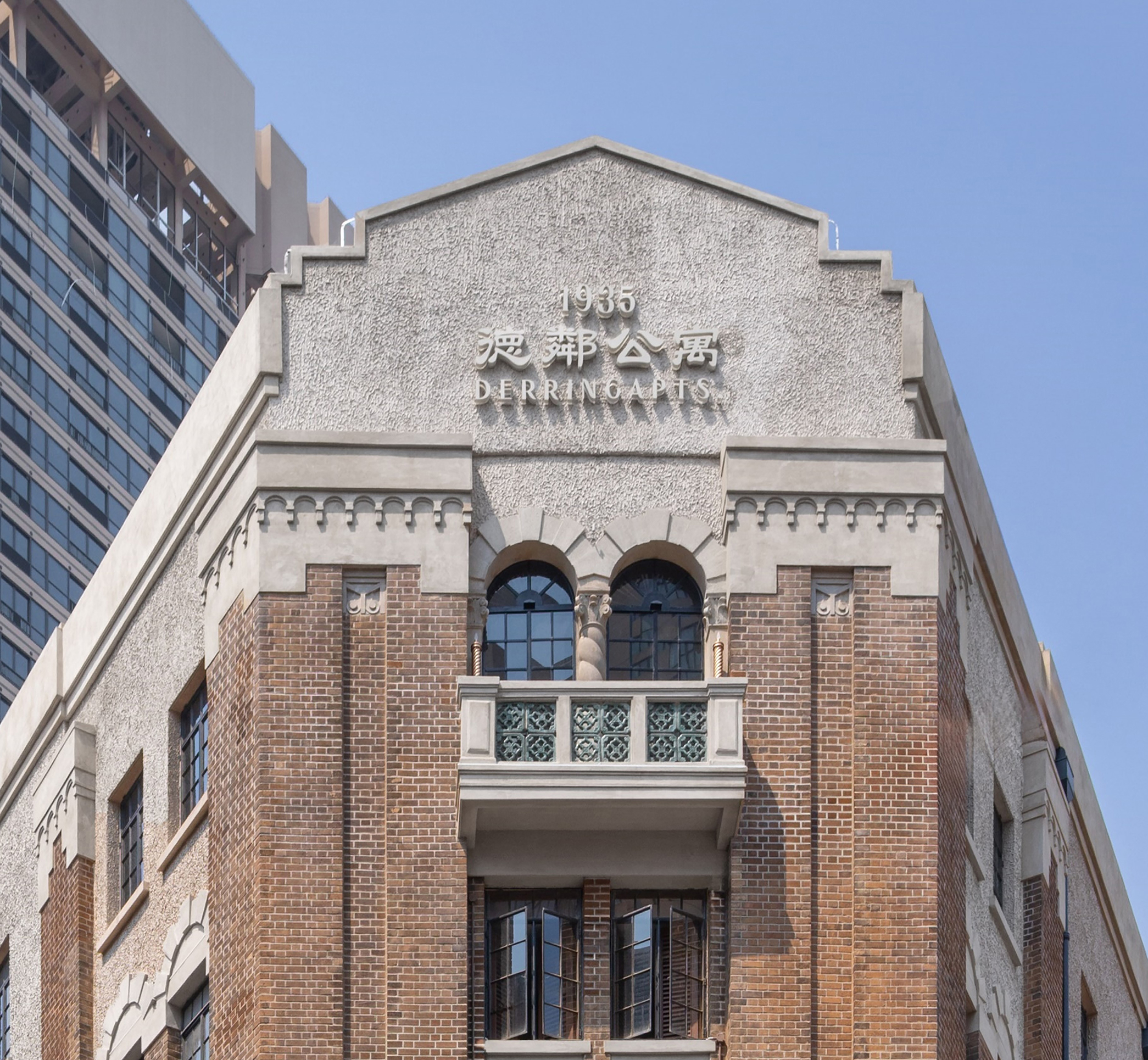
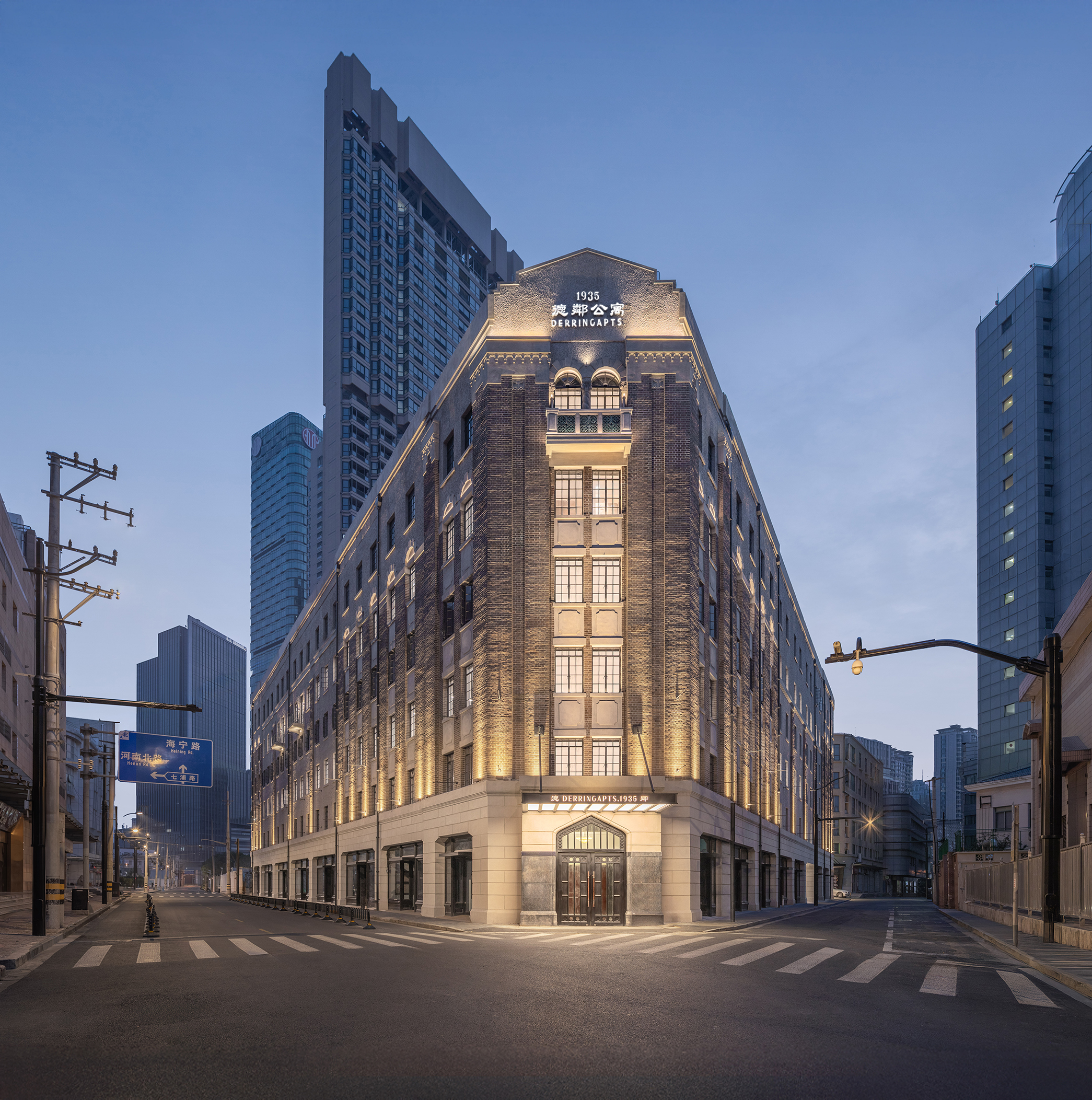
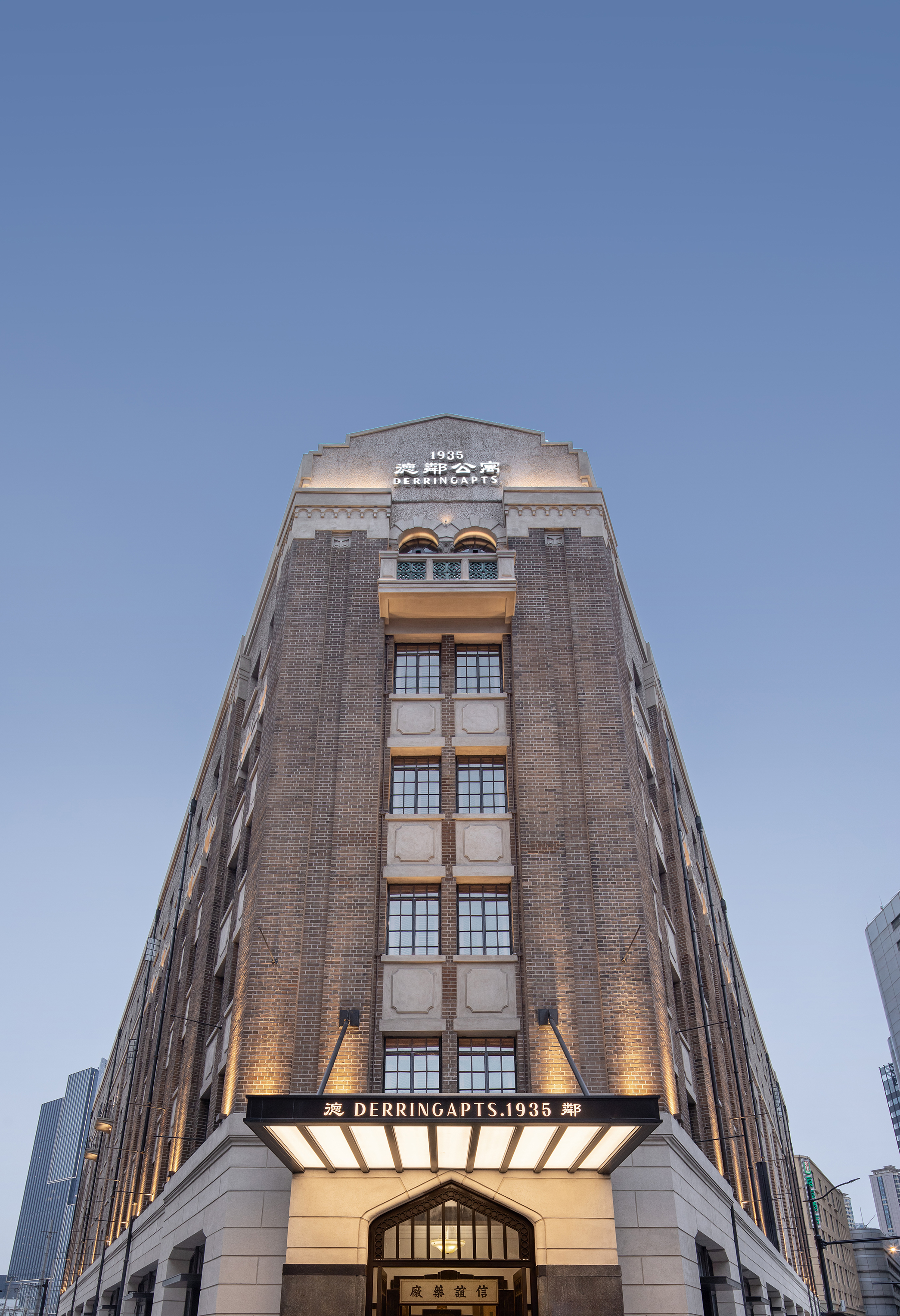
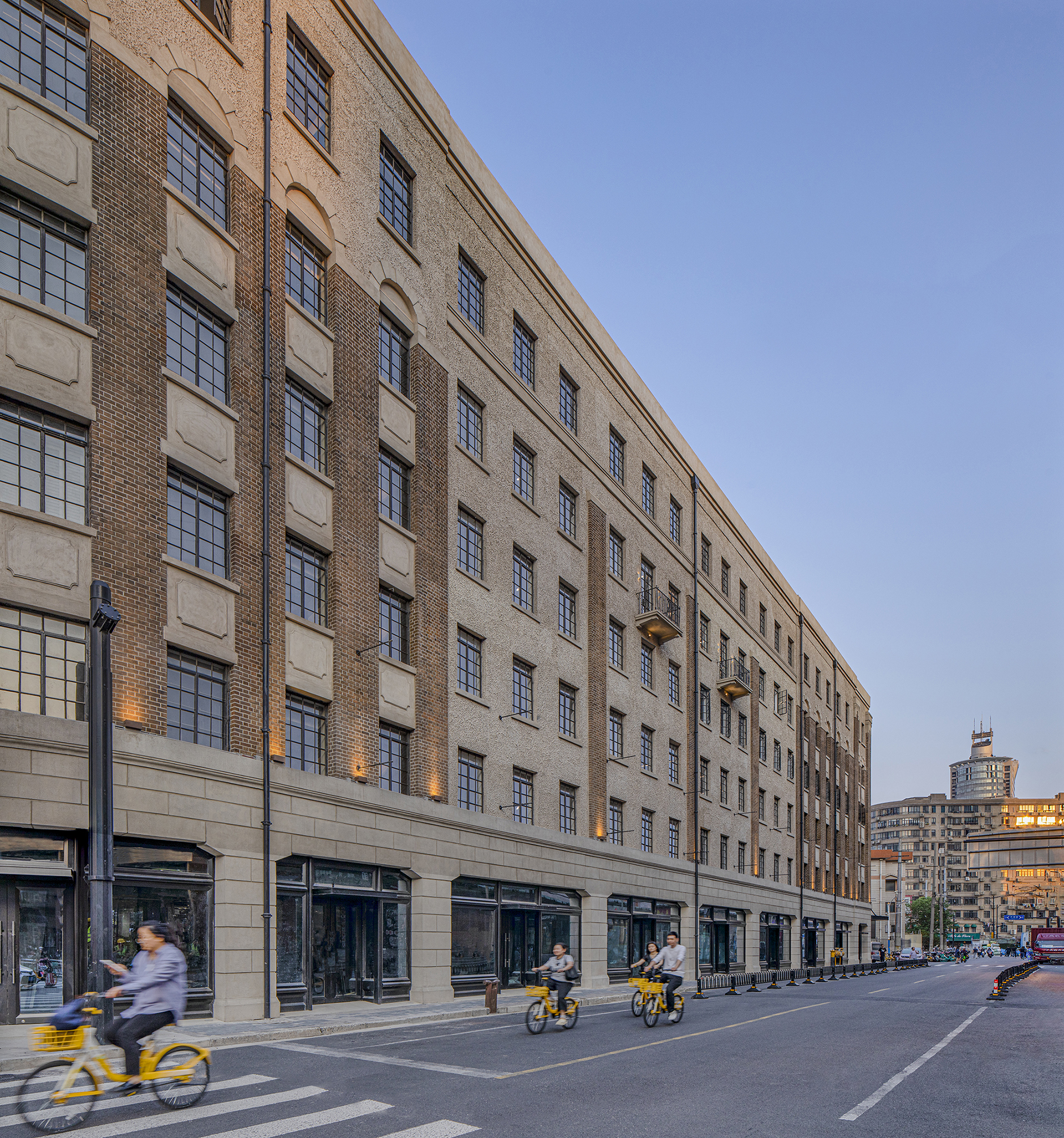
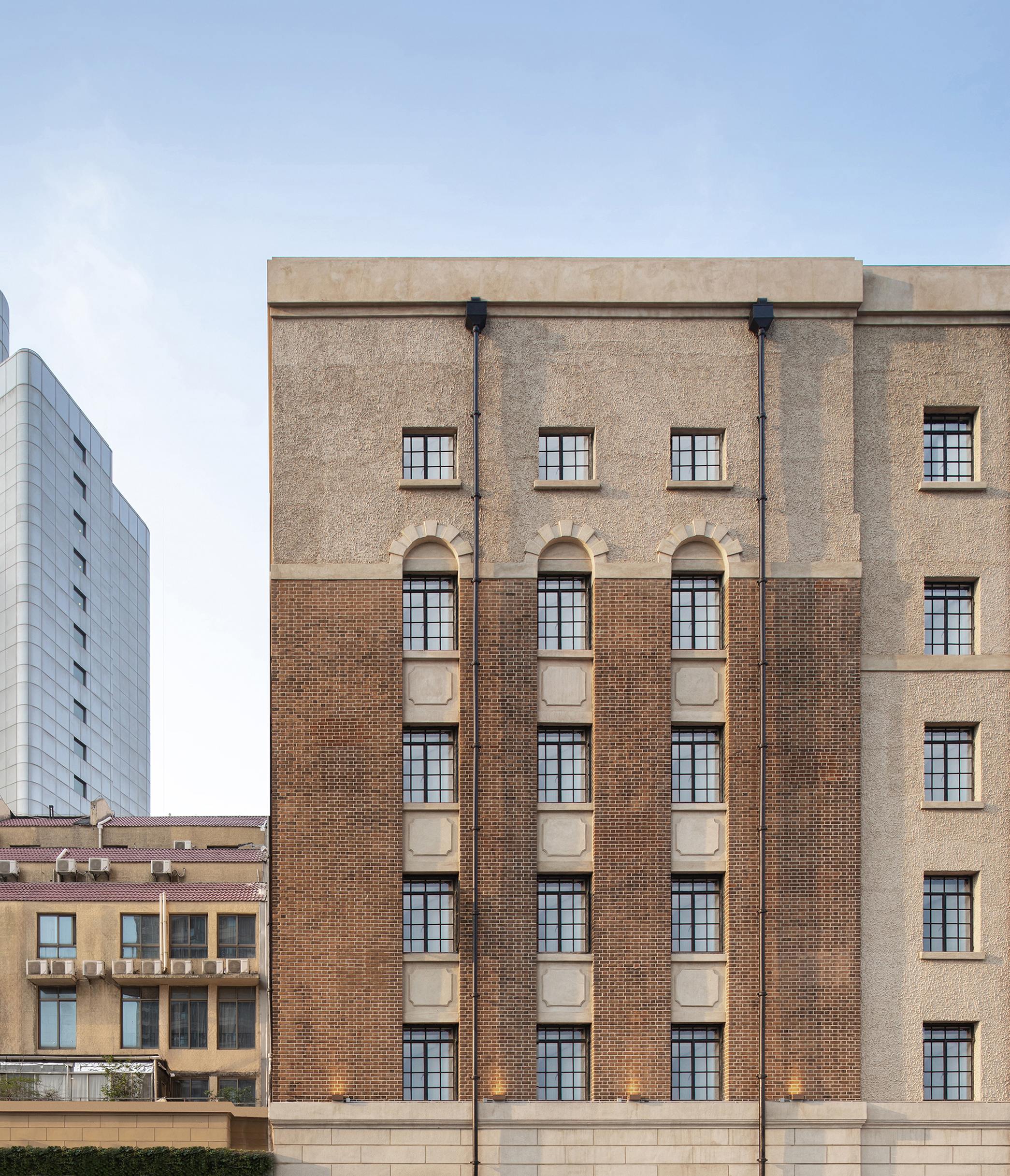
德邻公寓具有典型的折衷主义建筑特征,平面为周边式,立面为纵向三段式构图。建筑外观整洁,构图严整,强调褐色面砖窗间墙的垂直效果,顶层窗加设券形装饰。它不仅是上海滩最早一批配备电梯的公寓,而且曾是新中国成立前上海第一批白领居住区,汇聚了来上海滩“淘金”的欧美贸易商、与金融大亨。这种多元化的背景赋予了德邻公寓丰富的历史文化内涵。
这里曾汇聚了众多文人墨客,张恨水、张友鸾、陈占元、刘白羽、姜亮夫等文人学者曾在此居住,巴金、郁达夫、叶圣陶、萧乾、章靳以等人也慕名而来,使之成为上海的“文人客厅”。因此,建筑的策划定位在传承建筑的文脉背景的同时,结合自身设计总部的使用需求,打造设计创新前沿阵地,并通过一体化策略,为历史建筑注入新活力,续写德邻公寓新篇章。
Located at the westernmost edge of Hongkou District's North Bund area, at the intersection of Chongming Road, Jiangxi North Road, and Qipu Road, Shanghai's Derring Apartments were originally built in 1935 as residential apartments. After 1947, the building was used by Shanghai Xinyi Pharmaceutical Factory and was converted to commercial use starting in 2011. It is listed as a Category III Excellent Historical Building in the fourth batch of Shanghai's protected heritage. In 2023, UA Design began restoration and renovation work.
Derring Apartments exhibit typical Eclectic architectural features, with a peripheral layout plan and a vertically tripartite facade composition. The building's exterior is neat, with a rigorous composition that emphasizes the vertical effect of the brown brick spandrel walls between windows; the top-floor windows feature arched decorations. It was not only one of the earliest apartment buildings in Shanghai equipped with elevators but also one of Shanghai's first white-collar residential areas before the founding of the People's Republic, attracting European and American traders and financial magnates who came to Shanghai to "seek their fortune." This diverse background endows Derring Apartments with rich historical and cultural significance.
The building once gathered numerous literati and scholars. Writers and scholars such as Zhang Henshui, Zhang Youluan, Chen Zhanyuan, Liu Baiyu, and Jiang Liangfu lived here, while Ba Jin, Yu Dafu, Ye Shengtao, Xiao Qian, and Zhang Jinyi were also drawn to visit, making it a "Literary Salon" of Shanghai. Therefore, the project's positioning aims to inherit this cultural context while combining the needs of its own design headquarters, creating a forefront for design innovation. Through an integrated strategy, it seeks to inject new vitality into the historic building and write a new chapter for Derring Apartments.
©颜洪熙 Photo by Yan Hongxi
02
修缮工程
RESTORATION
五大修缮原则:
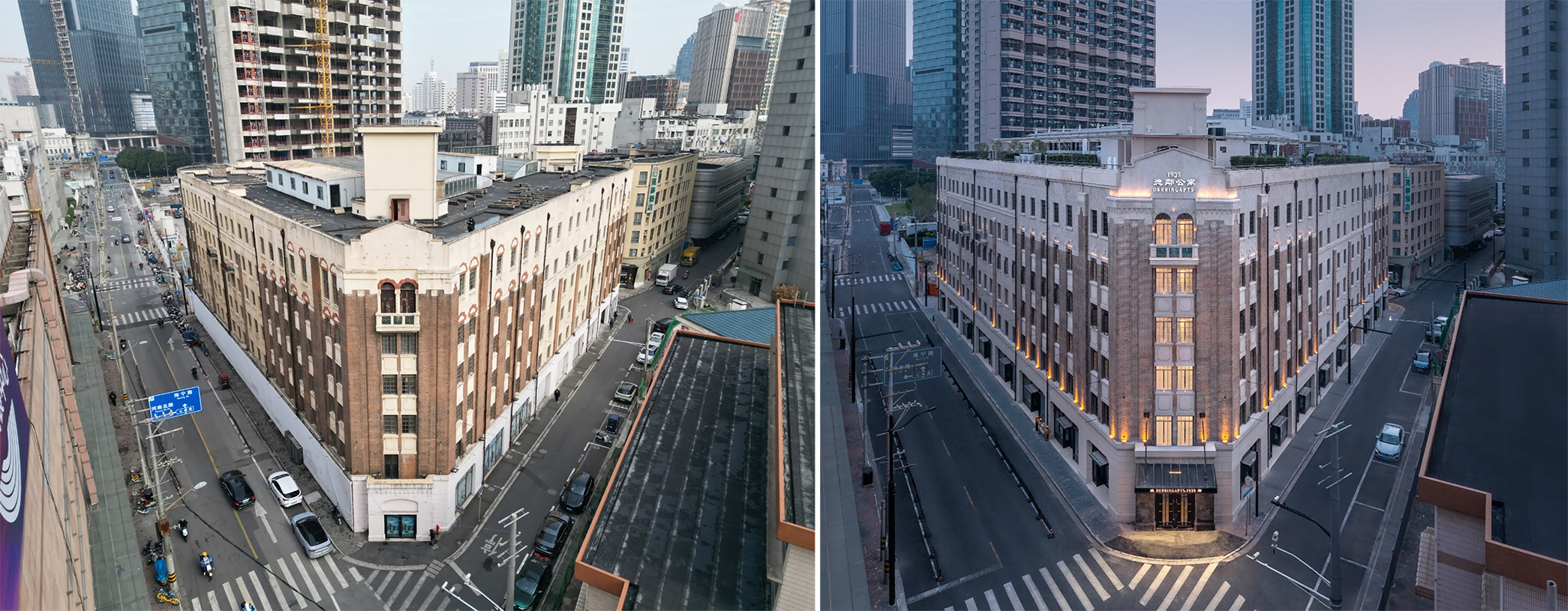
1.真实性原则:优秀历史建筑的修缮和保护须还原历史建筑的原有历史面貌。根据对四川北路71号2幢的勘察,德邻公寓在信谊药厂期间进行了加层加建,此部分仍是该建筑重要历史信息,在后期商城不正当改造中破坏了历史信息和真实性。基于价值评估,保护其重要历史价值的同时,也应重视其艺术价值的恢复。此次修缮中将基于现状和历史信息进行修缮。
2.完整性原则:优秀历史建筑的修缮和保护必须整体保护各种历史信息和恢复历史,尽可能多地保留各时期的有价值的遗存,此次修缮将对历次改建、修缮的重要历史信息采取完整保留。
3.保护为主合理利用:对优秀历史建筑的保护性整治应贯彻“保护为主、抢救第一、合理利用、加强管理”的工作方针。在保护工作不断开展和保护面不断扩大的情况下,我们要探索一种将历史建筑的保护利用融入现代社会发展的保护模式,充分发挥历史建筑的社会价值和经济价值。
4.少干扰性原则:我们在修缮优秀历史建筑时,对原有的历史信息尽可能不干扰或者少干扰。要求后期内部软装与展陈尽可能不对修缮后的建筑造成不可逆的破坏。
5.可识别性与可逆原则:优秀历史建筑历经沧桑,多有改变,有的原状可以识别复原,有些难以考证复原,因此保护抢救历史信息需要的干预措施和添加的其他各类保护措施须与原物有适当区别,以便认识水平的提高与科技的进步优化保护措施。
Five Major Restoration Principles:
1. Principle of Authenticity: The restoration and protection of excellent historic buildings must restore their original historical appearance. Based on the survey of Building No.2 at 71 Sichuan North Road, Derring Apartments underwent additions and story increases during its use by Xinyi Pharmaceutical Factory. These additions remain important historical information of the building, although improper conversions during its later use as a shopping mall damaged historical information and authenticity. Based on value assessment, while protecting its significant historical value, the restoration of its artistic value is also emphasized. This restoration will be carried out based on the current condition and historical information.
2. Principle of Integrity: The restoration and protection of excellent historic buildings must holistically protect various historical information and restore history, preserving valuable remains from different periods as much as possible. This restoration will completely retain important historical information from all previous modifications and repairs.
3. Protection as Primary, Rational Utilization: The protective renovation of excellent historic buildings should implement the working principle of "protection as primary, rescue first, rational utilization, strengthened management." As protection work continuously develops and its scope expands, we must explore a protection model that integrates the conservation and utilization of historic buildings into modern social development, fully realizing their social and economic value.
4. Principle of Minimal Intervention: When restoring excellent historic buildings, we should avoid or minimize interference with the original historical information as much as possible. Subsequent interior soft furnishings and exhibitions should avoid causing irreversible damage to the restored building.
5. Principles of Distinguishability and Reversibility: Excellent historic buildings have undergone many changes over time. Some original states can be identified and restored, while others are difficult to verify and recover. Therefore, necessary interventions for protecting and rescuing historical information, and other added protective measures, must be appropriately distinguishable from the original fabric. This allows for future optimization of protection measures as understanding improves and technology advances.
©颜洪熙 Photo by Yan Hongxi
(历史照片-修缮前实景图-修缮后实景图对比)
(修缮前实景图-修缮后实景图对比)
03
匠心外修 重现原貌
External Craftsmanship, Restoring Original Appearance
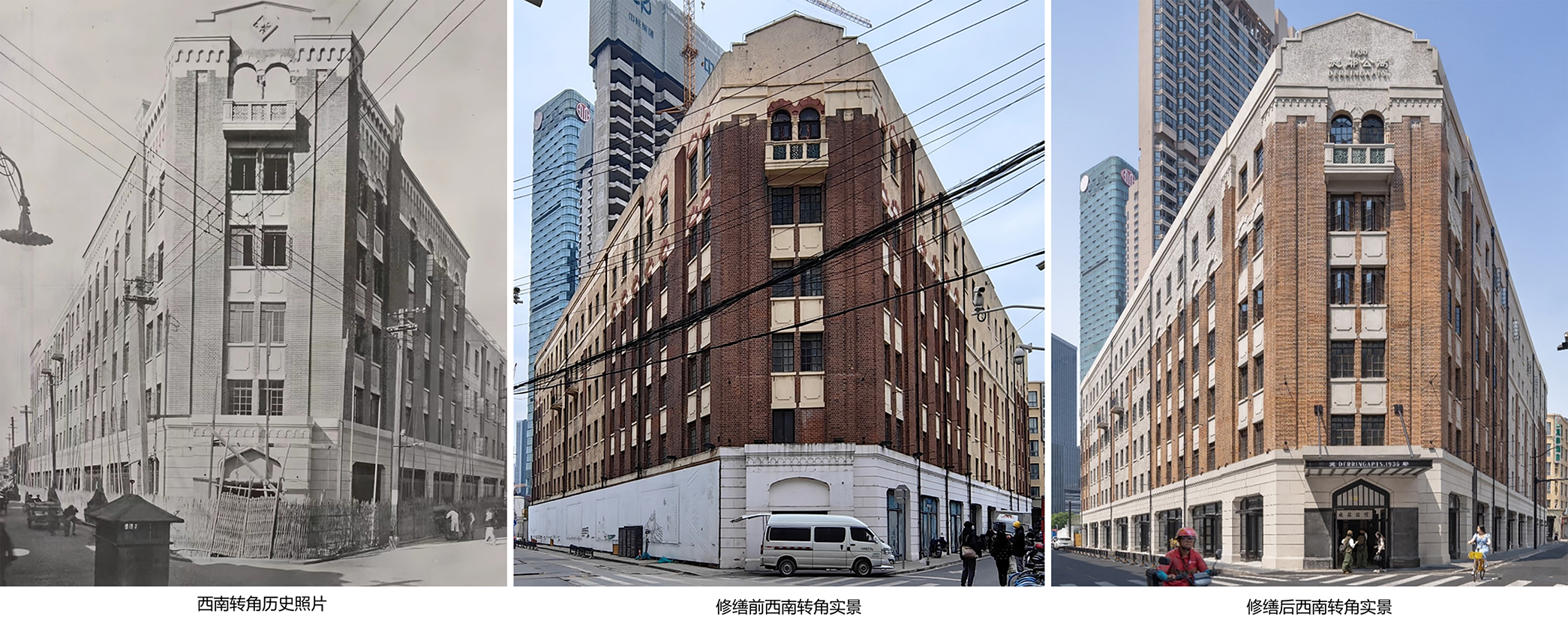
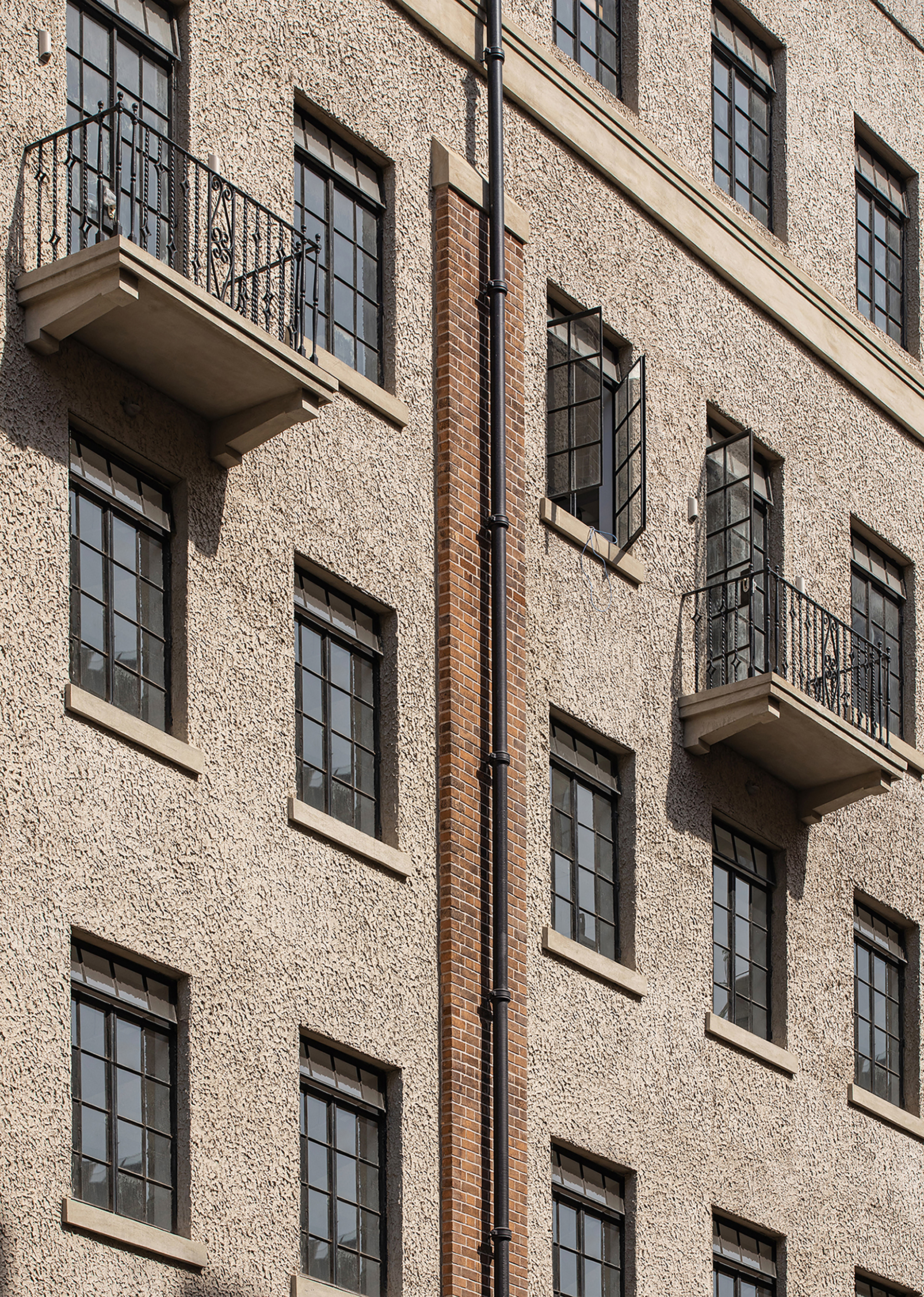
外部修缮主要围绕饰面、钢窗、特殊花饰、外挑阳台、入口与门洞等展开,设计以“尊重历史、还原历史、保护历史、修旧如旧”为准则,通过历史图纸考证、历史照片考证、现场查勘等手段,采用原样式、原材质、原工艺,还原这座折衷主义风格建筑的历史原貌。
External restoration primarily focuses on the facade finishes, steel windows, special decorative elements, projecting balconies, entrances, and door openings. Guided by the principle of "respecting history, restoring history, protecting history, repairing the old to look old," the design utilizes historical drawings, historical photographs, and on-site surveys, employing original styles, materials, and craftsmanship to restore the historical appearance of this Eclectic-style building.
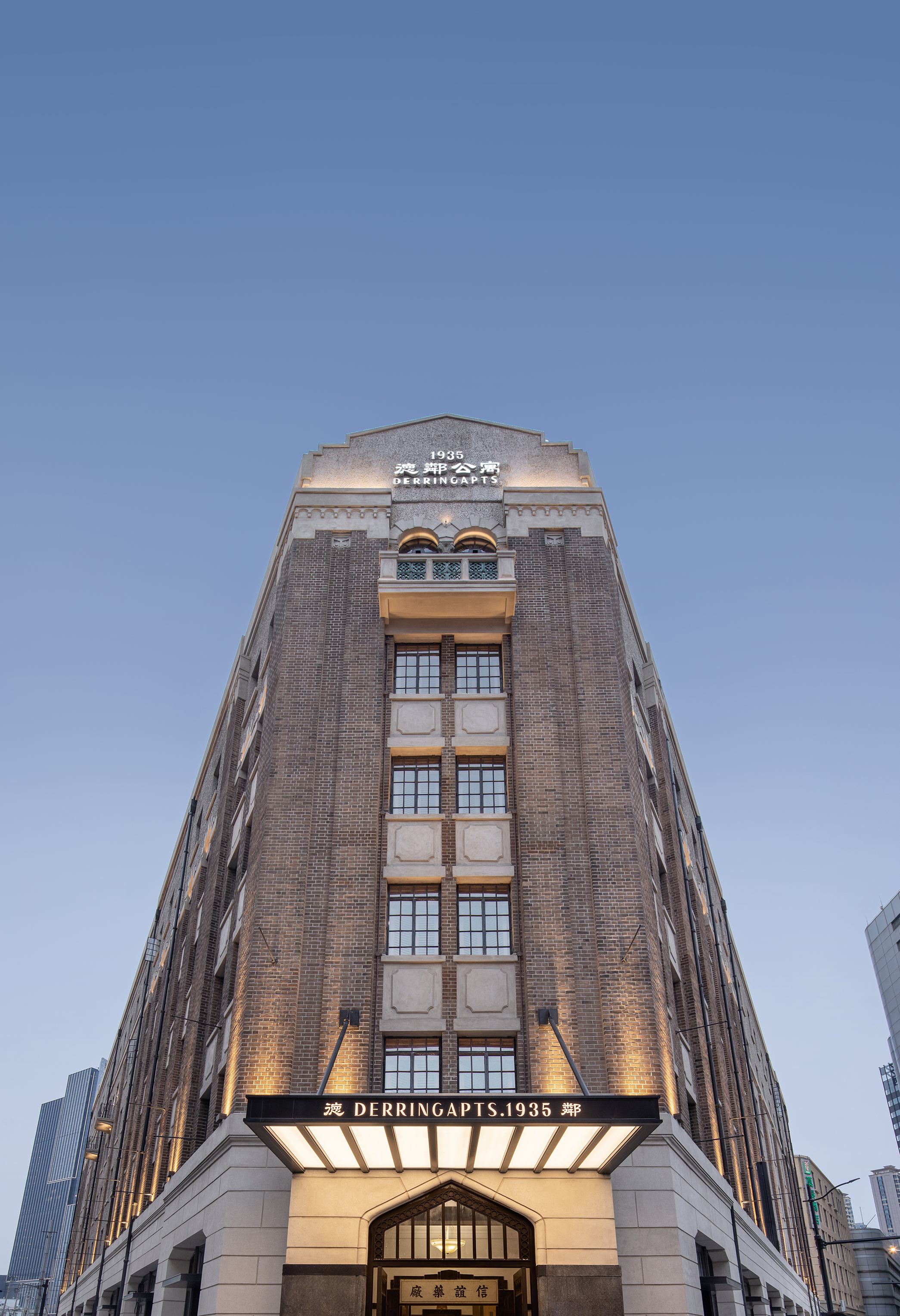
©颜洪熙 Photo by Yan Hongxi
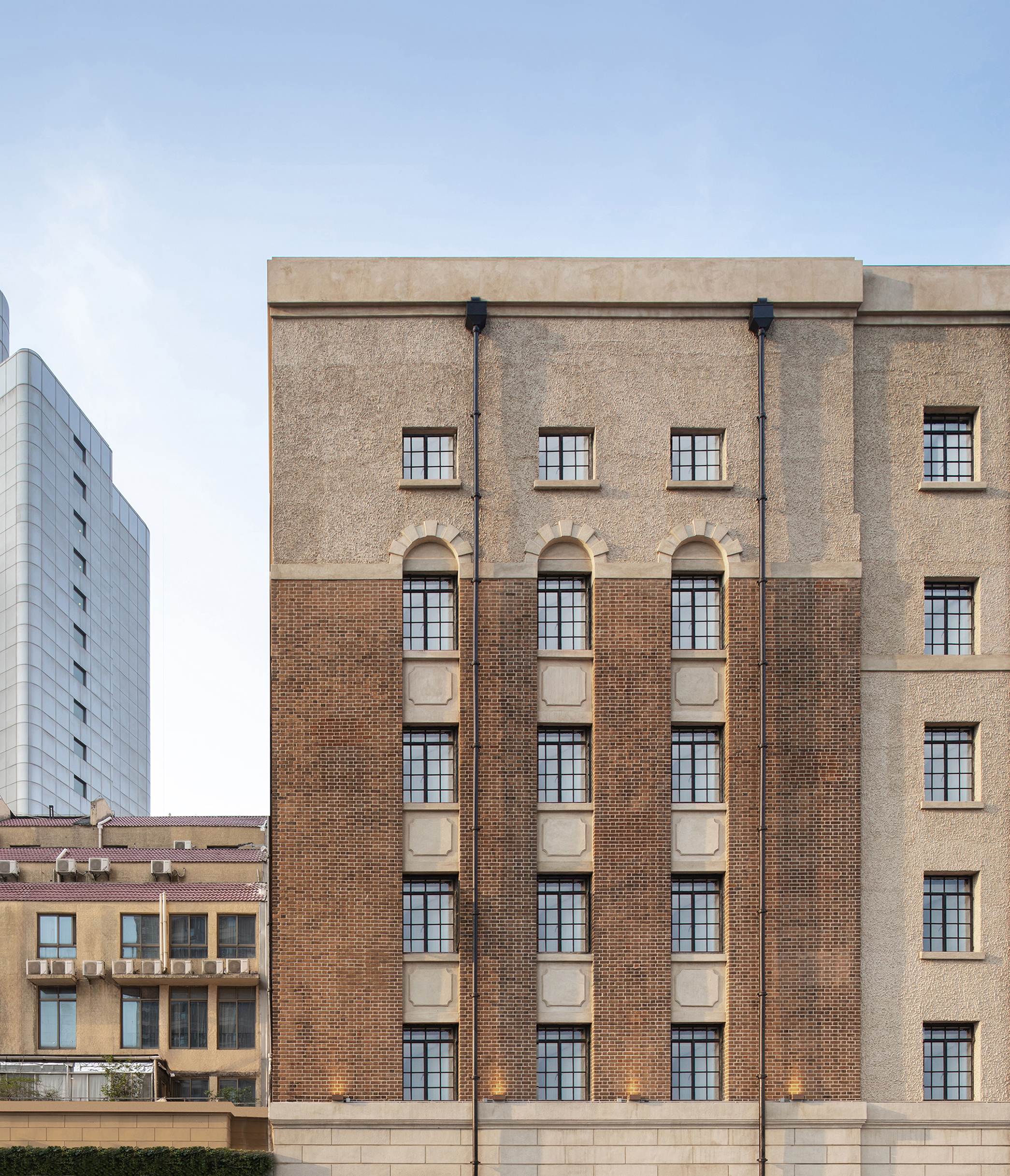
©颜洪熙 Photo by Yan Hongxi
饰面与钢窗修缮
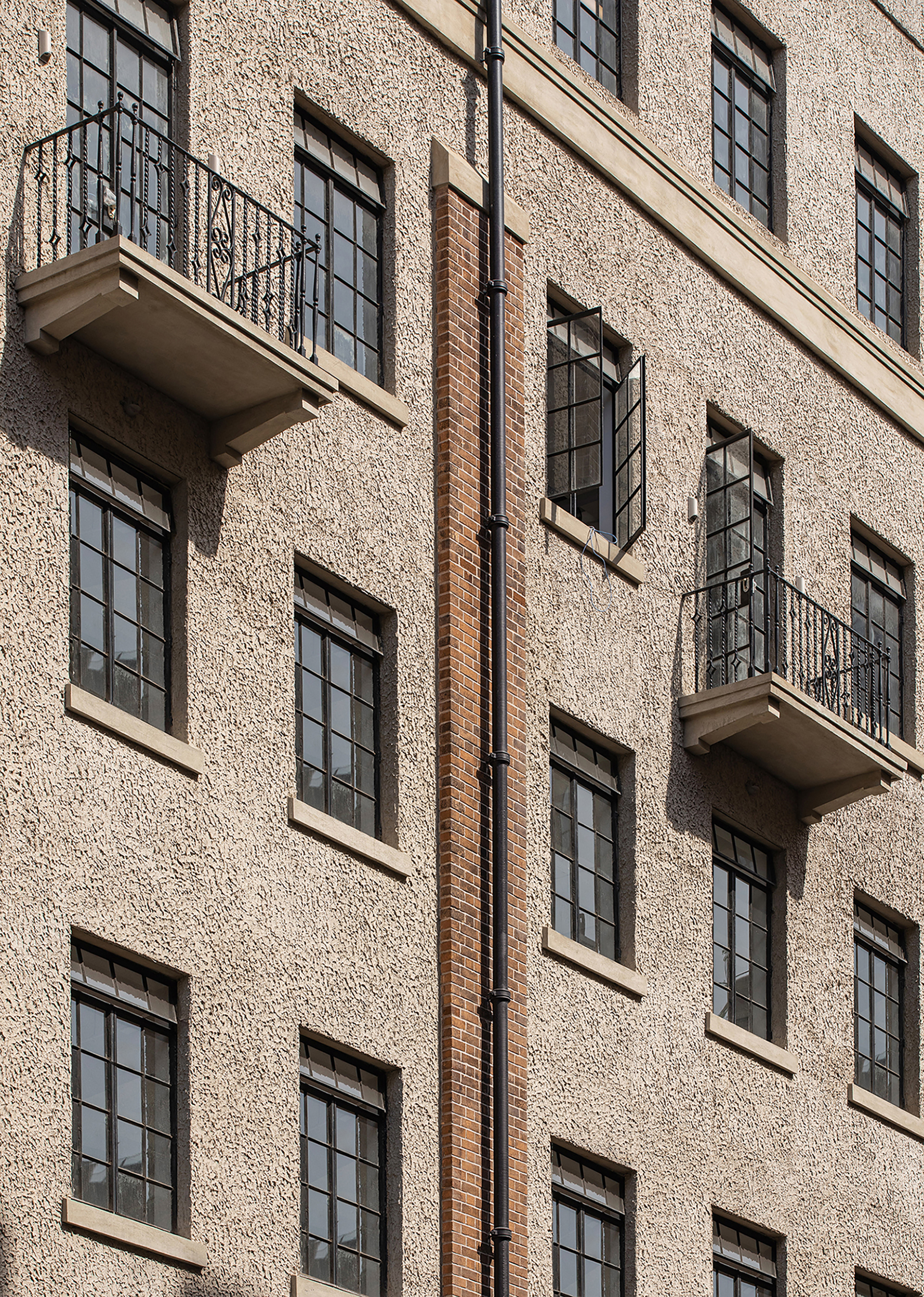
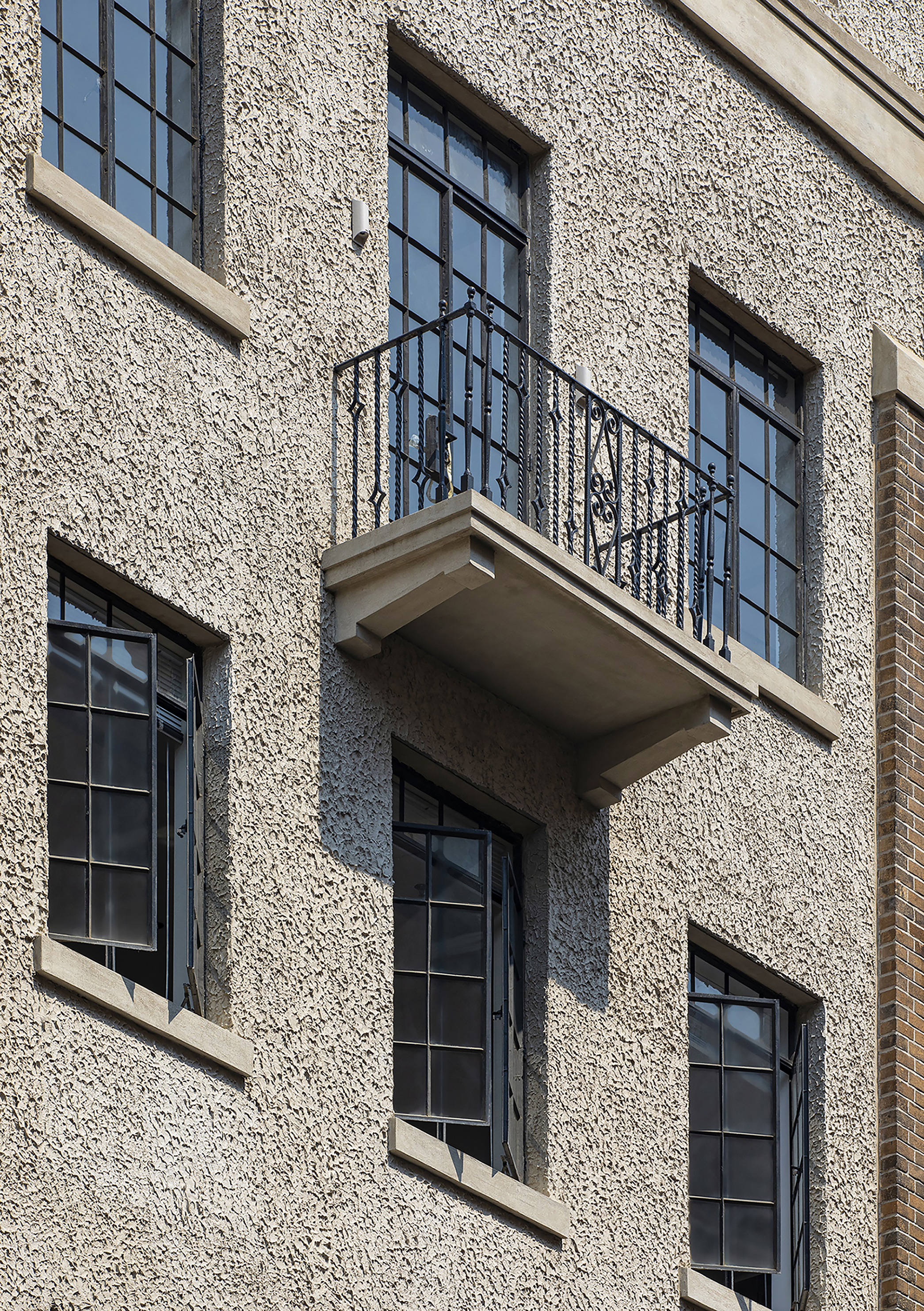
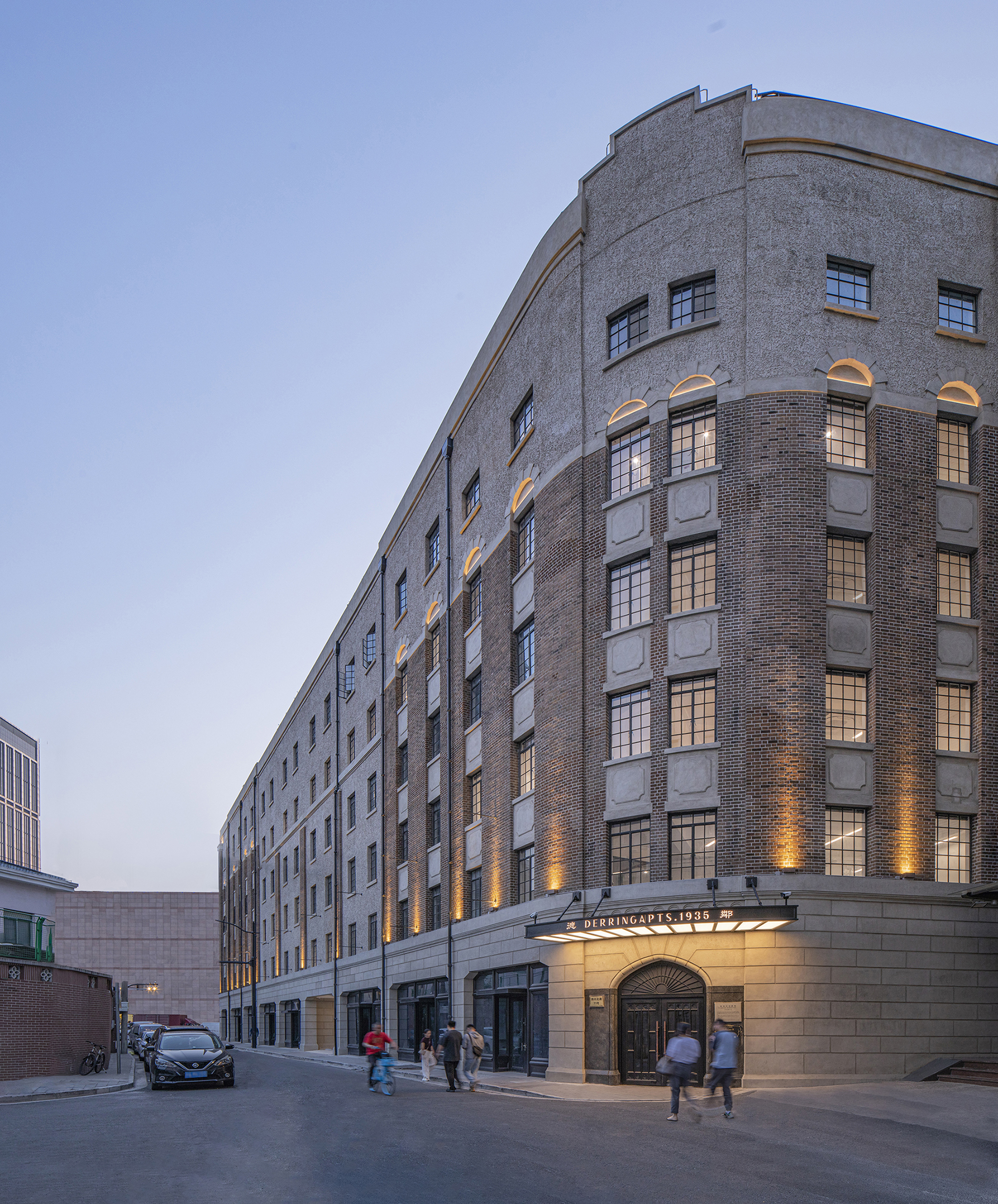
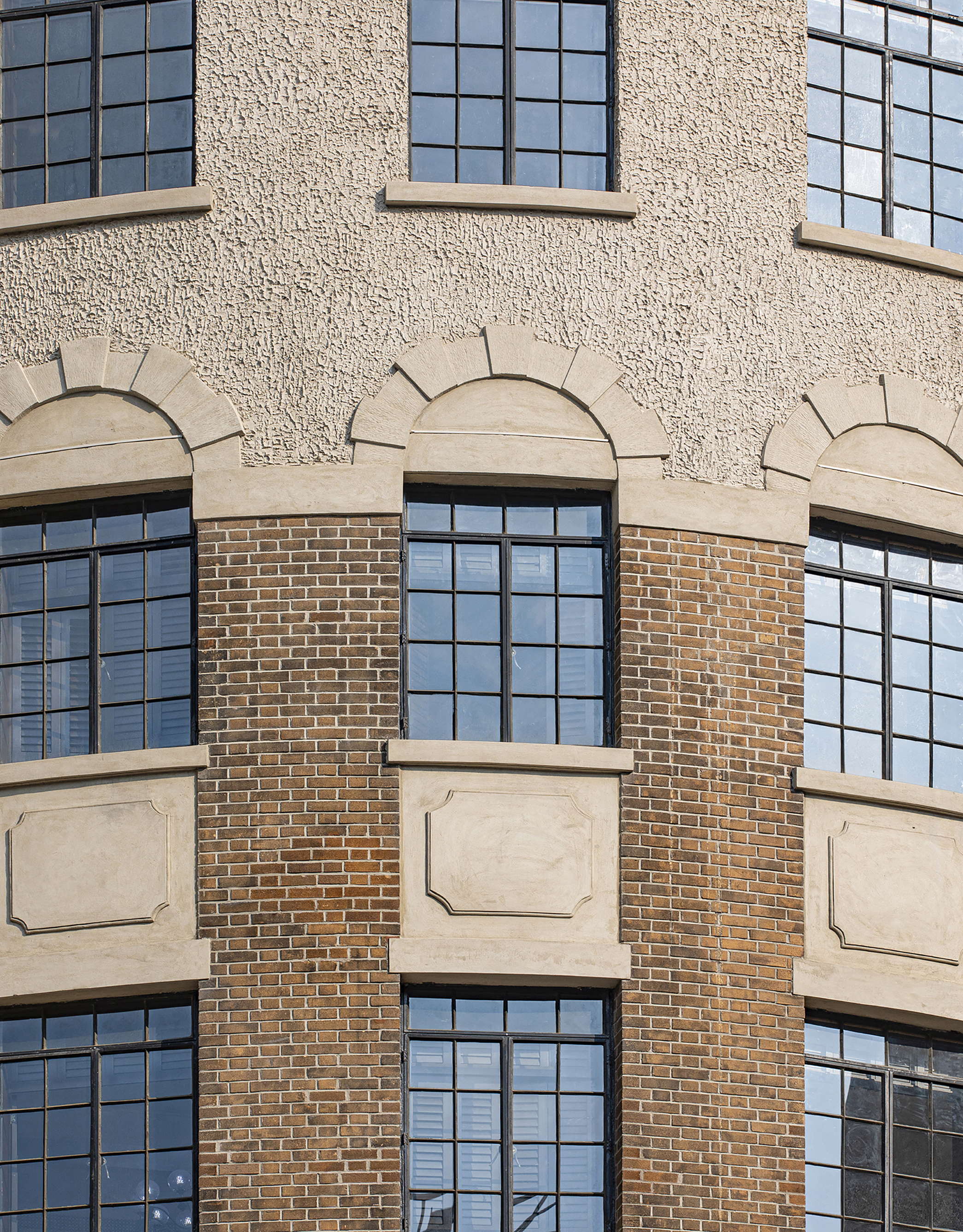
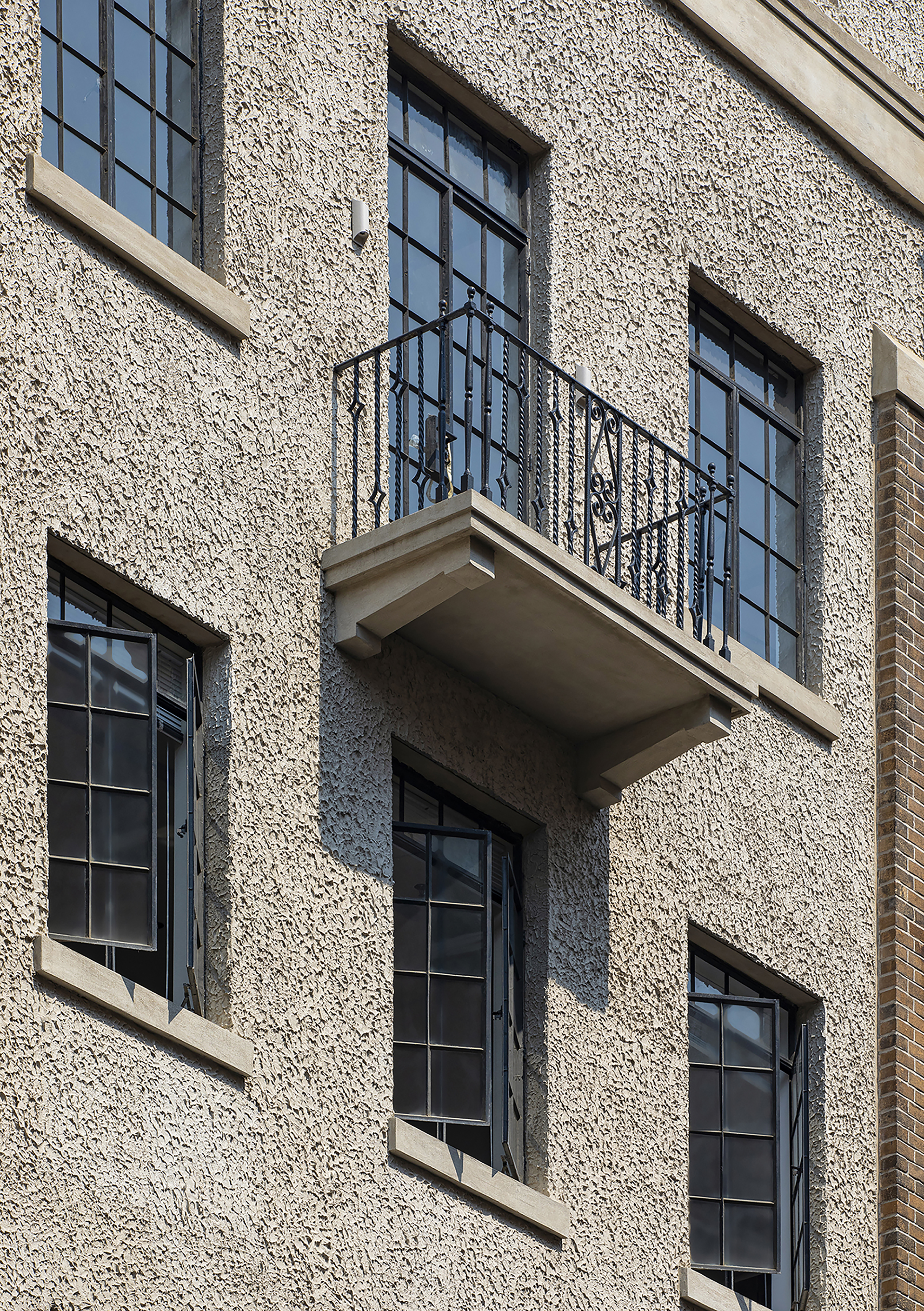
原始设计饰面由泰山面砖、水泥拉毛、斩假石为主要构成,此次通过水泥砂浆的原工艺、原材质来恢复拉毛饰面与斩假石饰面的设计原貌。泰山面砖则通过清洗、修补、还原勾缝本真颜色等方式修缮复原。钢窗主要通过除锈、破损修缮,重漆,玻璃以及五金件修缮,按照原有样式钢窗定制更换等实现修缮复原。此次拉毛饰面修缮,开创了新时期历史建筑修缮保护工程修复拉毛墙面的新样板。
Facade Finishes and Steel Window Restoration
The original design finishes primarily consisted of Taishan bricks, cement stucco, and artificial stone. This project uses original techniques and materials like cement mortar to restore the original appearance of the stucco and artificial stone finishes. Taishan bricks are restored through cleaning, repair, and restoring the authentic color of the pointing. Steel windows are mainly restored through rust removal, repair of damage, repainting, glass and hardware repair, and custom replacement according to the original style. The stucco finish restoration in this project sets a new benchmark for restoring stucco walls in historic building conservation projects in the new era.
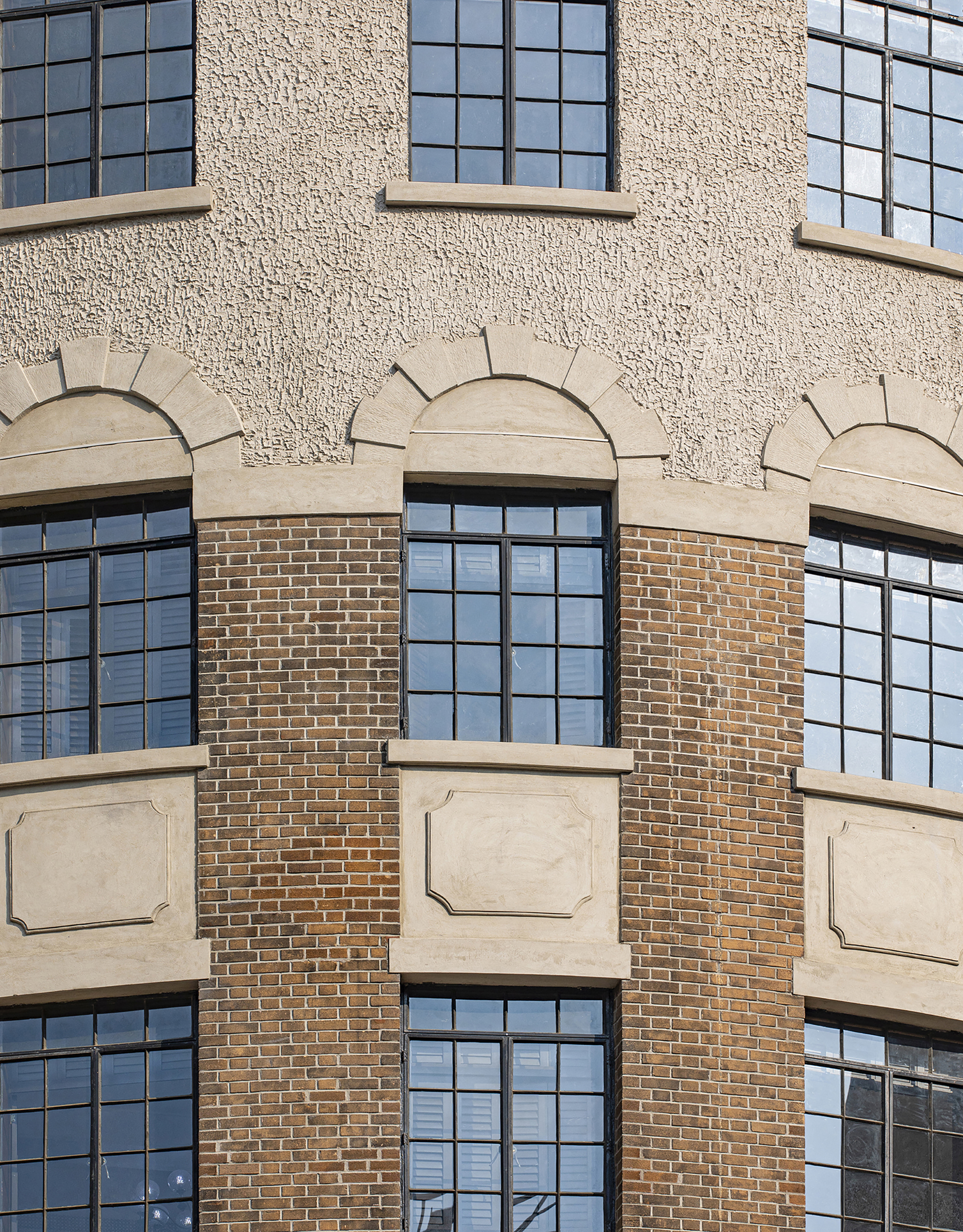
©颜洪熙 Photo by Yan Hongxi
特殊花饰与外挑阳台修缮
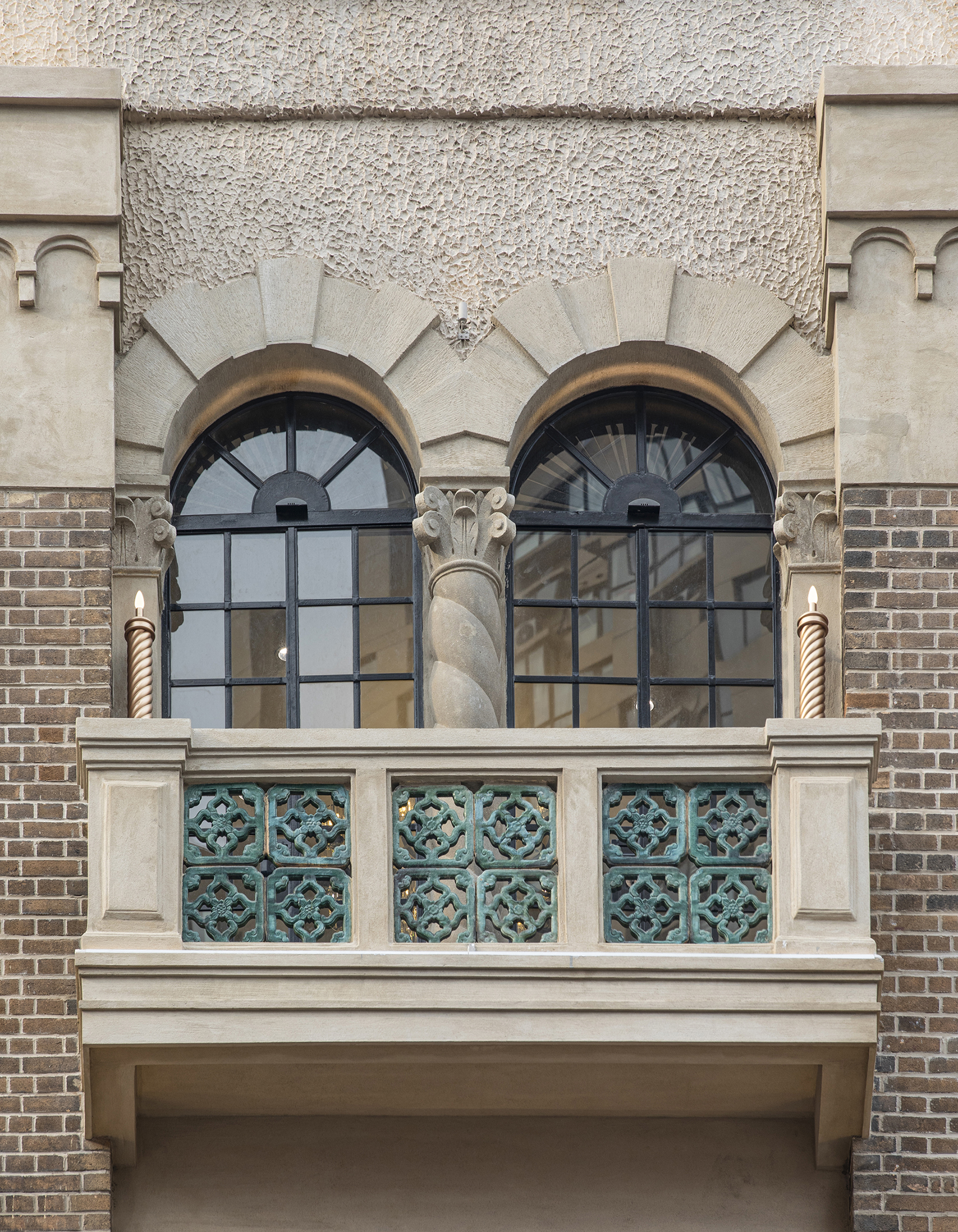
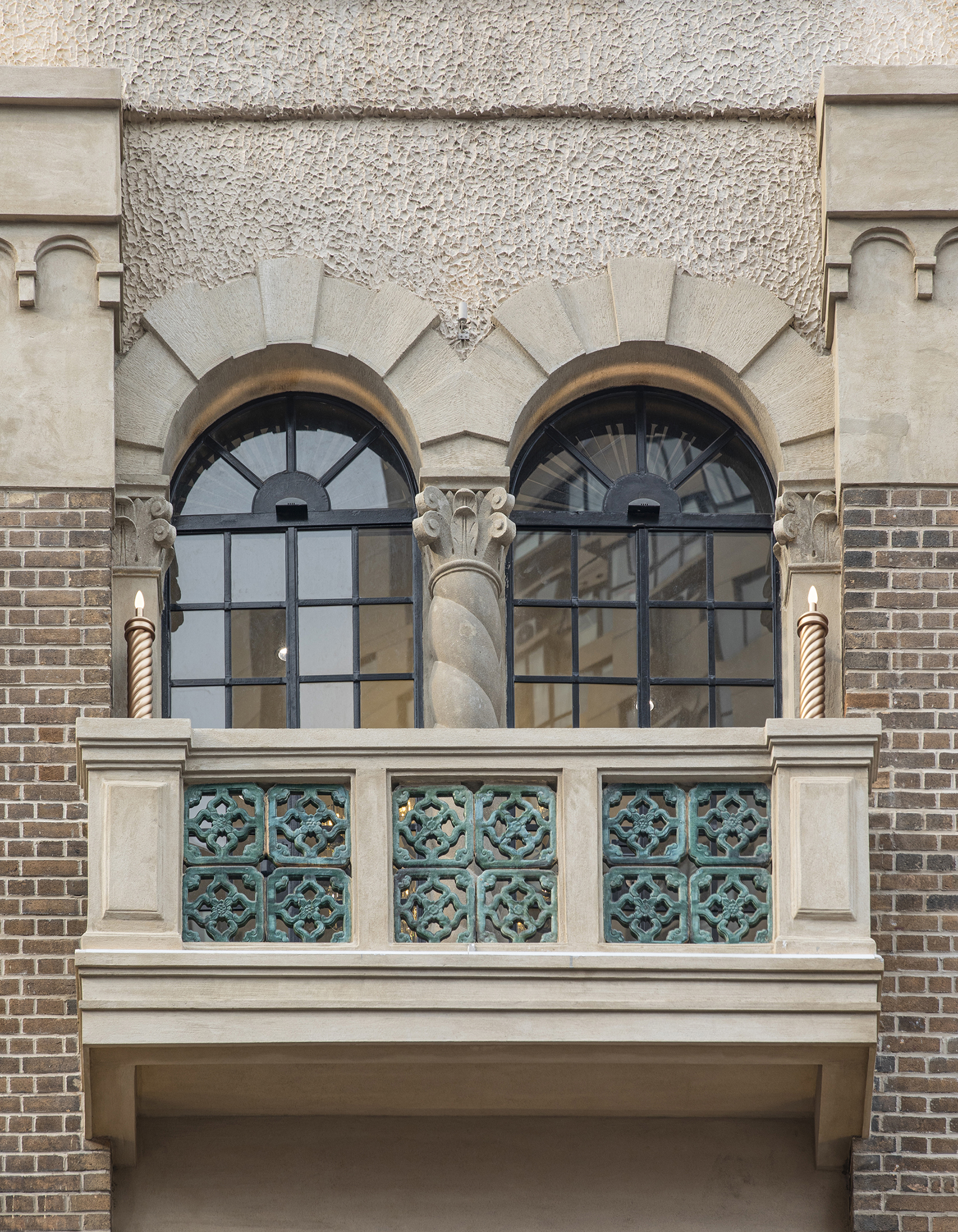
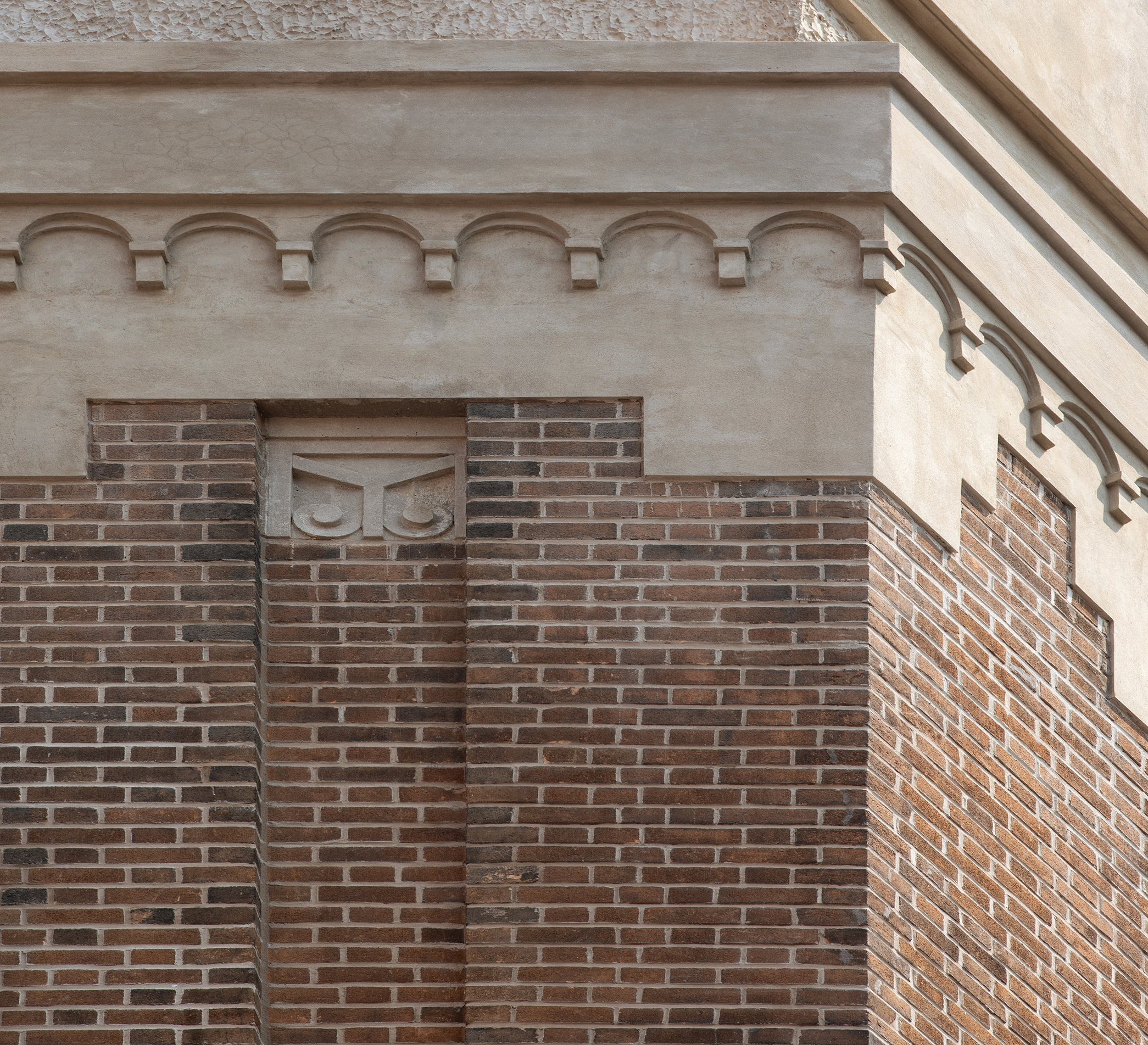
对于原始设计的门窗顶花饰拱券、窗下花饰、壁柱柱头花饰等特殊花饰的复原,设计首先考证其均由水泥砂浆筑成,且门窗顶花饰拱券呈斩假石饰面。经过去除这些特殊花饰修缮前的非设计或原竣工材质,清理基层后重新打底并精细粉抹水泥砂浆,按原设计样式精准复原。而对于外阳台的修缮以保养修护为主,对西南转角外挑阳台的西班牙风格螺旋柱、镂空琉璃方砖栏板等进行清洁、修补、同材质替换,对西立面铸铁栏杆重刷油漆等。
Special Decorative Elements and Projecting Balcony Restoration
For restoring special decorative elements like the arched lintel ornaments above doors/windows, decorative panels below windows, and pilaster capital ornaments from the original design, research confirmed they were all constructed with cement mortar, with the arched lintel ornaments featuring an artificial stone finish. The restoration involved removing non-original materials applied before restoration, cleaning the base layer, reapplying a base coat, and meticulously applying cement mortar plaster to accurately restore the original design. The restoration of the projecting balconies focuses mainly on maintenance and repair: cleaning, repairing, and replacing with the same materials for the Spanish-style spiral columns and hollow glazed brick railings of the southwest corner balcony, and repainting the wrought iron railings on the west facade.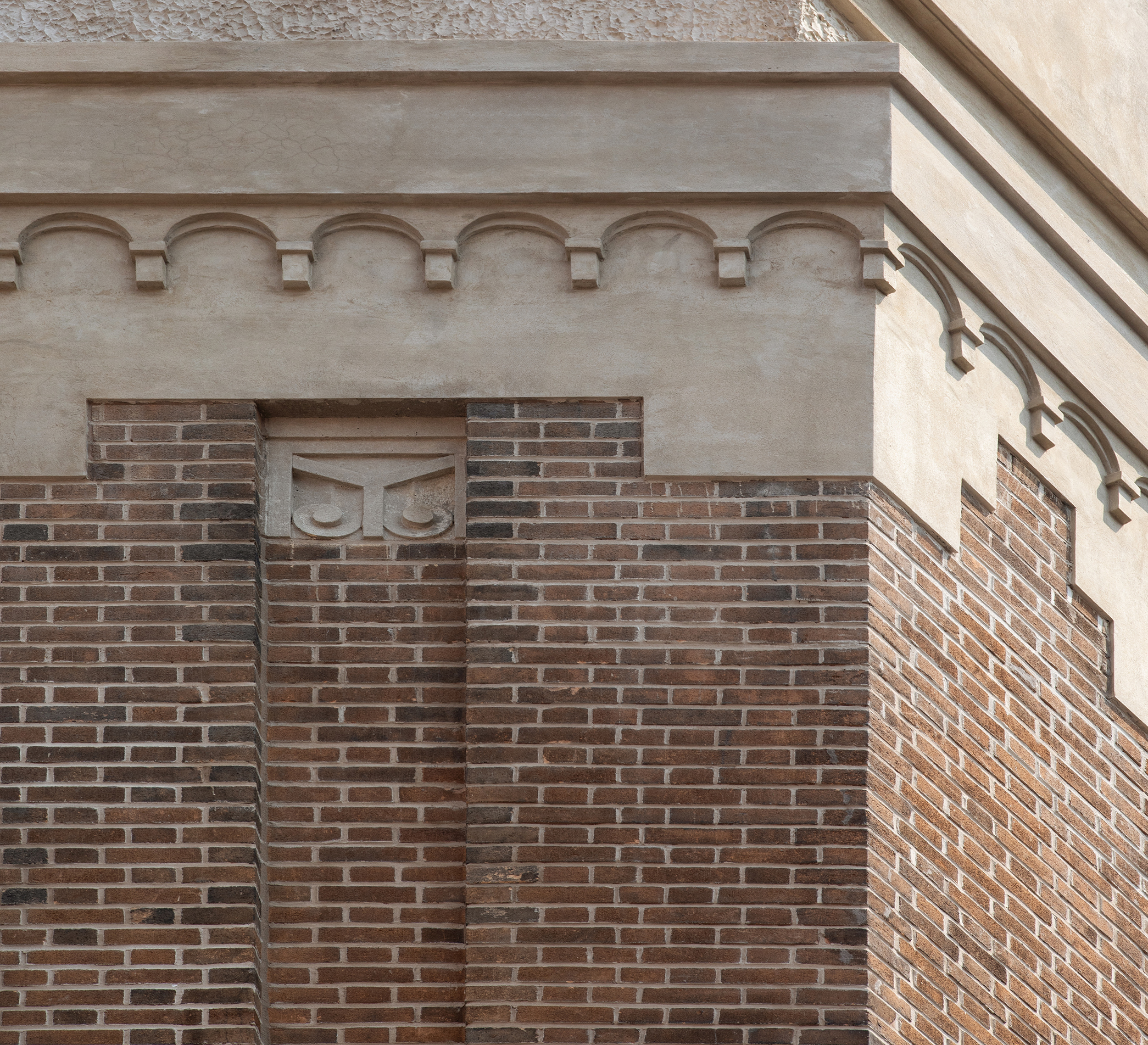
©颜洪熙 Photo by Yan Hongxi
©颜洪熙 Photo by Yan Hongxi
©颜洪熙 Photo by Yan Hongxi
©颜洪熙 Photo by Yan Hongxi
入口与门洞修缮
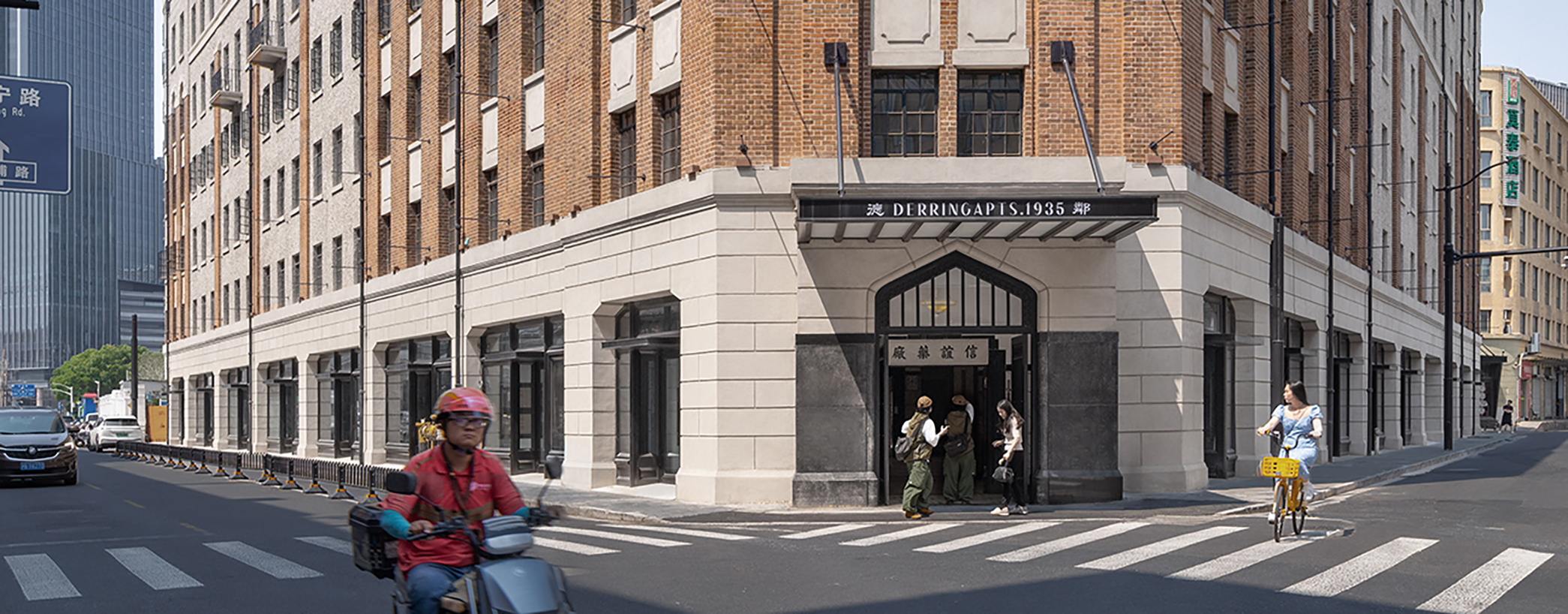
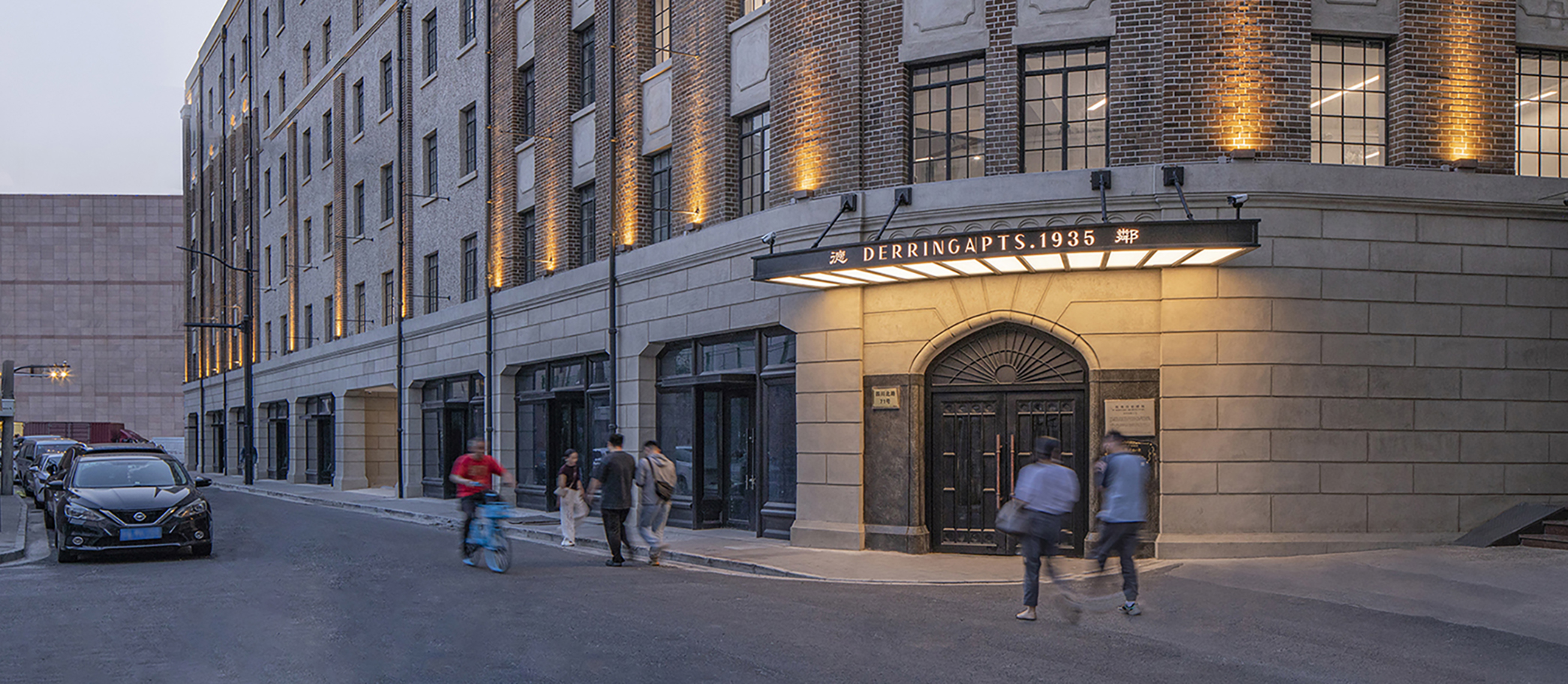
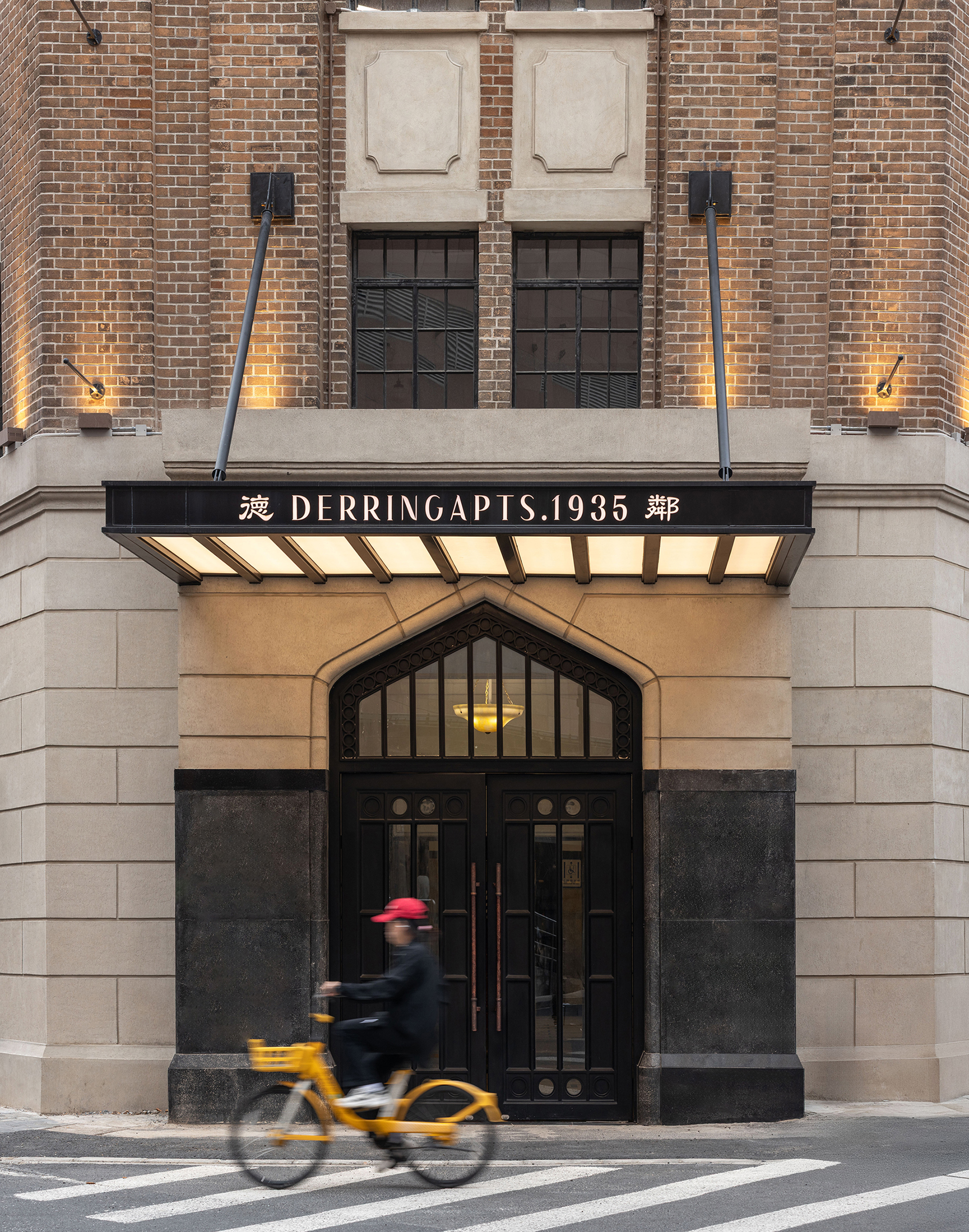
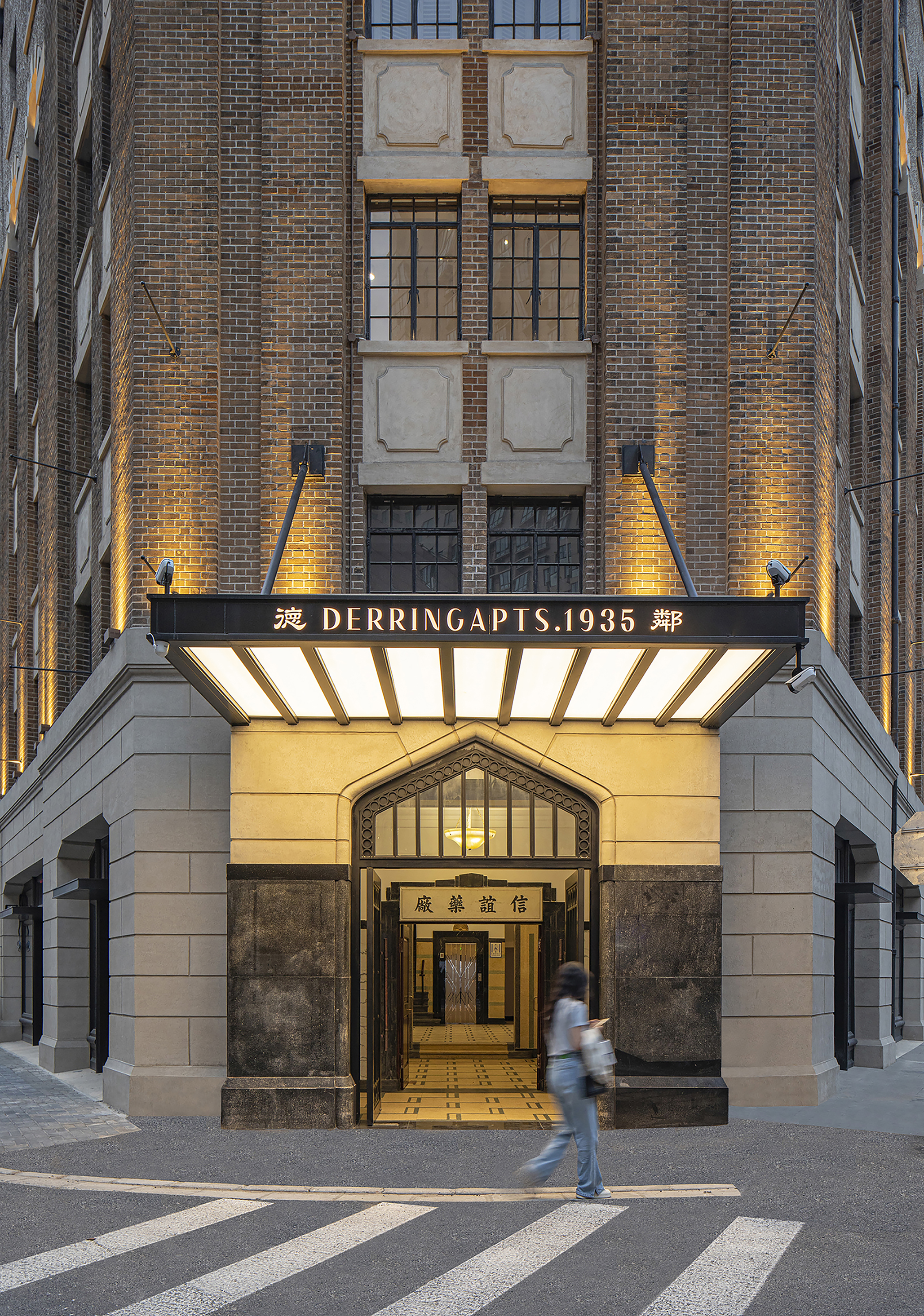
修缮前的东南入口外墙饰面为白色涂料覆盖,形制保存较为完好。西南入口外墙同为白色涂料覆盖,且门头形制与原设计图纸有出入。此次修缮主要按照原设计图纸和历史照片复原修缮东南、西南入口门头形制及外墙的斩假石饰面。同时,门头上方增加1米雨棚,满足现代使用需求及防坠落安全问题。而对于一层外立面门洞的修缮,主要按照原始设计图纸及现场空心砖后期填堵更改大小,进一步激活建筑的适用性价值,提升城市界面形象。
Entrance and Door Opening Restoration
Before restoration, the exterior wall finish of the southeast entrance was covered with white paint, but its form was relatively well-preserved. The southwest entrance exterior wall was also covered with white paint, and the form of its entrance hood differed from the original design drawings. This restoration primarily follows the original design drawings and historical photos to restore the forms of the southeast and southwest entrance hoods and the artificial stone finish on the exterior walls. Simultaneously, a 1-meter canopy was added above the entrances to meet modern usage needs and safety requirements regarding falling objects. For the restoration of the ground-floor facade door openings, the size alterations made by later infilling with hollow bricks were addressed based on the original design drawings and on-site conditions, further activating the building's adaptive reuse value and enhancing the urban streetscape image.
©颜洪熙 Photo by Yan Hongxi
©颜洪熙 Photo by Yan Hongxi
04
匠心内蕴 经典新生
Internal Craftsmanship, Classic Reborn
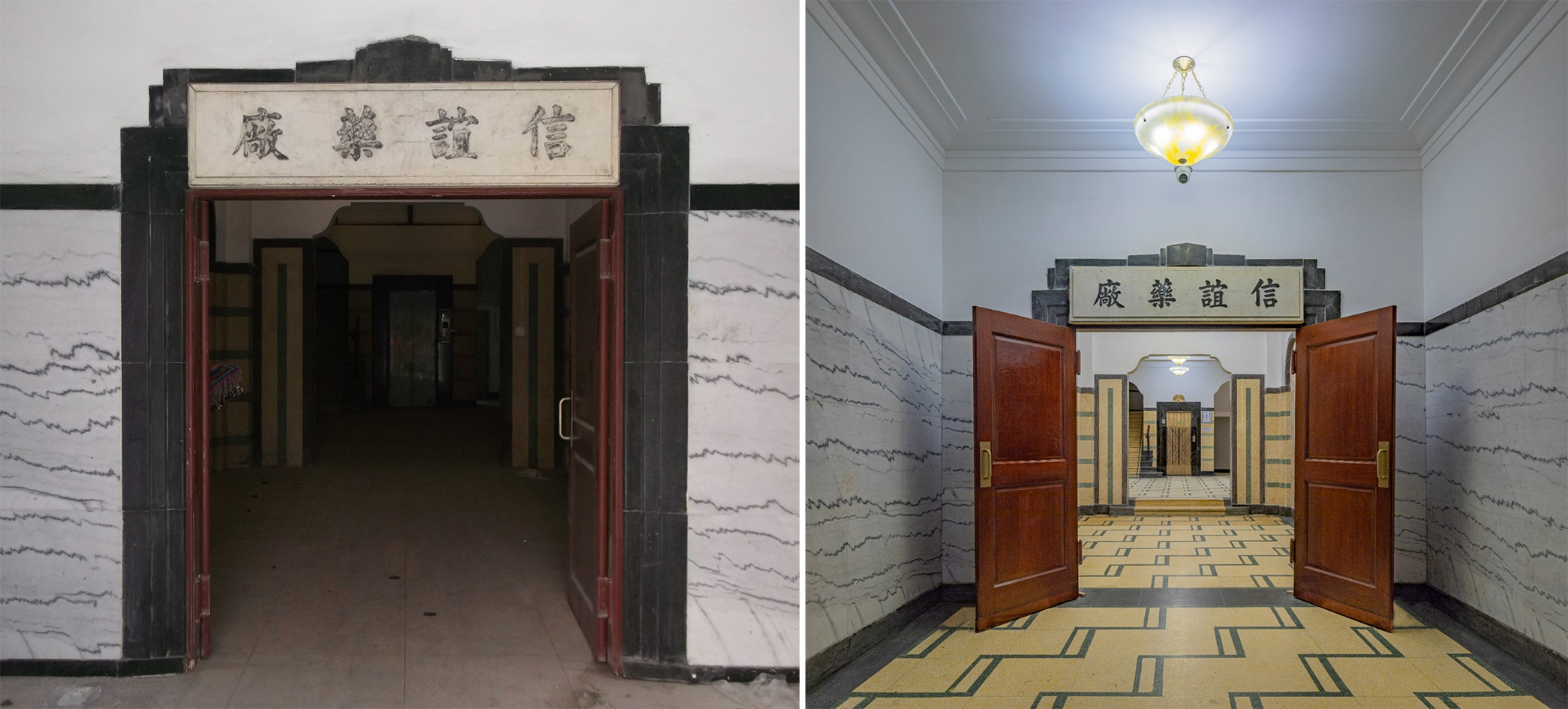
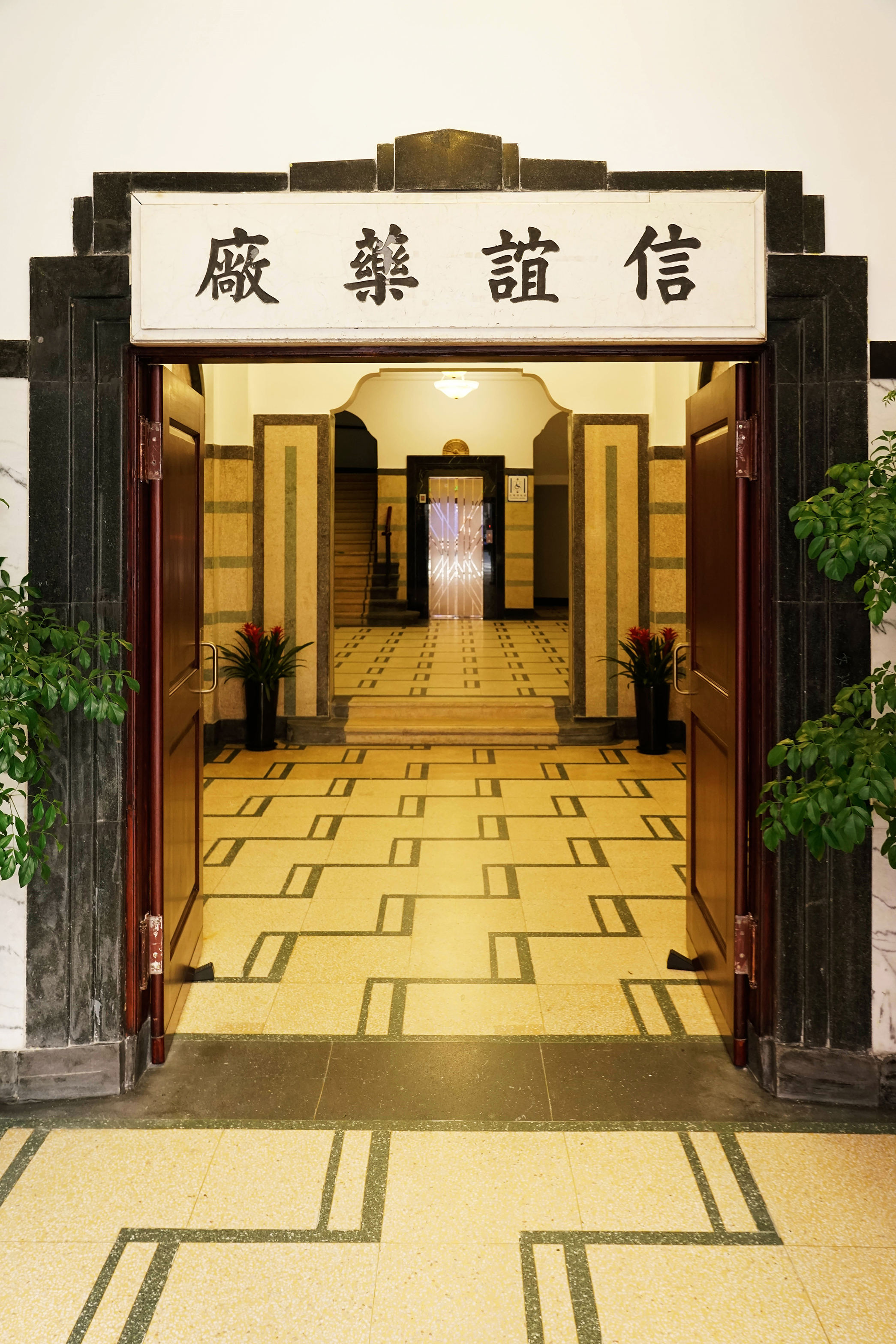
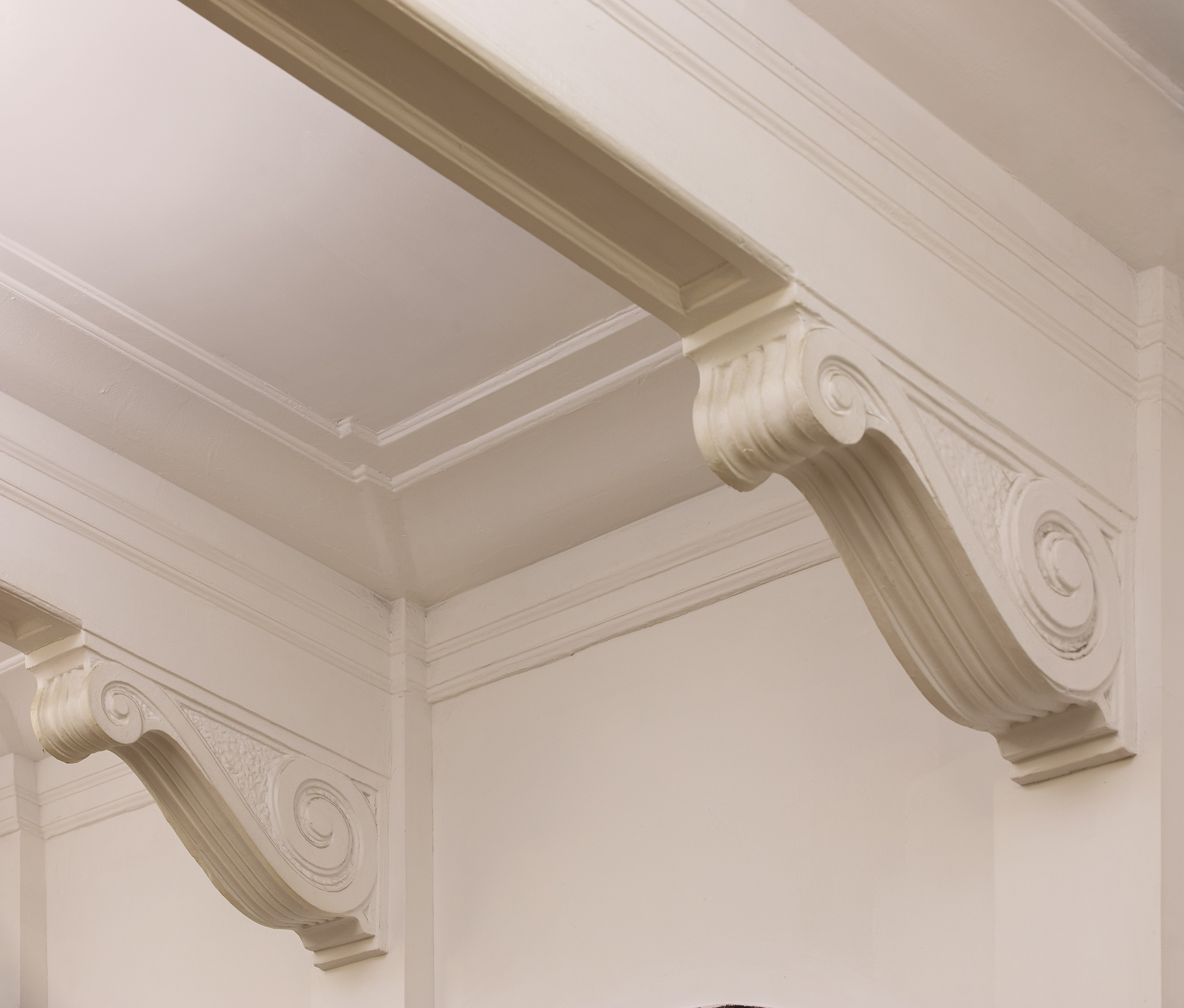
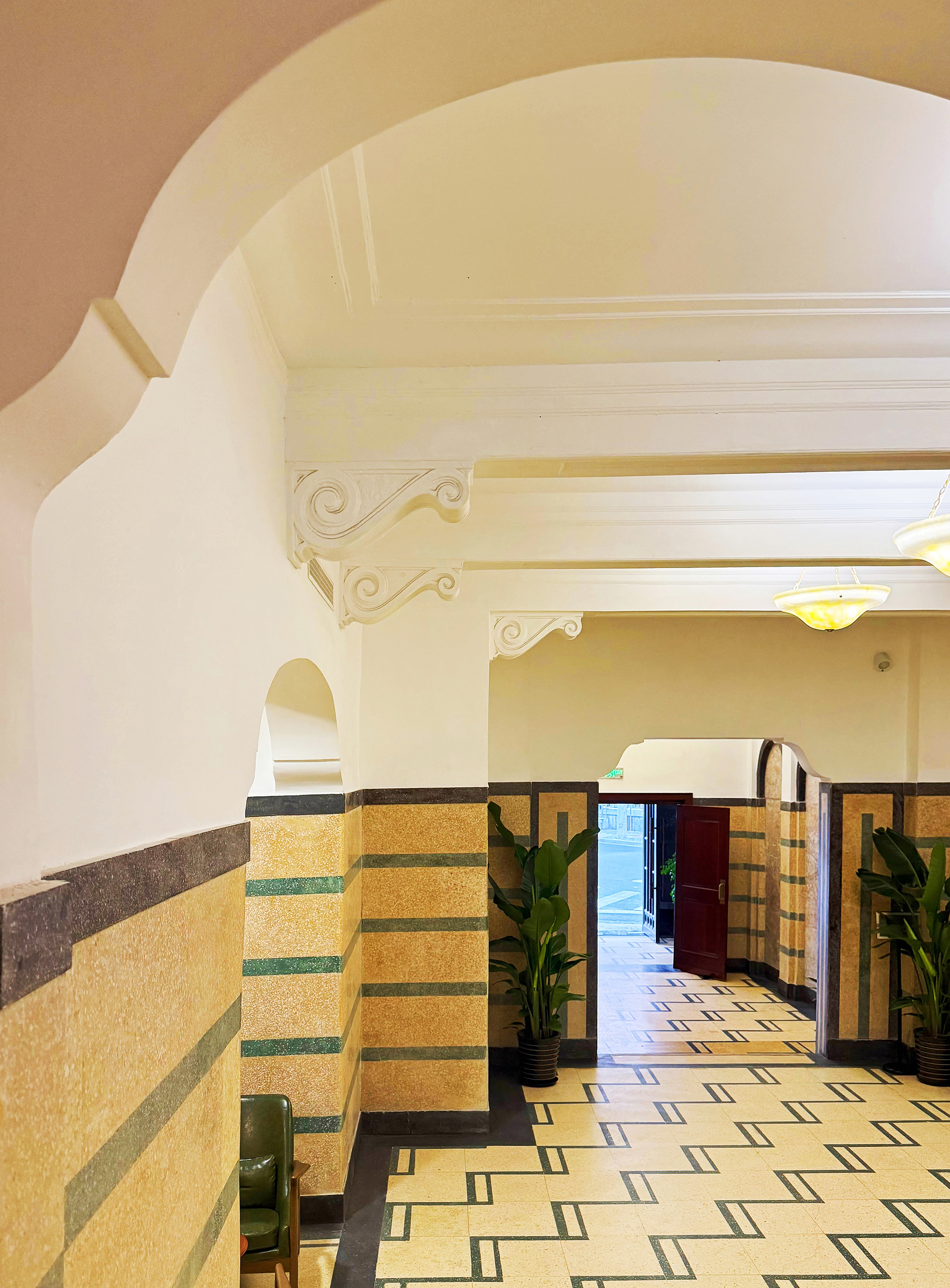
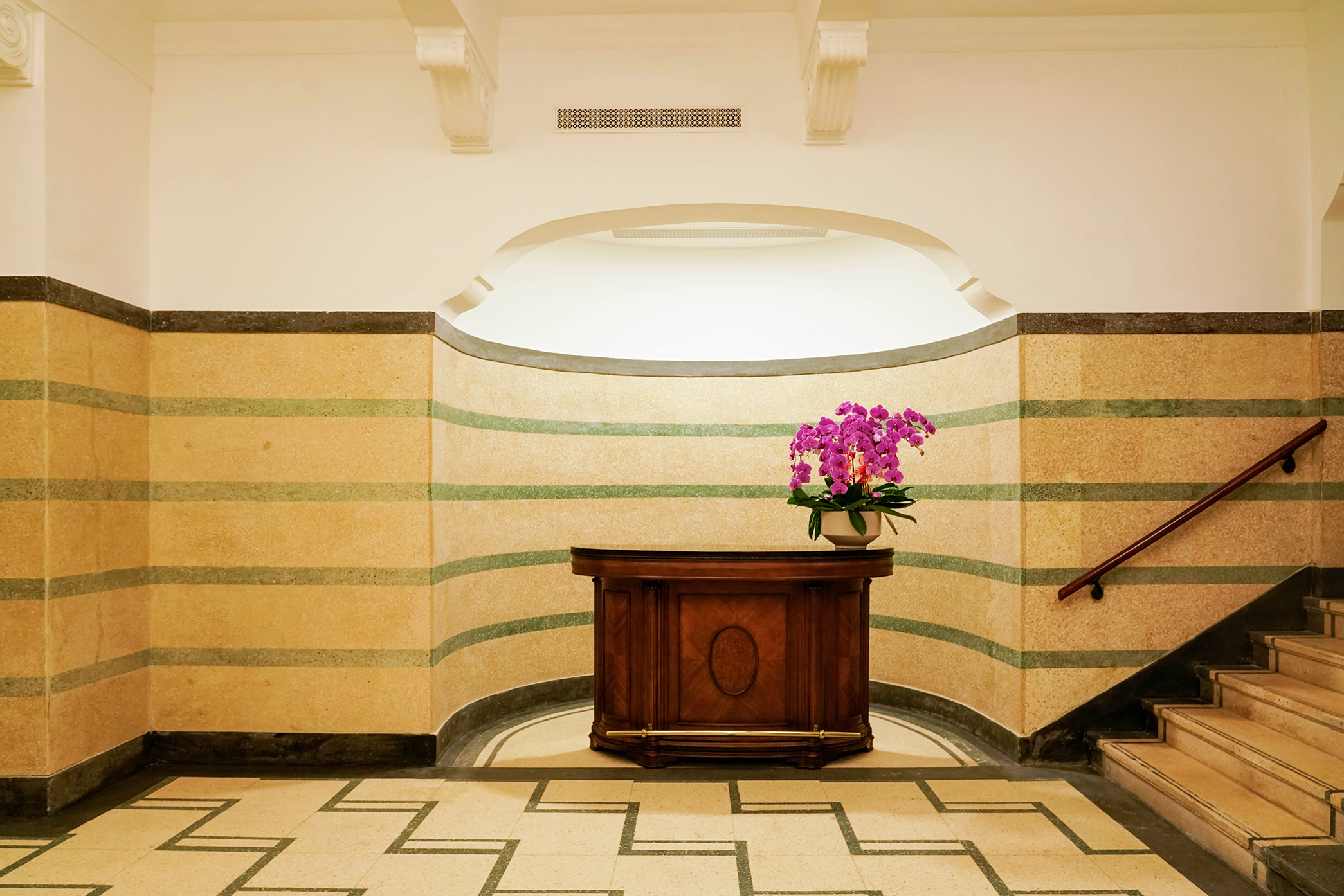
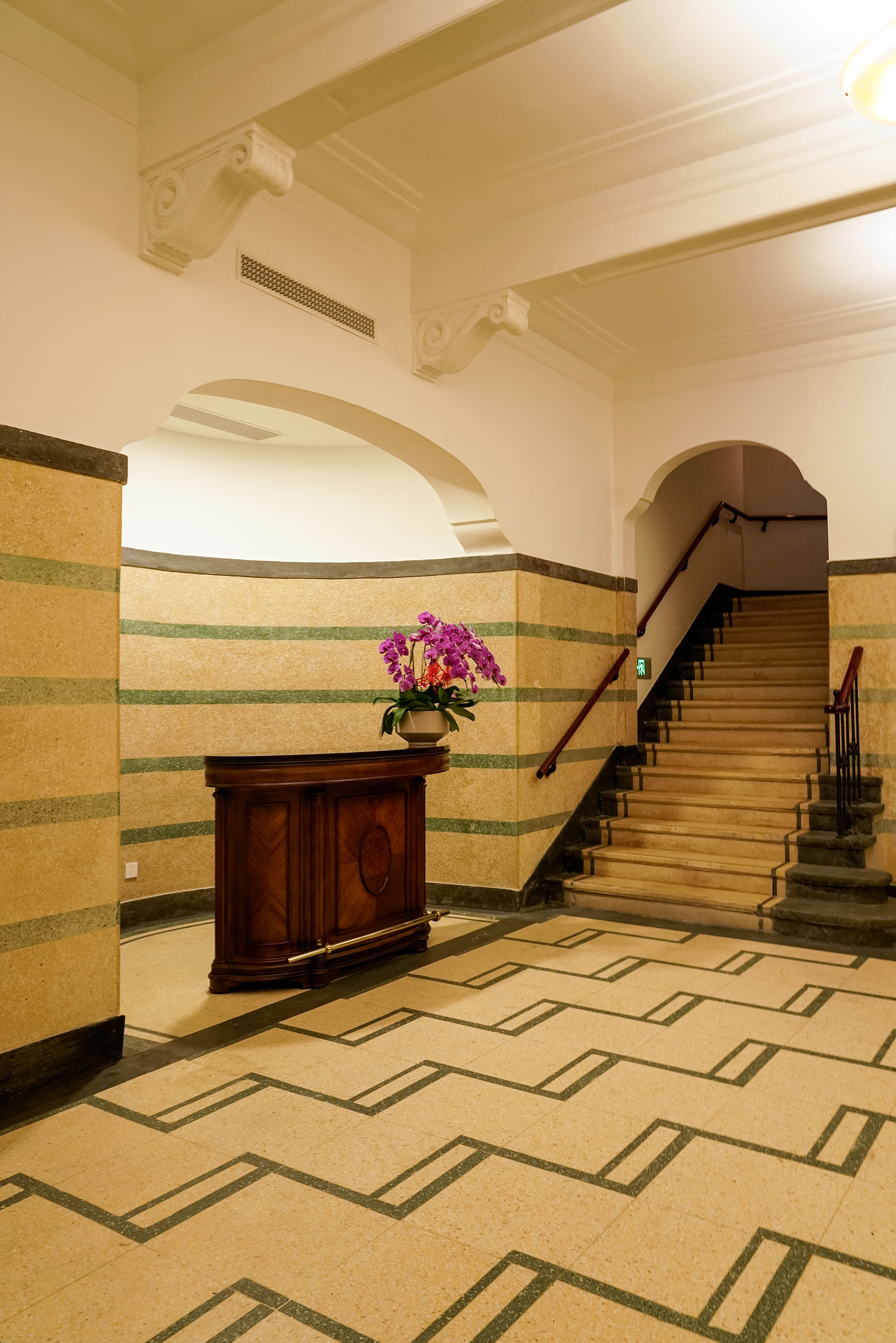
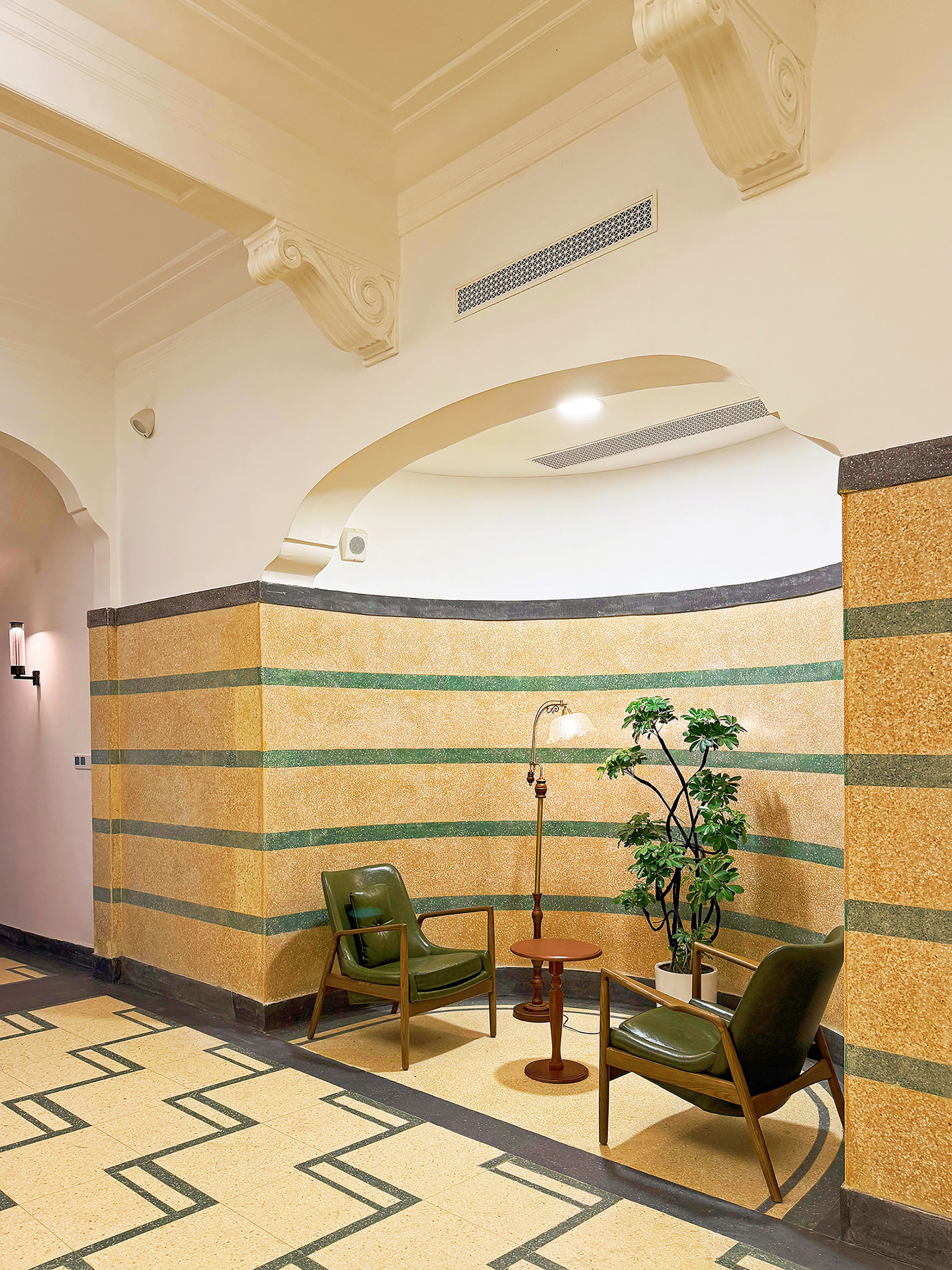
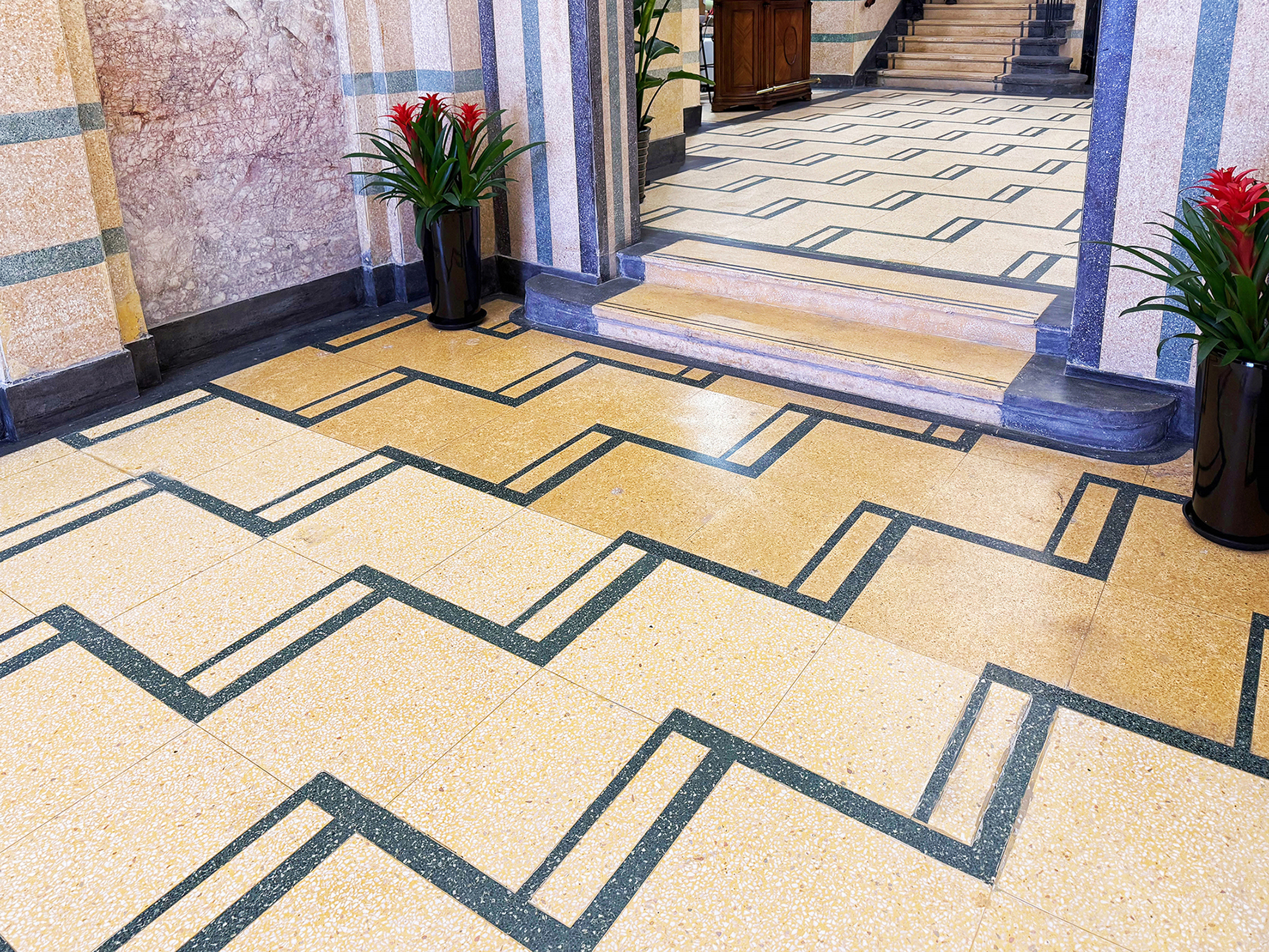
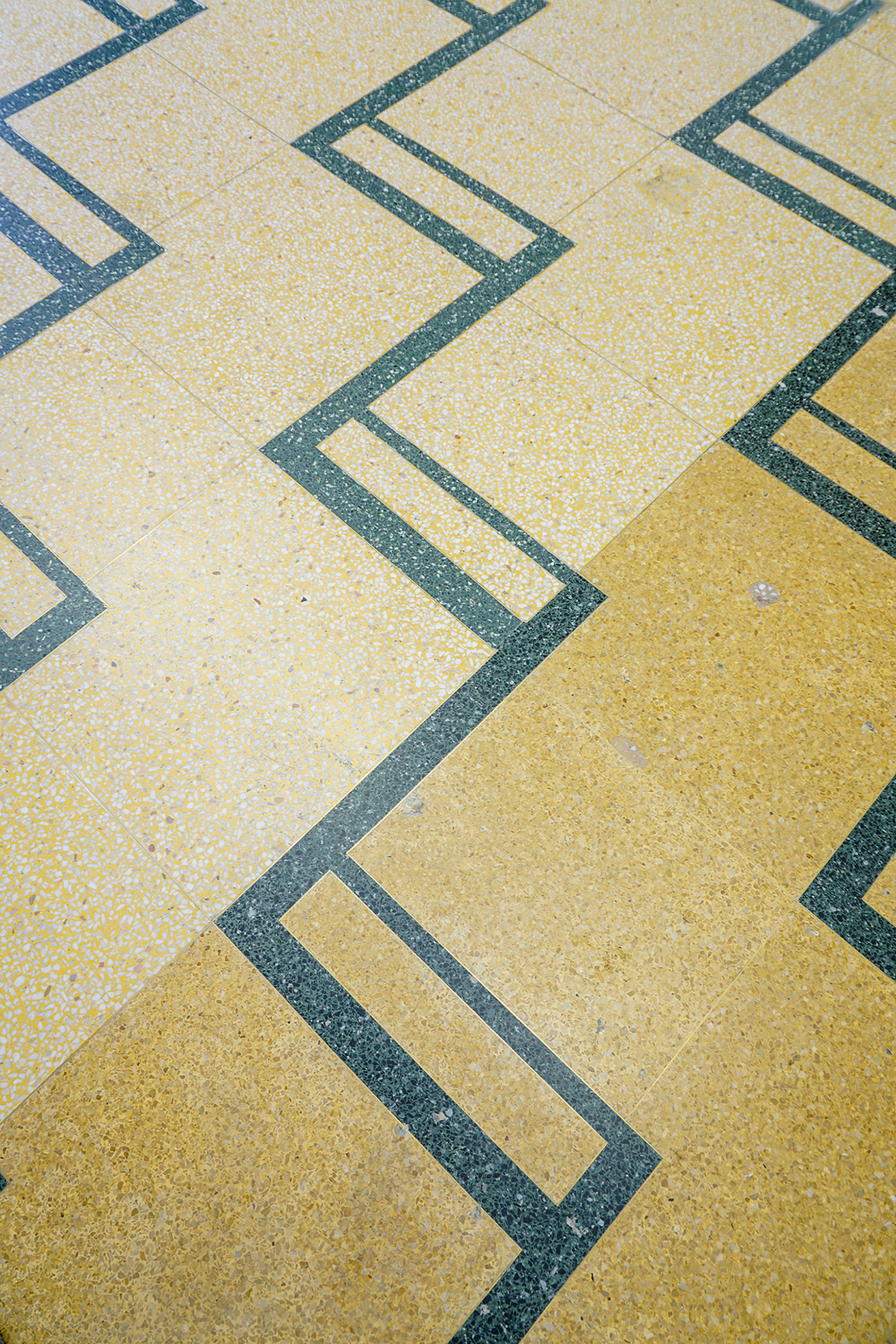
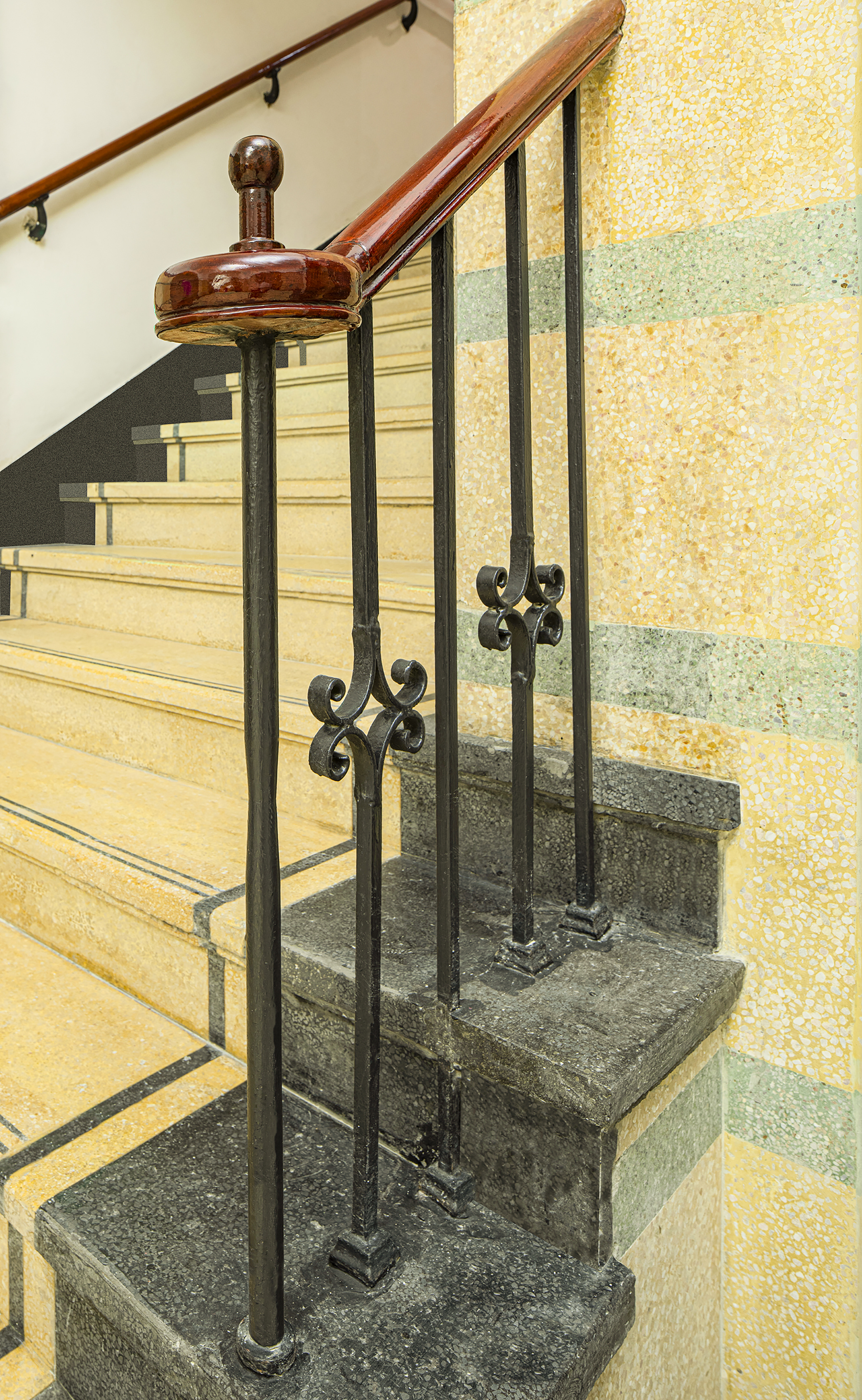
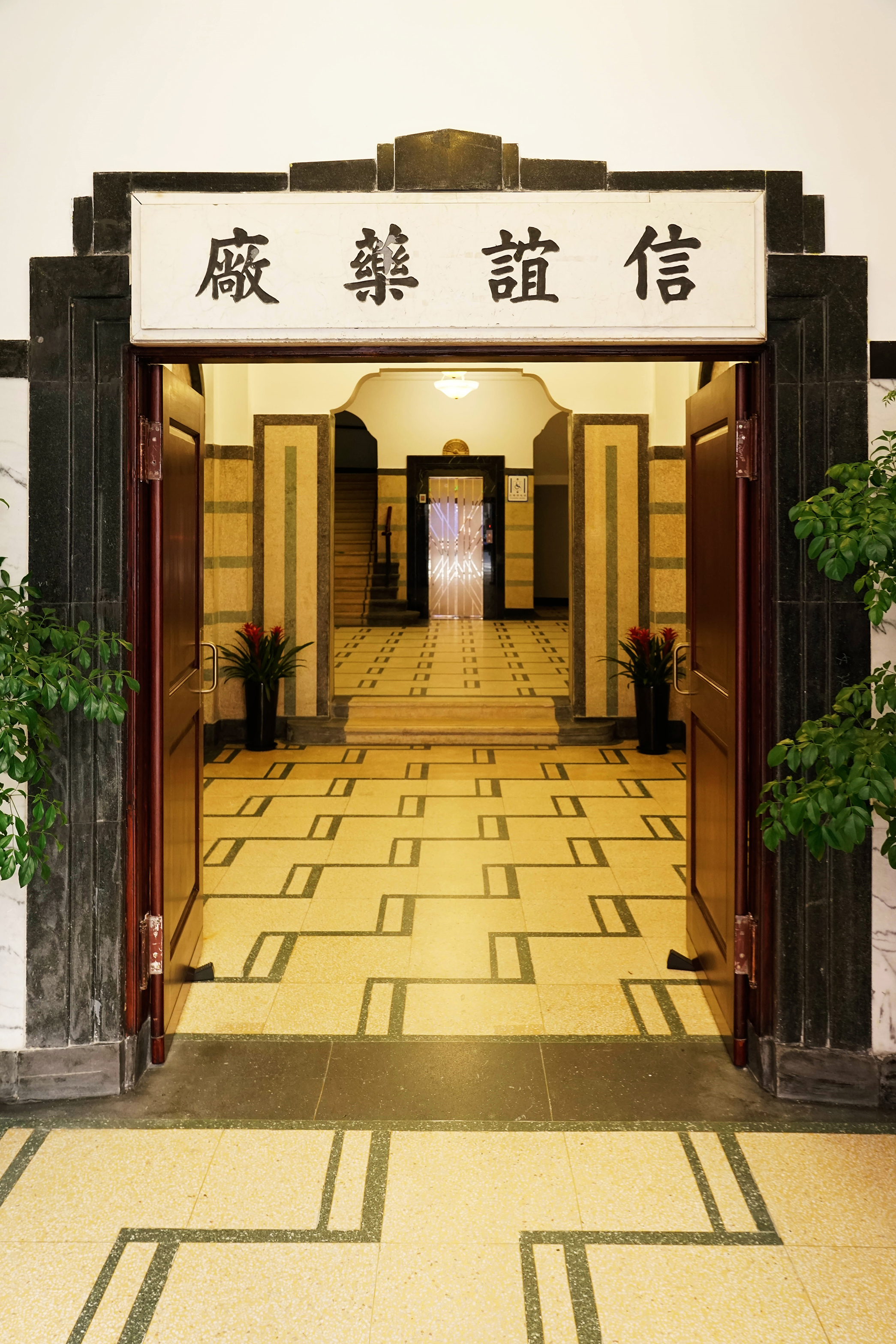
内部修缮主要围绕水磨石、拱券、涡卷牛腿、楼梯踏步与扶栏、马赛克地坪等展开,设计遵循还原本真的准则,通过充分讨论、考证及听取历保专家的建议等,确认水磨石的色浆颜色配比与石子种类、粒径及门洞拱券、壁龛、楼梯1、2级台阶形制等,复原上世纪三十年代的装修风貌。
Internal restoration primarily focuses on terrazzo, arches, scroll corbels, stair treads and handrails, and mosaic flooring. The design adheres to the principle of restoring authenticity. Through thorough discussion, research, and considering the advice of heritage conservation experts, details such as the color ratio of terrazzo pigments, aggregate type and size, the form of door opening arches, niches, and the first two steps of the stairs were confirmed, restoring the 1930s decorative style.
(修缮前实景图-修缮后实景图对比)
©颜洪熙 Photo by Yan Hongxi
水磨石修缮
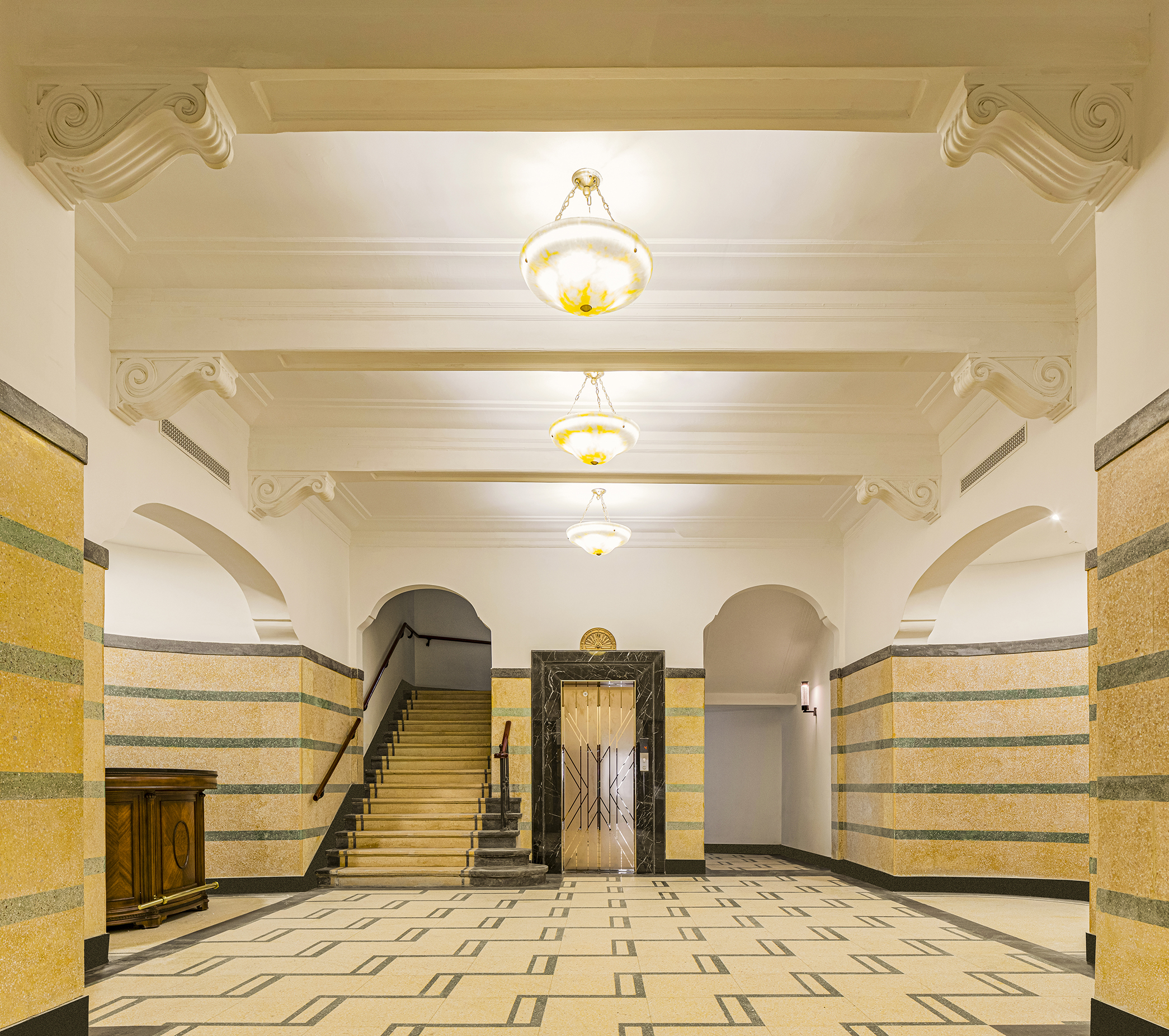
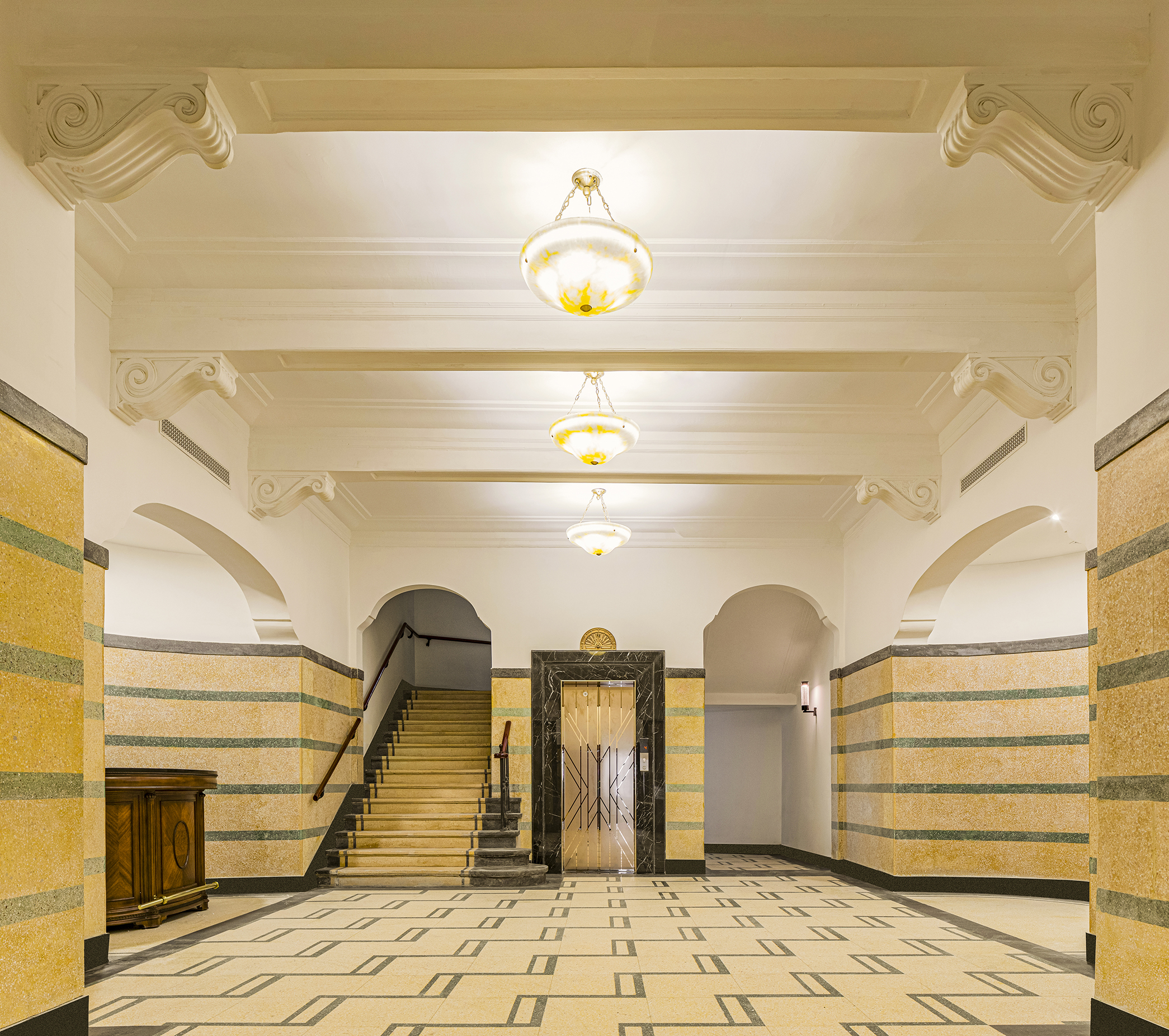
对于原始状态的水磨石墙面破损处,采用与原墙饰材质和色泽相近的水磨石材料进行修补。对于经由原始设计图纸考证的电梯厅两侧壁龛和施工探出的历史原样地坪进行水磨石新做。西南楼梯间楼梯踏步,按照东南楼梯间楼梯恢复1、2级水磨石台阶。修缮过程精确测量和施工,以确保新旧材料的无缝对接和整体美观。其中,水磨石地坪修缮保留了一段较为完整的历史原样,且新做水磨石地坪与其形成可识别区分。
Terrazzo Restoration
Damaged areas on the original terrazzo walls were repaired using terrazzo materials similar in texture and color to the original wall finish. New terrazzo was installed for the niches on either side of the elevator lobby and for the historical original flooring uncovered during construction. The stair treads in the southwest stairwell had their first two terrazzo steps restored based on those in the southeast stairwell. The restoration process involved precise measurement and construction to ensure seamless integration of new and old materials and overall aesthetic harmony. Notably, a relatively intact section of the original historical terrazzo flooring was preserved, and the new terrazzo flooring is distinguishably different from it.
©颜洪熙 Photo by Yan Hongxi
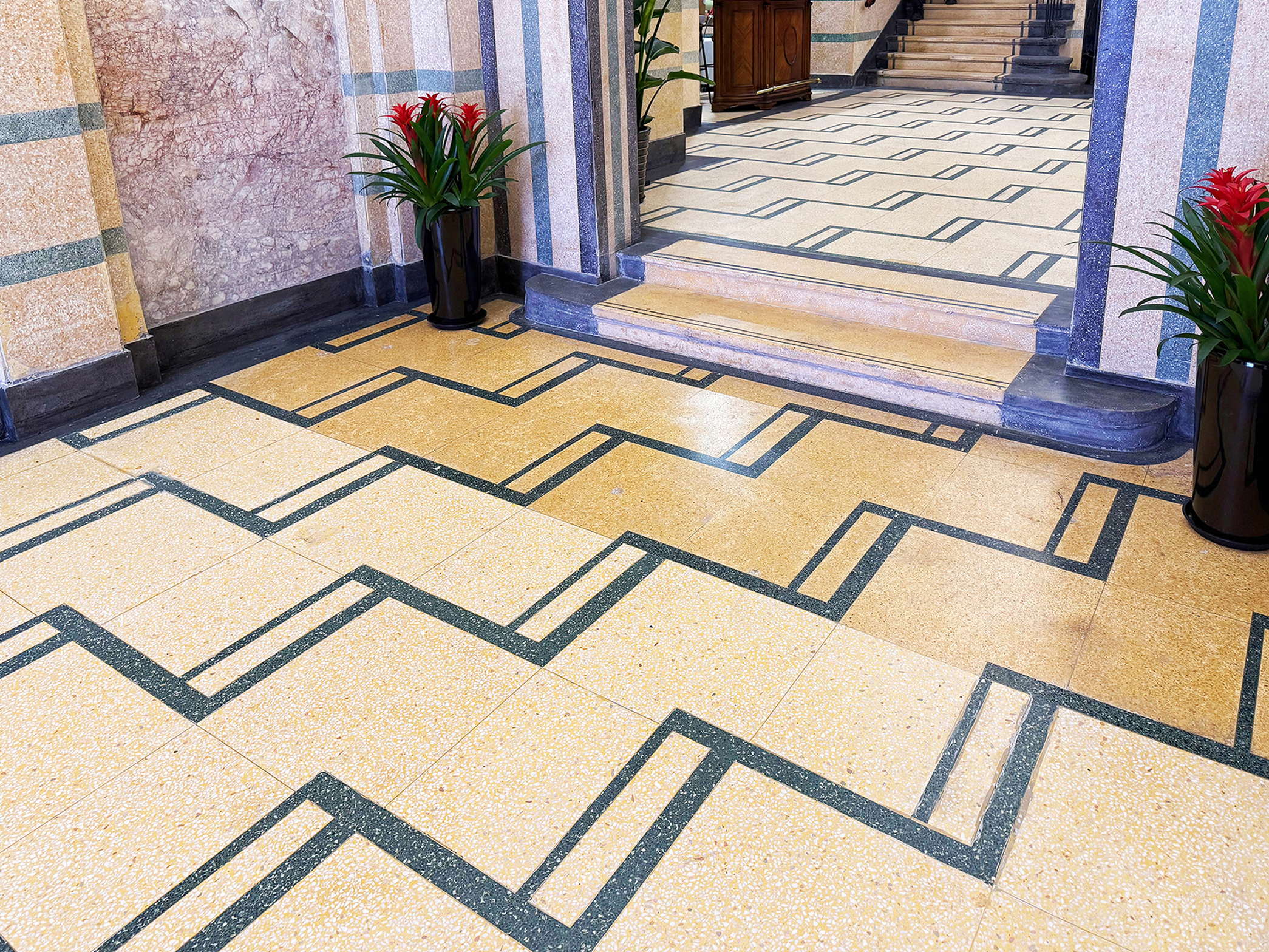
©颜洪熙 Photo by Yan Hongxi
拱券与涡卷牛腿修缮
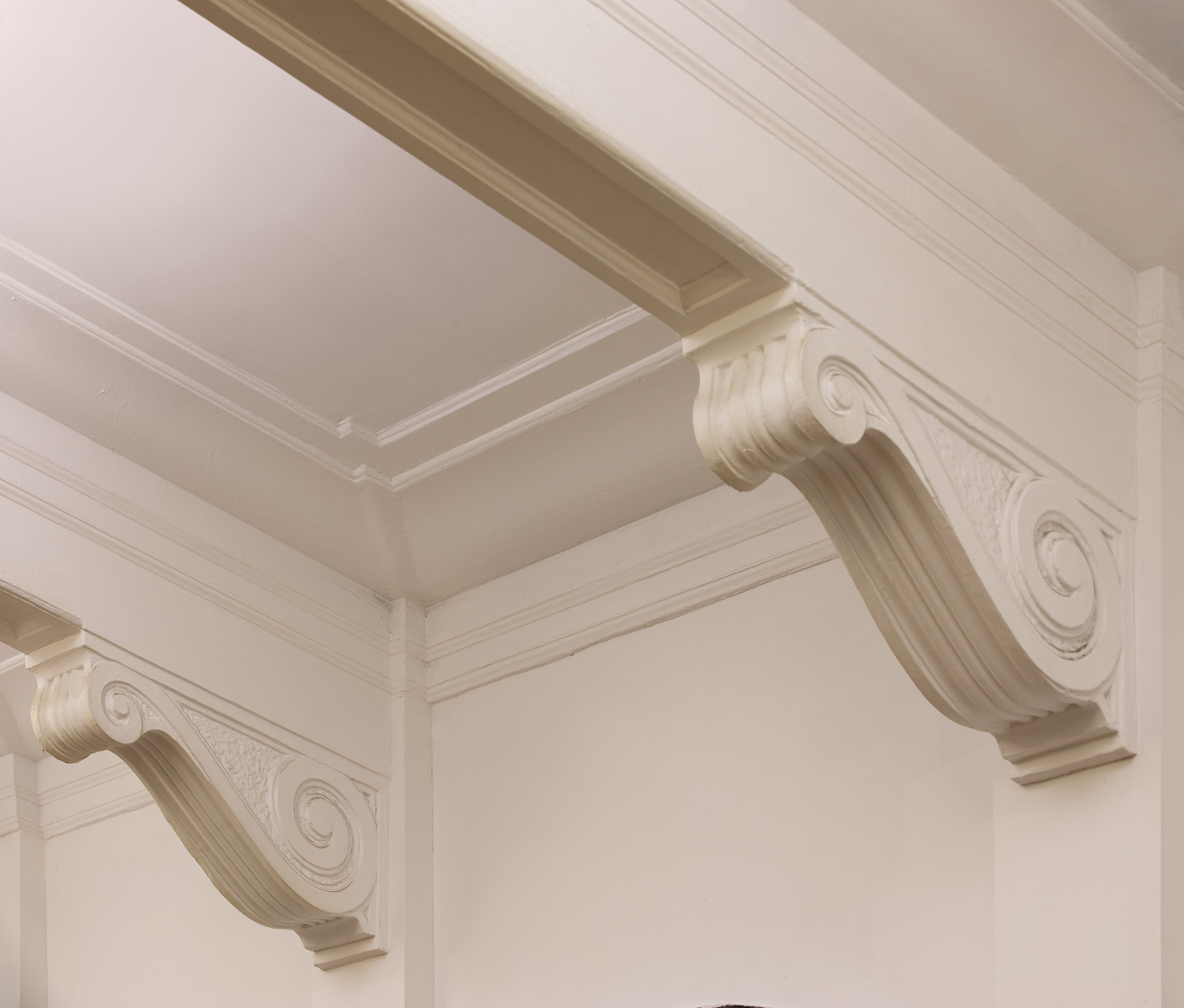
对东南梯厅门洞拱券统一恢复,将楼梯侧门洞拱券形式按照走道侧门洞恢复。对西南楼梯间及门厅原始状态的涡卷牛腿表面粉刷修缮,缺失侧通过翻模恢复。
Arch and Scroll Corbel Restoration
The door opening arches in the southeast stair hall were uniformly restored. The form of the arch in the side stairwell door opening was restored to match the arch in the corridor-side door opening. The surfaces of the original scroll corbels in the southwest stairwell and lobby were repaired by repainting; missing ones were restored using mold-remaking techniques.
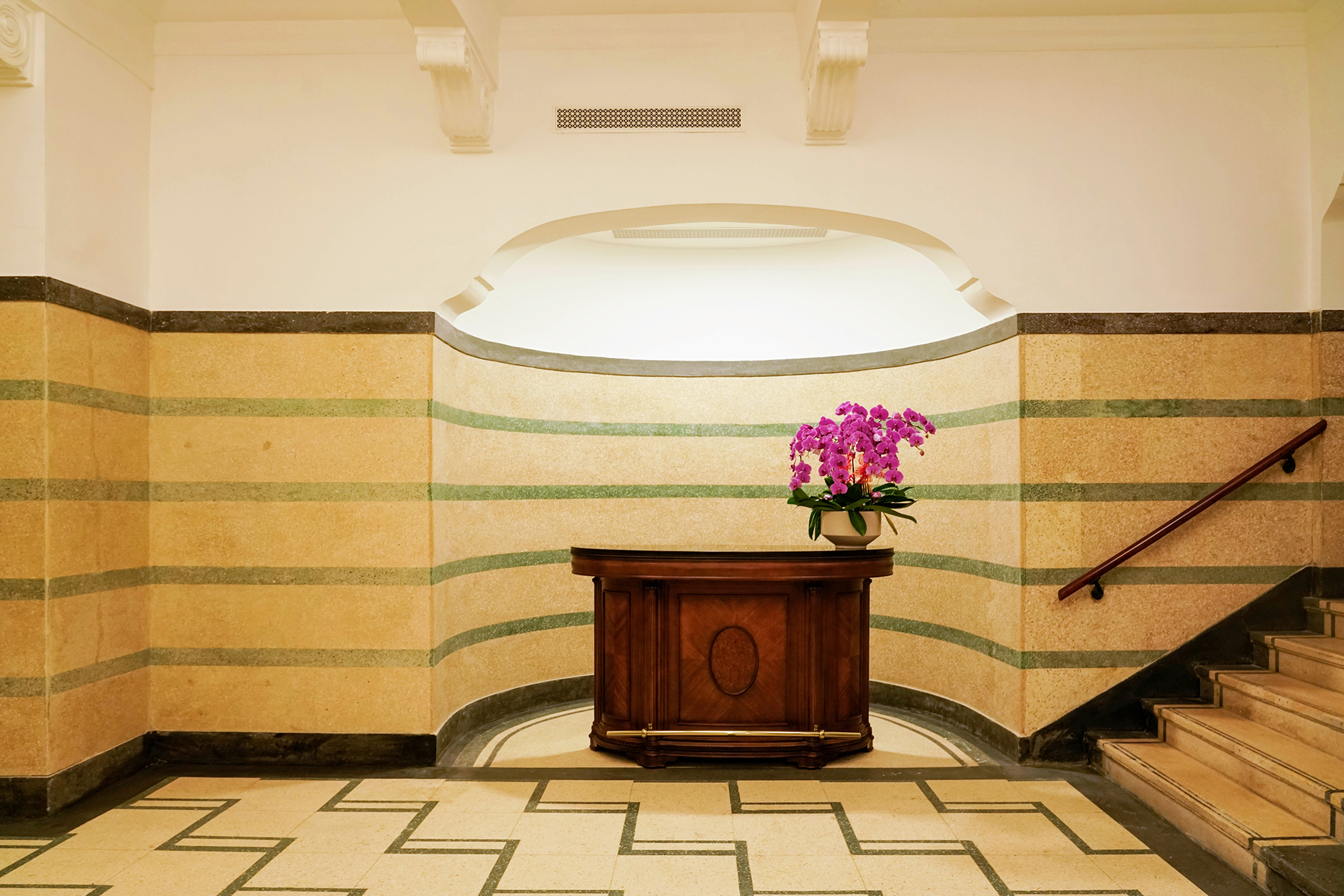
©颜洪熙 Photo by Yan Hongxi
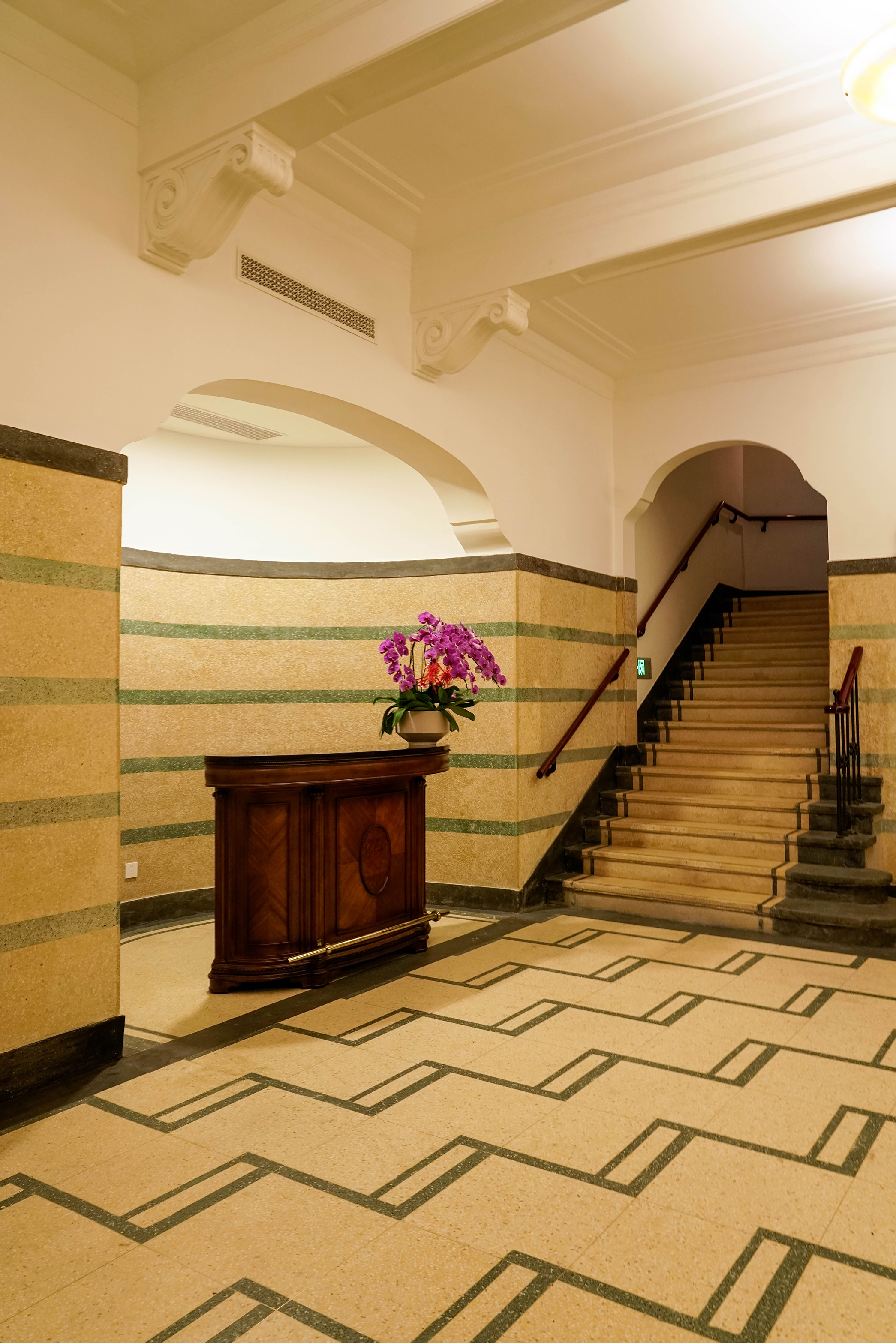
©颜洪熙 Photo by Yan Hongxi
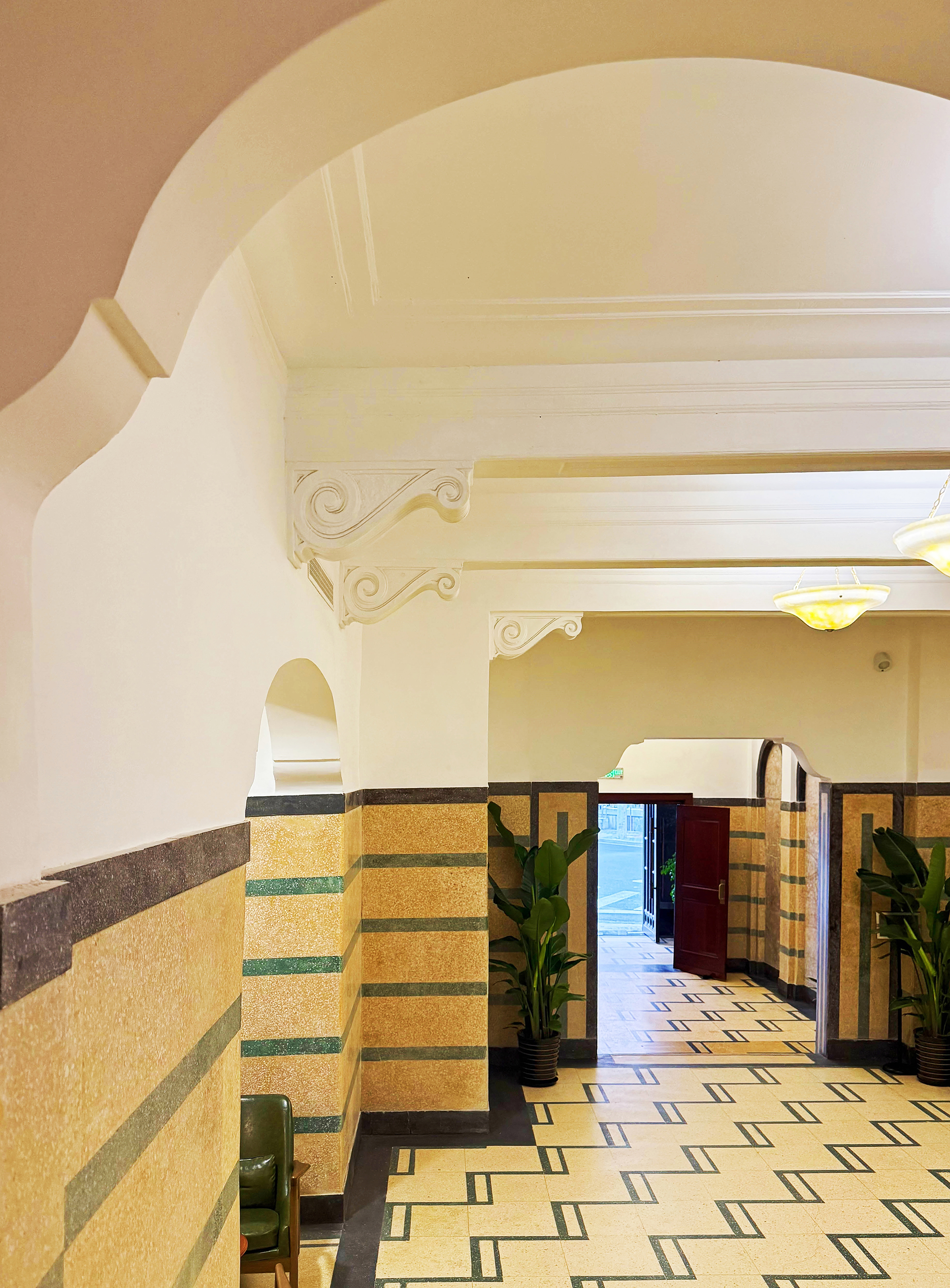
©颜洪熙 Photo by Yan Hongxi
©颜洪熙 Photo by Yan Hongxi
05
新旧融合 功能焕新
Blending Old and New, Functional Renewal
在内部空间焕新上,基于历保建筑之于公众具有重大探索意义的考虑,此次设计主要通过“新旧融合”的更新策略,对建筑首层空间、内庭院立面及历次改建、修缮的重要历史信息等,进行开放性、故事性、创新性塑造,注入现代功能的同时,打造一个向城市和街区开放、为市民提供“街区可漫步 庭院可进入”的休闲、娱乐、社交场所,从真正意义上实现对优秀历史保护建筑的活化更新。
Regarding the renewal of the interior space, considering the significant exploratory value of historic buildings for the public, the design primarily adopts a "blending old and new" renewal strategy. It aims to shape the ground-floor space, the inner courtyard facades, and important historical information from various modifications and repairs in an open, narrative, and innovative way. While injecting modern functions, it creates a leisure, entertainment, and social space open to the city and neighborhood, providing citizens with a place for "strollable streets and accessible courtyards," truly achieving the revitalization and renewal of the protected historic building.
四大更新策略:
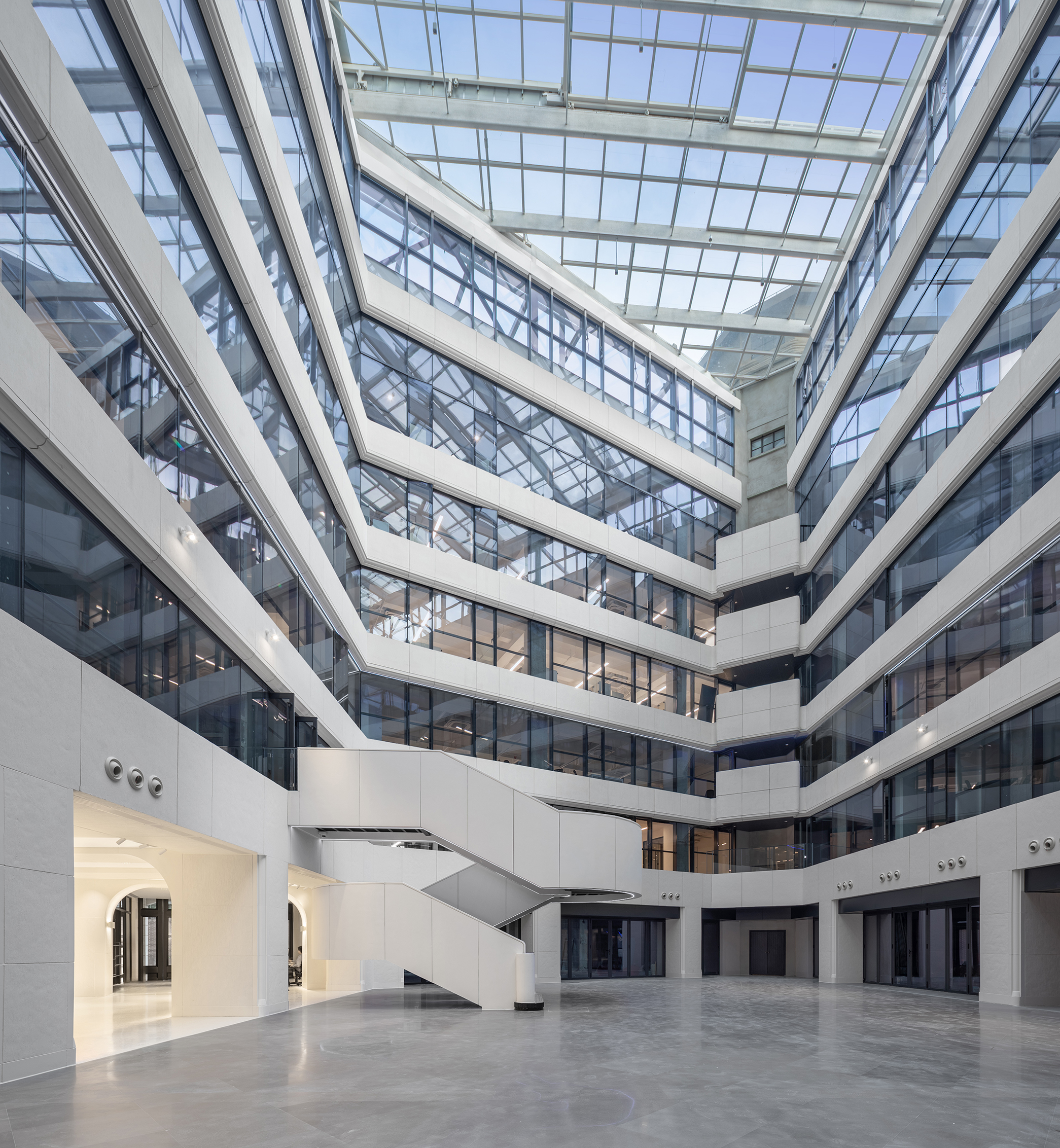
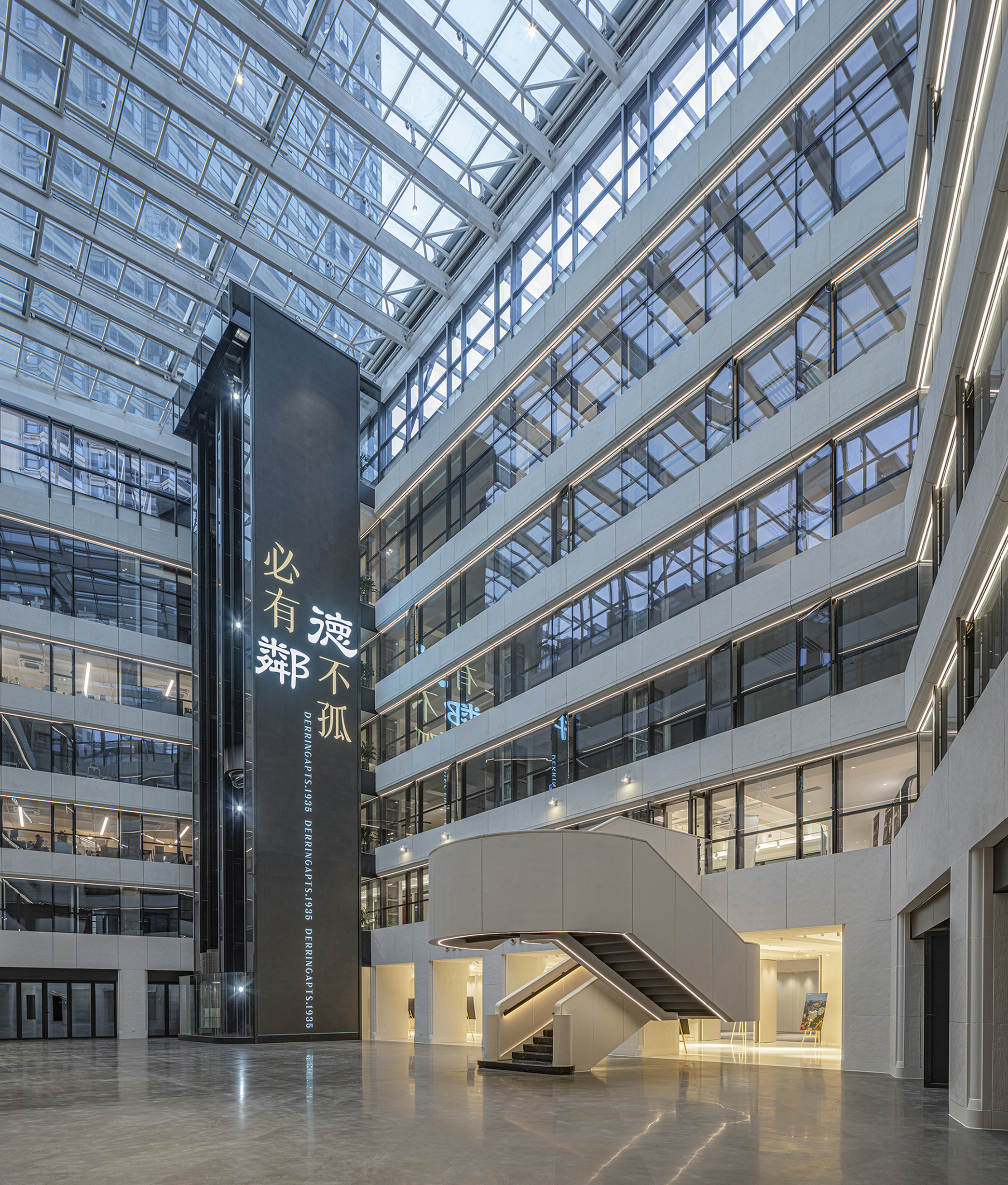
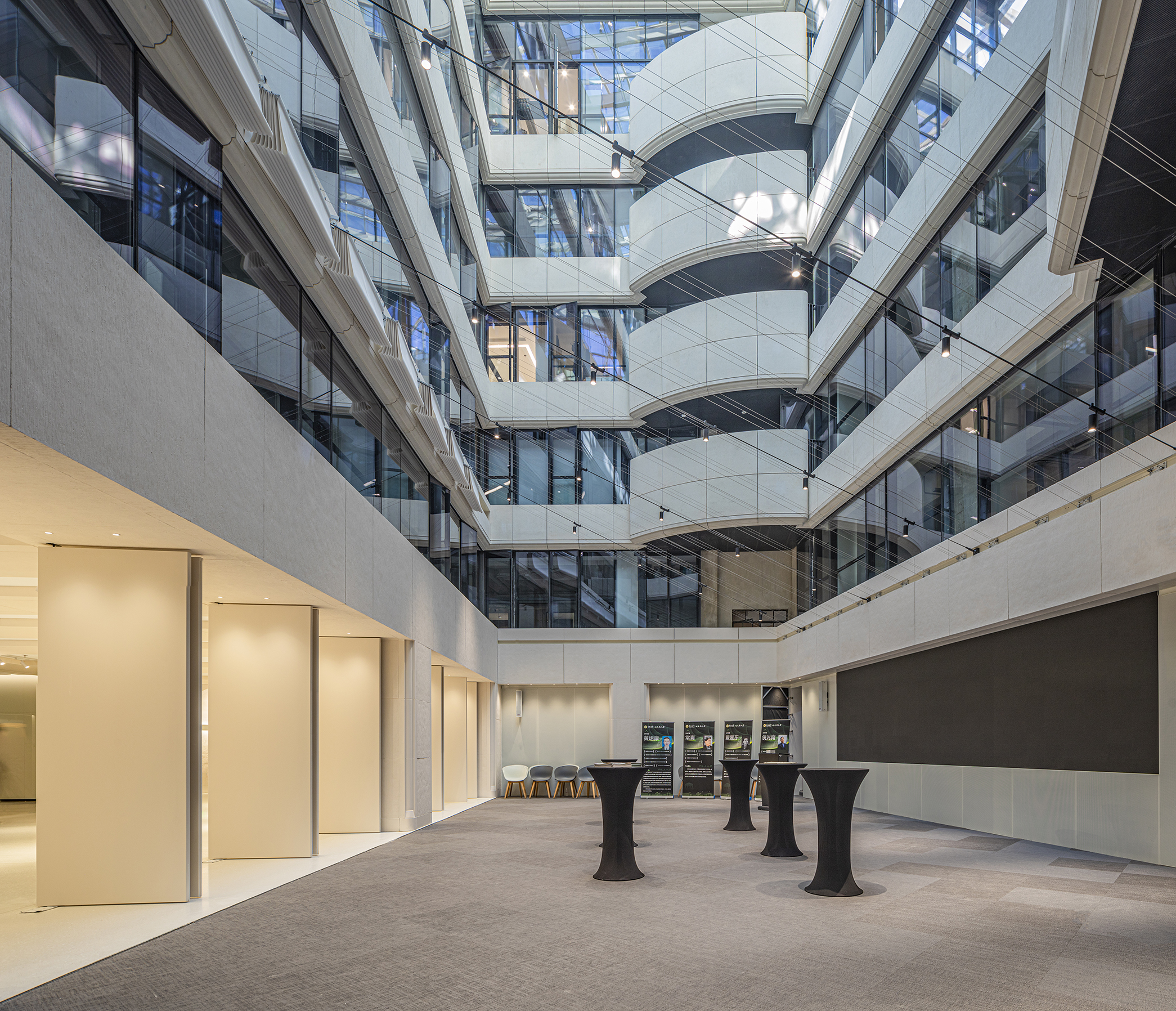
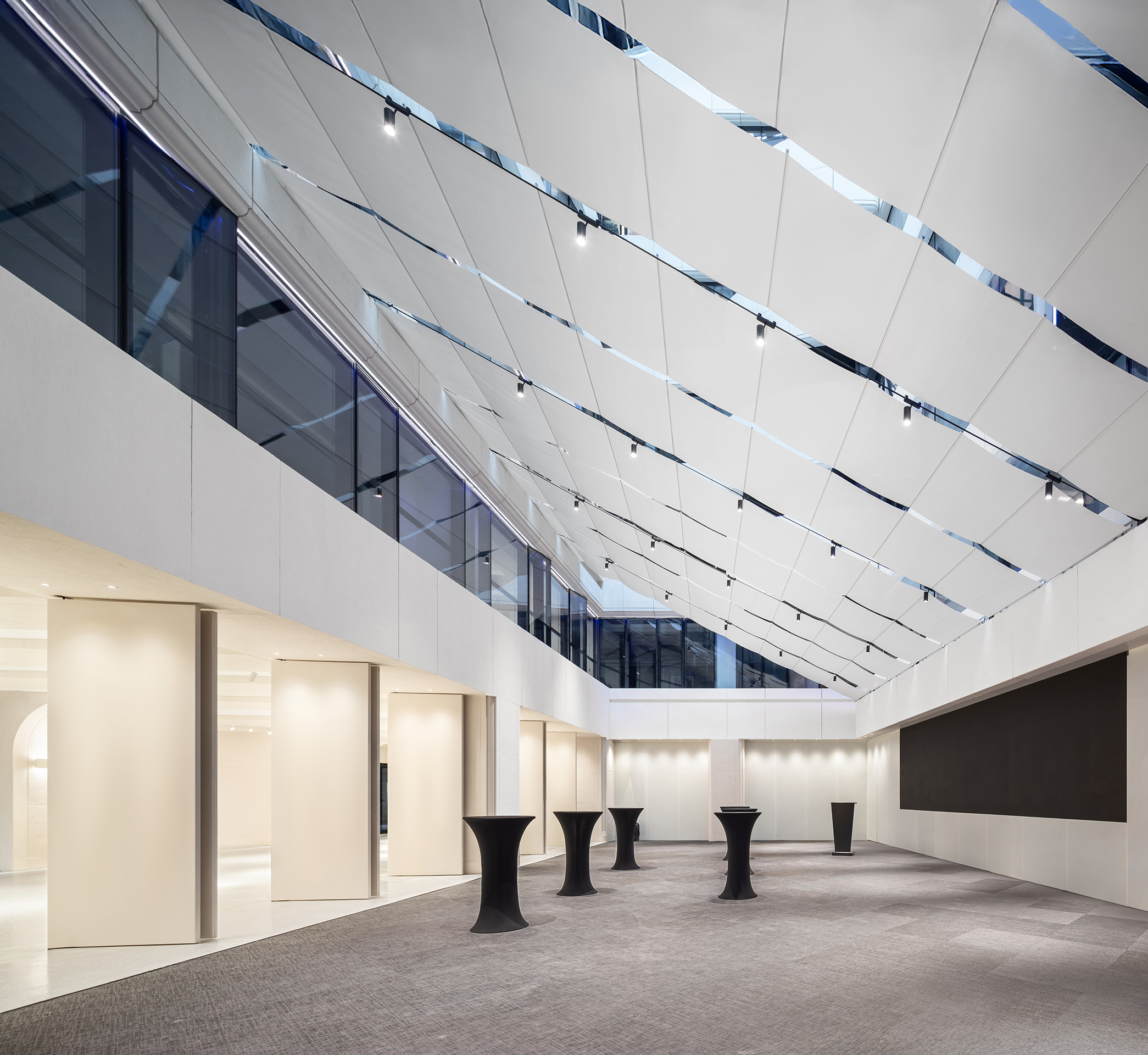
1.功能适应性:在满足企业总部办公功能的同时,在此打造一个开放向城市和街区,可以充分融于市民生活并且充满历史记忆的场所。为了重拾德邻公寓曾被誉为“文人客厅”的历史记忆,设计在建筑首层中央位置打通了一条连接北侧社区和南侧绿地的公共廊道--德邻廊,并在廊道的两侧打造与沿街商业做贯通设计的多功能中庭--不孤庭、有邻厅,打造“新时代人文客厅”。
Four Major Renewal Strategies:
1. Functional Adaptability: While meeting the functional needs of the corporate headquarters office, the aim is to create a place open to the city and neighborhood, fully integrated into civic life and rich with historical memory. To revive the historical memory of Derring Apartments as the "Literary Salon," the design created a public passageway—the Derring Gallery—through the central area of the ground floor, connecting the northern community with the southern green space. On both sides of this gallery, multifunctional atriums—the "No-Loneliness Court" and the "Good-Neighbor Hall"—were created, designed to connect with the street-level commercial spaces, forming a "New Era Literary Salon."
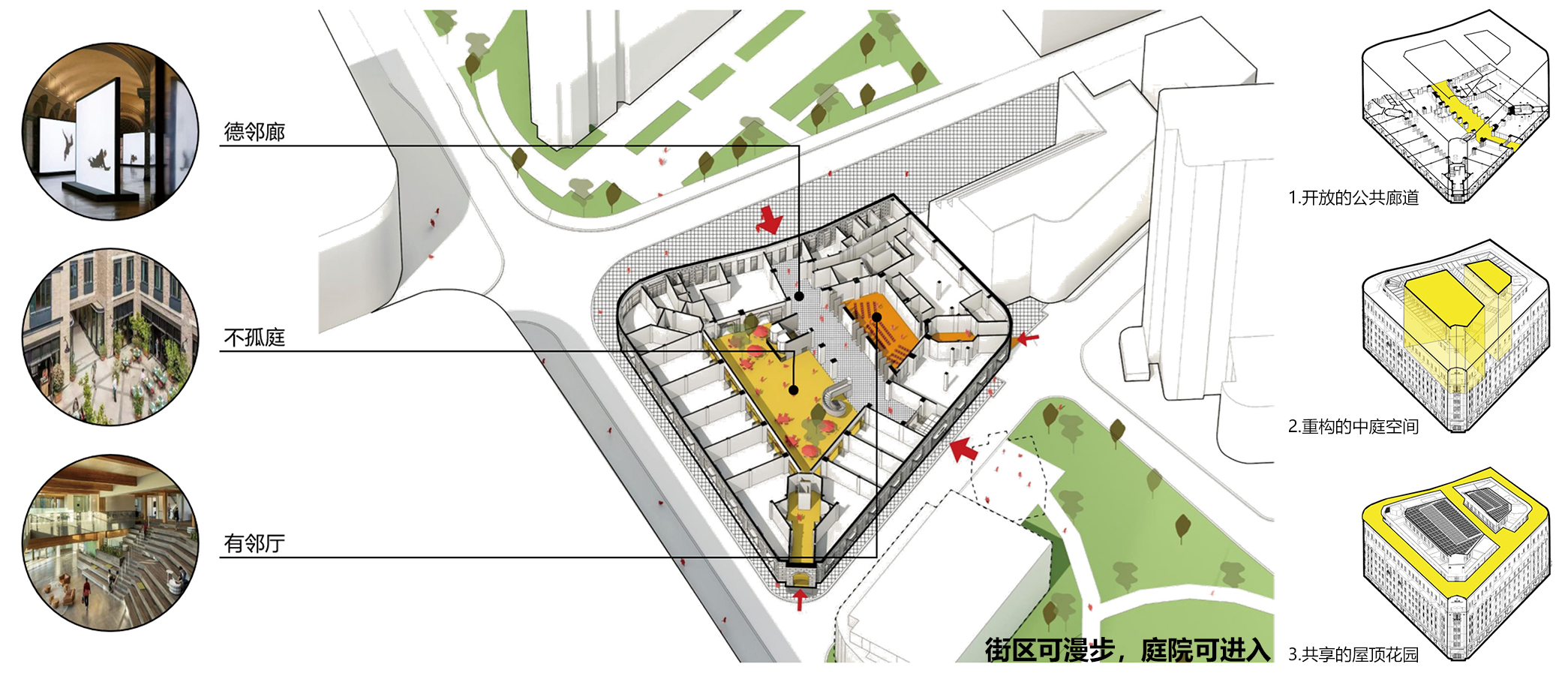
概念分析图
2.故事性营造:两个中庭打造不同的空间:一个开放的广场,和一个可以相对围合的报告厅,并且可以灵活转换成各种场景。
不孤庭希望可以成为一个开放的内部广场,一个随性的休闲聚会场所,一个共享艺术的舞台,与德邻廊可以充分的连接通达,而新增的观光电梯和旋转楼梯则增加了空间的可达性和丰富性,使得庭院变得丰富而有趣。
2. Narrative Creation: The two atriums create different spaces: an open plaza and a relatively enclosed auditorium/report hall that can be flexibly converted into various scenarios.
The "No-Loneliness Court" is intended to be an open internal plaza, a casual leisure gathering spot, a stage for shared art, fully connected and accessible from the Derring Gallery. The newly added sightseeing elevator and spiral staircase enhance spatial accessibility and richness, making the courtyard varied and interesting.
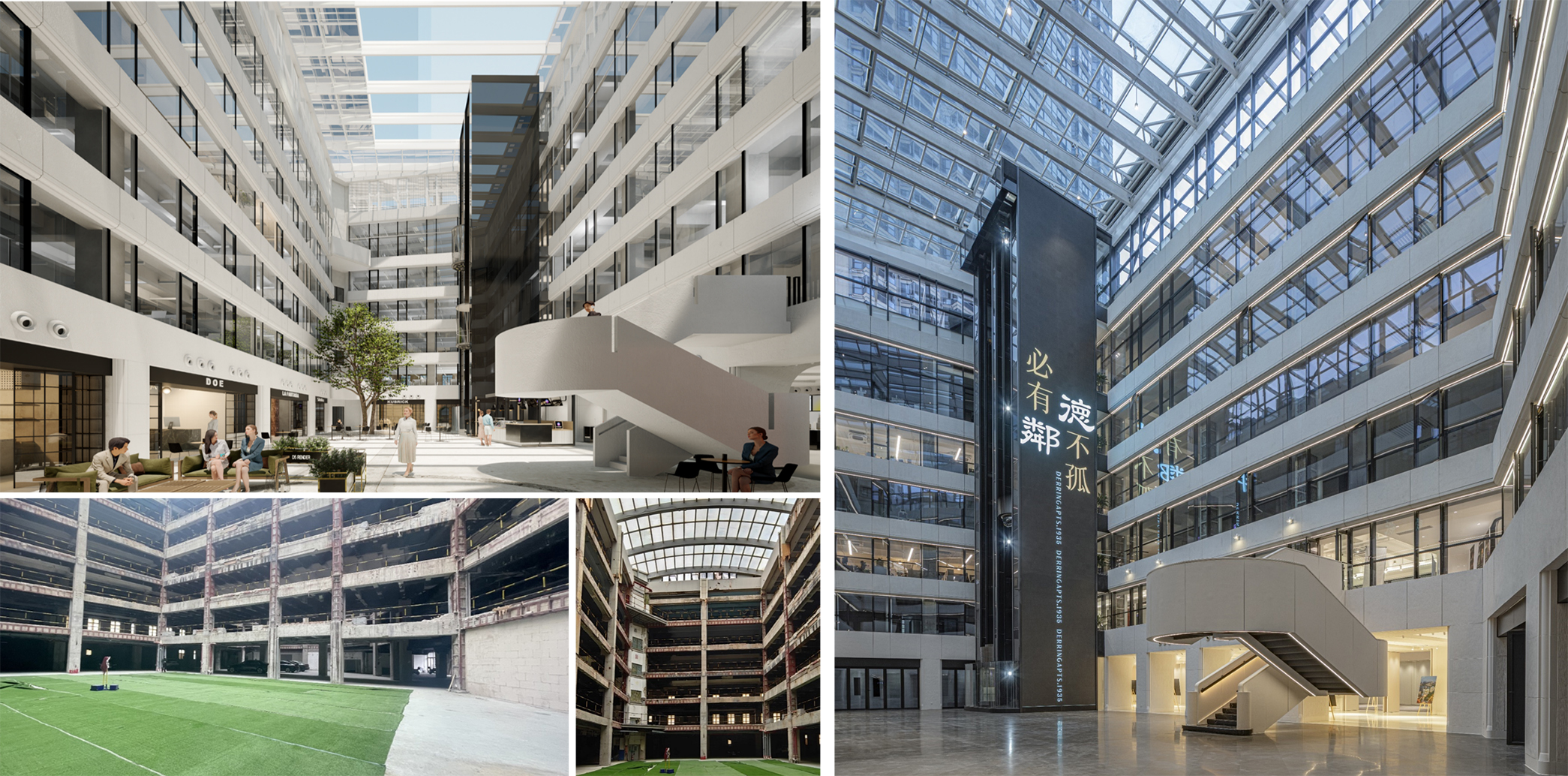
(不孤庭修缮前实景图-效果图-修缮后实景图对比)
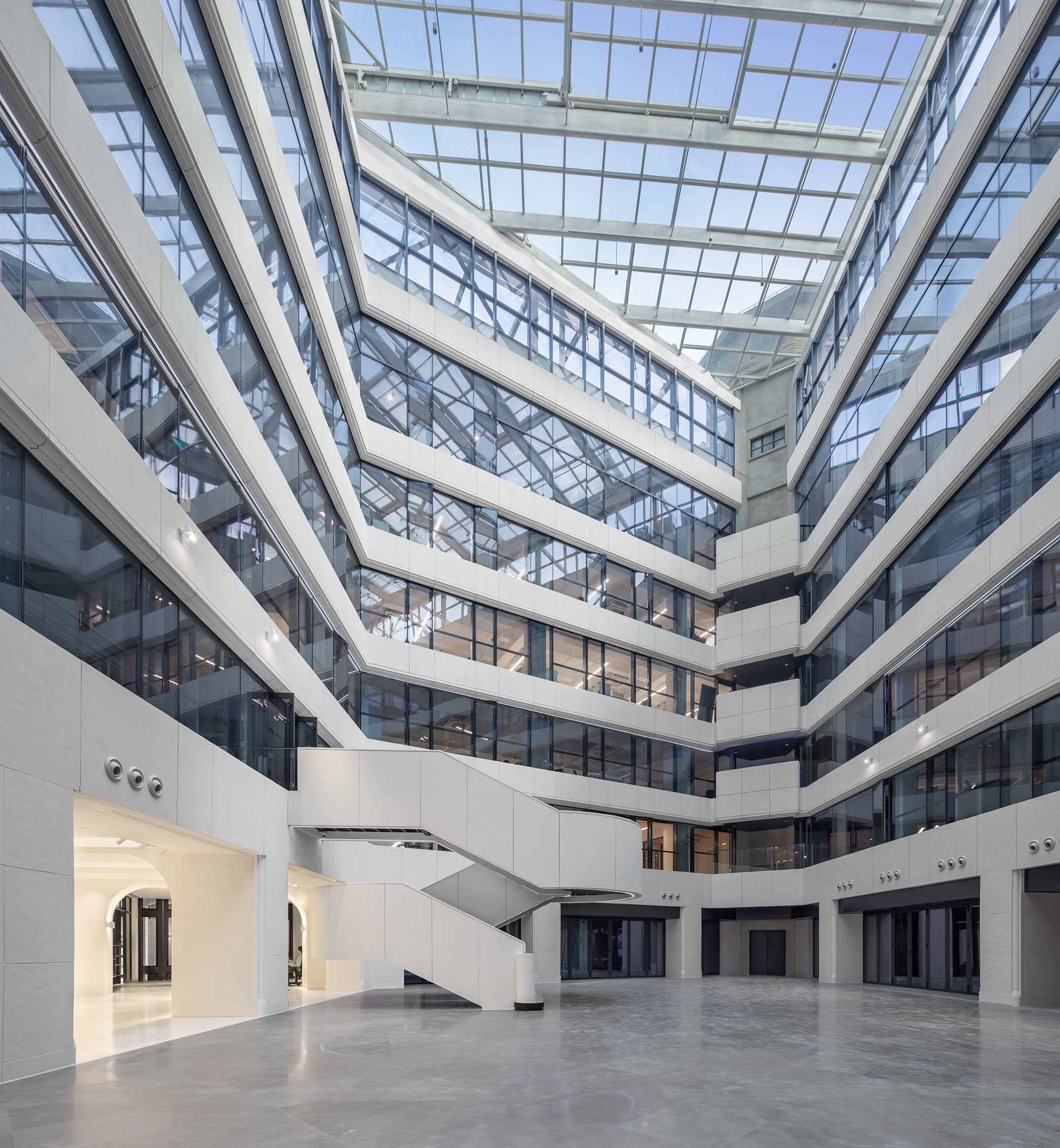
©颜洪熙 Photo by Yan Hongxi
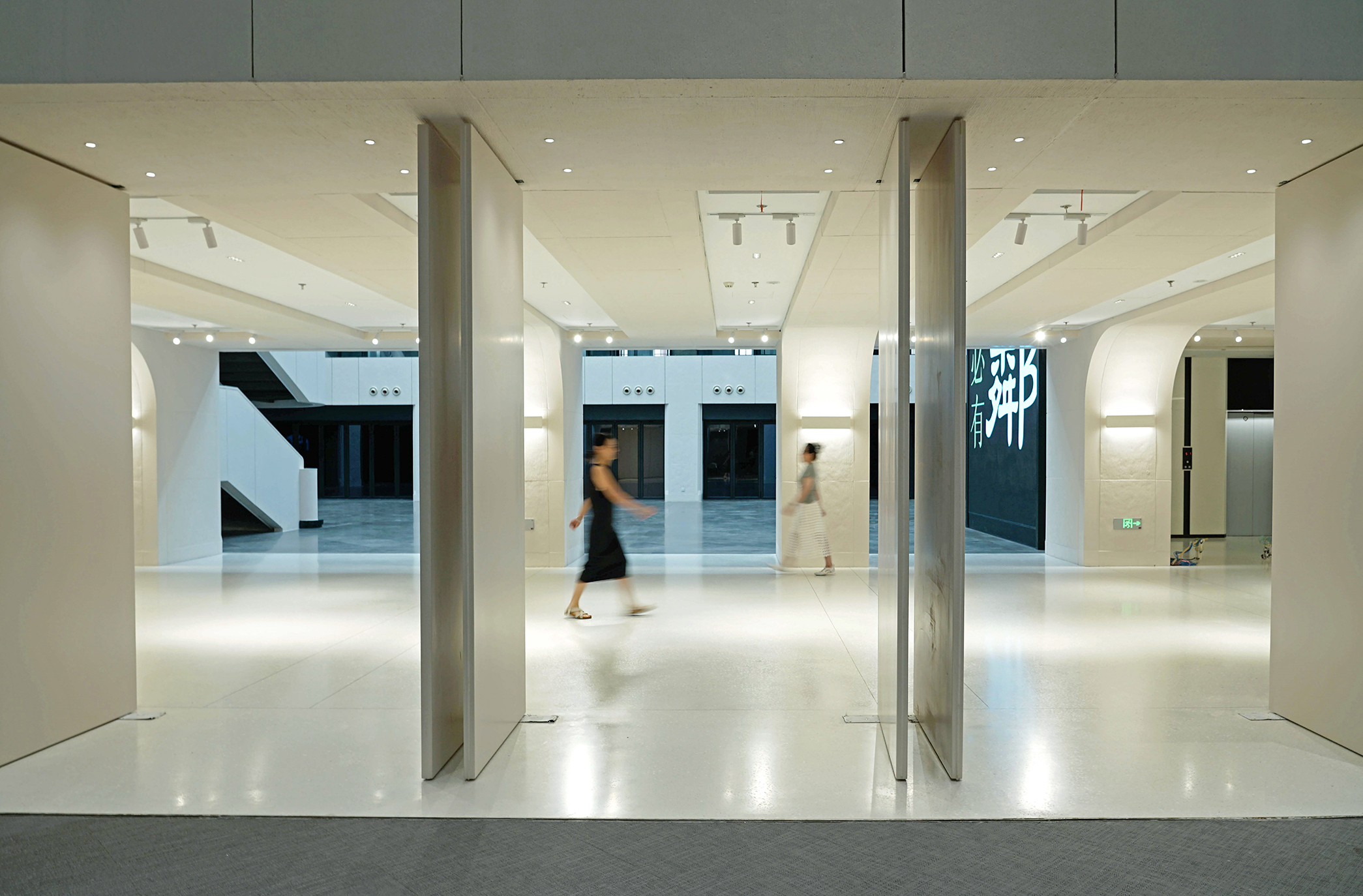
有邻厅靠近德邻廊的一侧,设计可开合式活动展门,实现封闭与开放空间的高效转化。在关闭时,结合二层电动遮阳帘,围合出适应会议论坛的报告厅空间,为其赋予除展示展览以外更多空间活动可能性。
The side of the "Good-Neighbor Hall" near the Derring Gallery features operable movable display doors, enabling efficient transformation between enclosed and open spaces. When closed, combined with electric sunshades on the second floor, it creates an auditorium space suitable for conferences and forums, offering possibilities for spatial activities beyond exhibitions.
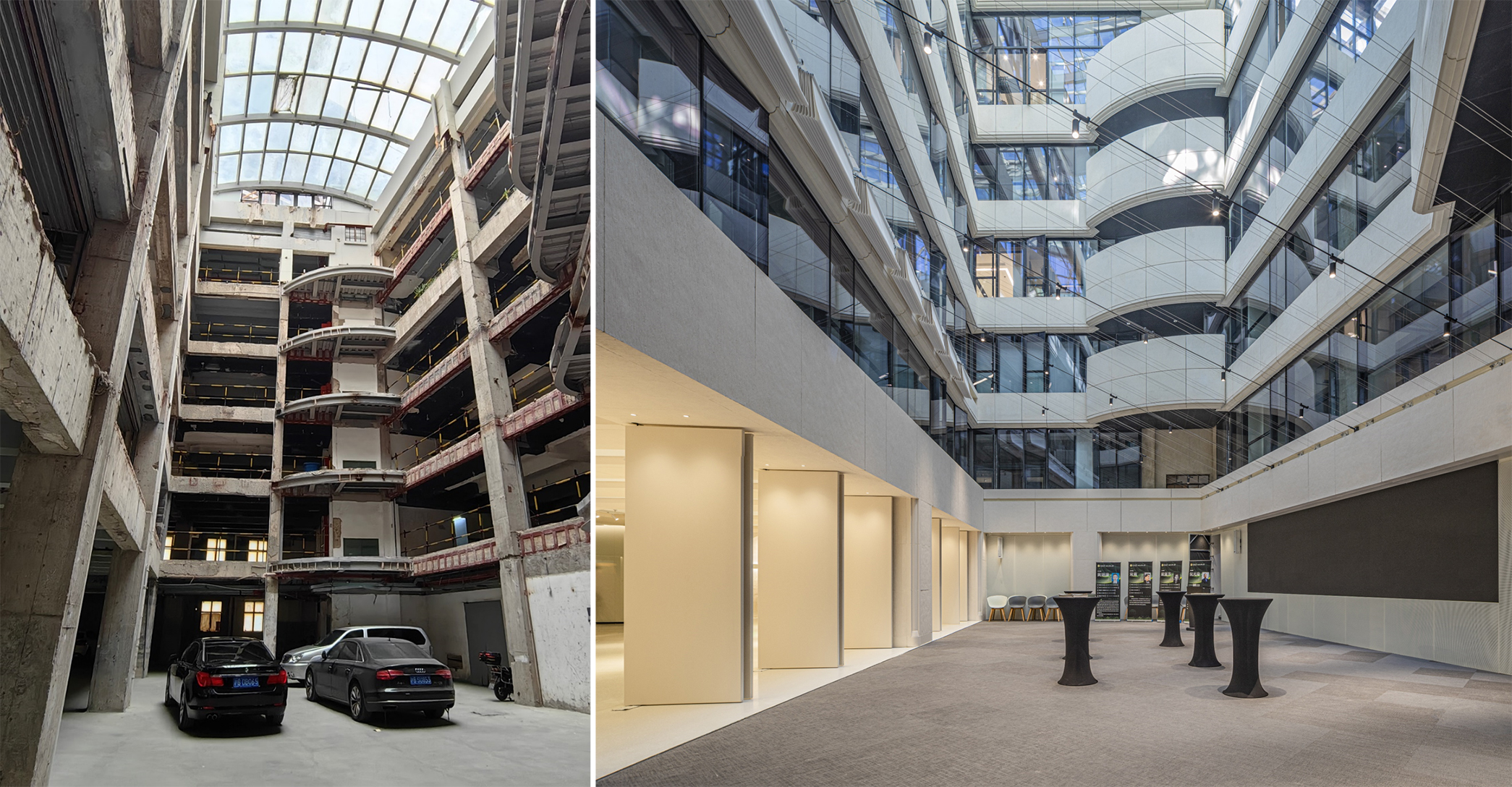
(有邻厅修缮前实景图-修缮后实景图对比)
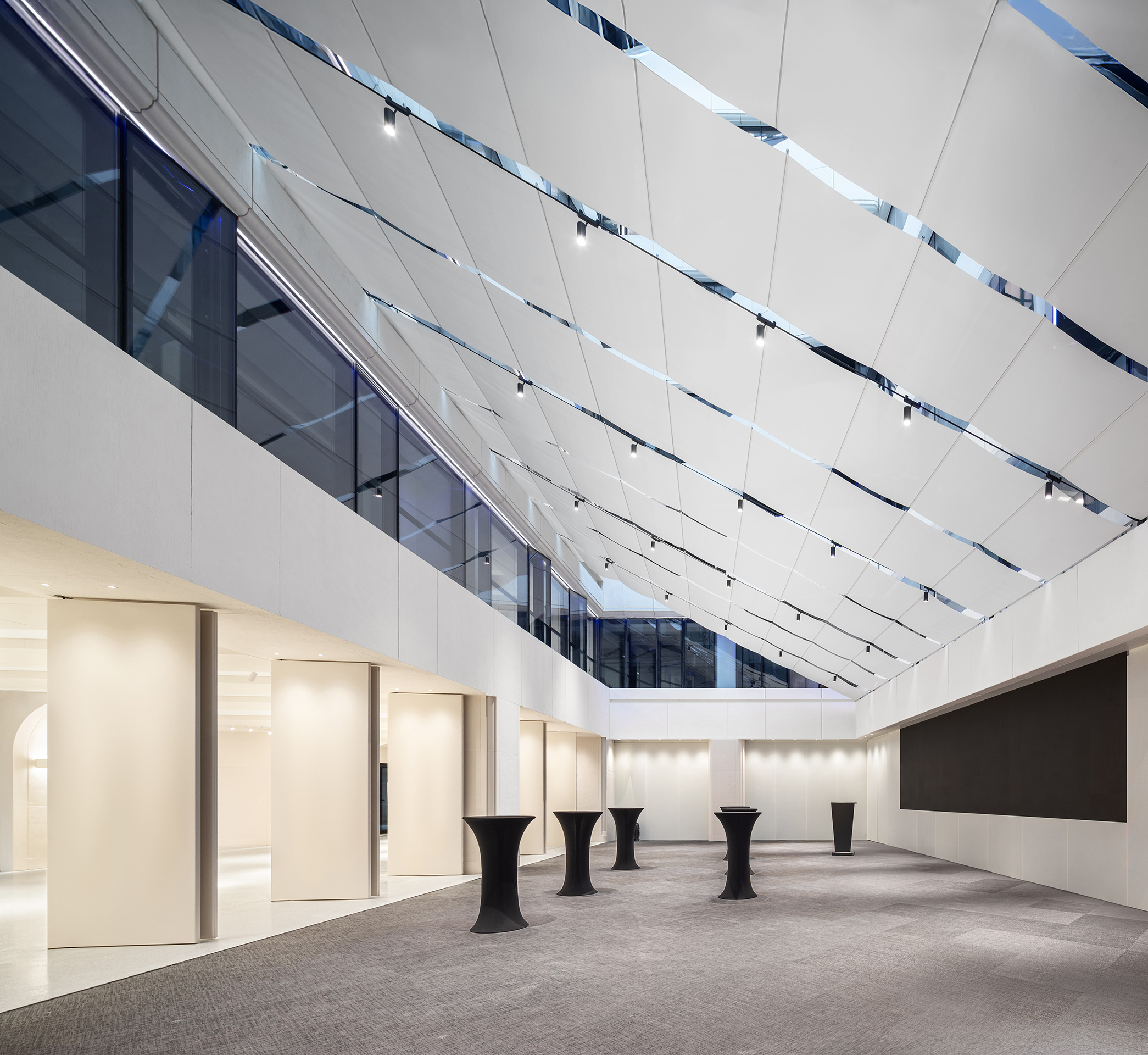
©颜洪熙 Photo by Yan Hongxi
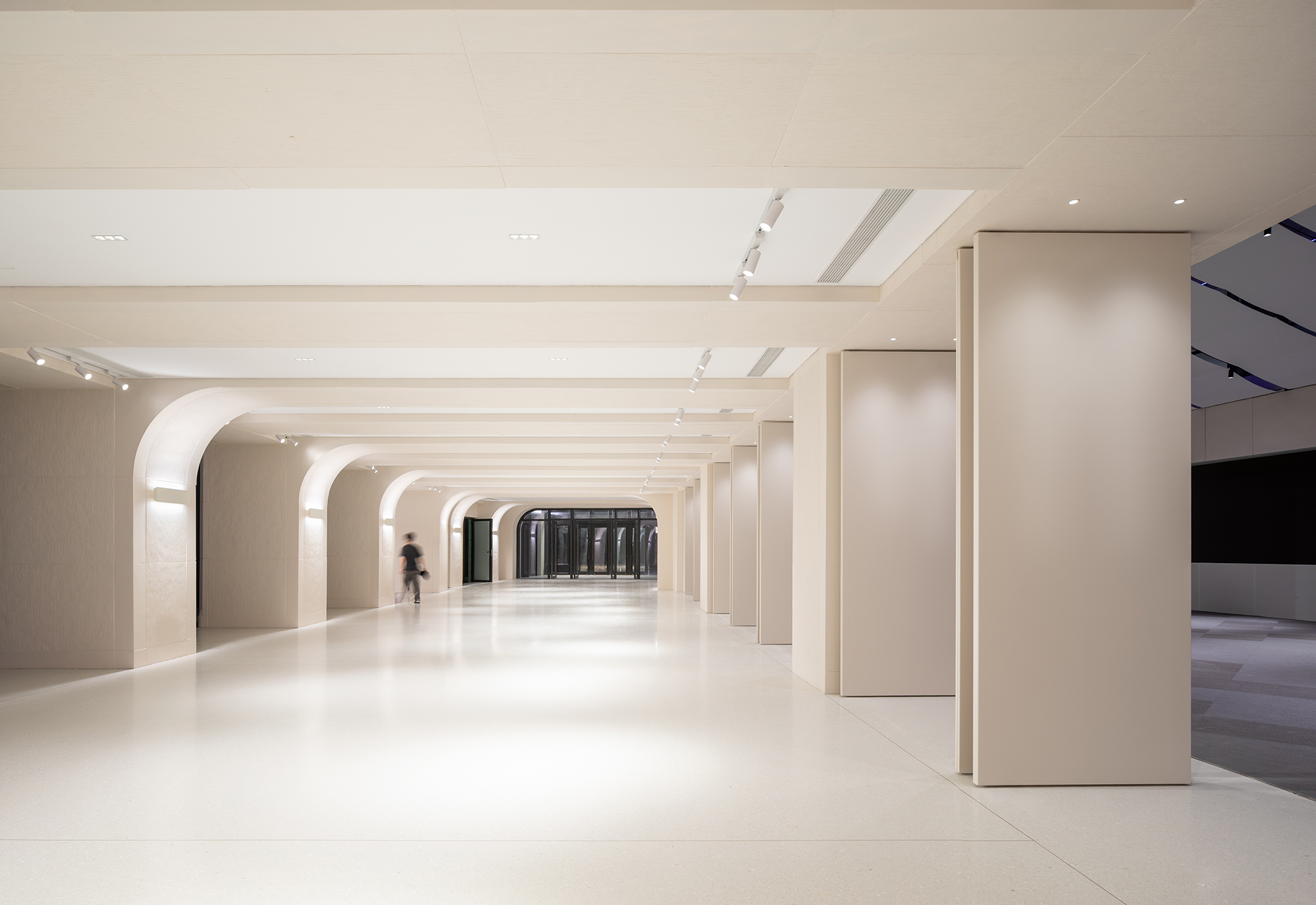
在德邻廊的打造中,通过对原始建筑混乱柱网的梳理,结合德邻公寓拱券的设计语言,重塑一条充满秩序感和纵深感的纯白展廊空间,为布展参观提供了绝佳的呈现空间。
In creating the Derring Gallery, by rationalizing the original building's chaotic column grid and incorporating the arch design language of Derring Apartments, a pure white exhibition gallery space full of order and depth was重塑, providing an excellent presentation space for exhibitions and visits.
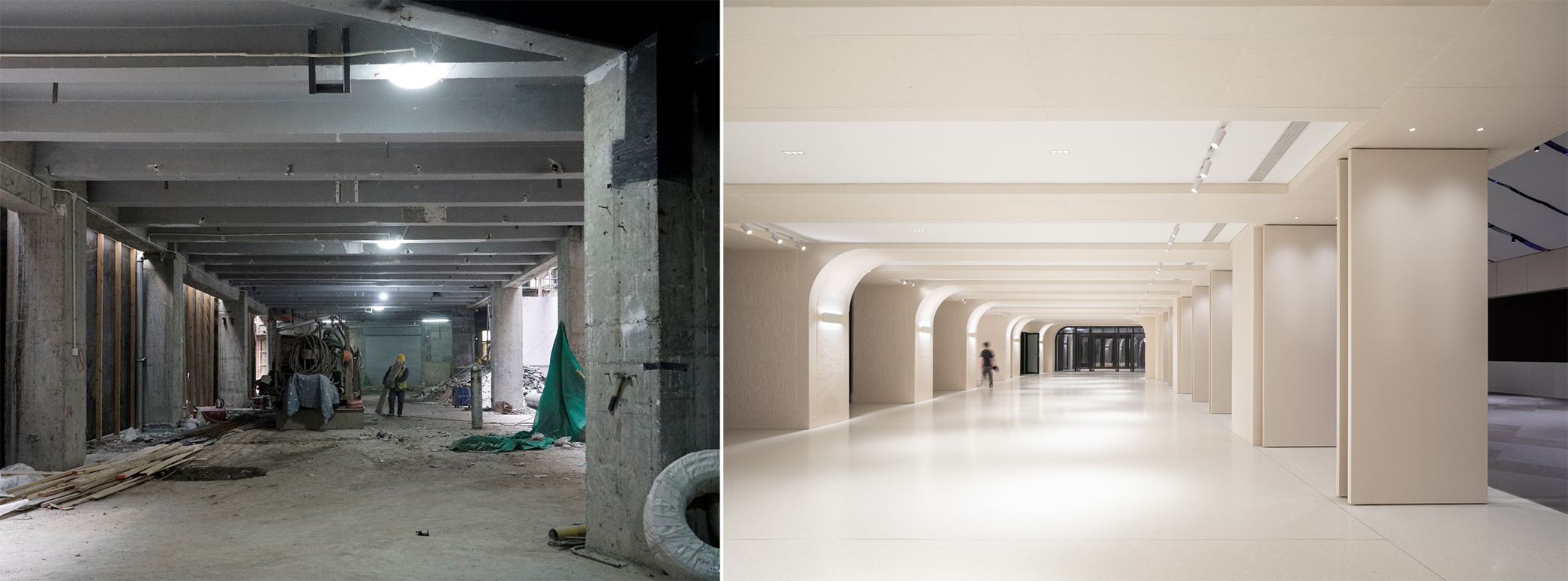
(德邻廊修缮前实景图-修缮后实景图对比)
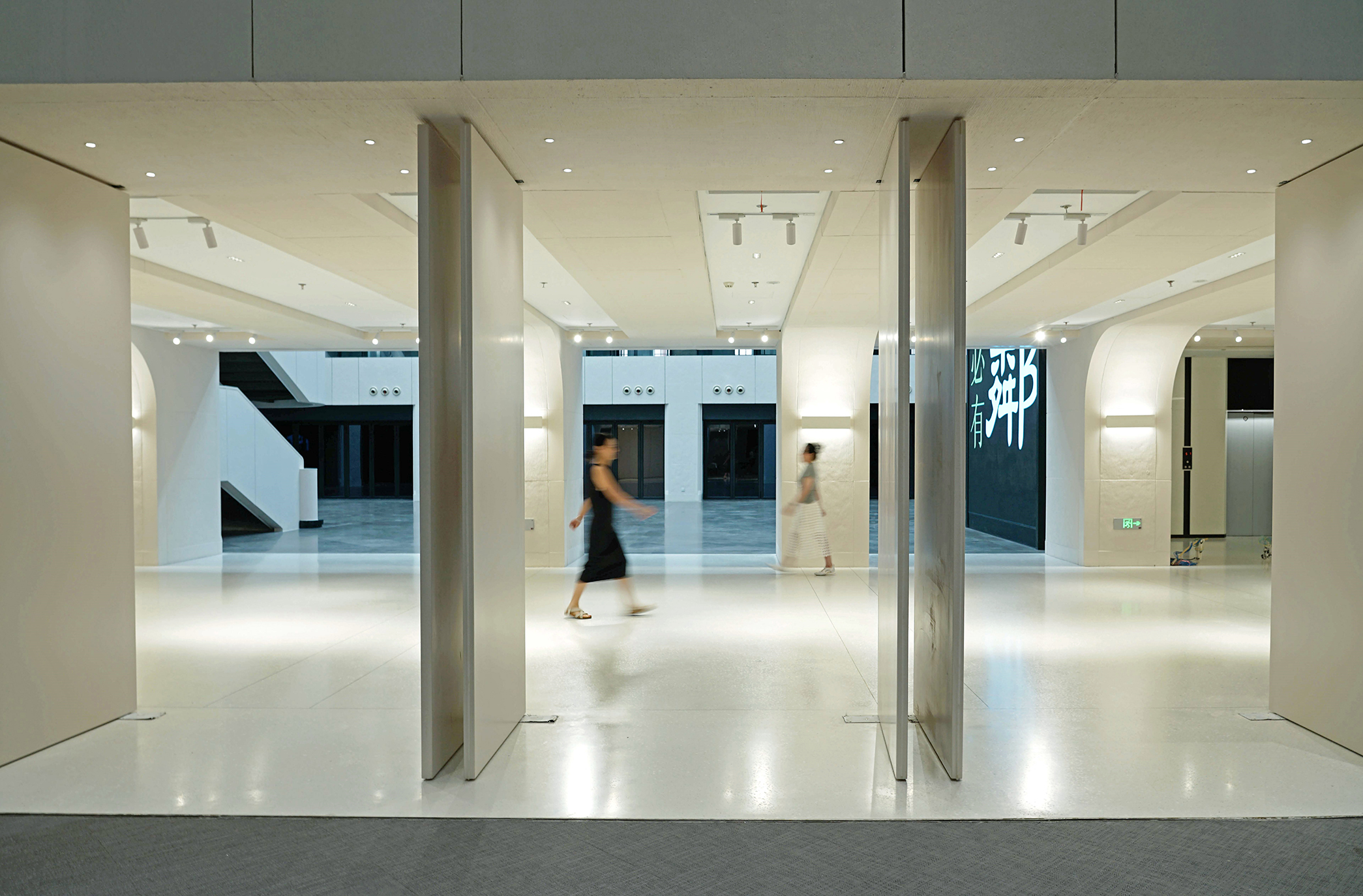
©颜洪熙 Photo by Yan Hongxi
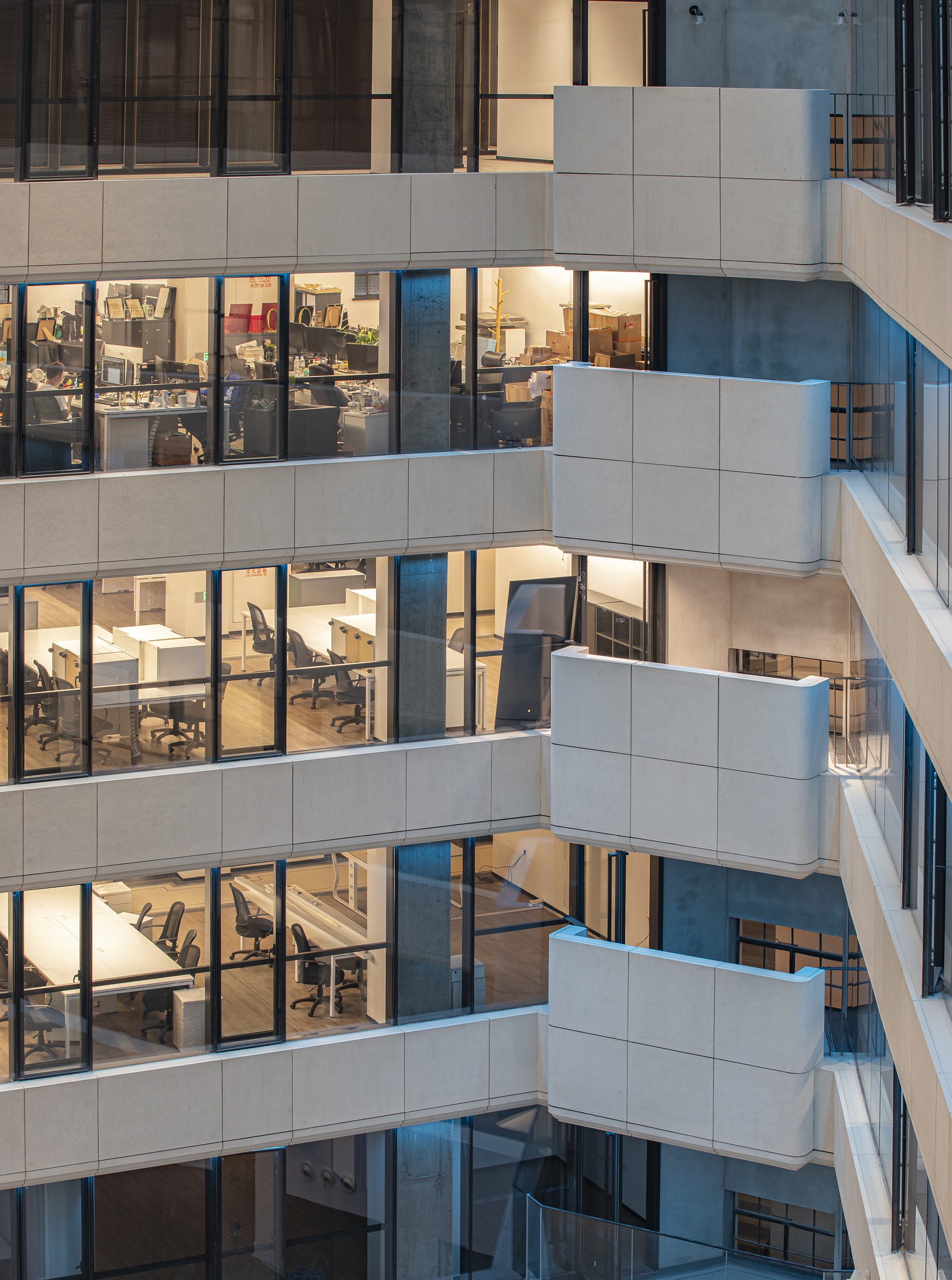
3.形式追随功能:为了解决标准层办公空间采光需求与公寓建筑3.2m层高的矛盾,内庭院立面形式整体采用横向连续长窗的幕墙做法,既避免了新建立面对原始结构造成影响,也将中庭光线最大化引入室内。在首层空间,为了可以适应多种公共活动和展览的实现,我们希望可以打造一个类似于美术馆的极简纯净空间,可以作为一个完美的背景,来呈现未来发生的任何展览和活动。
a.横向连续长窗
为了解决标准层办公空间采光需求与公寓建筑3.2m层高的矛盾,内庭院立面形式整体采用横向连续长窗的幕墙做法,既避免了新建立面对原始结构造成影响,也将中庭光线最大化引入室内。
3. Form Follows Function:
To resolve the conflict between the daylighting requirements of the standard floor office spaces and the 3.2-meter floor height of the apartment building, the inner courtyard facade adopts a curtain wall design with horizontal continuous strip windows. This approach not only avoids impacting the original structure with new additions but also maximizes the introduction of natural light from the atrium into the interior.
On the ground floor, to accommodate a variety of public activities and exhibitions, the aim is to create a minimalist, gallery-like pure space that serves as a perfect backdrop for any future exhibitions and events.
a. Horizontal Continuous Strip Windows: To resolve the conflict between the daylighting needs of standard office floors and the apartment building's original 3.2-meter floor height, the inner courtyard facade employs a curtain wall approach with horizontal continuous strip windows. This avoids impact on the original structure from new facades and maximizes the introduction of atrium light indoors.
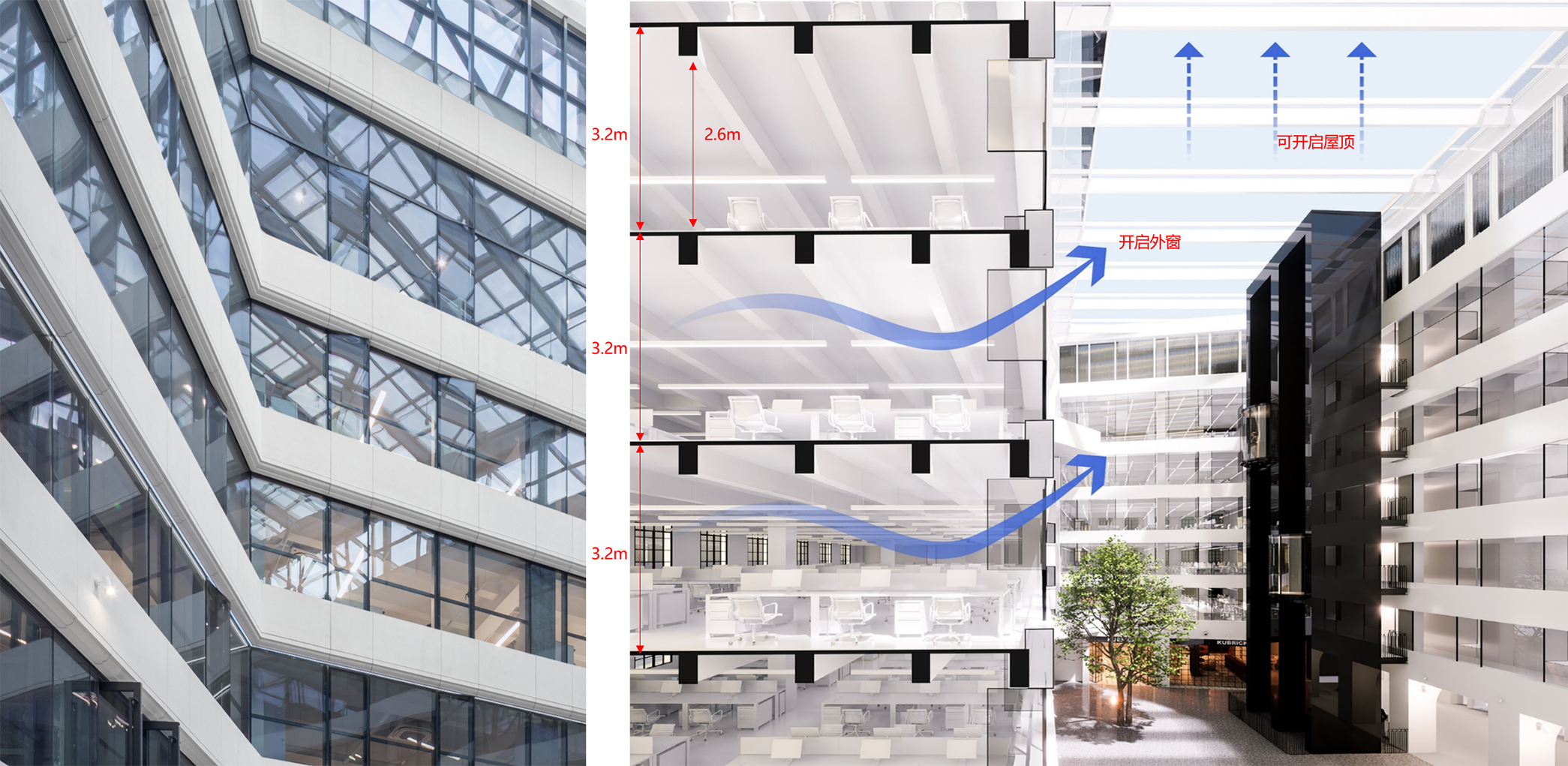
办公空间通风采光分析图
b.可开合屋面
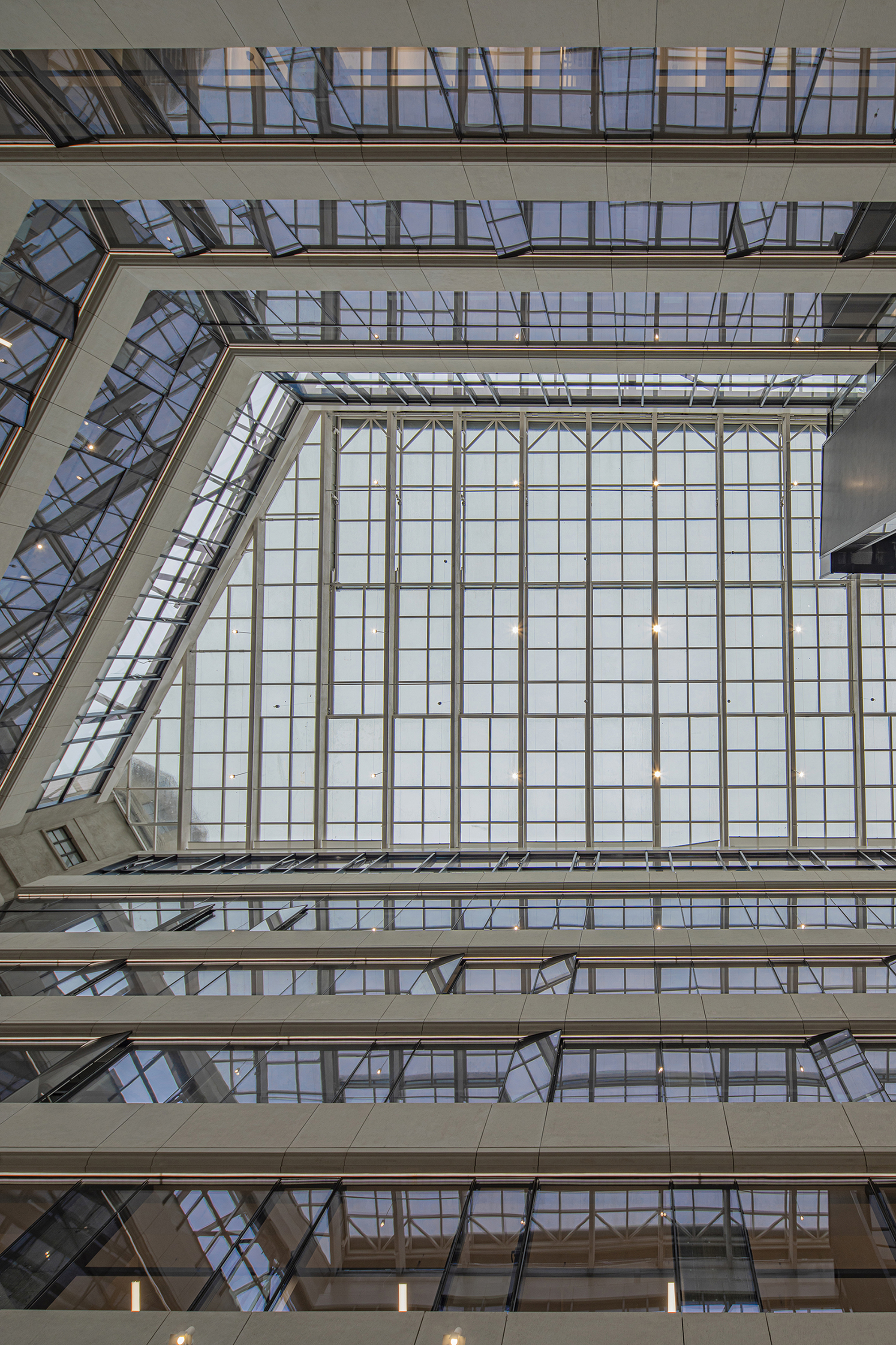
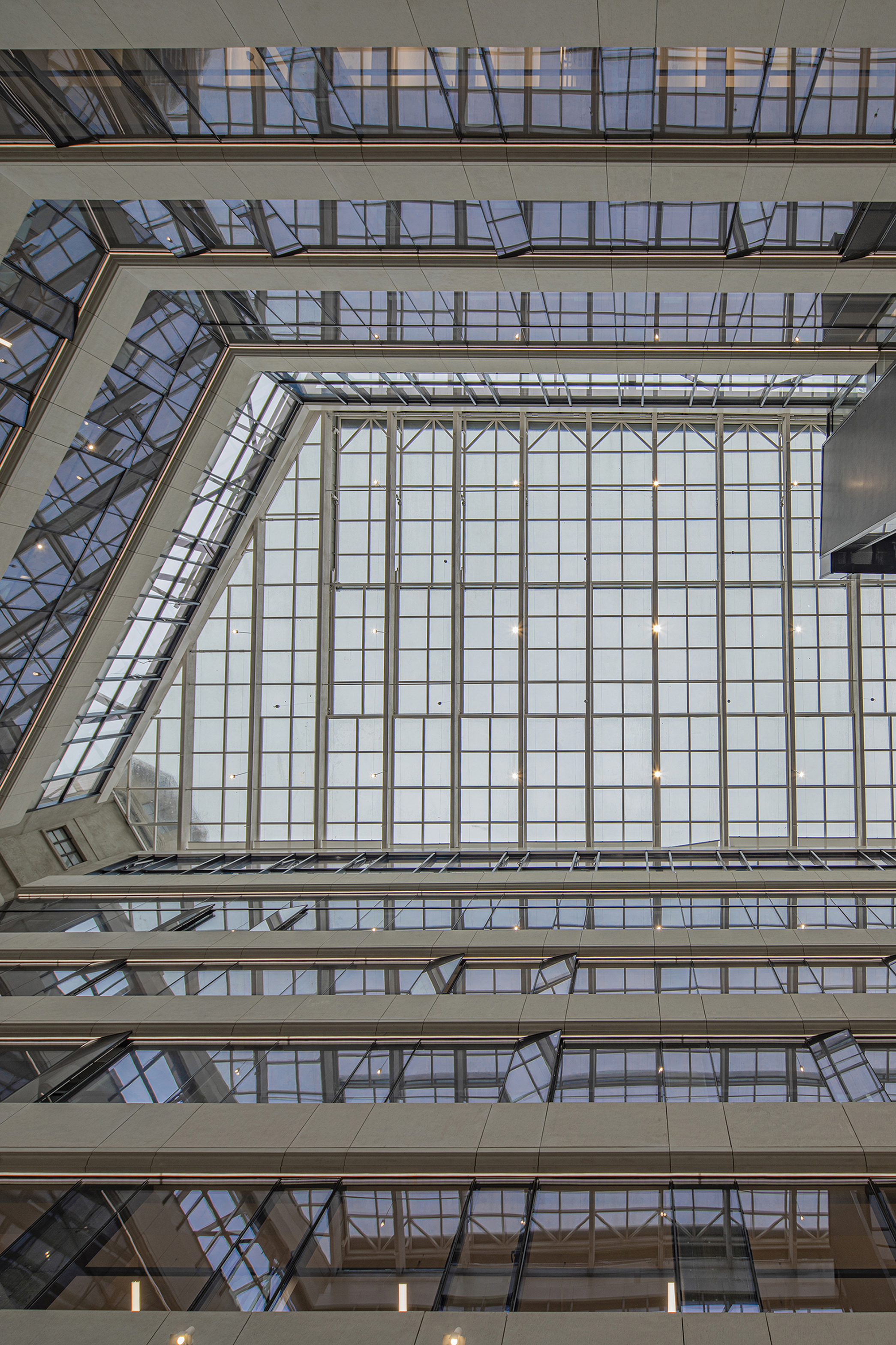
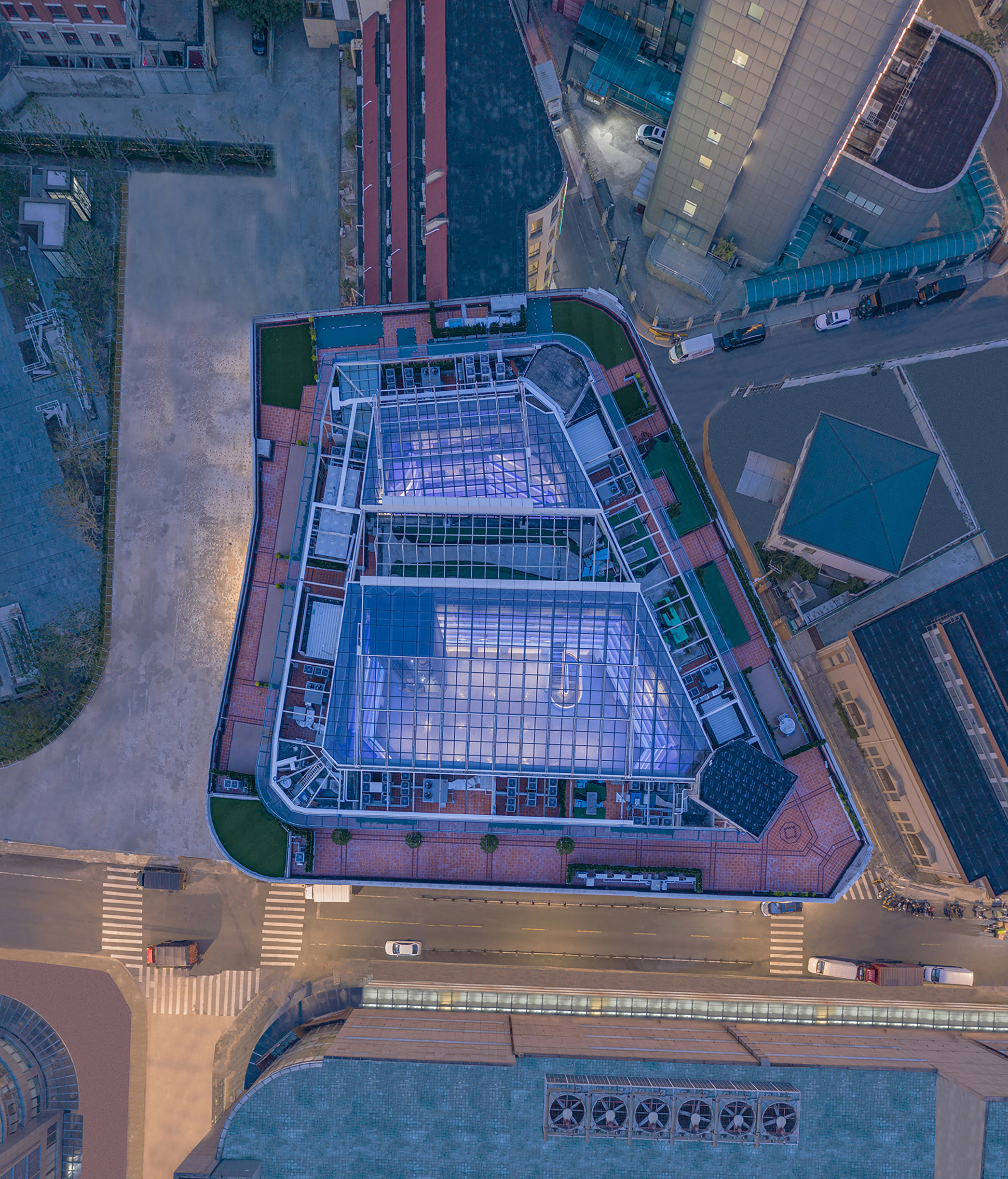
本次修缮设计将原搭建的玻璃顶棚拆除,拆除后采用了可电动开合的新型玻璃顶棚。在天气晴好的时候可以完全将屋面打开。使得传统的中庭空间能够实现室内室外场景的灵活转化,提供了全新的多功能使用场景。取得了“一种重力自下滑开启天窗结构、装置及消防系统”实用新型专利。
b. Operable Roof: The restoration design removed the originally added glass canopy and replaced it with a new, electrically operable glass roof. This roof can be fully opened in fine weather, allowing the traditional atrium space to flexibly transform between indoor and outdoor scenarios, providing new multifunctional usage possibilities. This solution obtained a utility model patent for "A Gravity Self-Sliding Opening Skylight Structure, Device, and Fire Protection System."
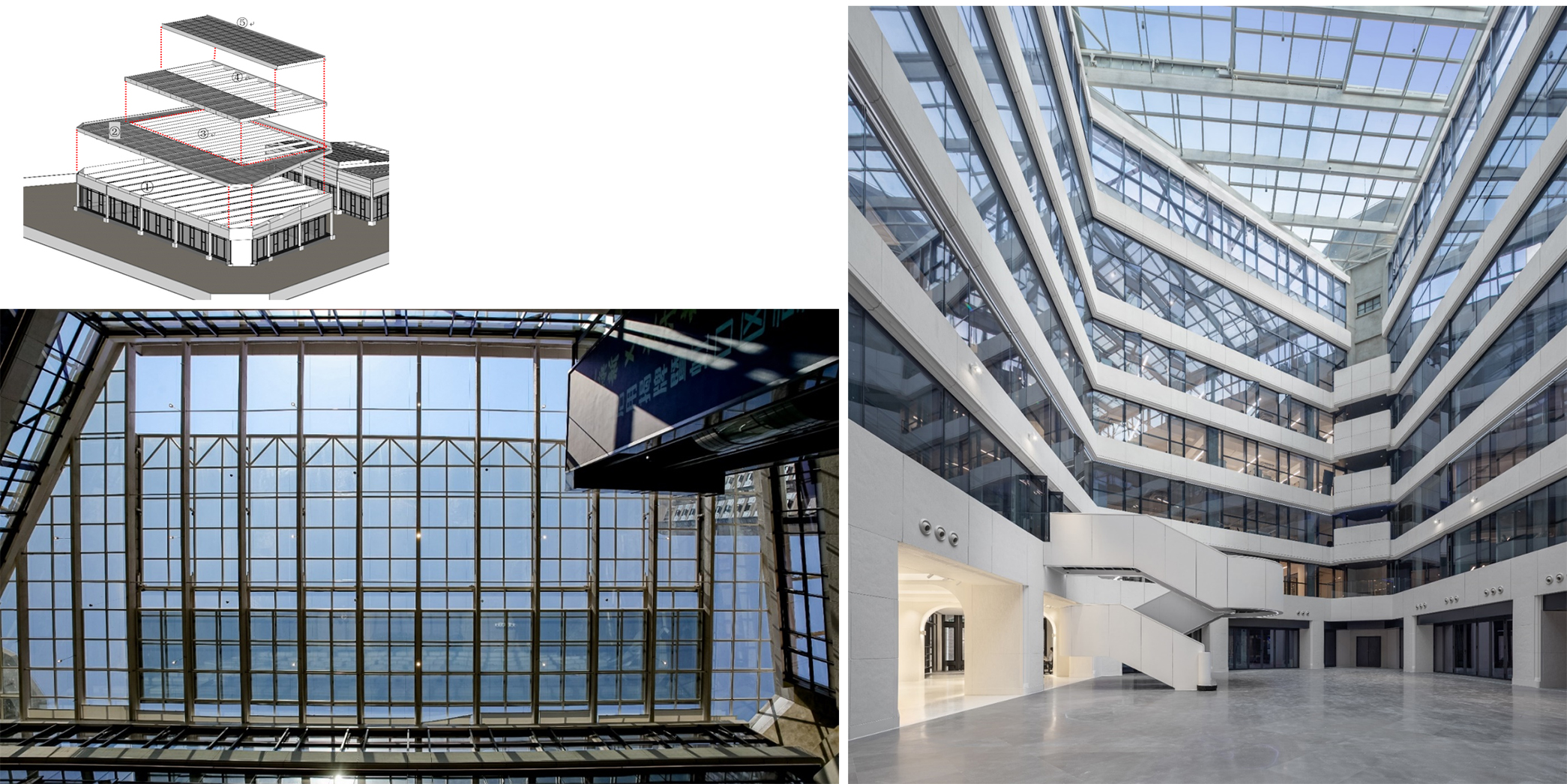
办公空间通风采光分析图
©颜洪熙 Photo by Yan Hongxi
c.巧妙组织机电管线
c. Ingenious Organization of MEP Lines
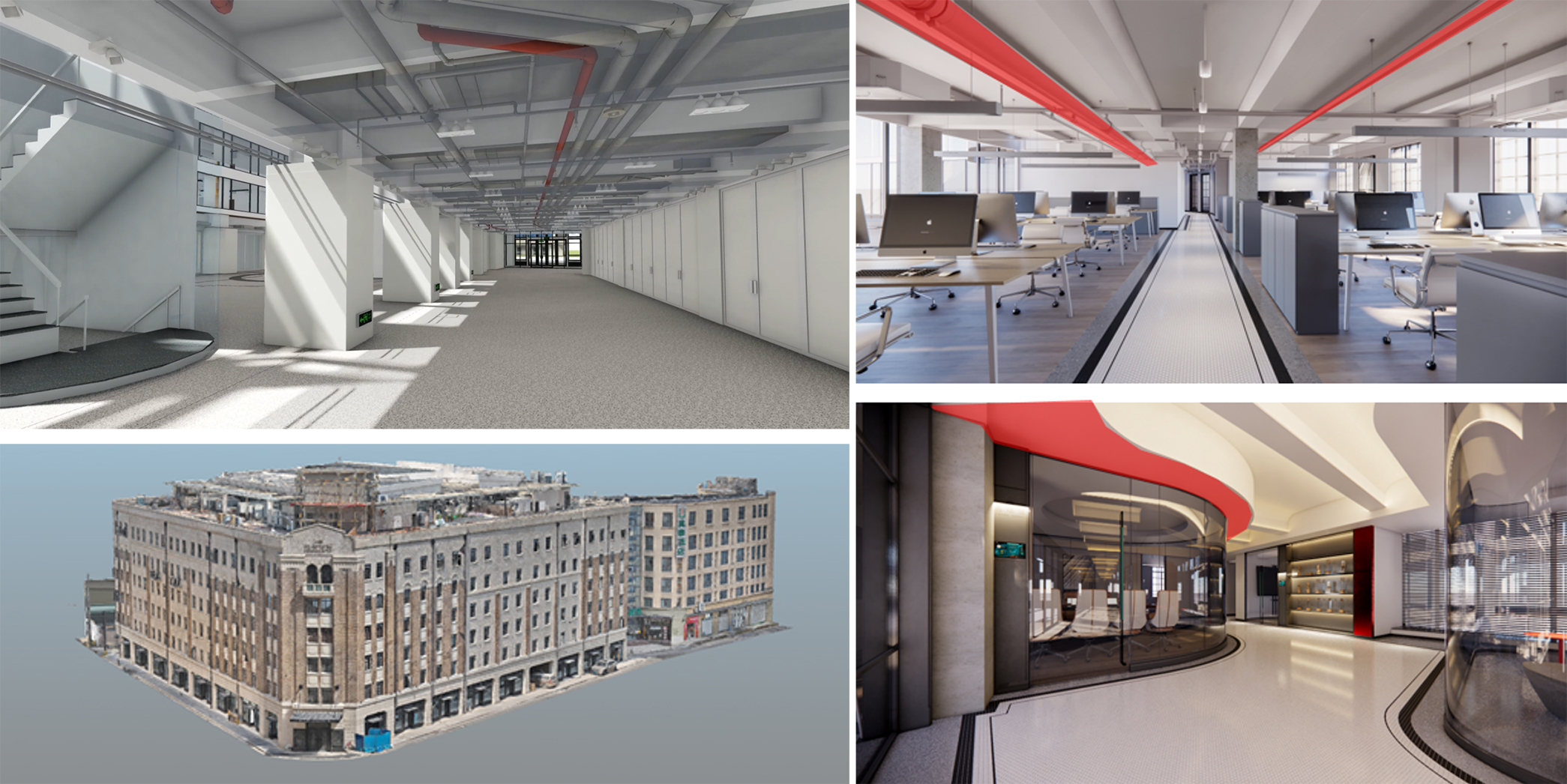
BIM-扫描图-室内效果图
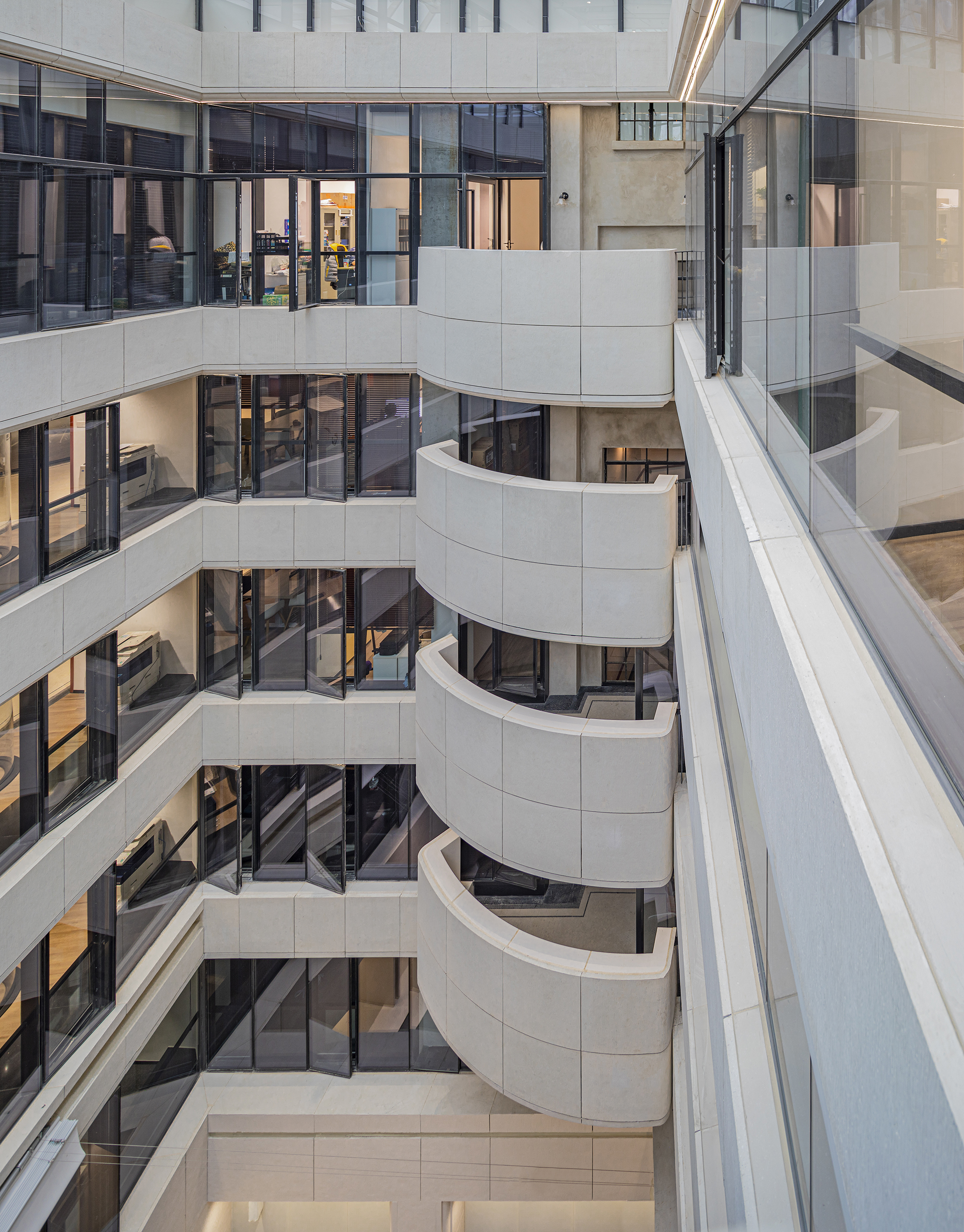
4.极简美学,新旧呼应:内中庭立面主要采用白色GRC材料,并且表面做仿斩假石肌理处理,让新材料注入历史的基因。线脚细节上采用建筑东南入口极具代表性的原始设计圆弧造型,既做到了内与外的设计呼应,又为建筑新生部分增添了故事性的设计语言,让到访的人们读得出建筑深厚的历史底蕴。
4. Minimalist Aesthetics, Old and New Echoing: The inner atrium facades primarily use white GRC material with a surface texture mimicking artificial stone, infusing new materials with historical genes. The detailing of moldings adopts the highly representative original design's curved forms from the building's southeast entrance, creating design coherence between inside and outside, while adding a narrative design language to the renewed parts of the building, allowing visitors to perceive its profound historical.
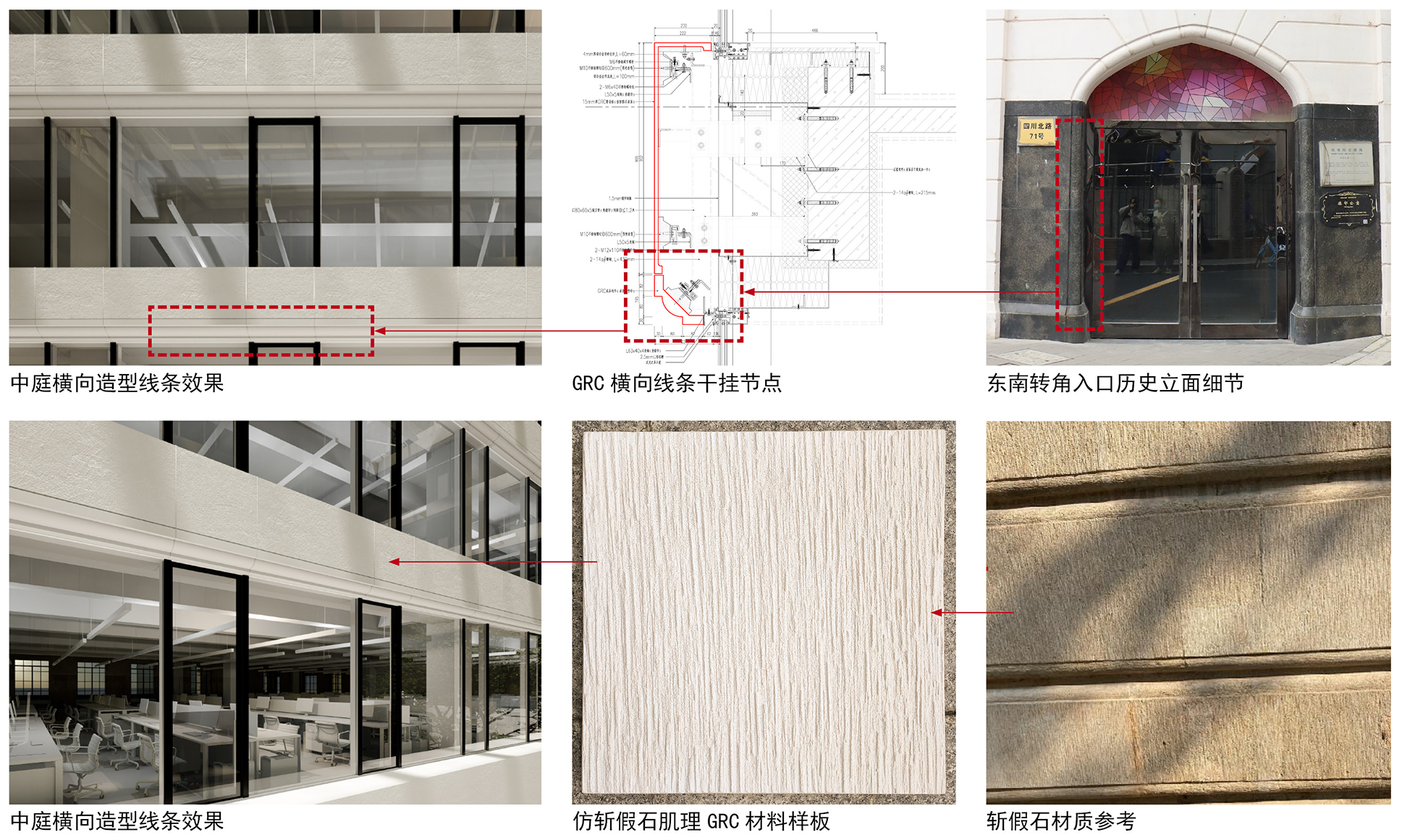
GRC材料研究分析图
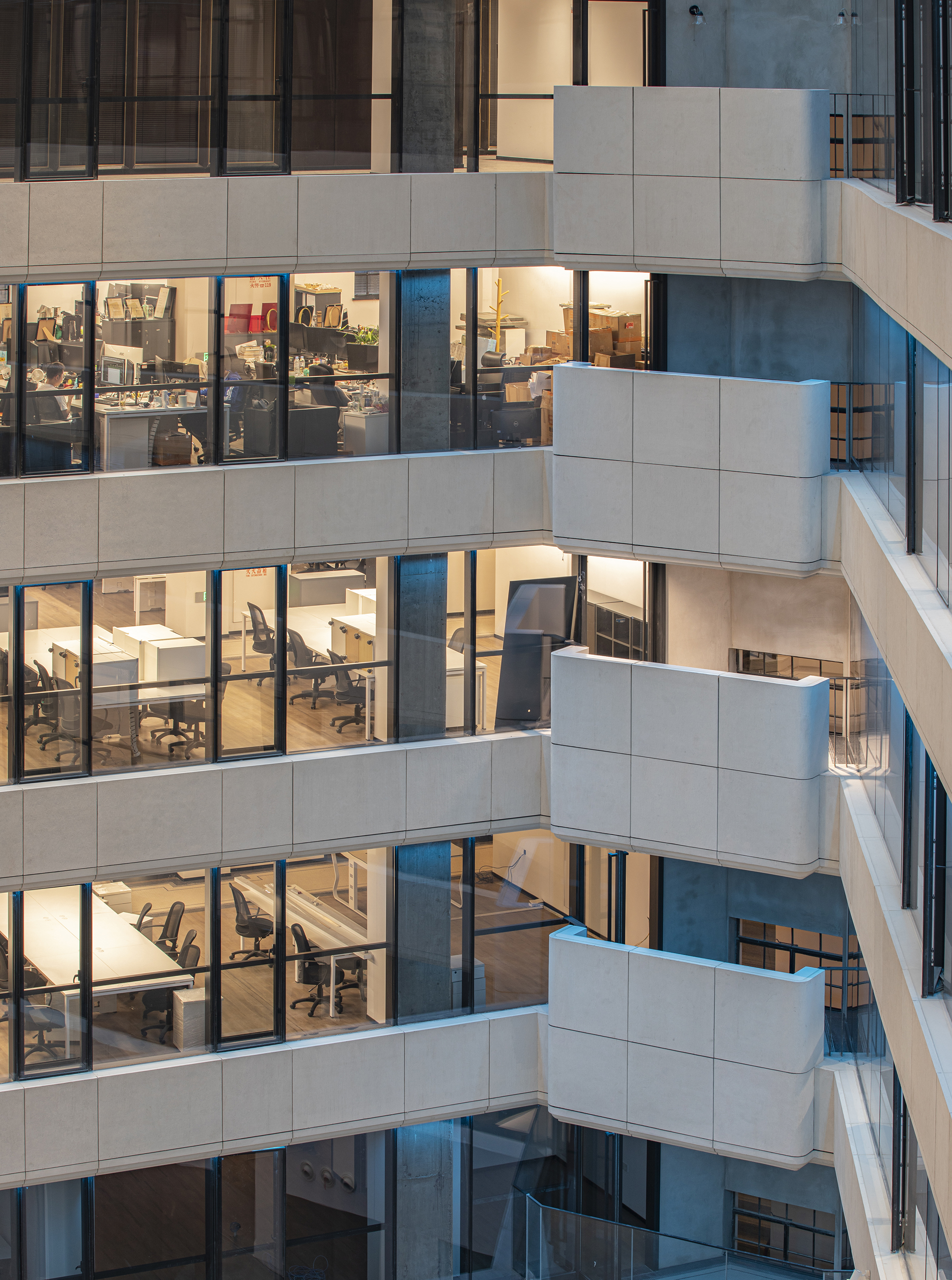
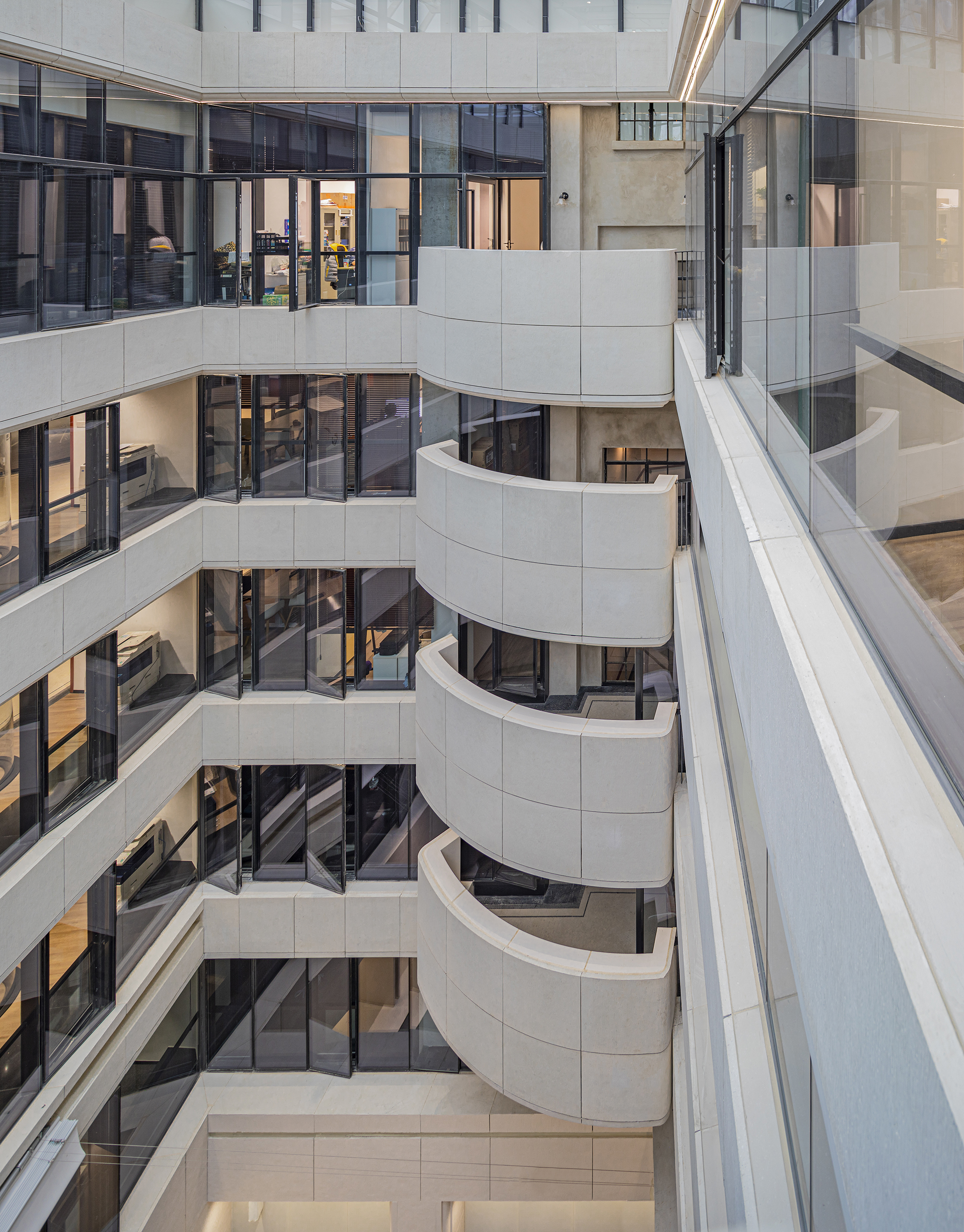
对于历次改建、修缮的重要历史信息,如室内中庭在建筑作为商场使用期间,角部搭建了很多钢结构平台,此次修缮采取完整保留。值得一提的是,在对角部平台内立面的修缮中,基于其内侧的楼梯间为历史重点保护修缮部位,为将这一重要信息有效在内庭得以展示,此次修缮设计未对这一部分内立面做过多的干预,仅以简单的水泥粉刷此处立面,形成历史信息的外化呈现。
Important historical information from various modifications and repairs, such as the many steel structure platforms built in the corners of the interior atrium during its use as a shopping mall, have been completely retained in this restoration. It is worth mentioning that for the restoration of the inner facade of these corner platforms, considering that the stairwell behind them is a key historically protected area, and to effectively display this important information within the atrium, the design did not overly intervene with this part of the inner facade. Only simple cement plaster was applied, making the historical information visibly manifest.
©颜洪熙 Photo by Yan Hongxi
©颜洪熙 Photo by Yan Hongxi
Forest House | Triangular architects
新天地东台里丨Kokaistudios
Parede Townhouses丨extrastudio
上海德邻公寓优秀历史建筑修缮工程丨UA尤安设计

UA 7/8 课堂(第十一期)

UA 7/8 课堂(第九期)

【命题2023-2024】Designverse Awards设计宇宙大奖报名通道全球开放!(完整版)
南头城社区中心 | 非常建筑
Villa Rossi丨G. Studio

订阅我们的资讯
切勿错过全球大设计产业链大事件和重要设计资源公司和新产品的推荐
联系我们
举报
返回顶部