

运河小亭驿Canal Pavilion Post丨造作建筑工作室
造作建筑工作室 ,发布时间2025-09-25 10:31:00





项目名称:运河小亭驿
项目类型:公共空间、休闲娱乐、城市更新
设计方:造作建筑工作室
设计内容:改造更新
公司网站:www.zaozuodesign.com
联系邮箱:1260297209@qq.com
项目起始时间:2024年11月
项目竣工时间:2025年2月
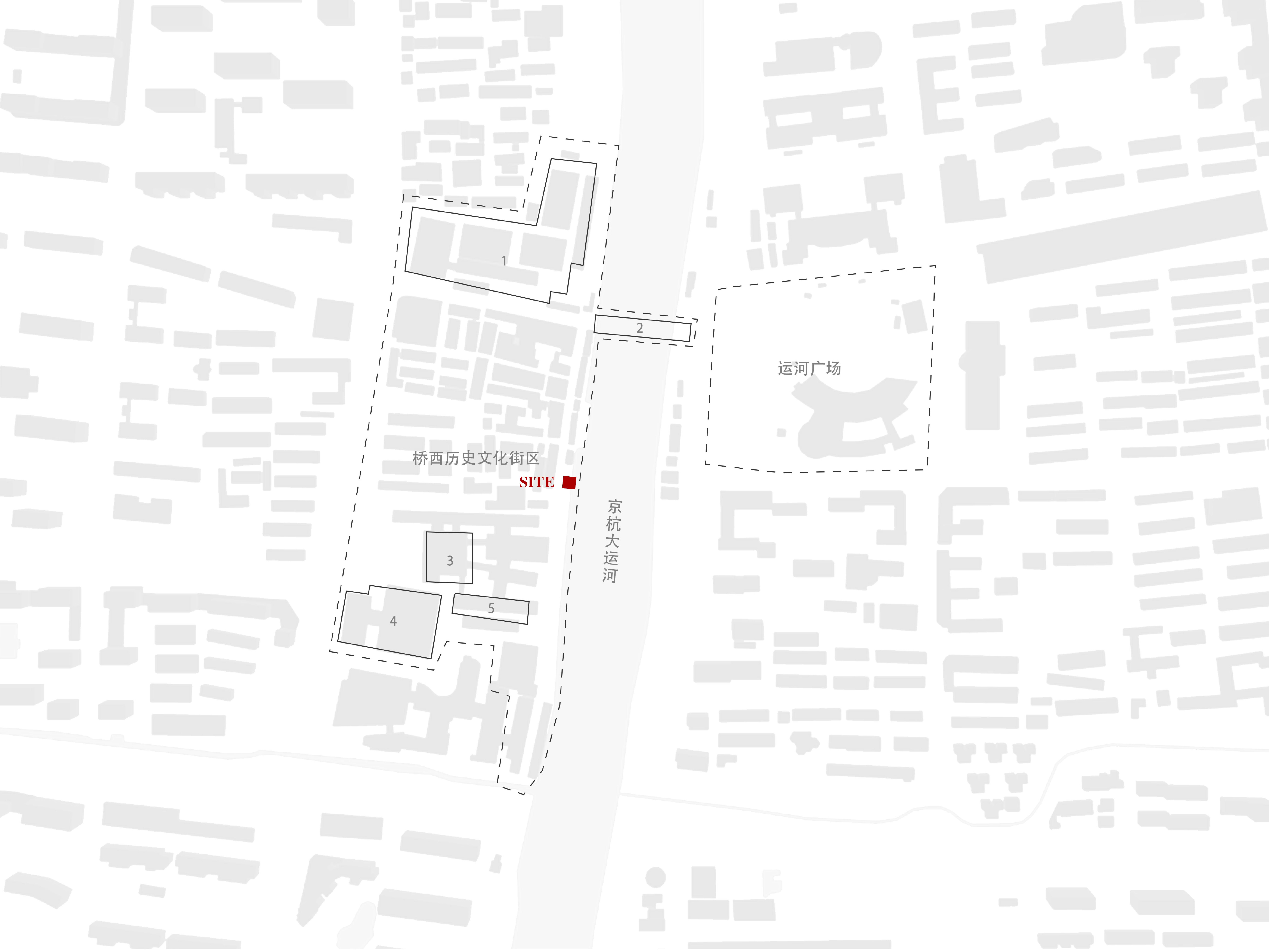
项目地址:浙江省杭州市拱墅区京杭大运河杭州段的拱宸桥边
建筑面积:10㎡
主创建筑师:沈悦、戴文竹
设计团队成员:孟文涛、朱婷婷(实习)、张余婕(实习)
业主单位:拱宸桥街道
施工方:刘宝山团队
项目配合:杭州简与真文化创意有限公司
灯光:杭州荣熙照明工程有限公司
摄影版权:吴清山
主要材料:海洋板、阳光板、波浪板
版权声明:本链接内容均系版权方发布,版权属于 造作建筑工作室,编辑版本版权属于设计宇宙designverse,未经授权许可不得复制转载此链接内容。欢迎转发此链接。
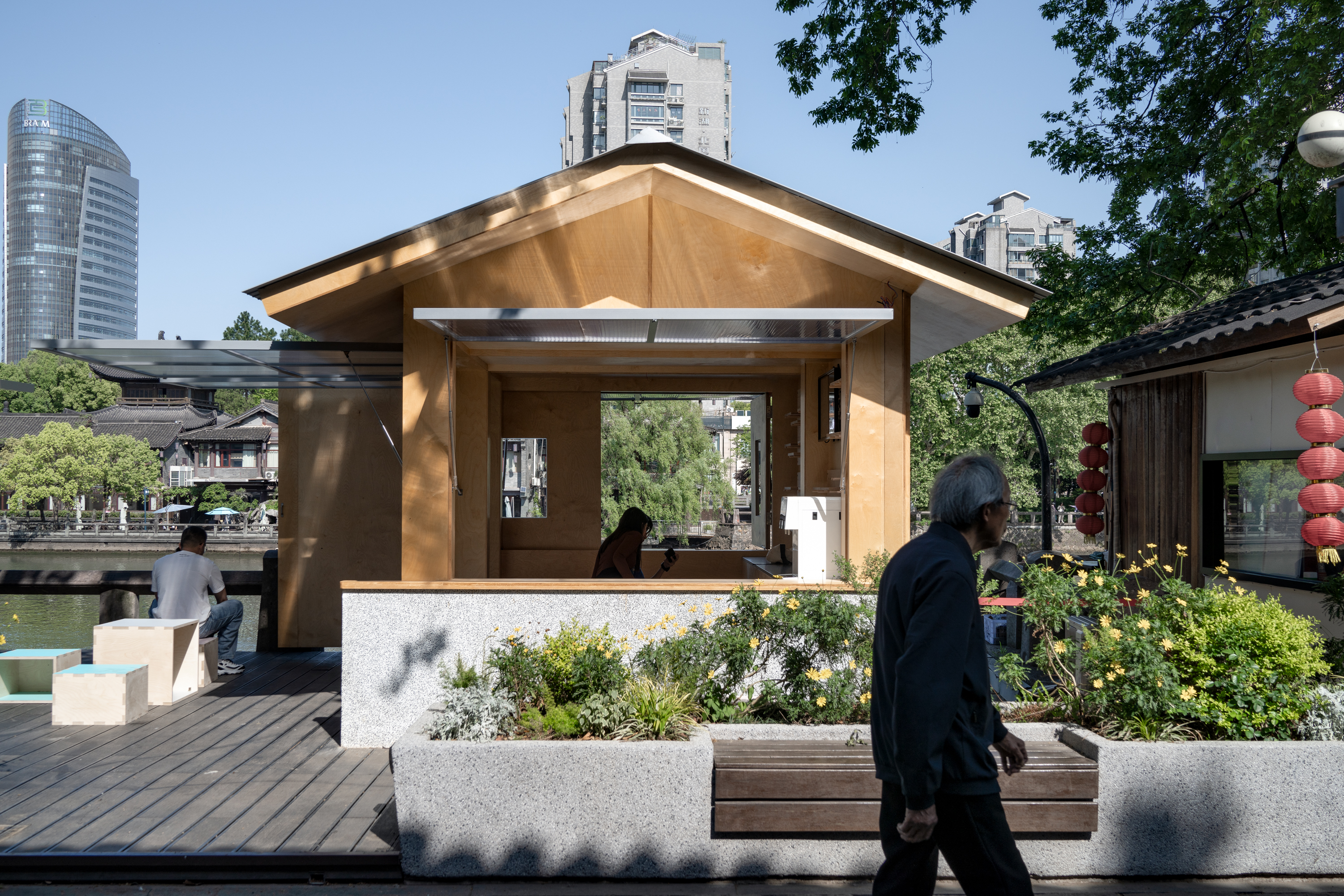
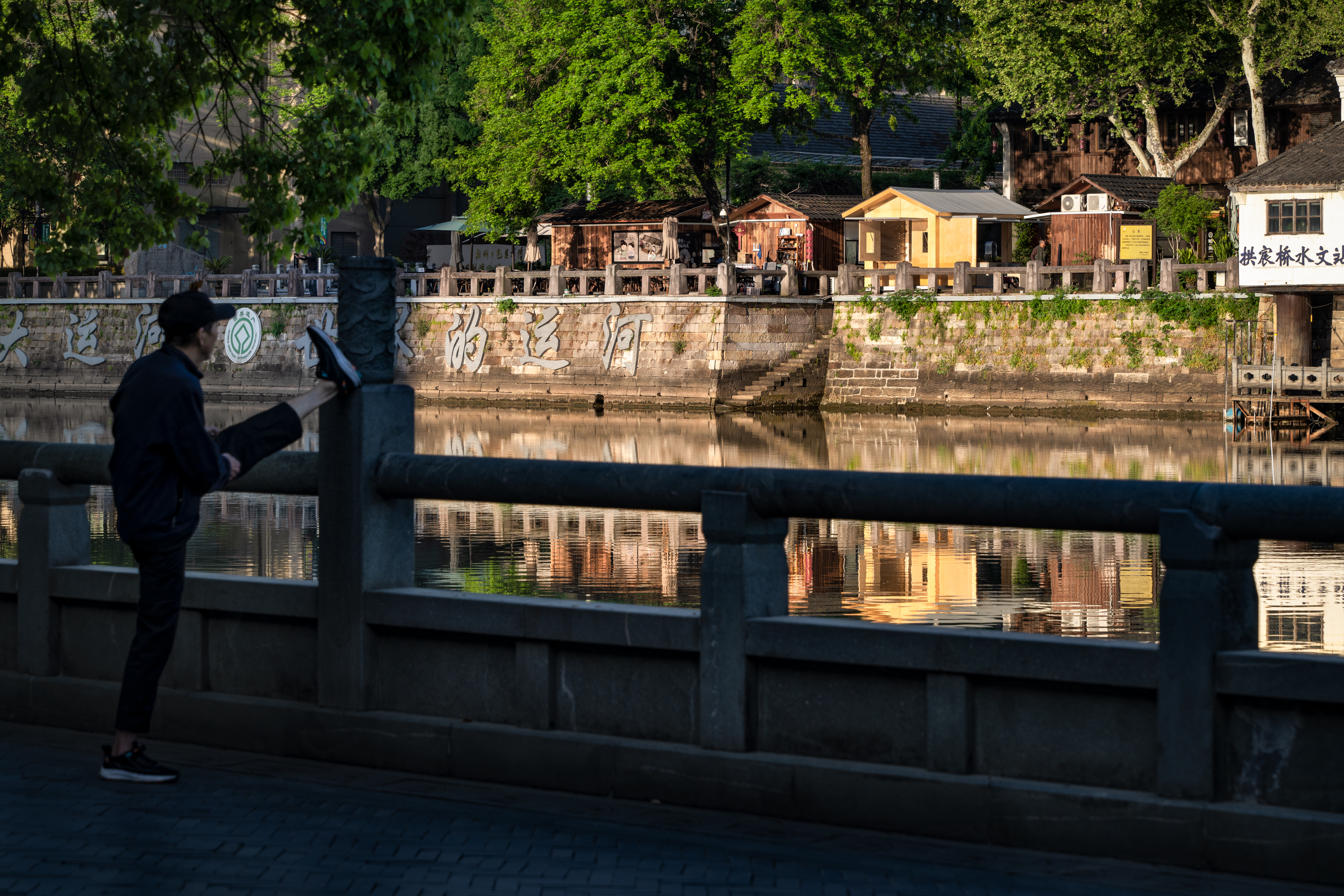
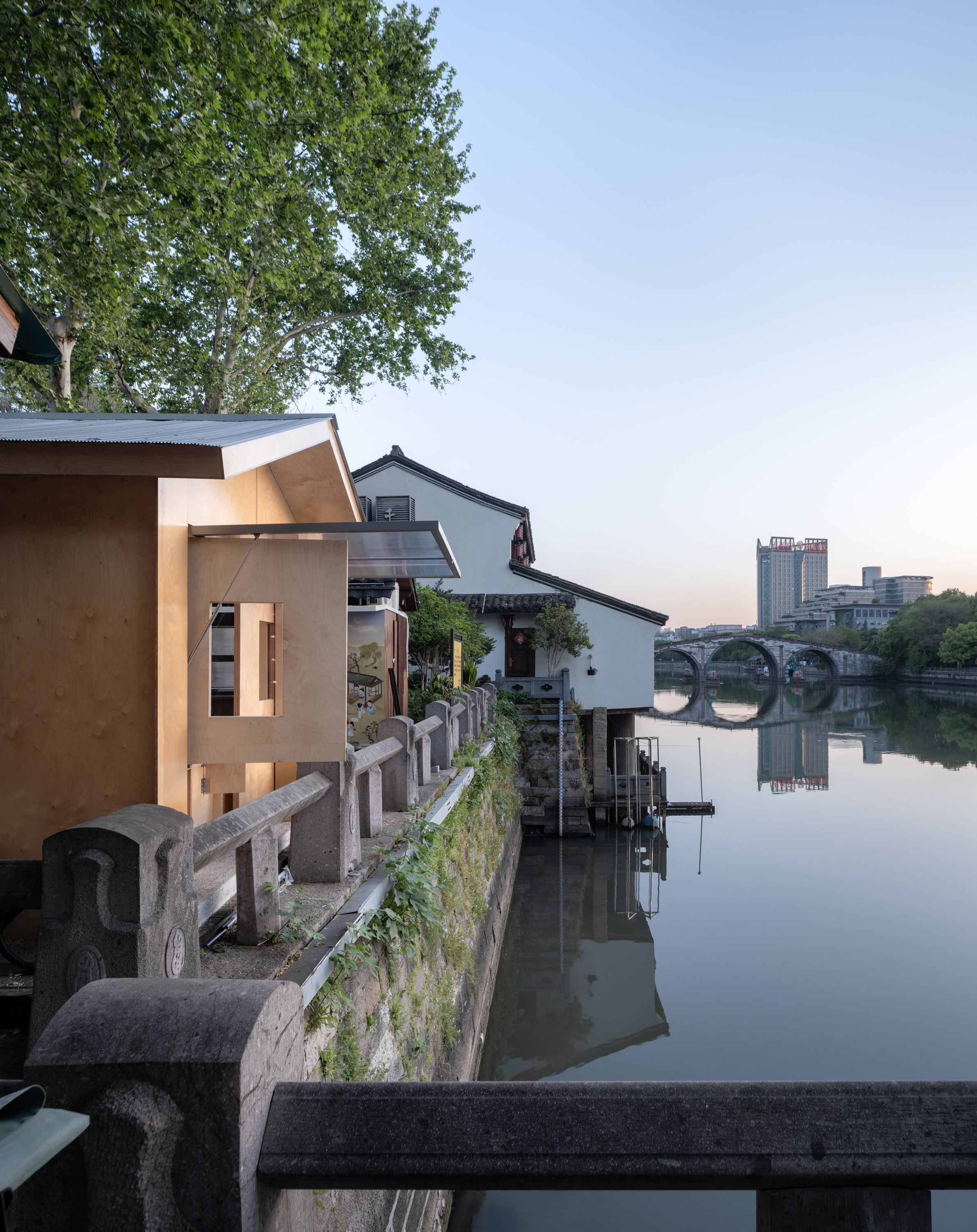
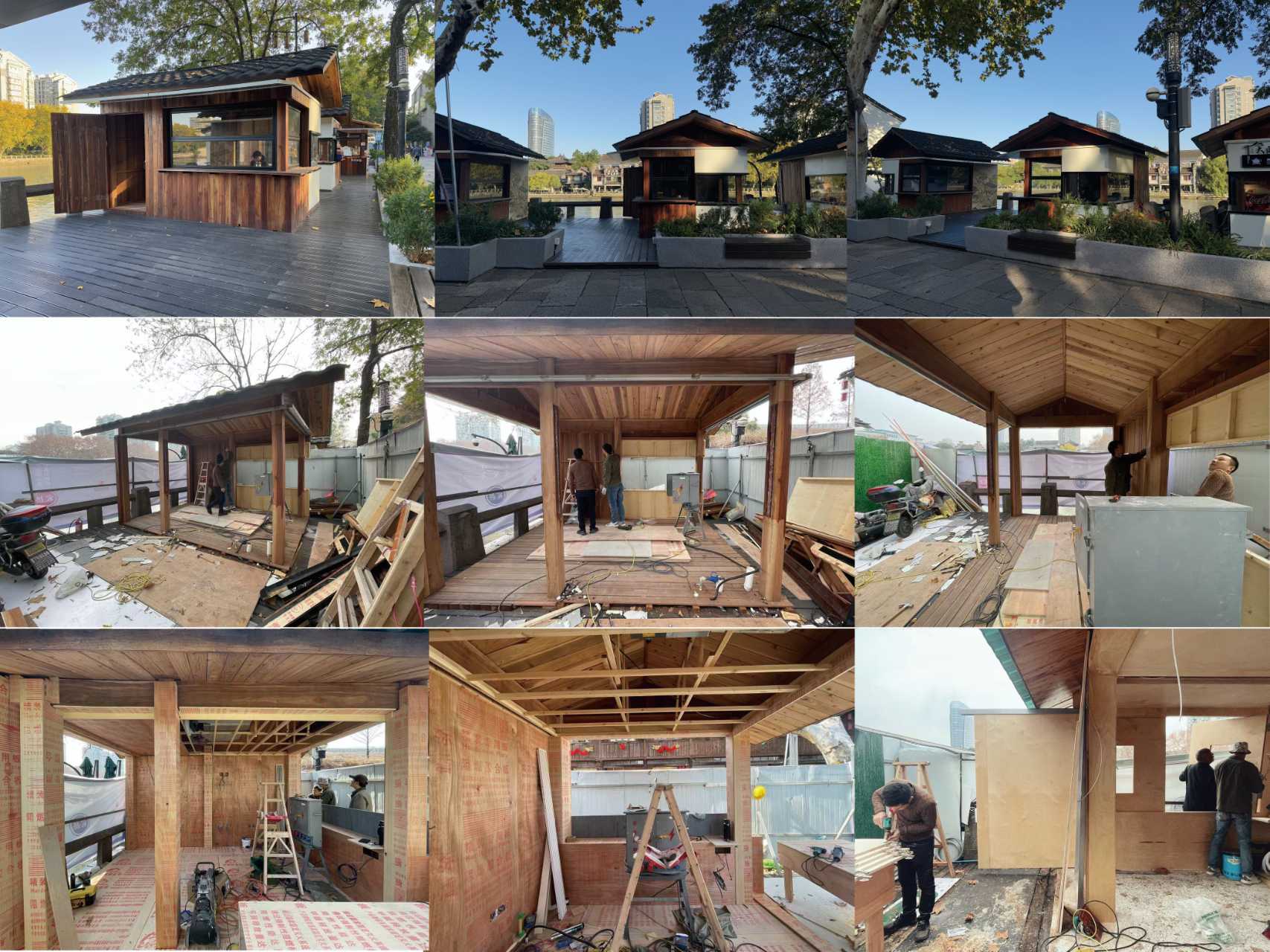
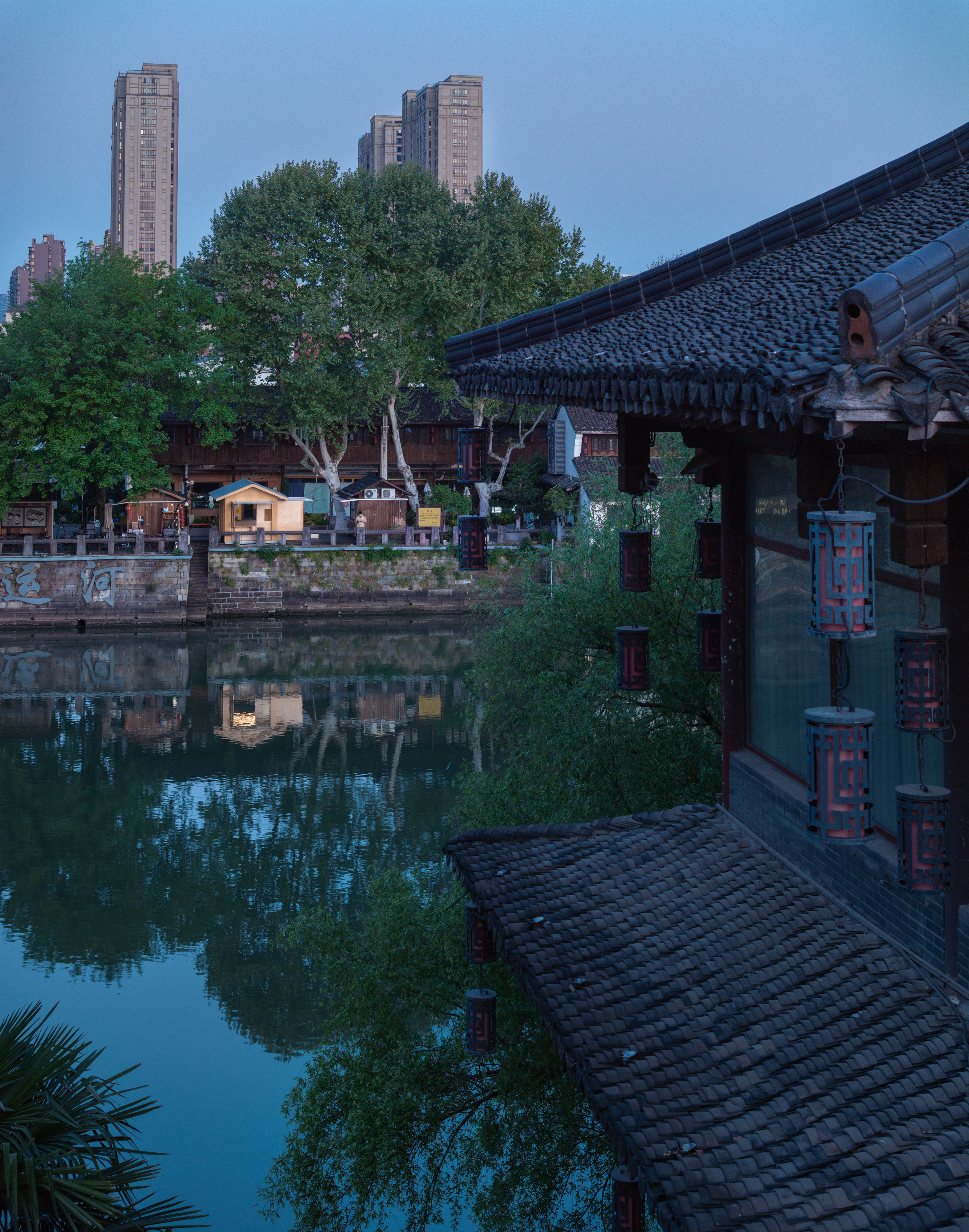
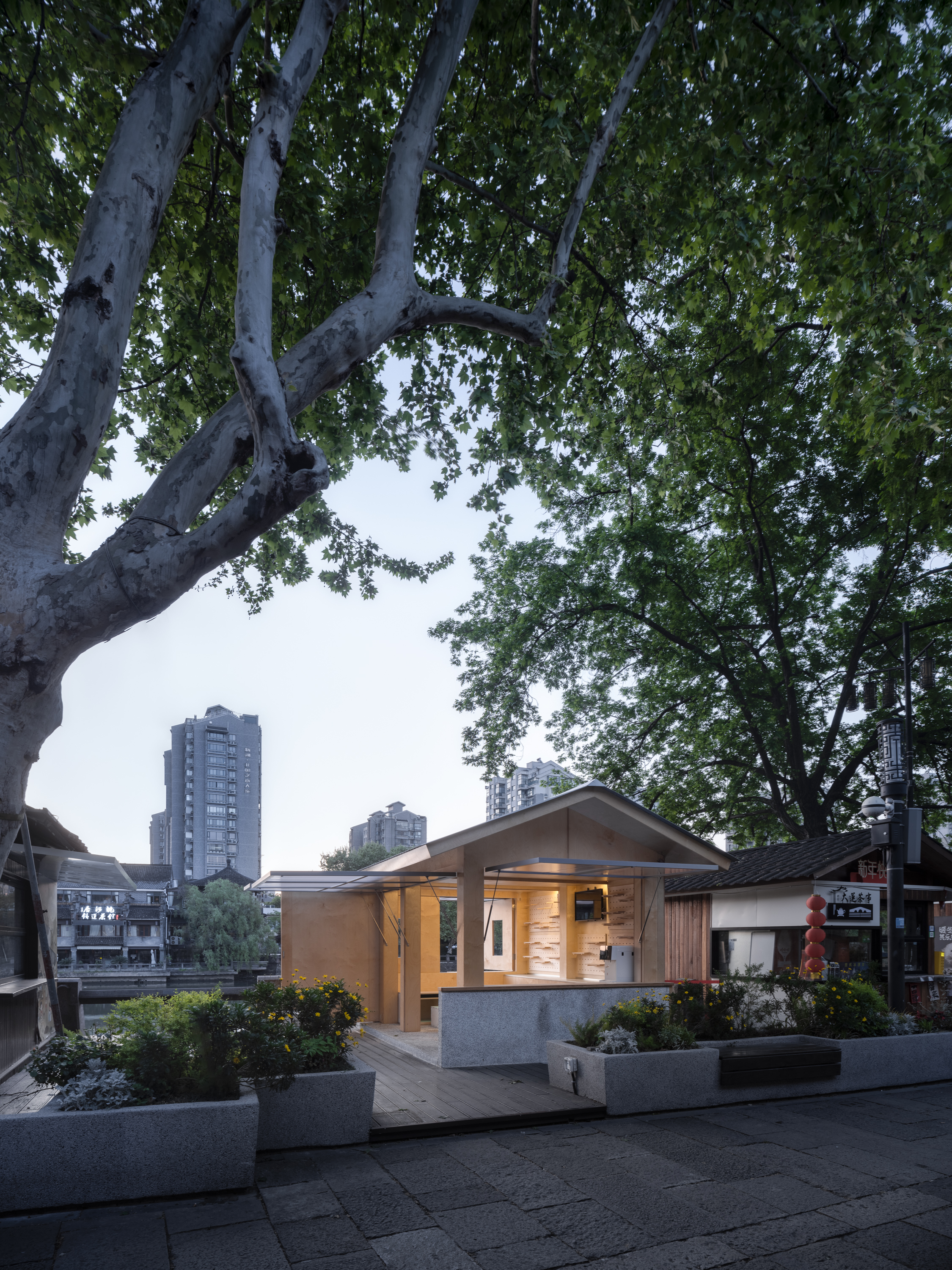
运河小亭驿坐落于浙江省杭州市拱墅区,位于京杭大运河杭州段拱宸桥畔,属于桥西历史文化街区范围内,是服务游客与市民的微型公益公共驿站。以下系造作建筑工作室提供的图文资料:
概况 Overview
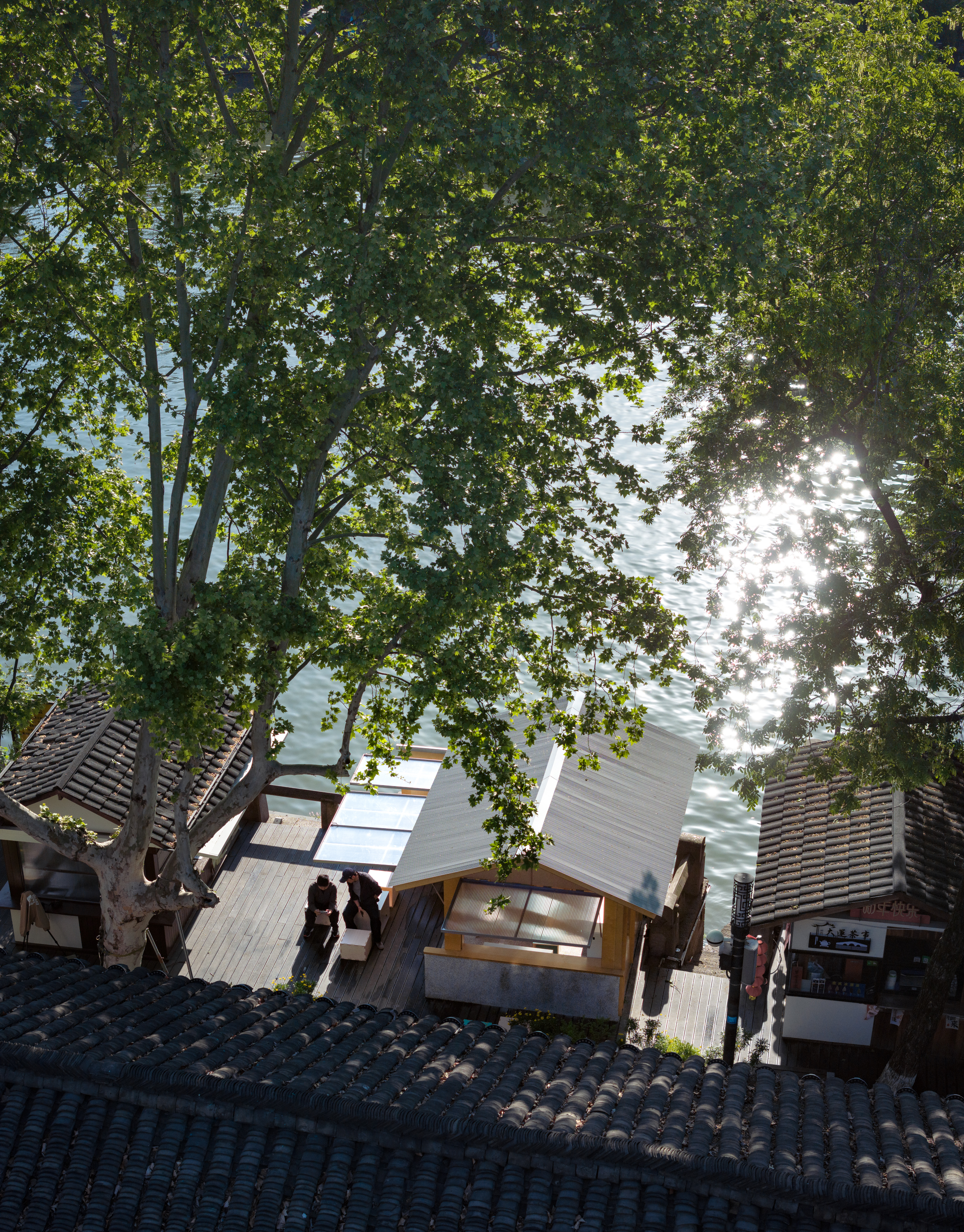
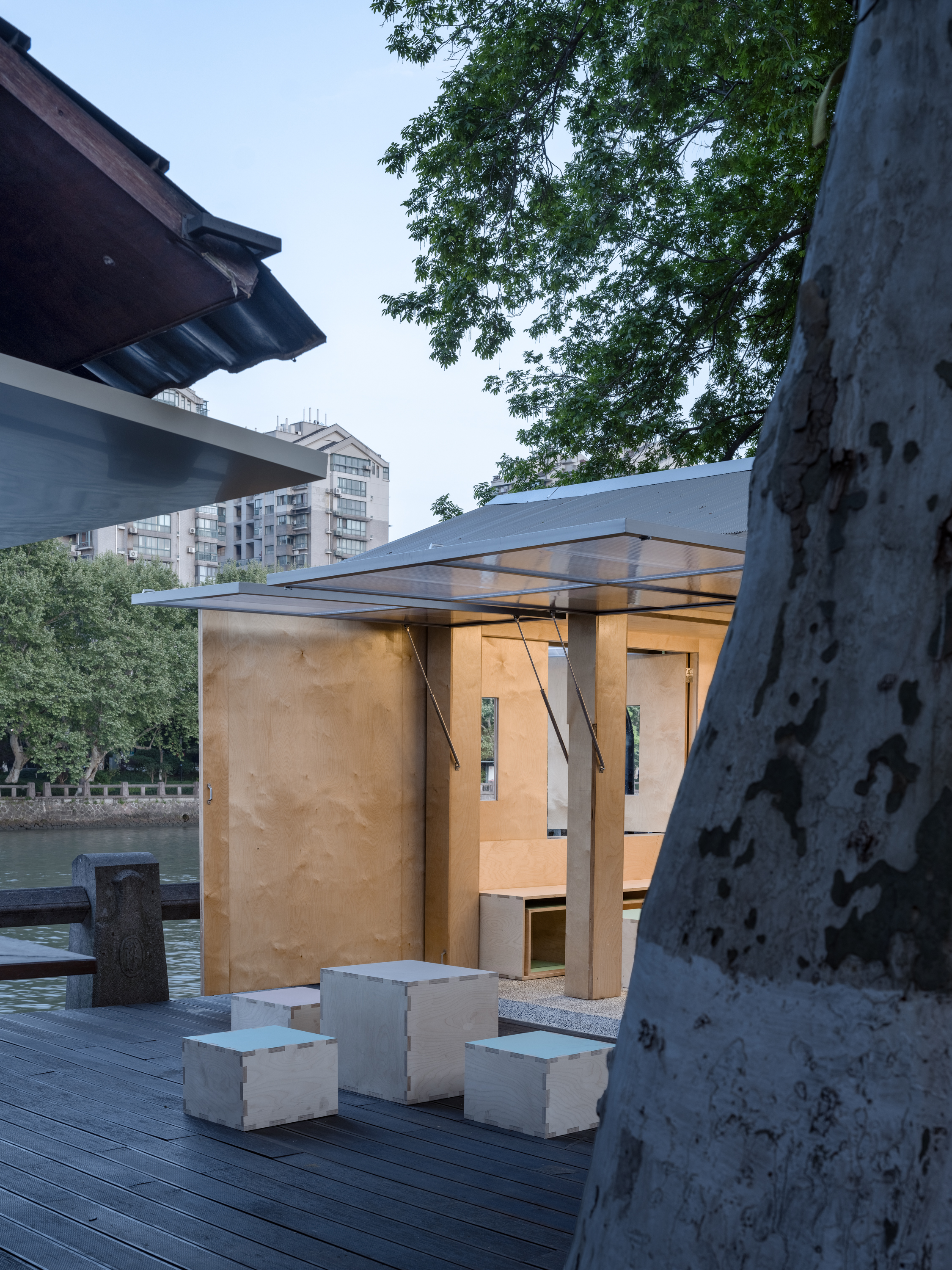
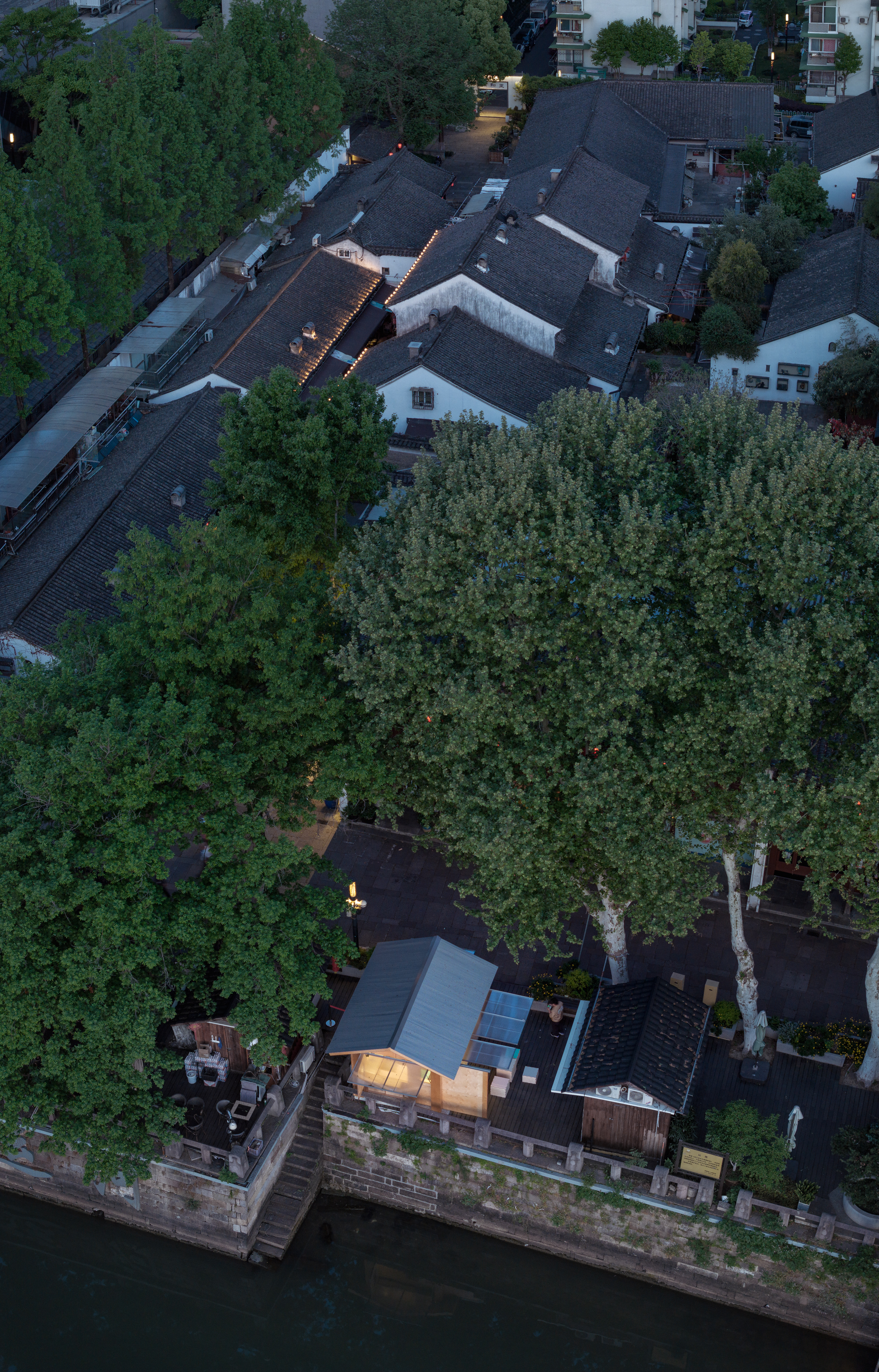
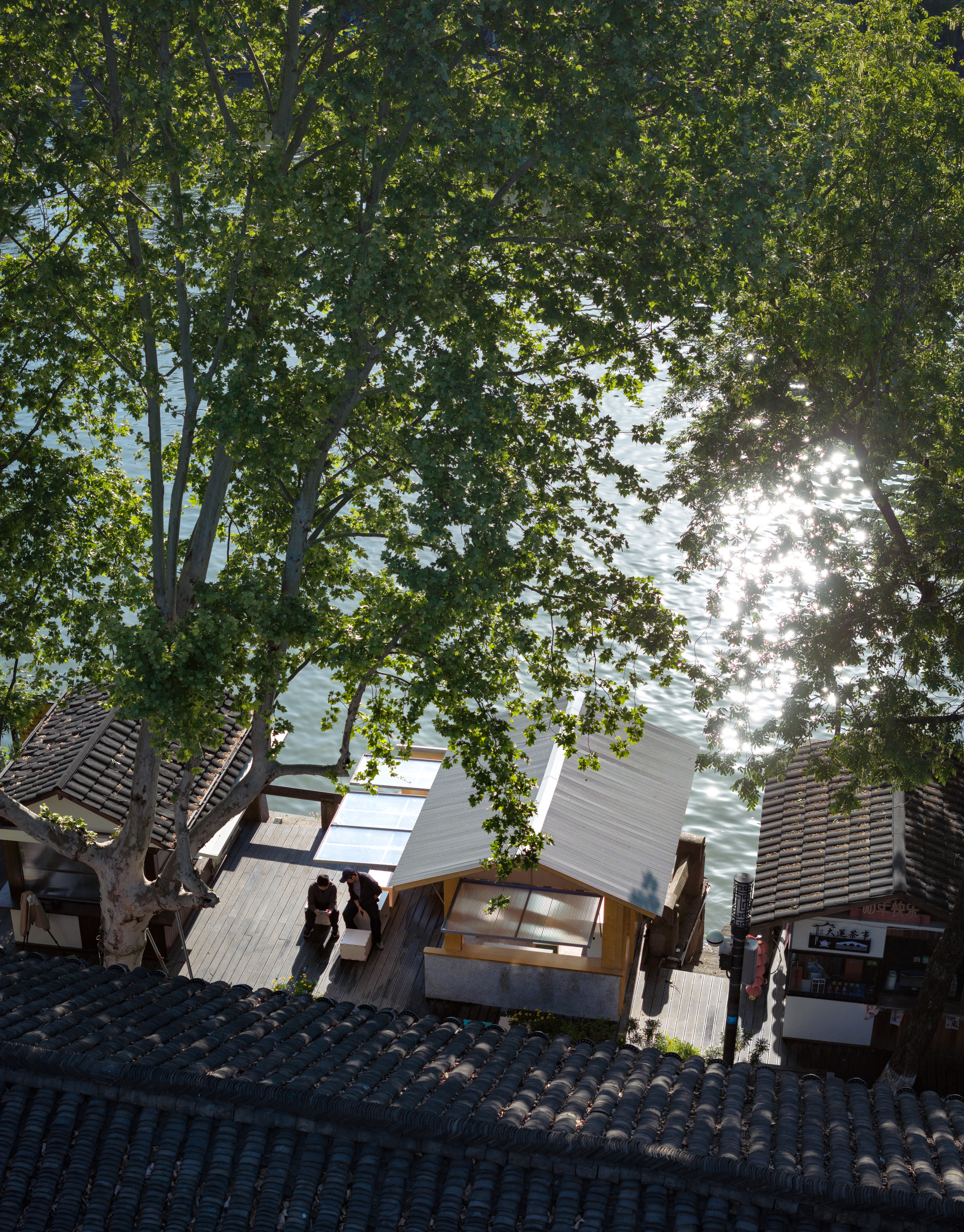
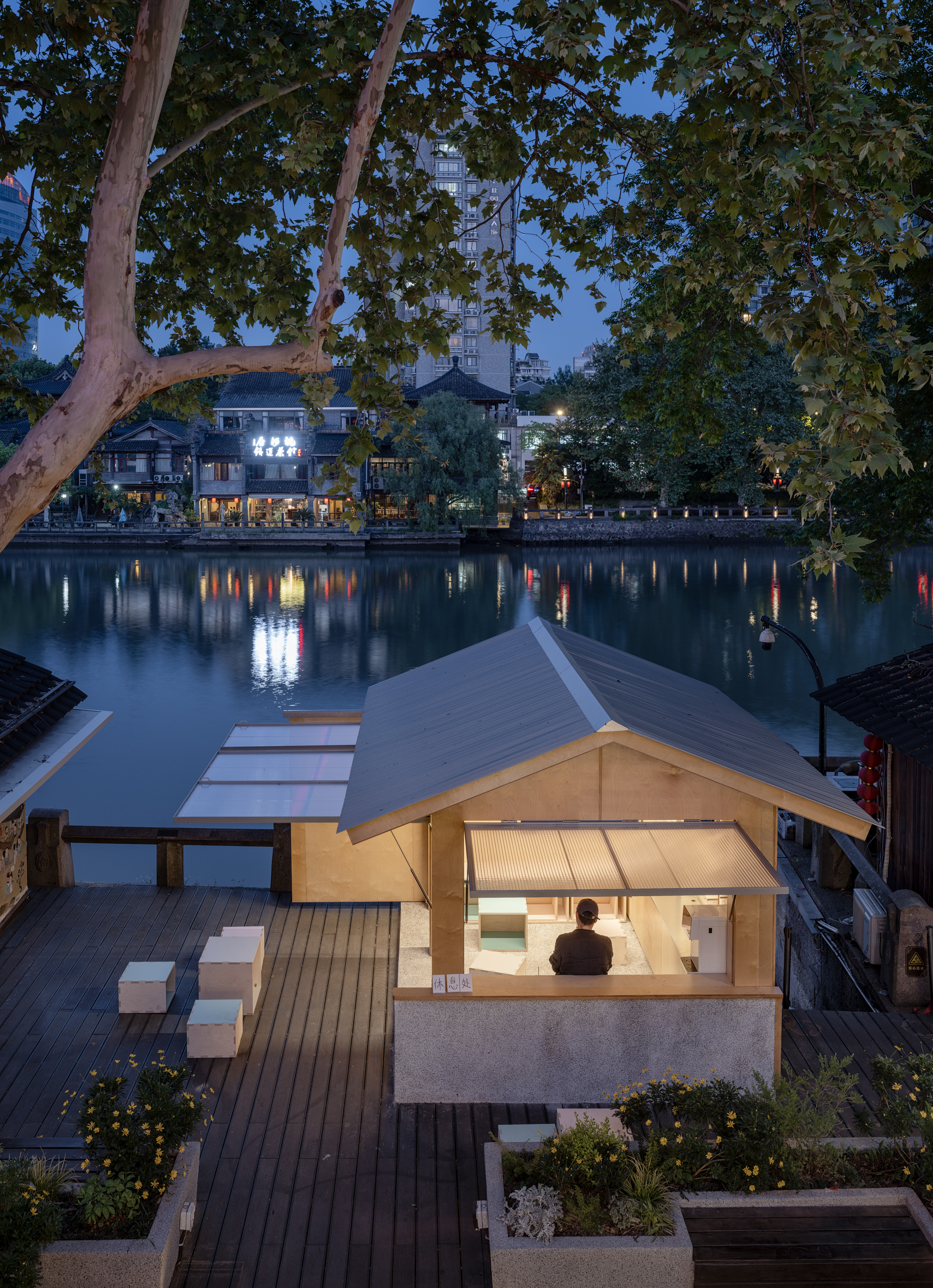
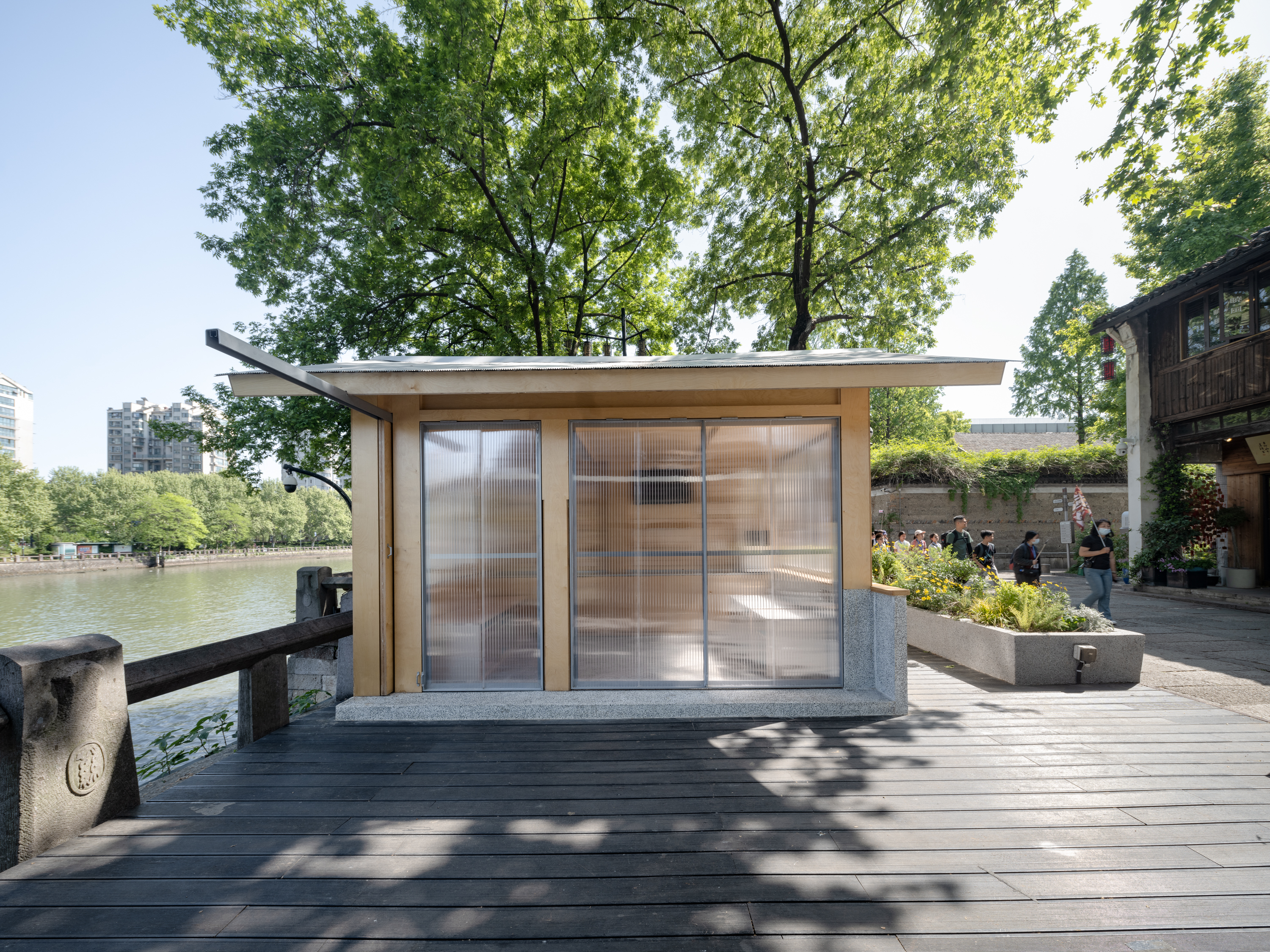
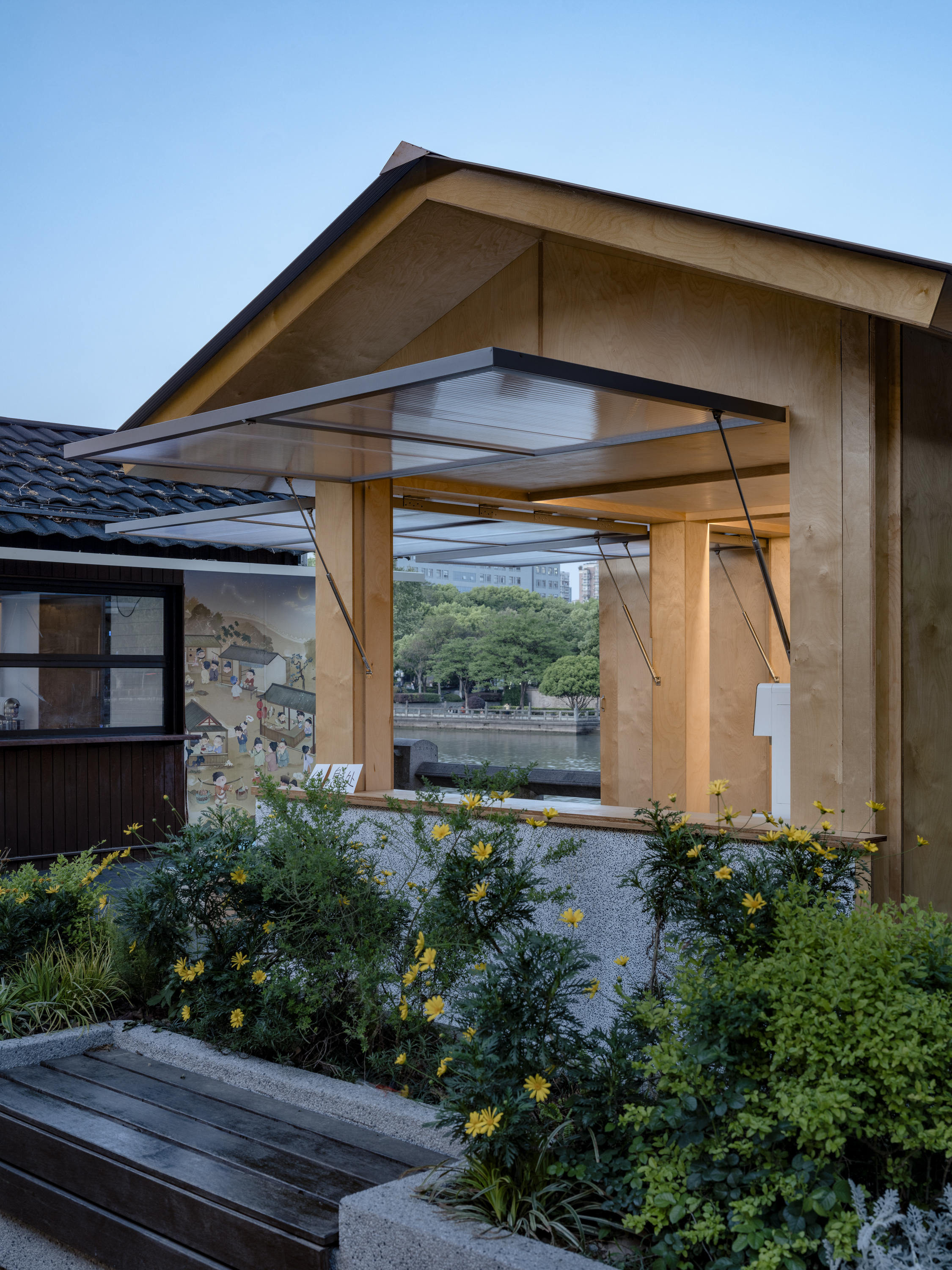
运河小驿站是个公益性质的临时建筑改造项目,位于京杭大运河杭州段的拱宸桥边。十平见方,二米多高,简易木构。我们习惯叫它小盒子,因为方正简单,一目了然。业主希望把原本空置的木屋改造成一个景点驿站,免费提供游客饮水休憩,同时作为街道以及拱宸桥,这座杭州标志性历史建筑的宣传点,销售一些旅游纪念文创产品。
Canal Pavilion Post is a public welfare renovation project of a temporary building, located by Gongchen Bridge on the Hangzhou section of the Beijing-Hangzhou Grand Canal. It covers an area of 10 square meters, stands over 2 meters high, and has a simple wooden structure. We are used to calling it "Little Box" because of its square and simple shape, which makes it easy to understand at a glance. The client hopes to transform this originally vacant wooden house into a scenic post that provides free drinking water and rest spaces for tourists. Meanwhile, it will serve as a publicity spot for the street and Gongchen Bridge – a landmark historical building in Hangzhou – and sell some tourist souvenirs and cultural and creative products.
亭子、廊子与房子 Pavilions, Corridors, and Houses
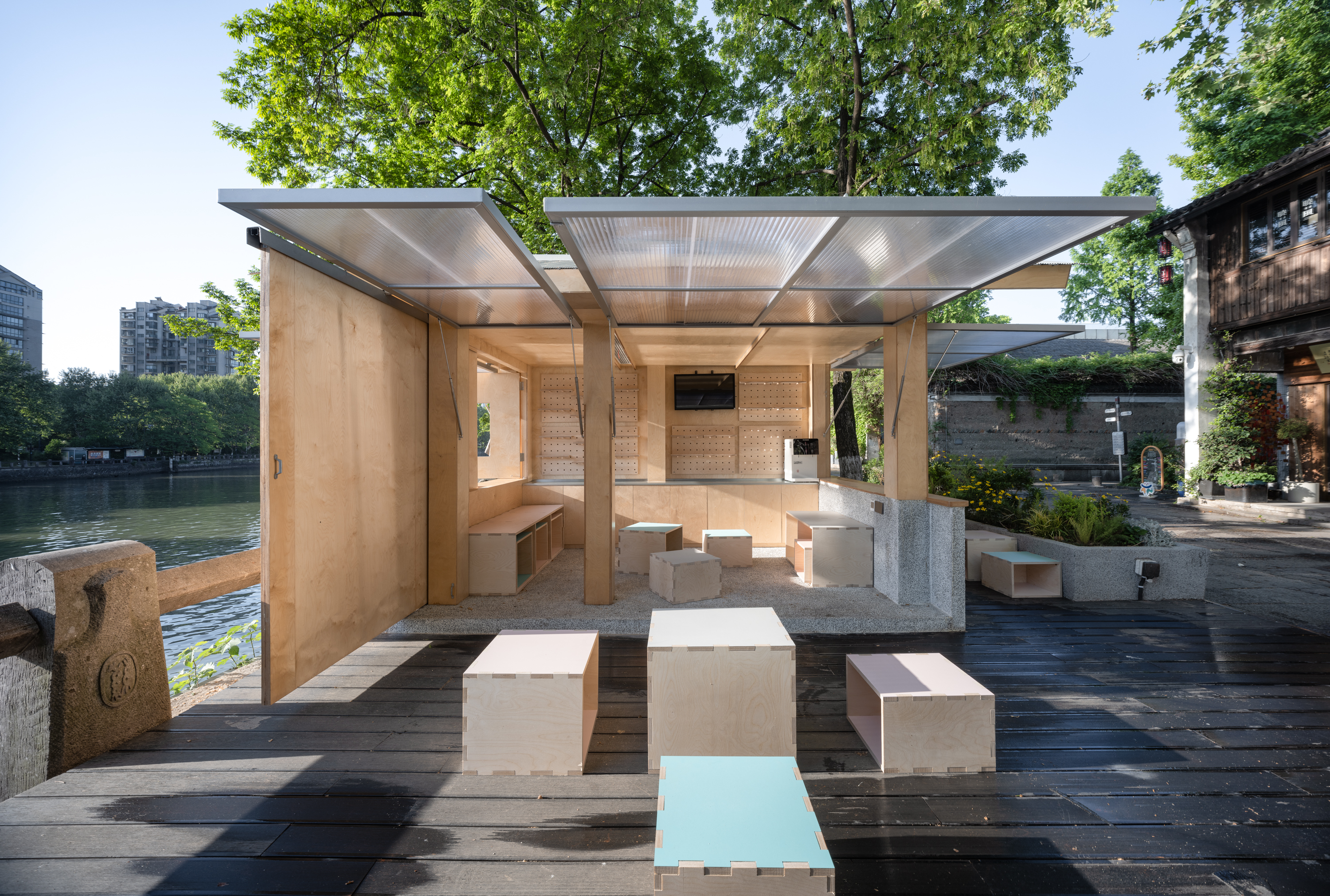
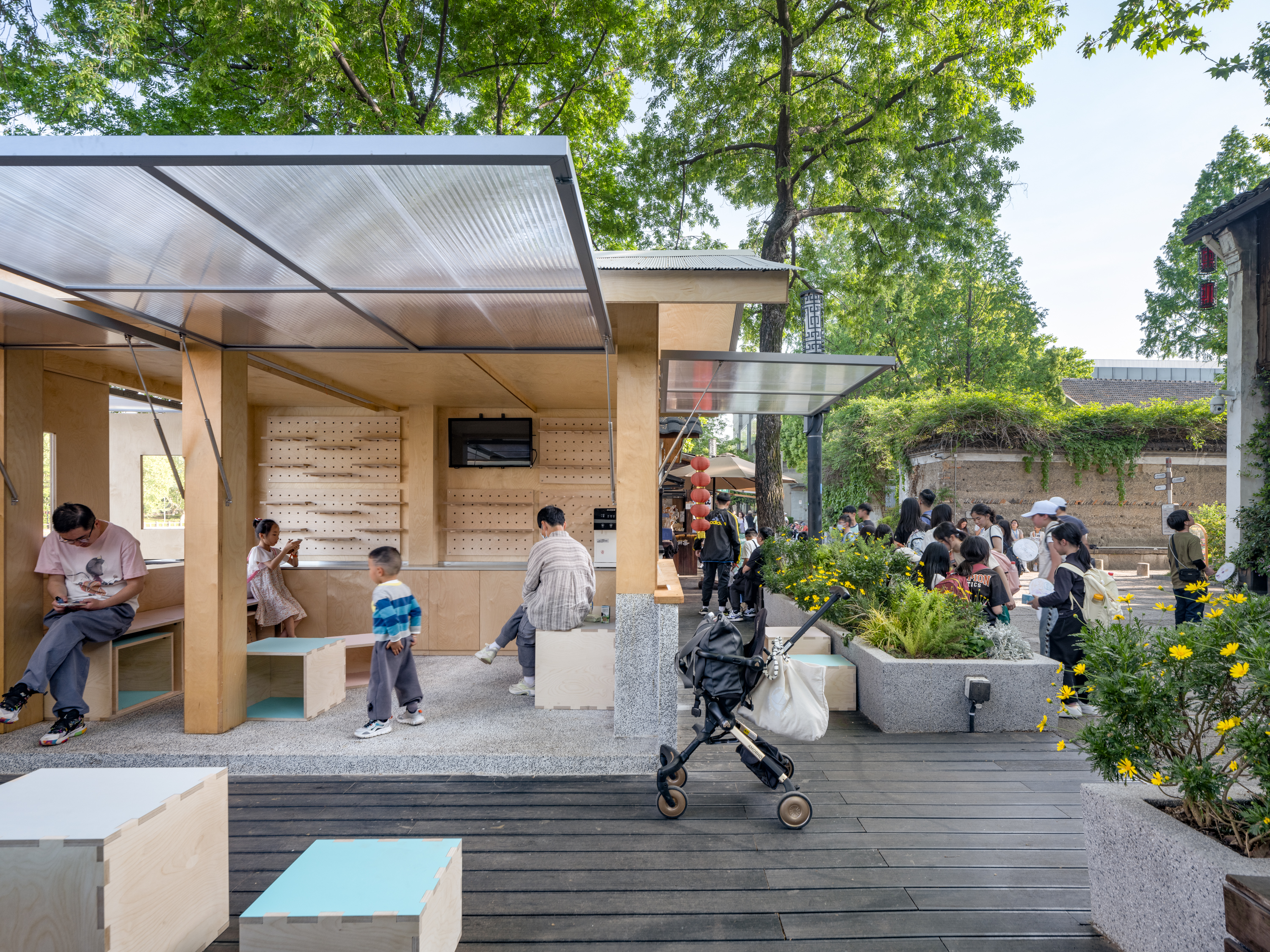
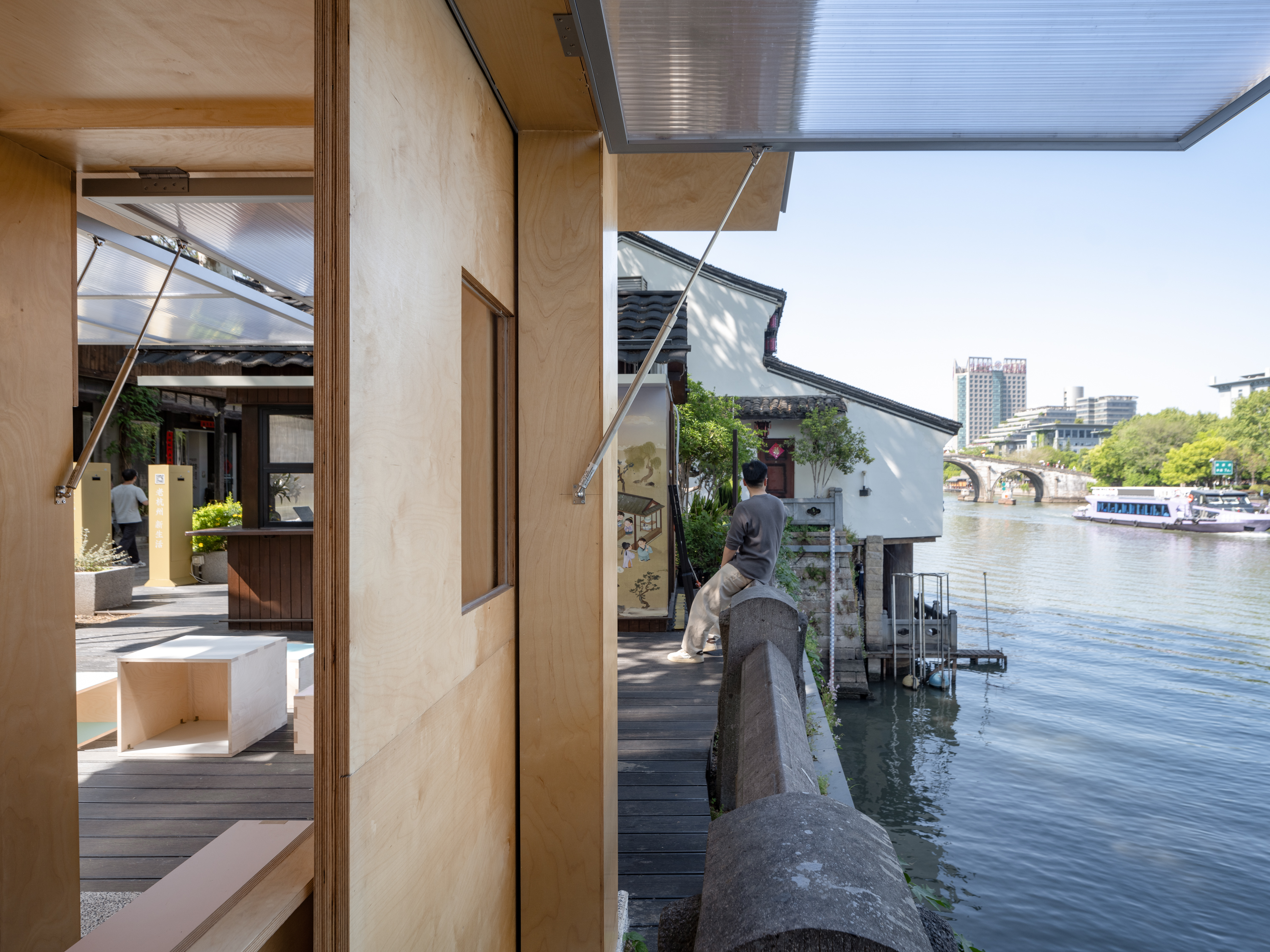
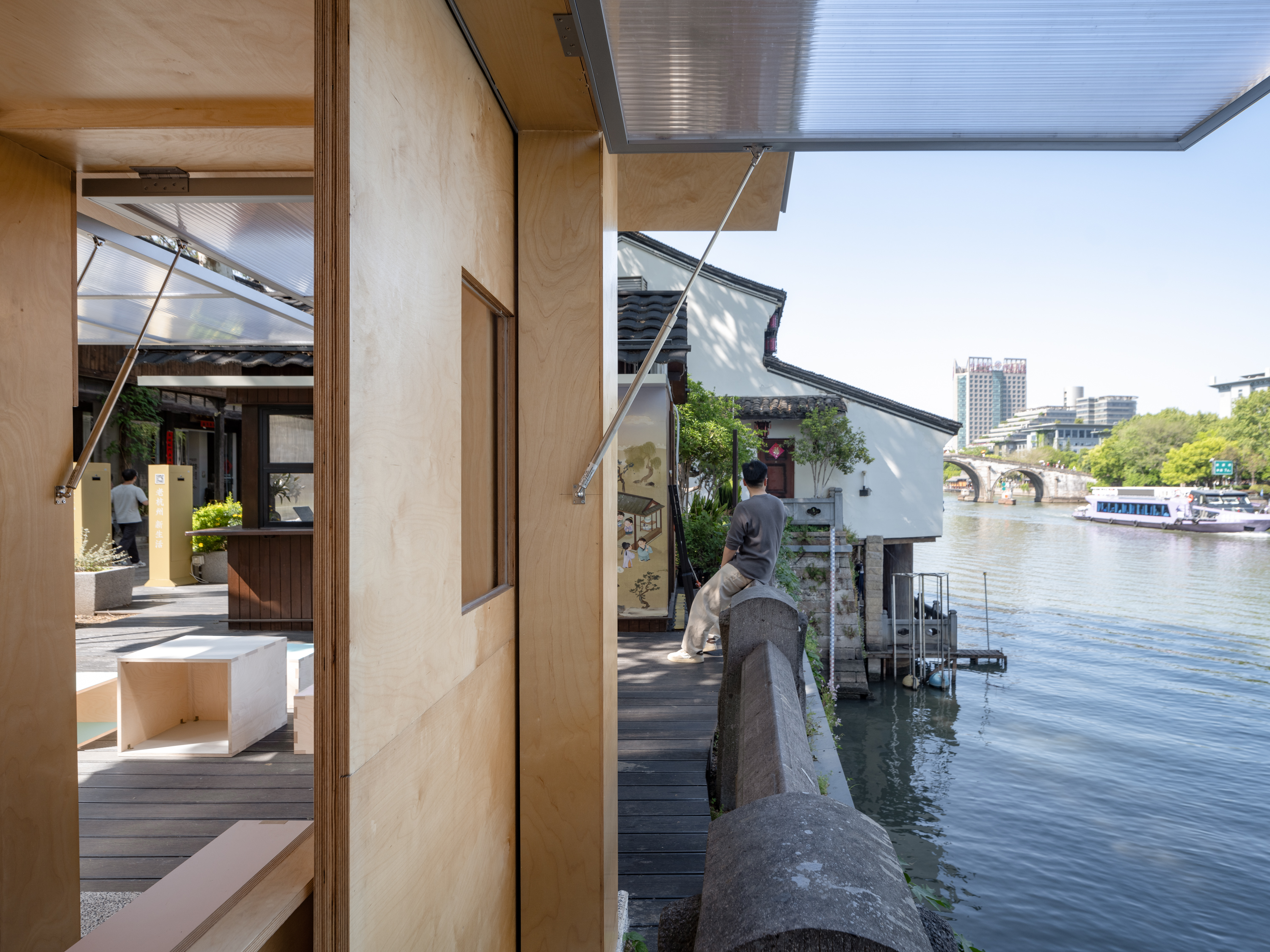
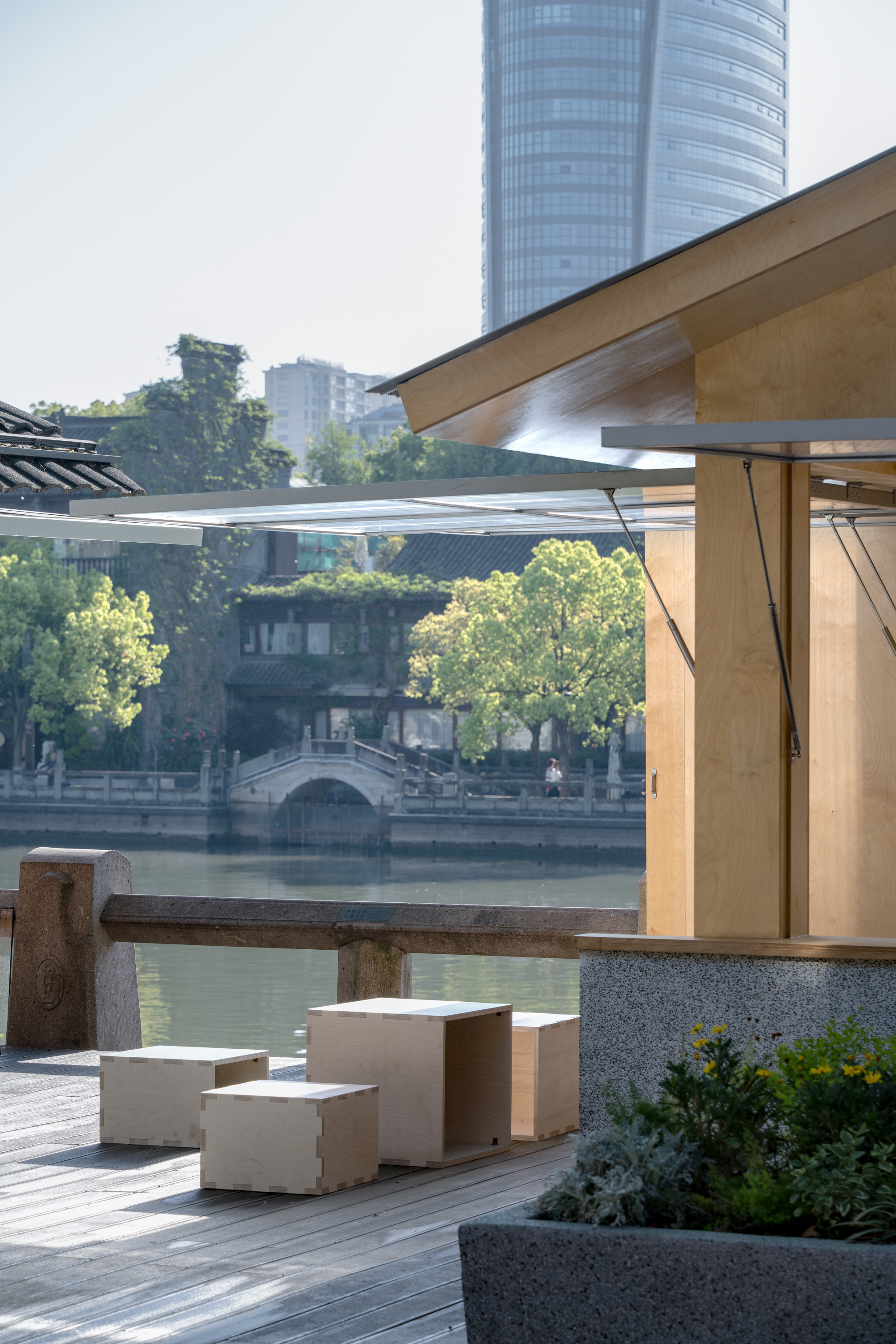
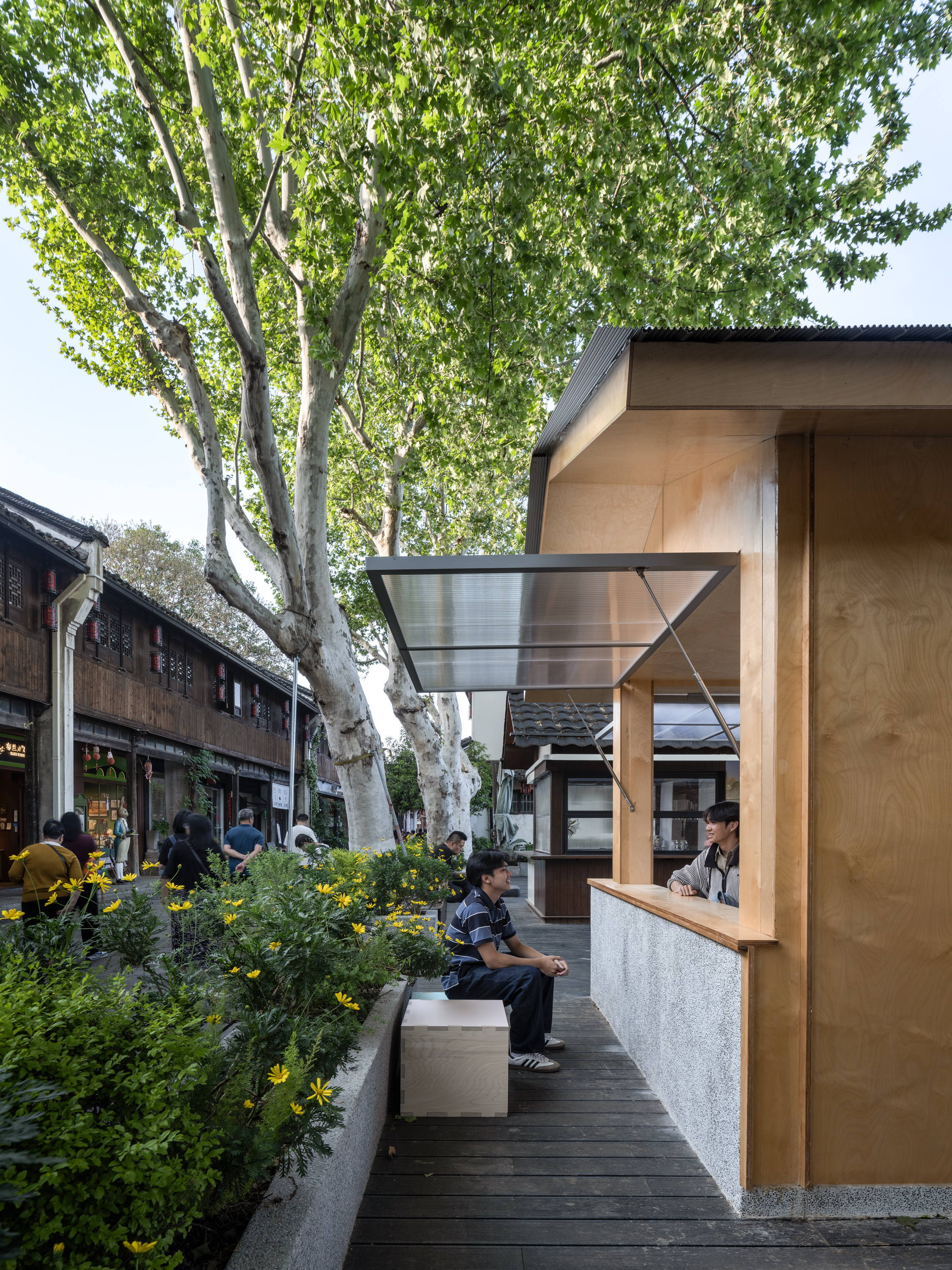
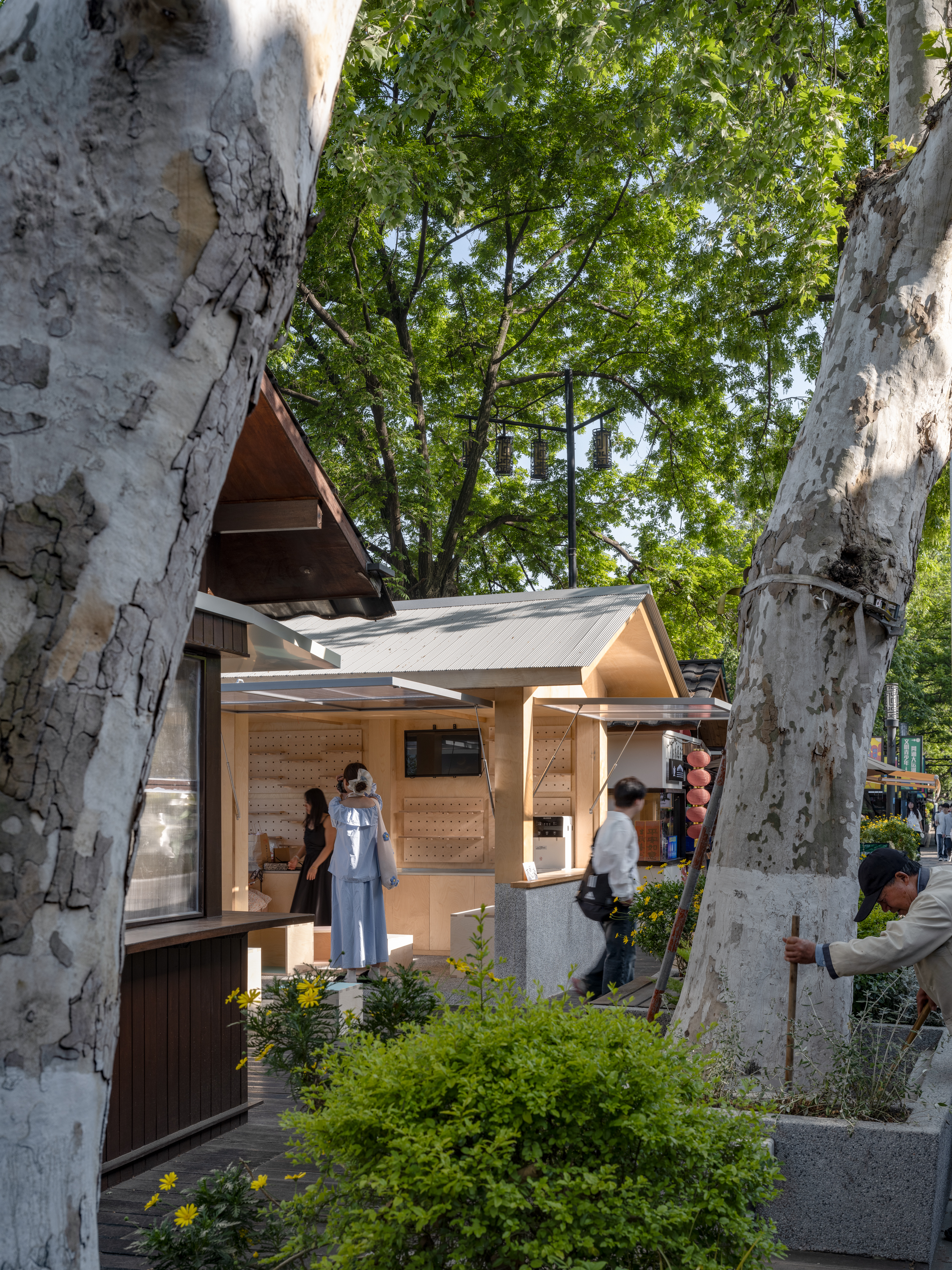
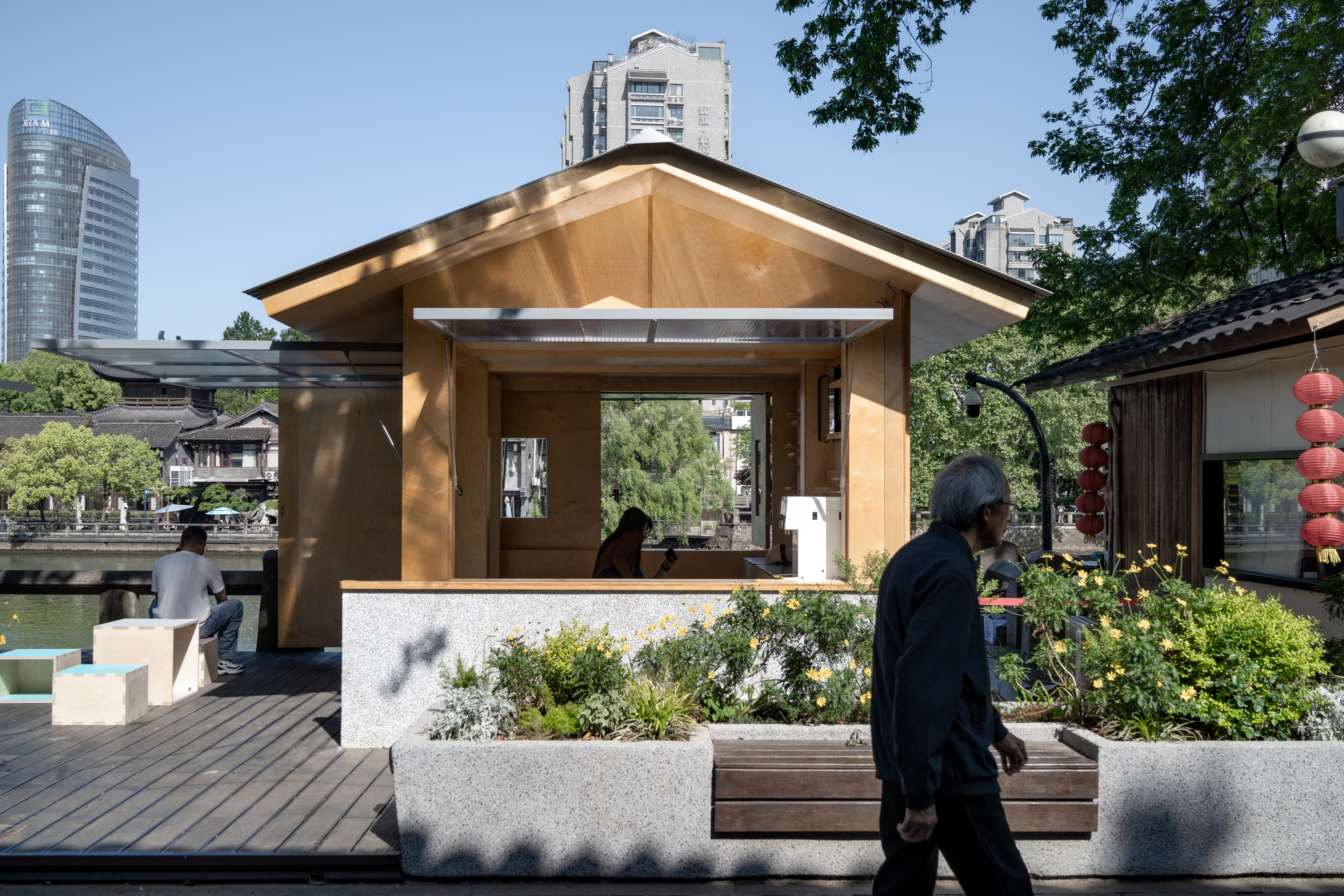
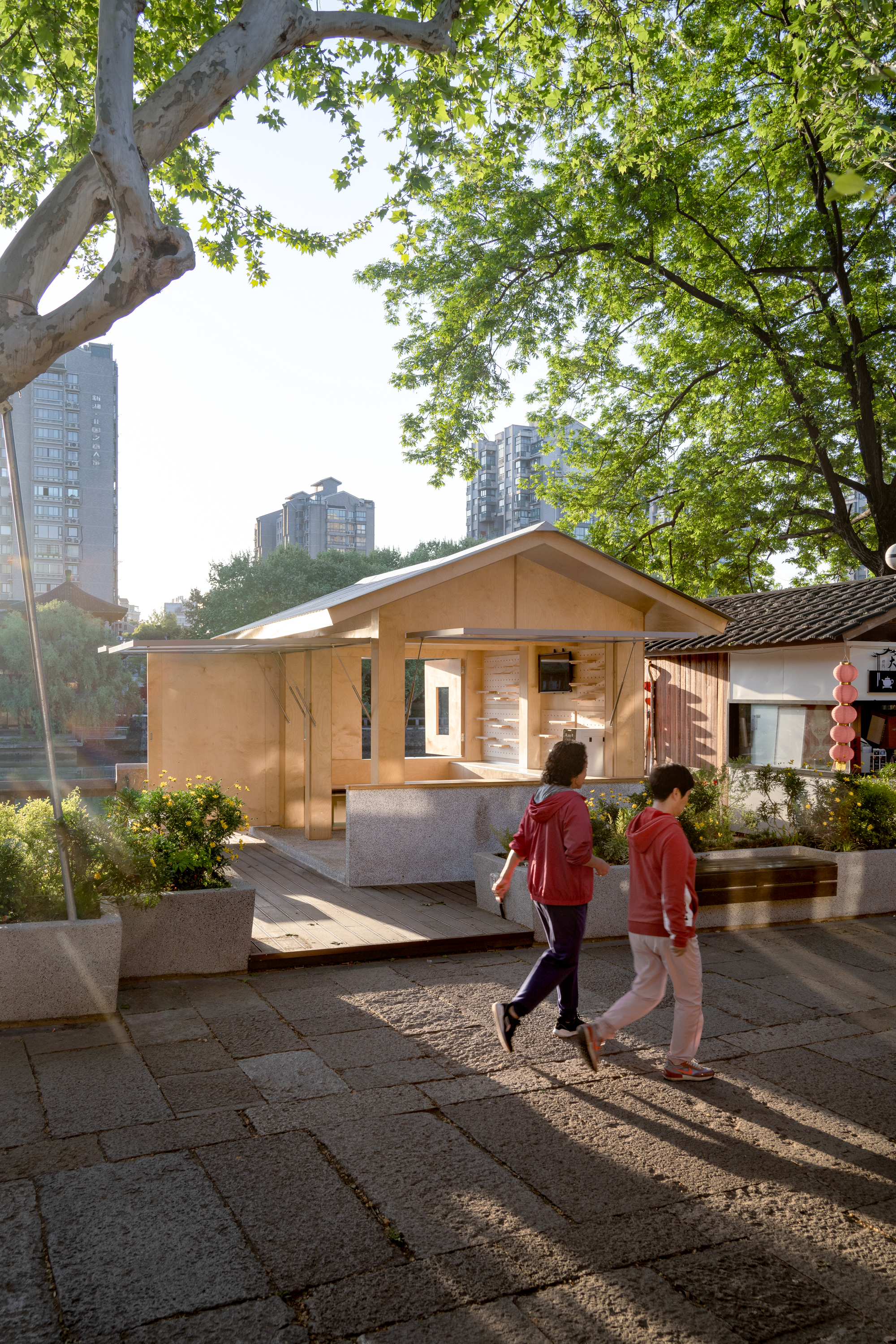
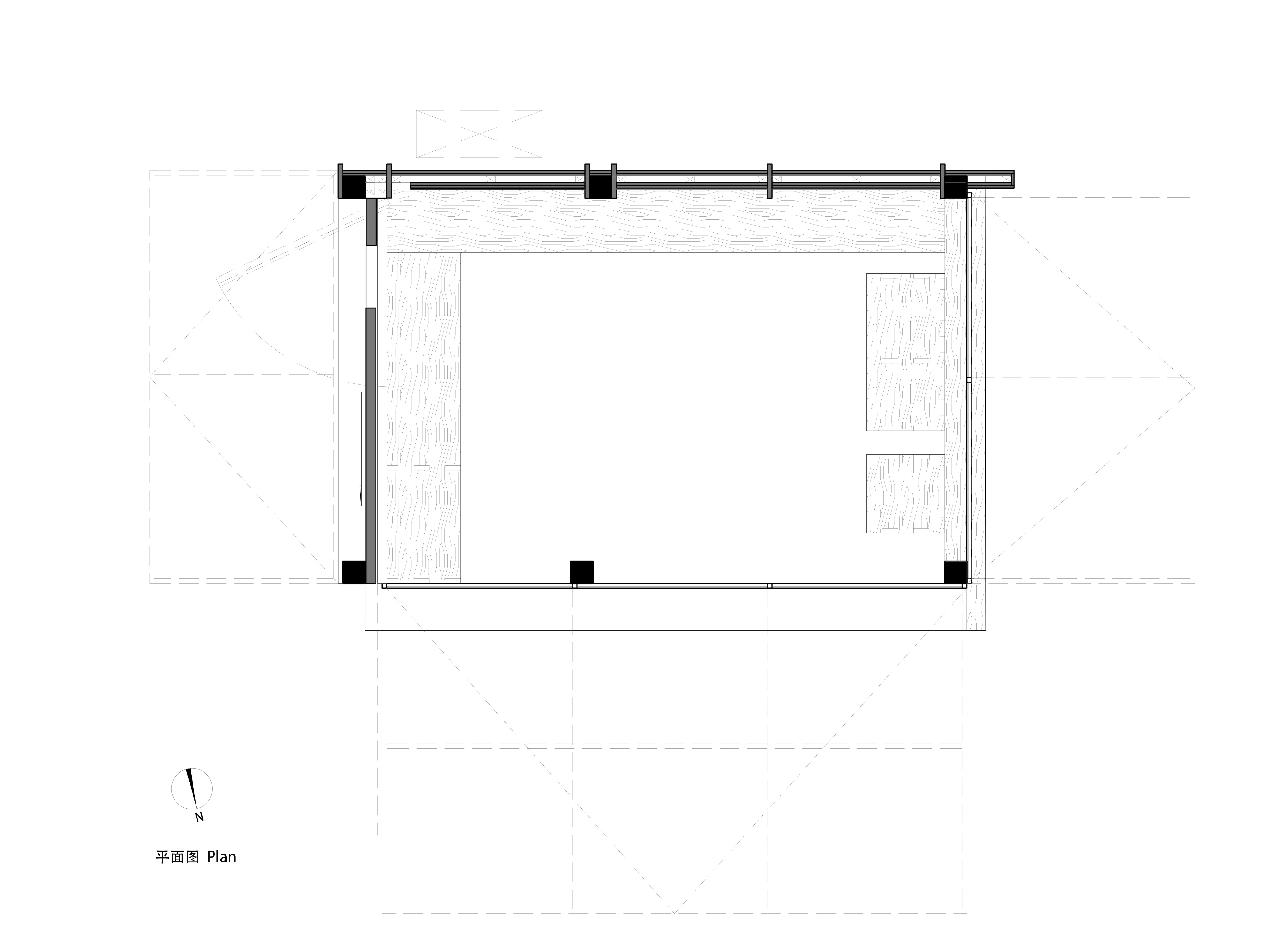
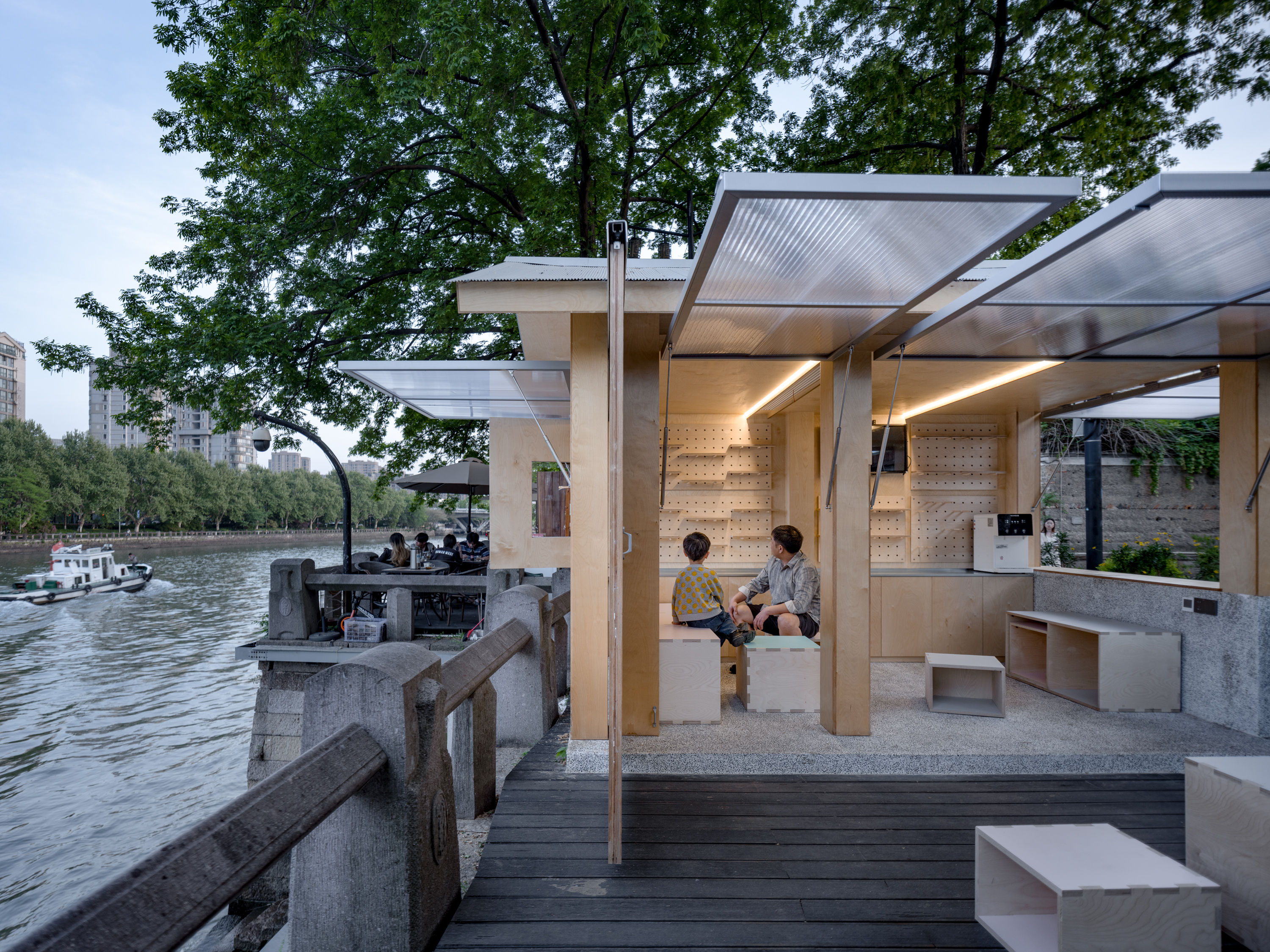
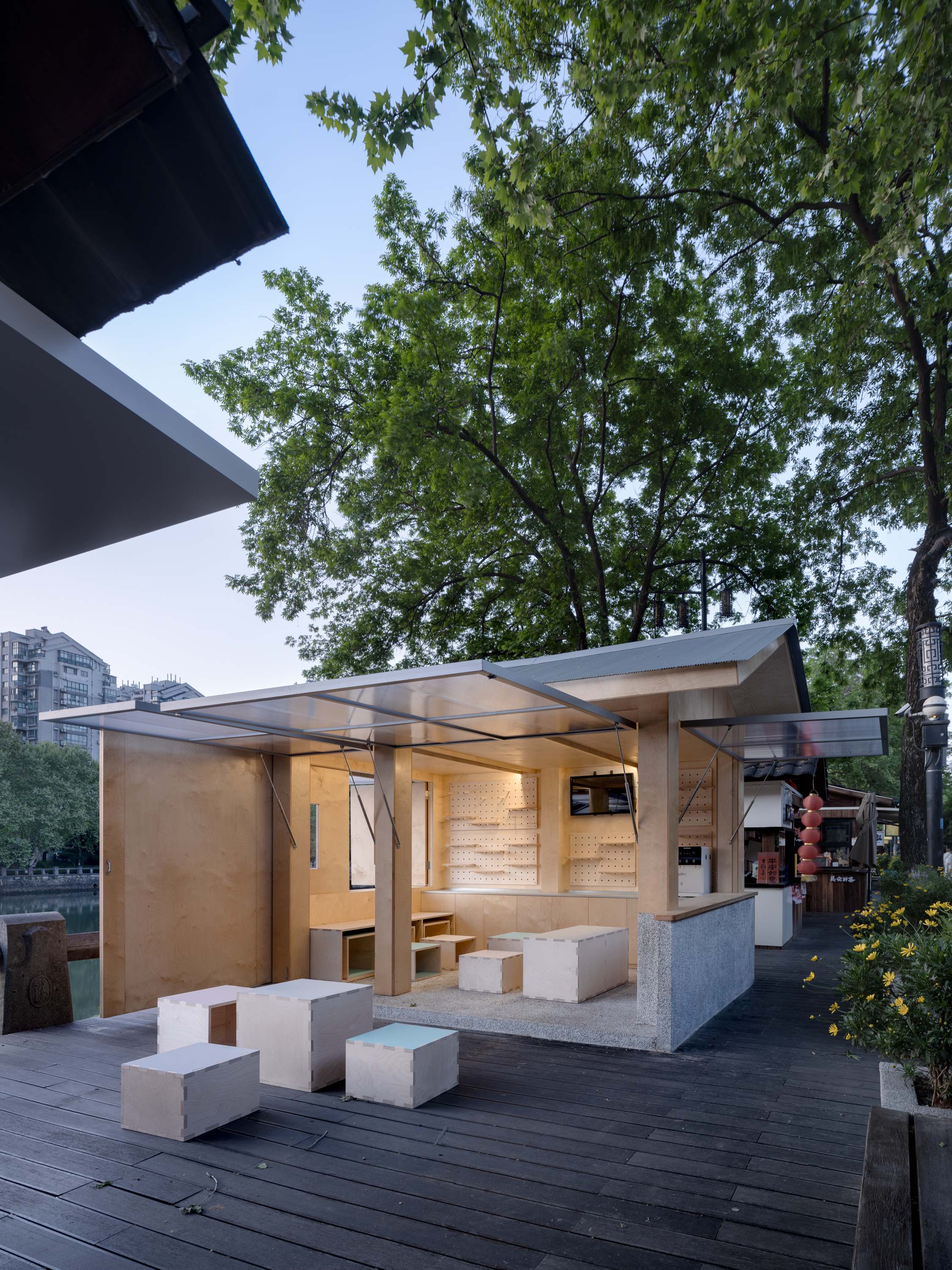
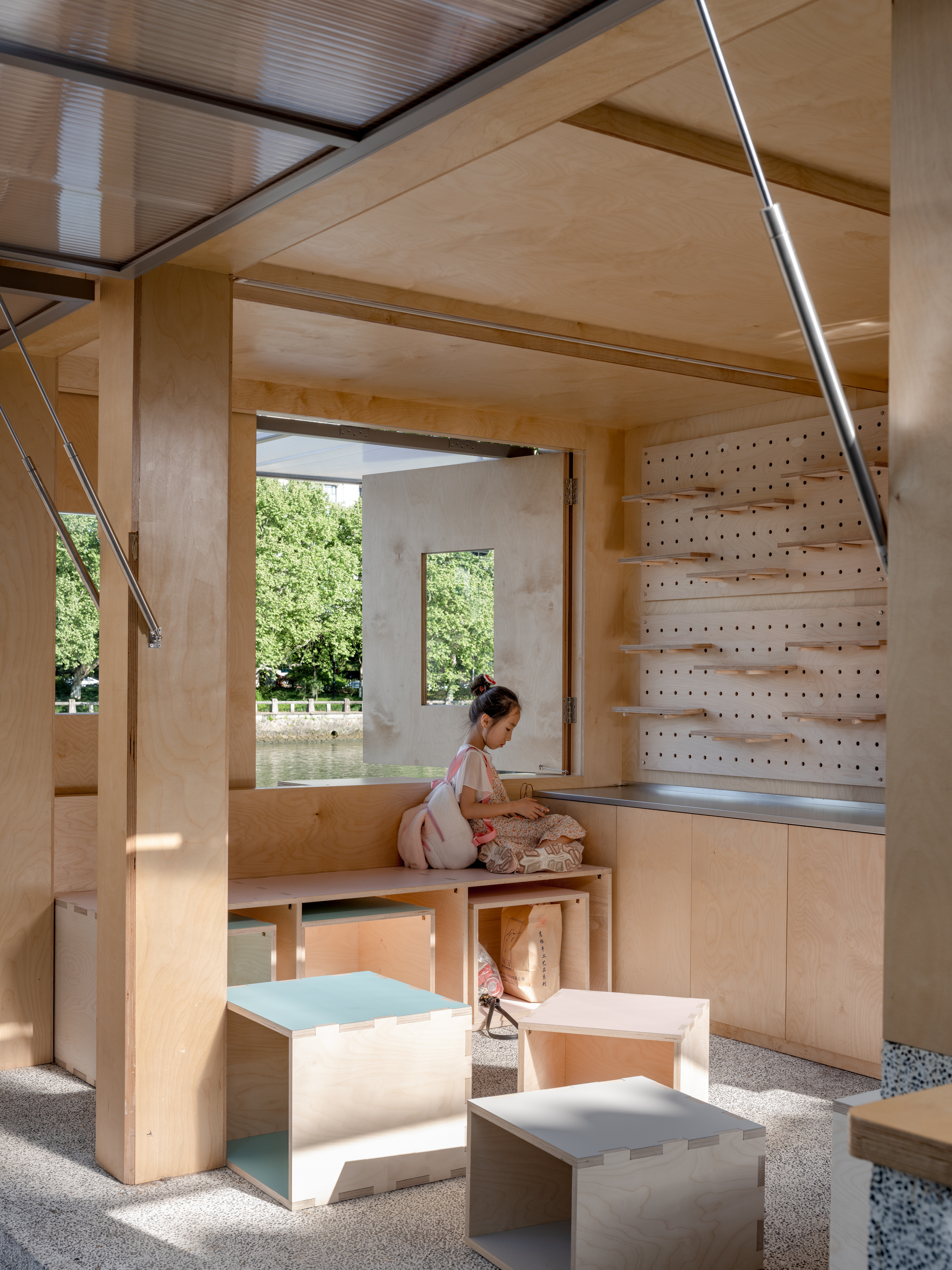
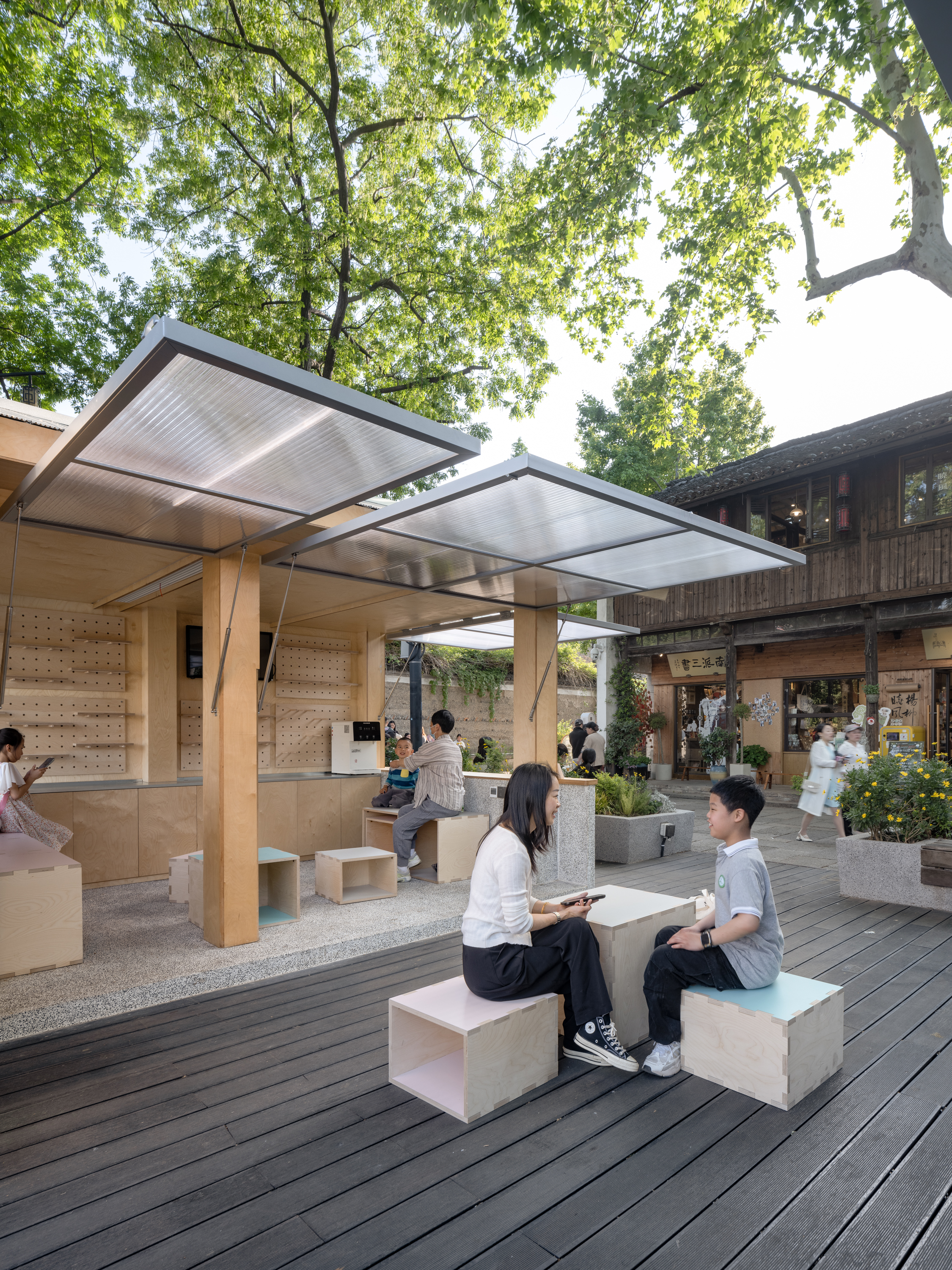
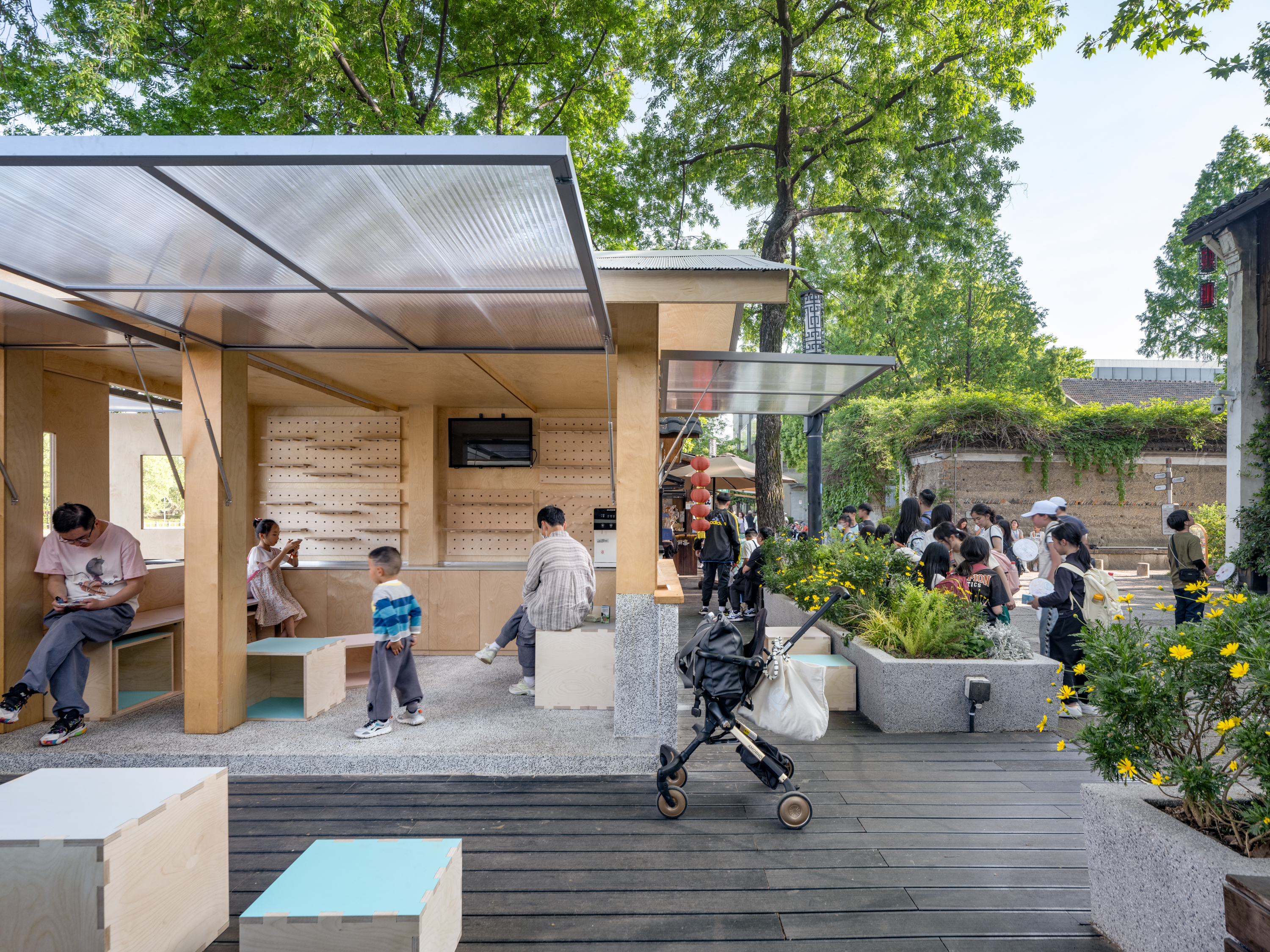
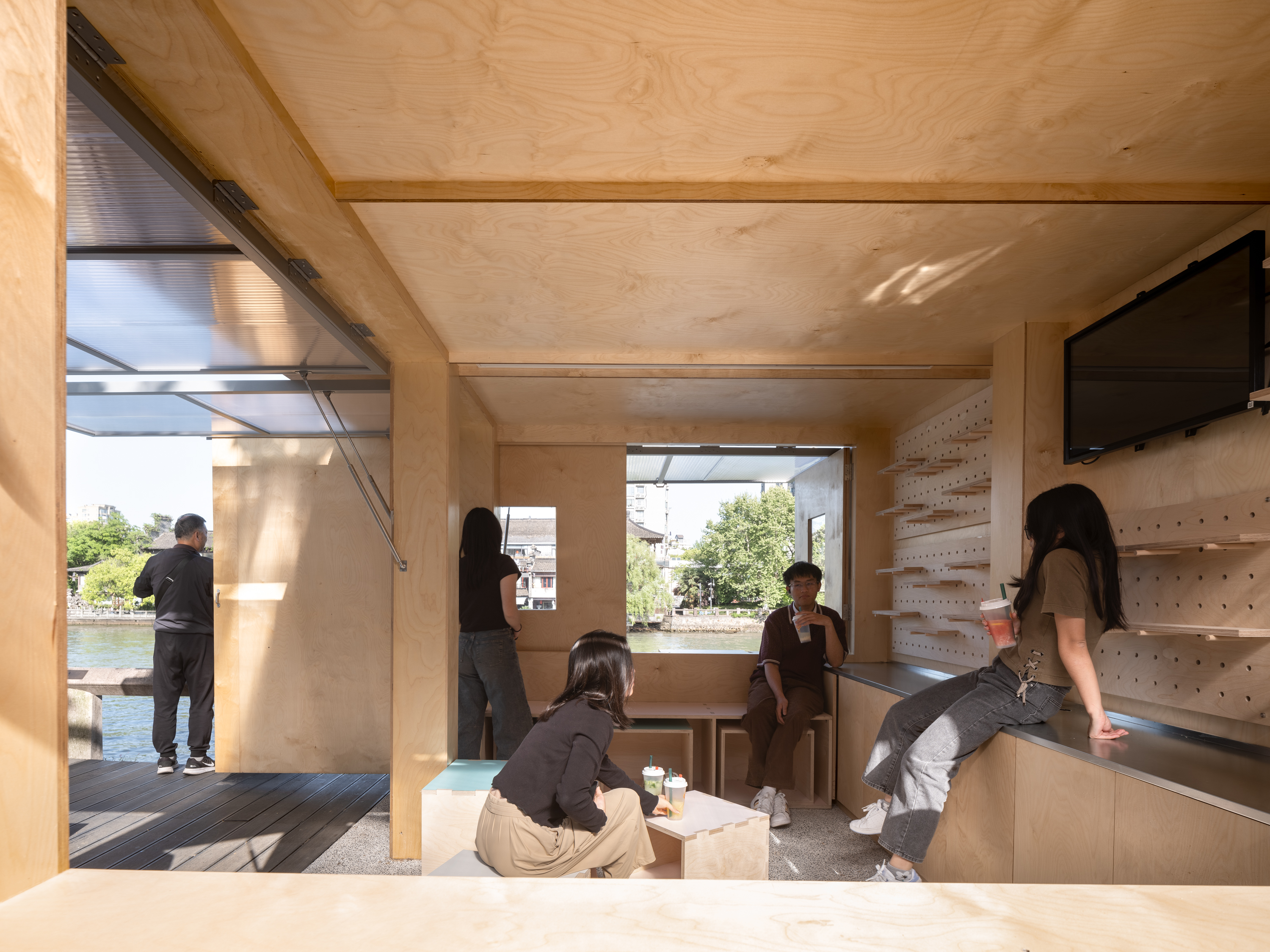
杭州桥西直街这一带,有若干小木屋,做的都是小茶饮、小零售生意。这些木屋对游客来说,是一个厨房:闲人免进。但作为一个免费提供游人喝水休憩的公益场所,小驿站应该是开放、无边界的:随到随坐,随起随走。从这个角度来说,它更像是一处景观亭或风雨廊。因此,它得足够开放:首先是视线,游客站在街上,透过驿站,直接看向运河。其次是流线,它不该再有“门”,而是一个整体敞开的面,减弱“进出”带来的边界感。最后是布局,柜椅等摆设均靠周边墙面,抛弃了内外之分,也顺便去了中心化。
In the area around Qiaoxi Straight Street in Hangzhou, there are several small wooden houses that operate small tea and retail businesses. To visitors, these wooden houses are like kitchens—off-limits to them. However, as a public welfare space offering free drinking water and rest for visitors, the small post should be open and borderless: visitors can sit down whenever they arrive and leave whenever they wish. From this perspective, it is more like a scenic pavilion or a wind-and-rain corridor. Therefore, it must be open enough. First, in terms of sightlines: when standing on the street, visitors should be able to look directly at the canal through the post. Second, in terms of circulation: it should no longer have a "door" but instead be an entirely open facade, weakening the sense of boundary brought by "entering and exiting." Finally, in terms of layout: furniture such as counters and chairs are all placed against the surrounding walls, eliminating the distinction between inside and outside and, incidentally, achieving decentralization.
一个可变形的盒子 A Transformable Box
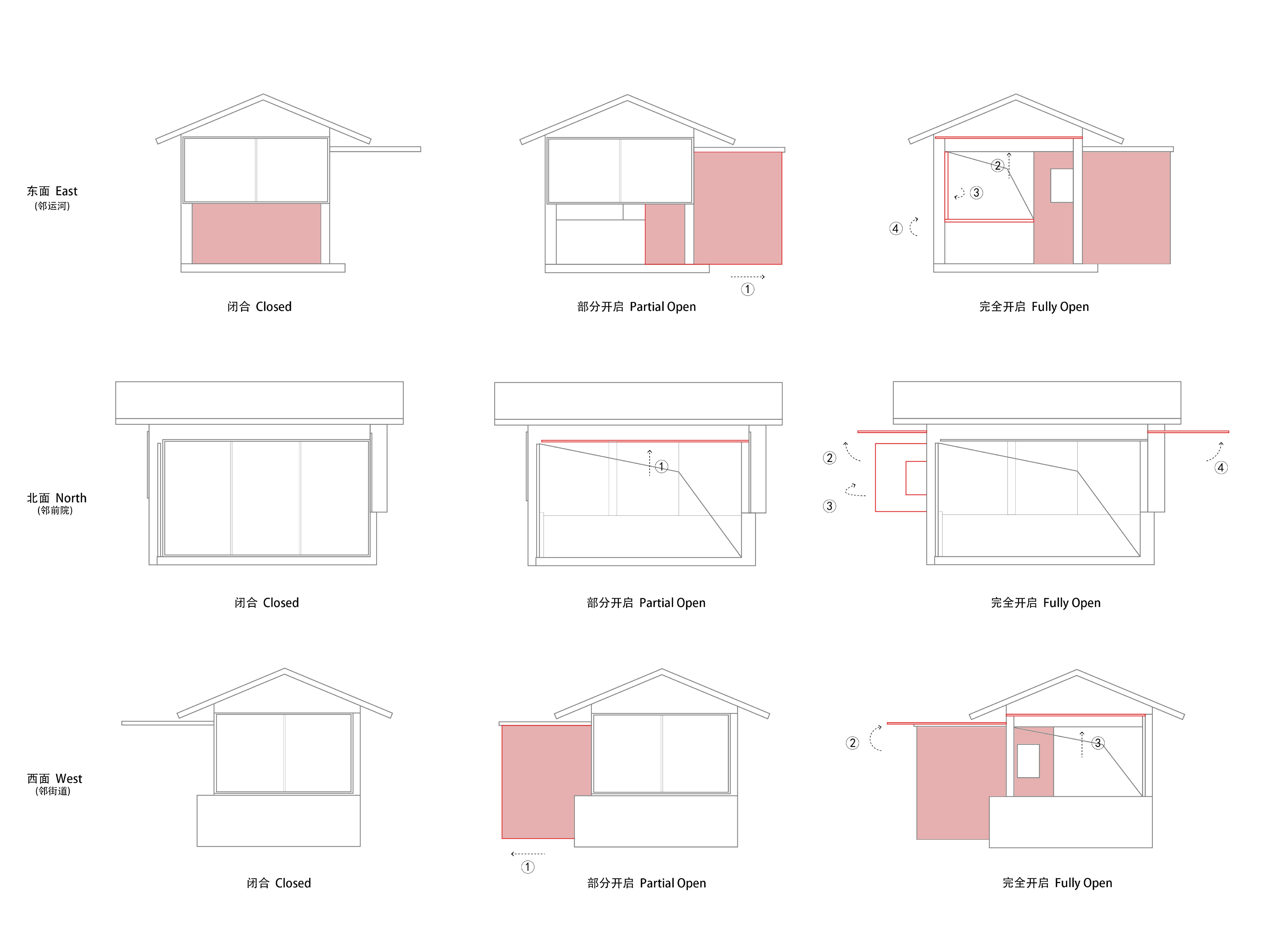
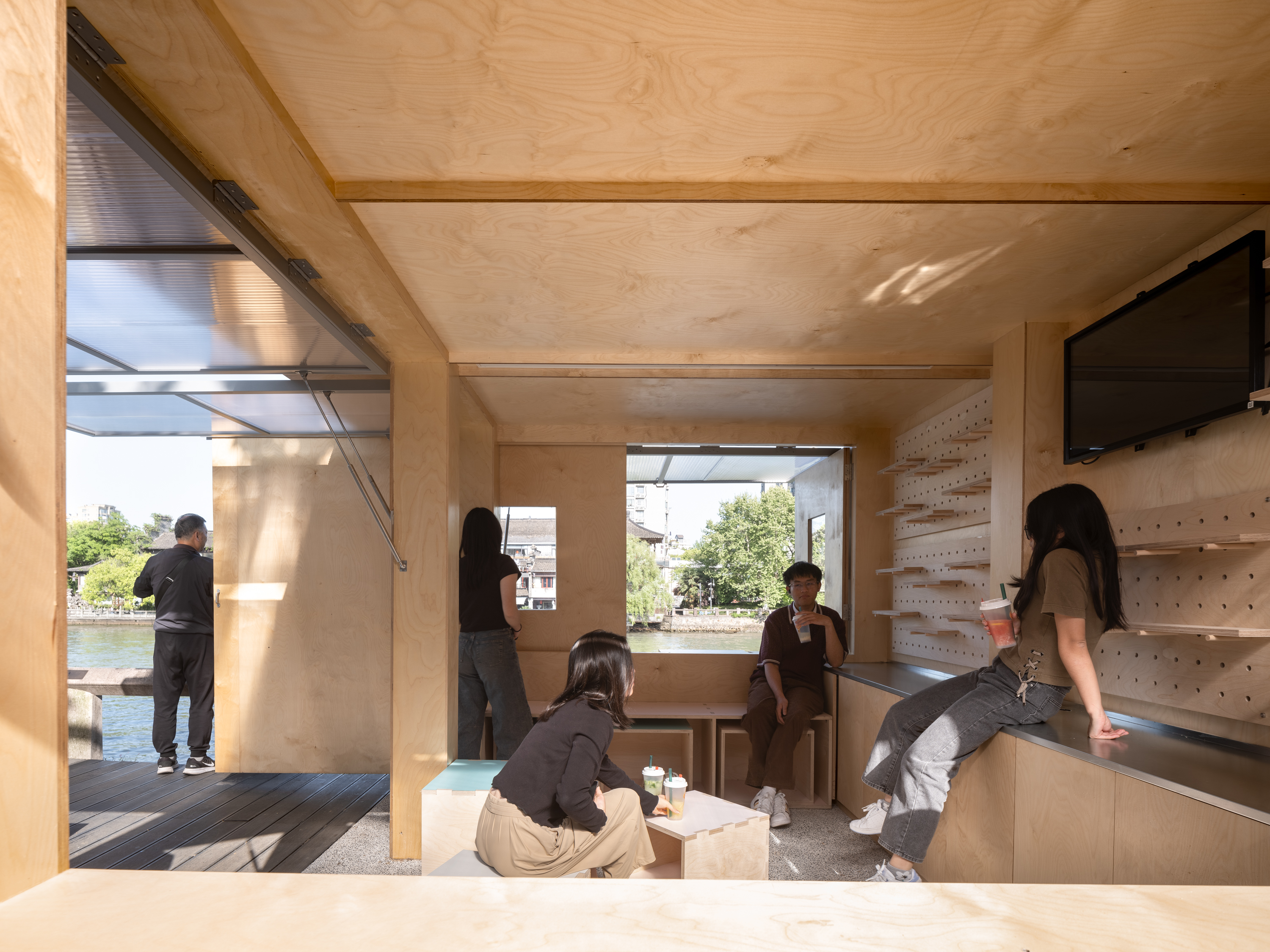
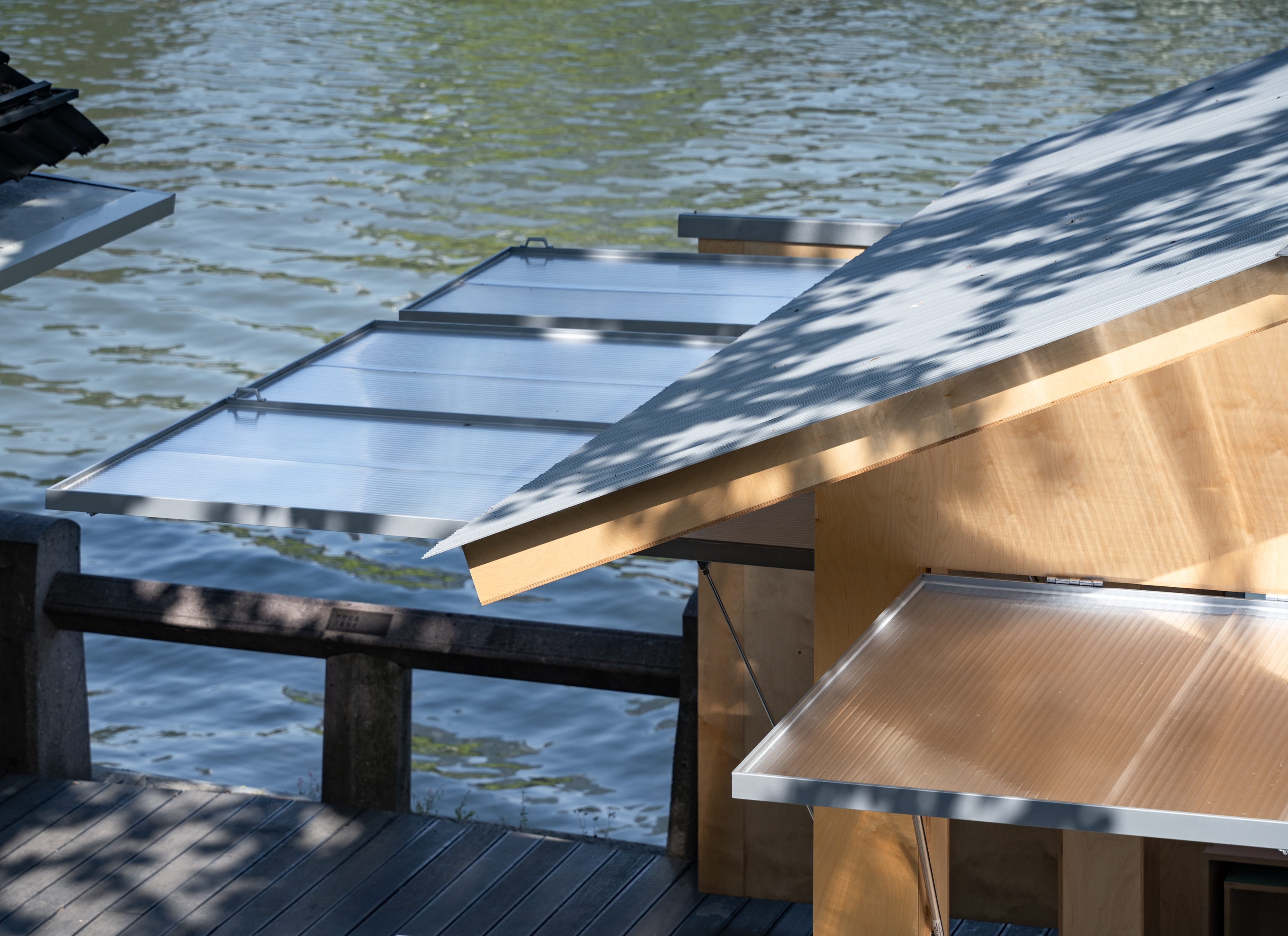
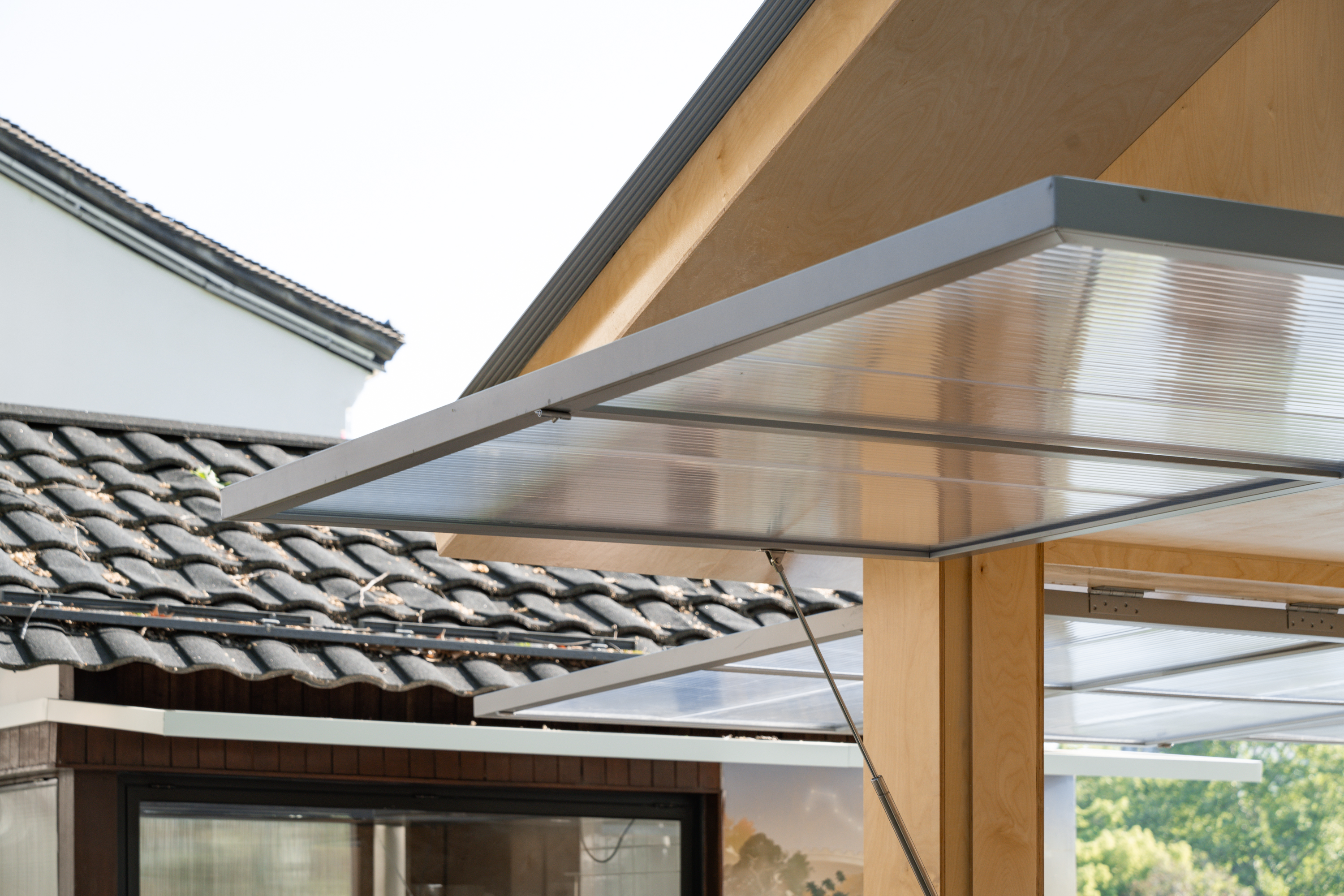
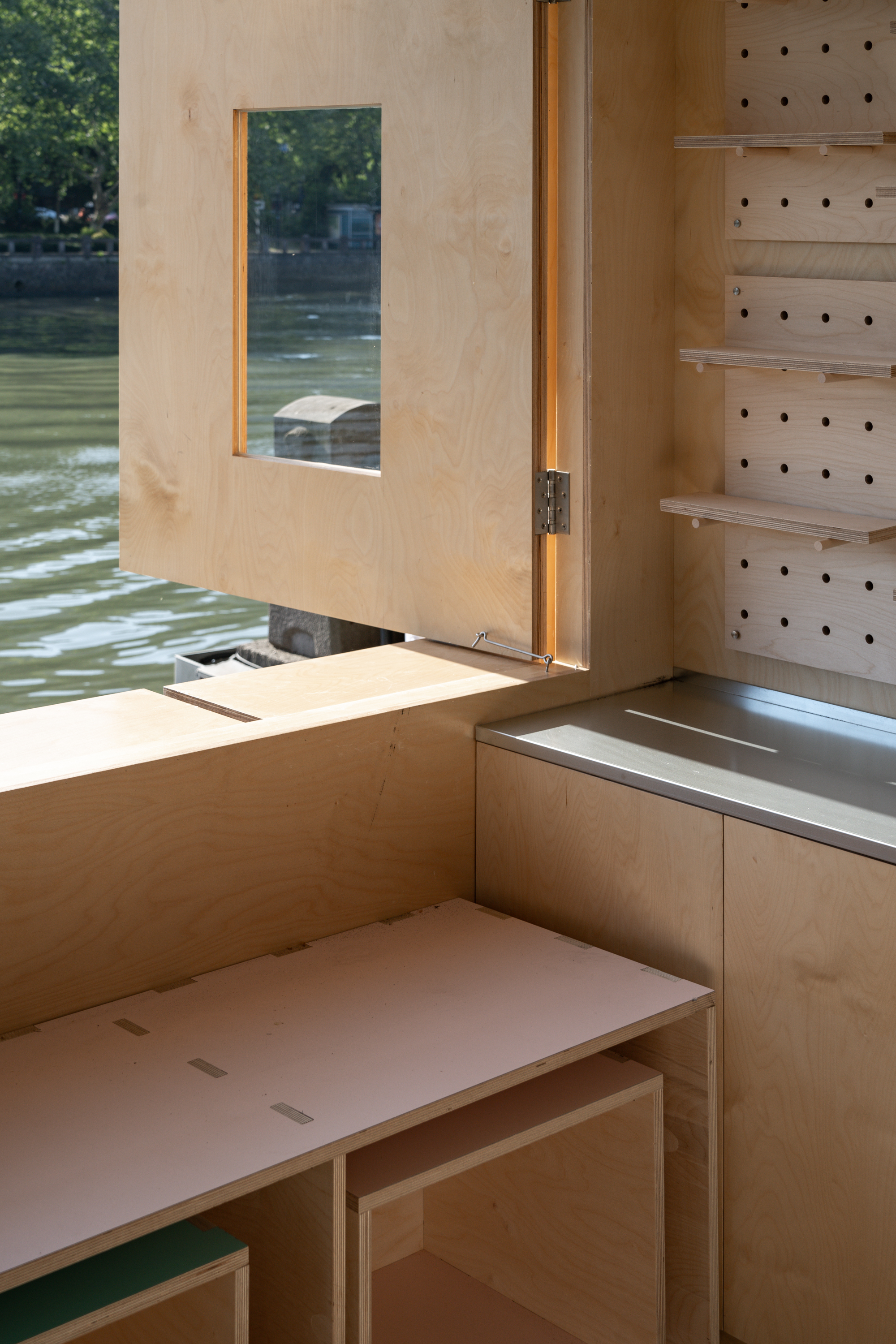
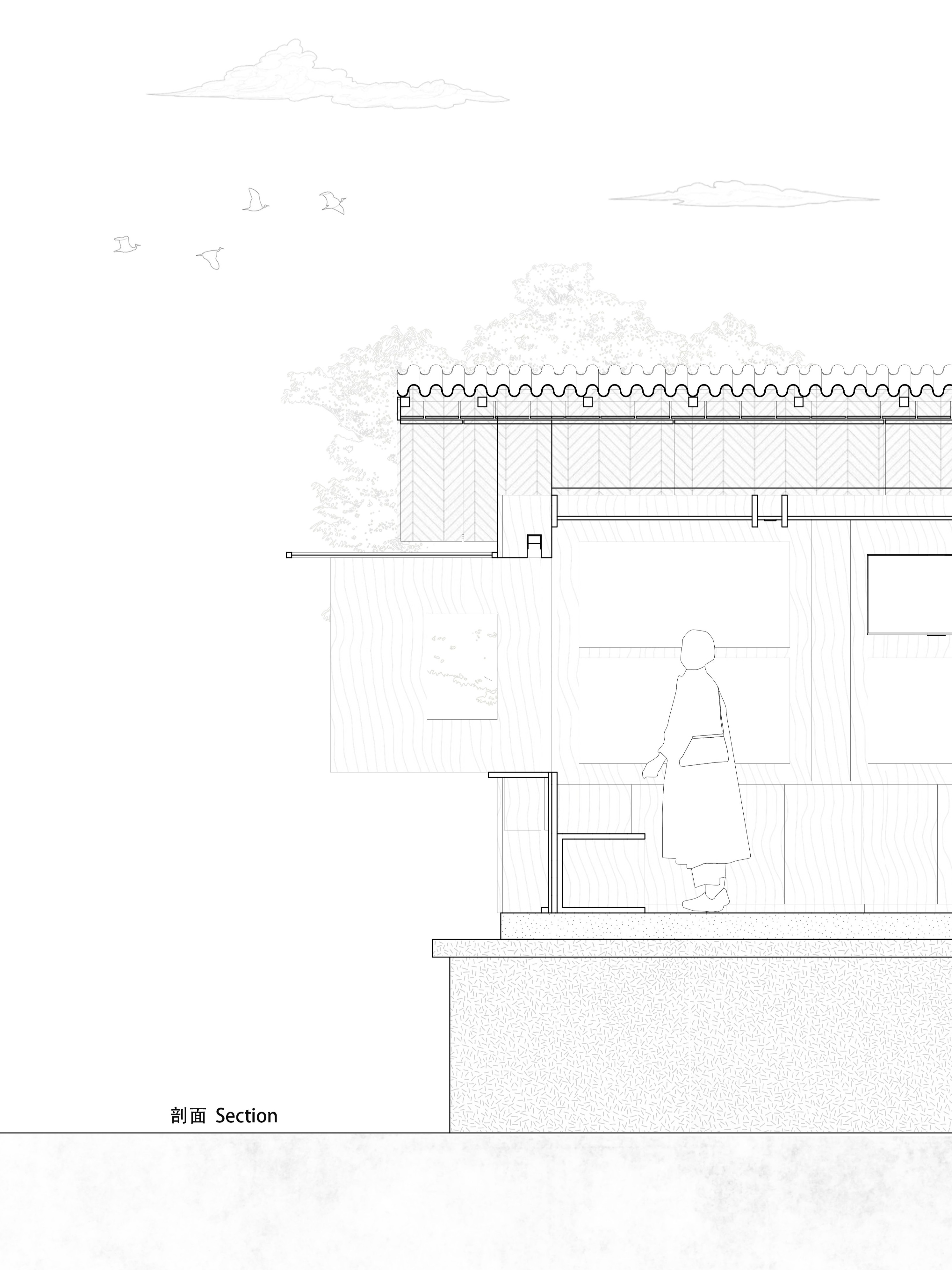
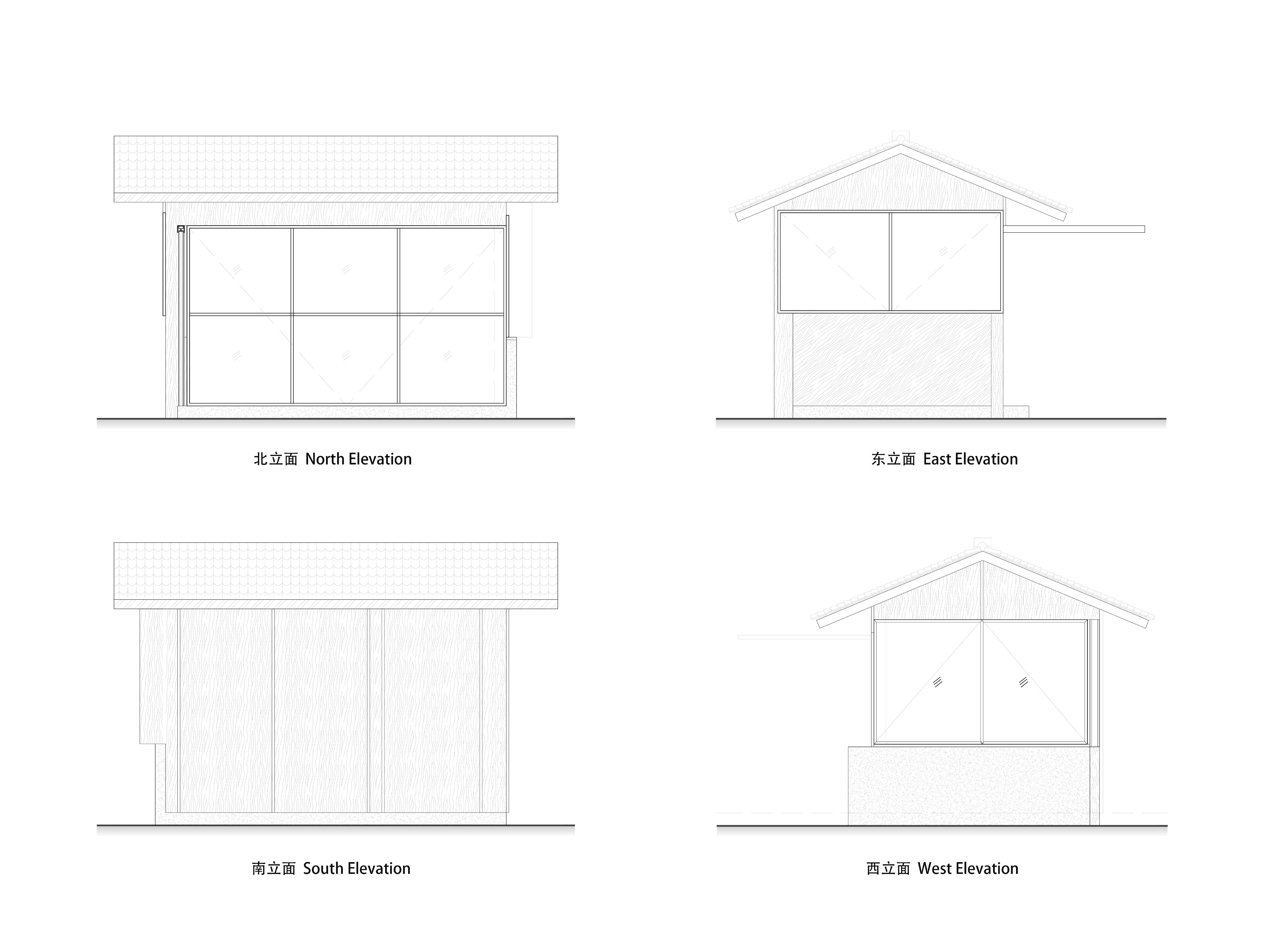
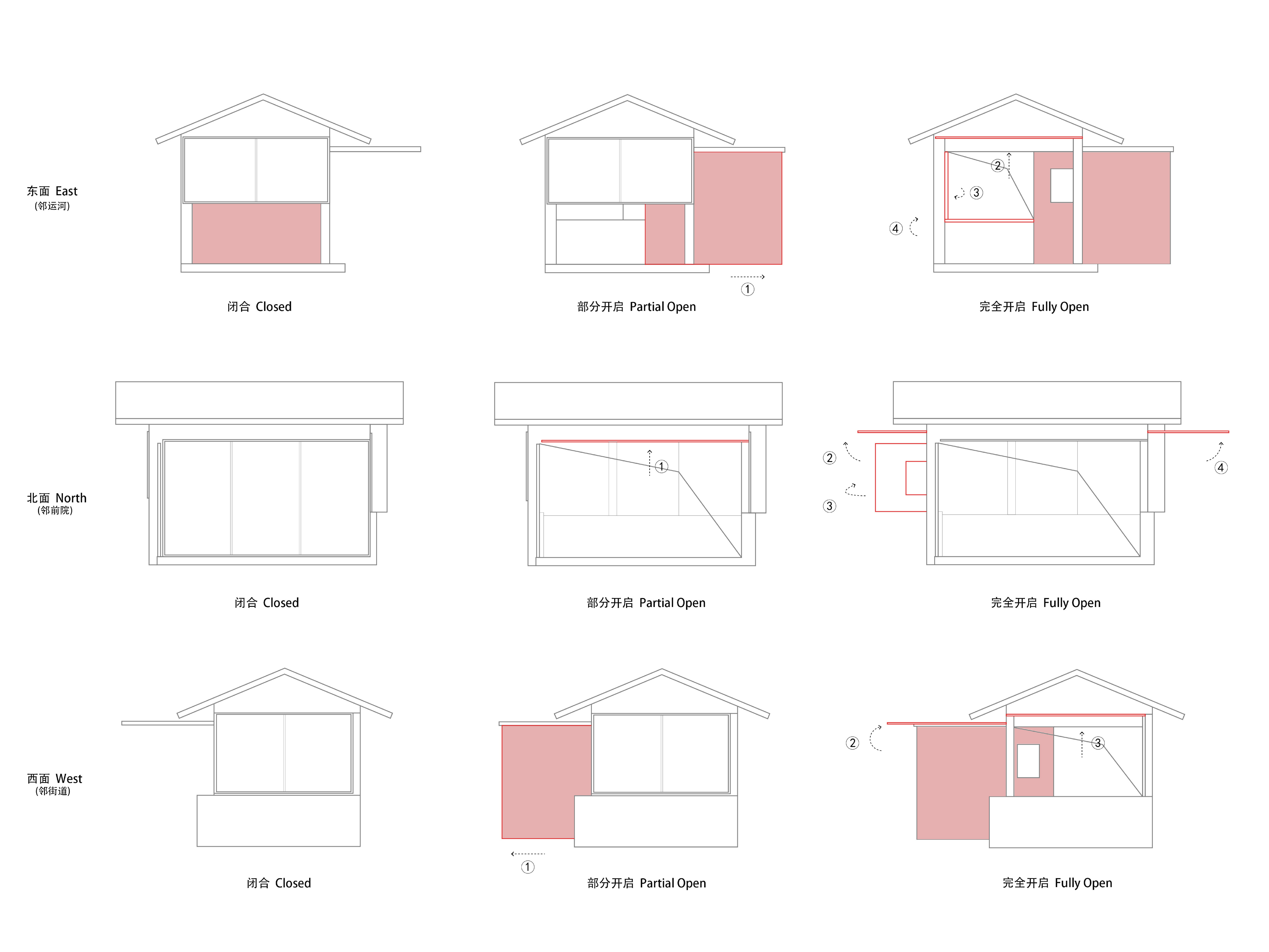
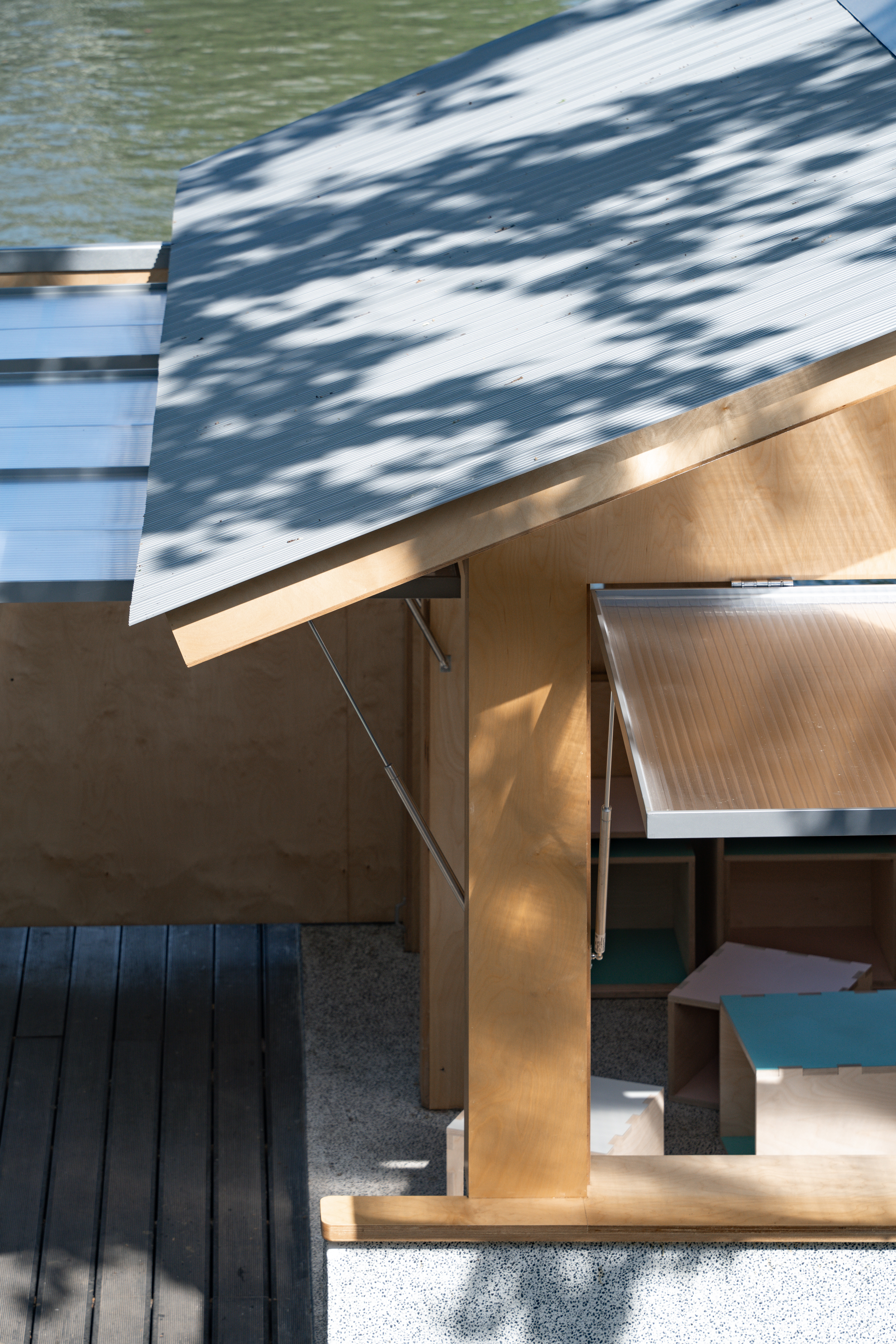
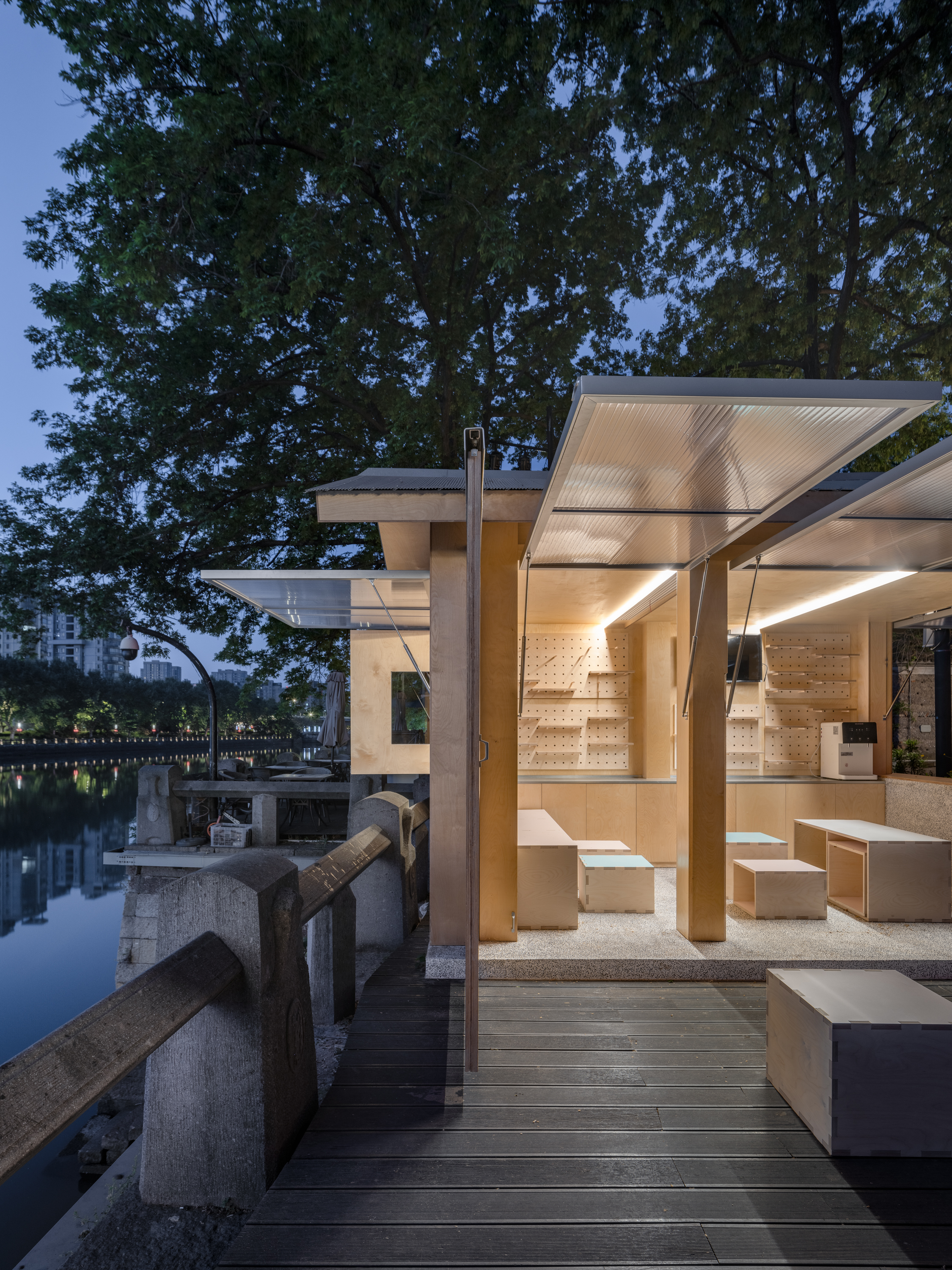
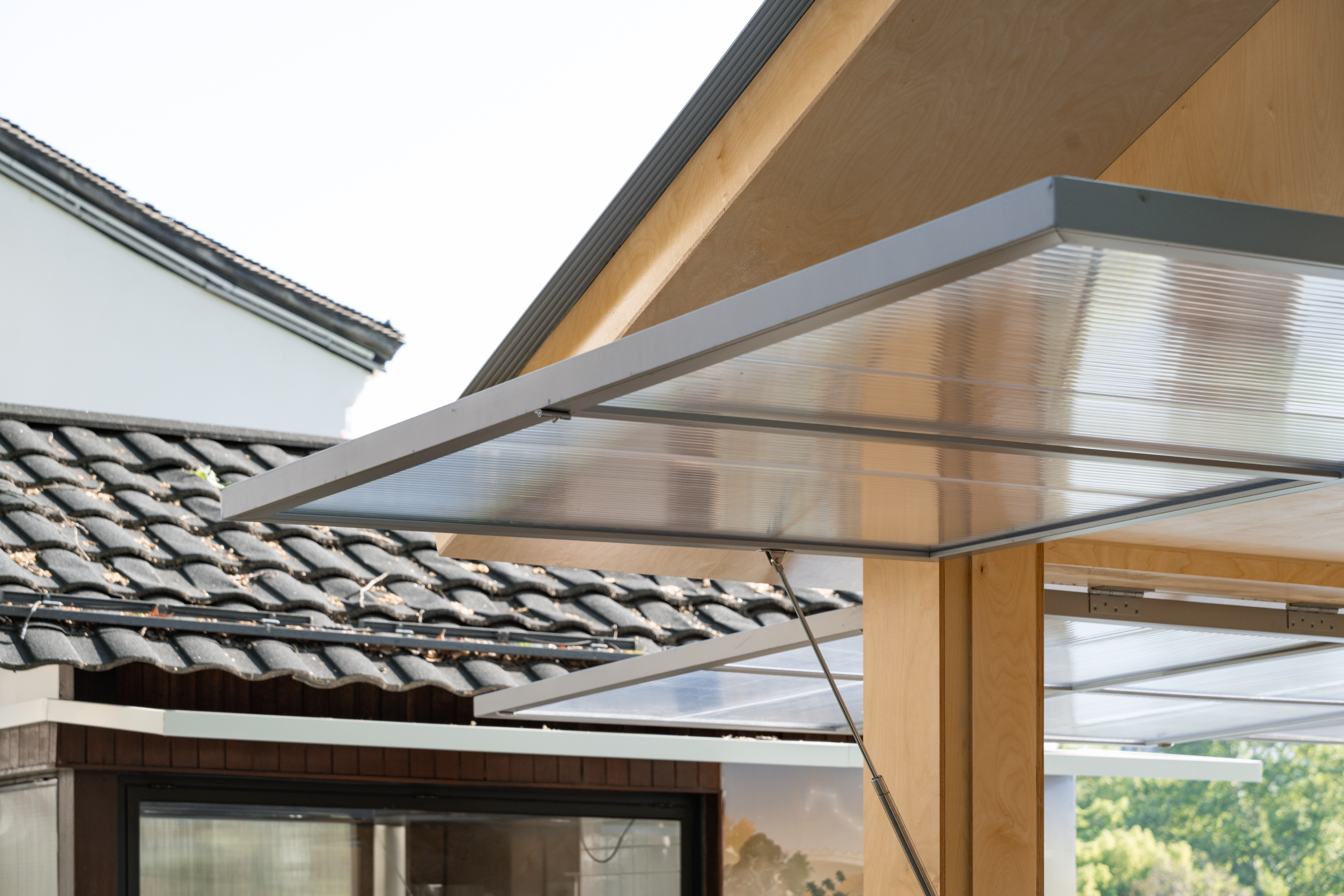
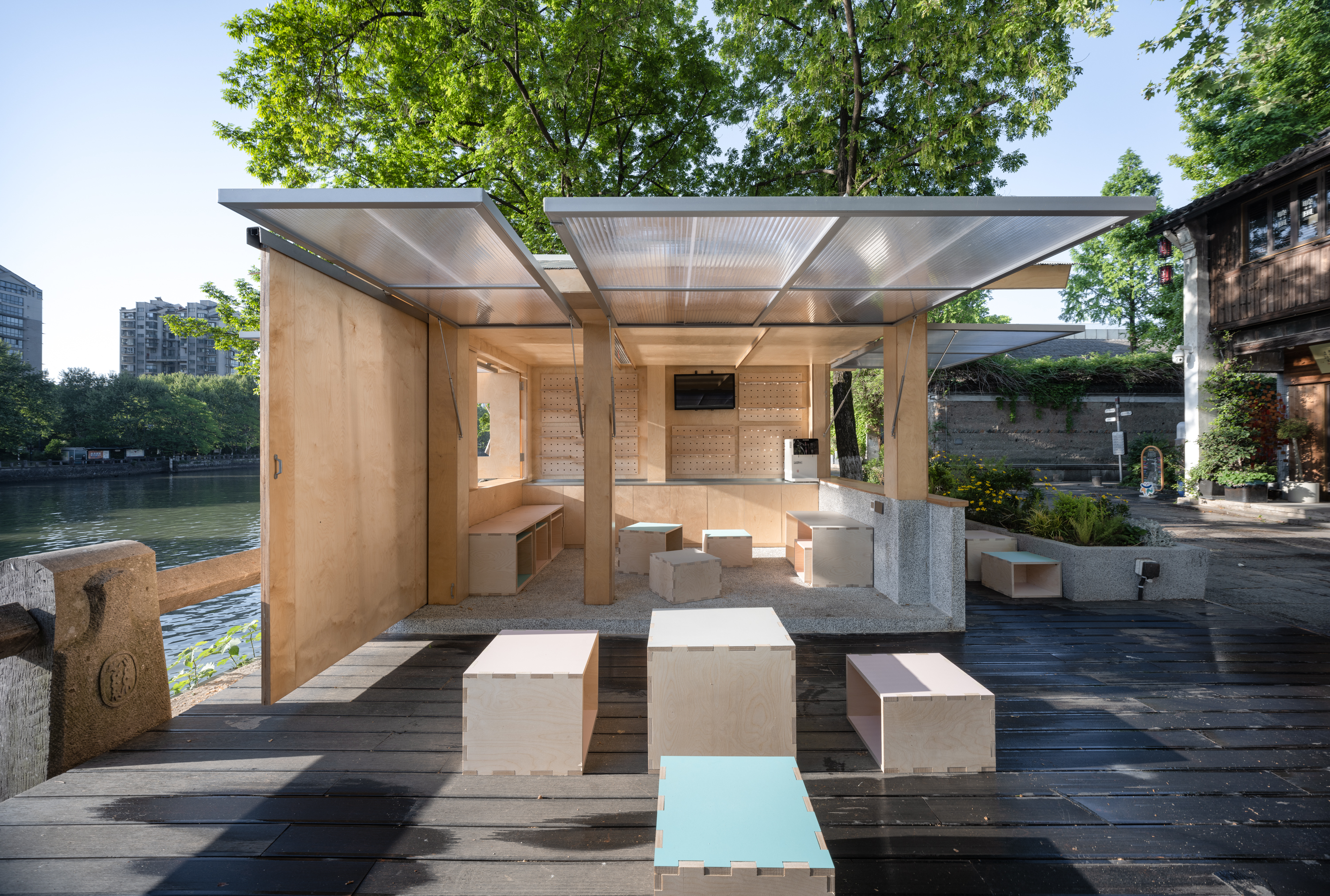
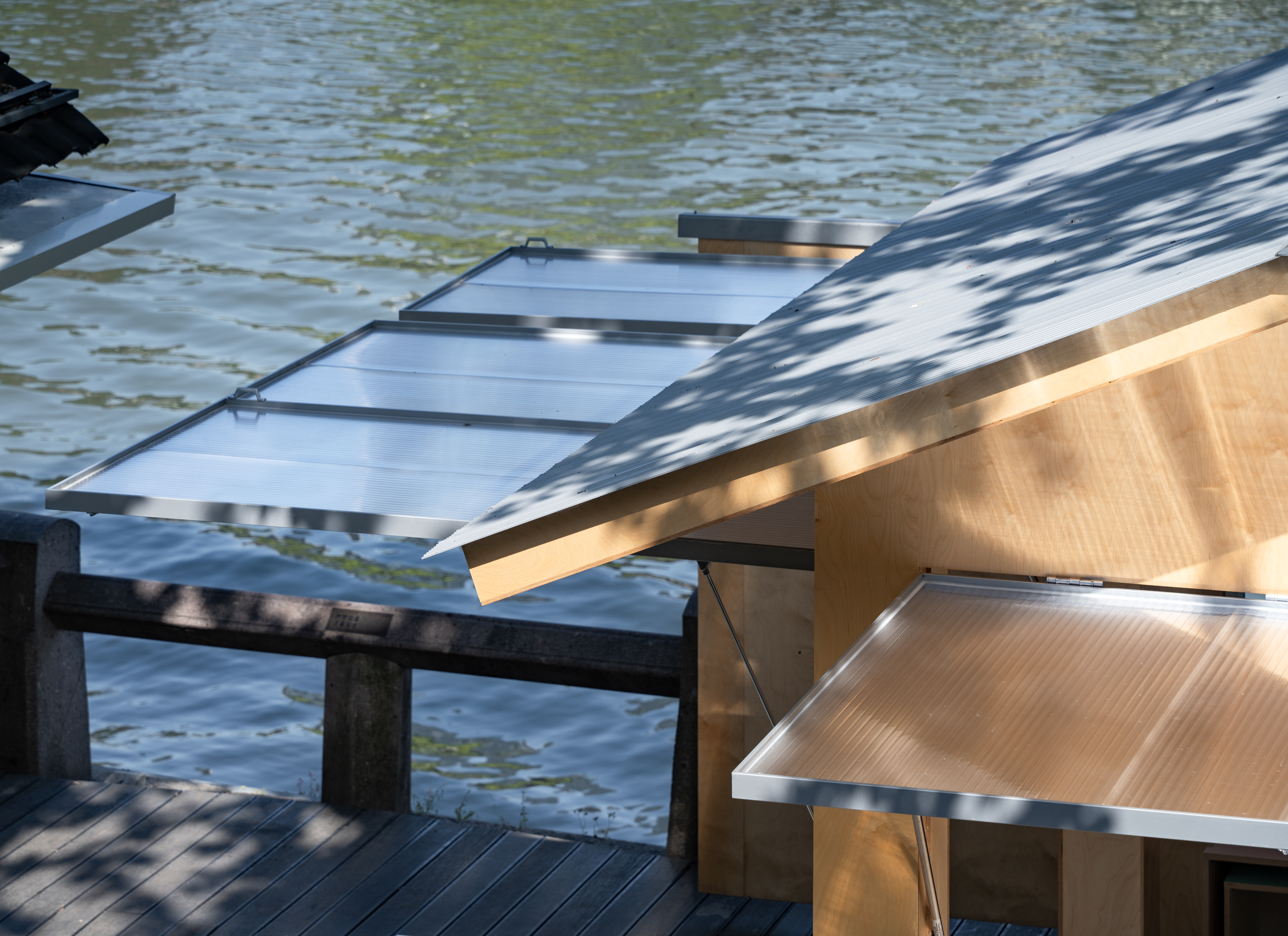
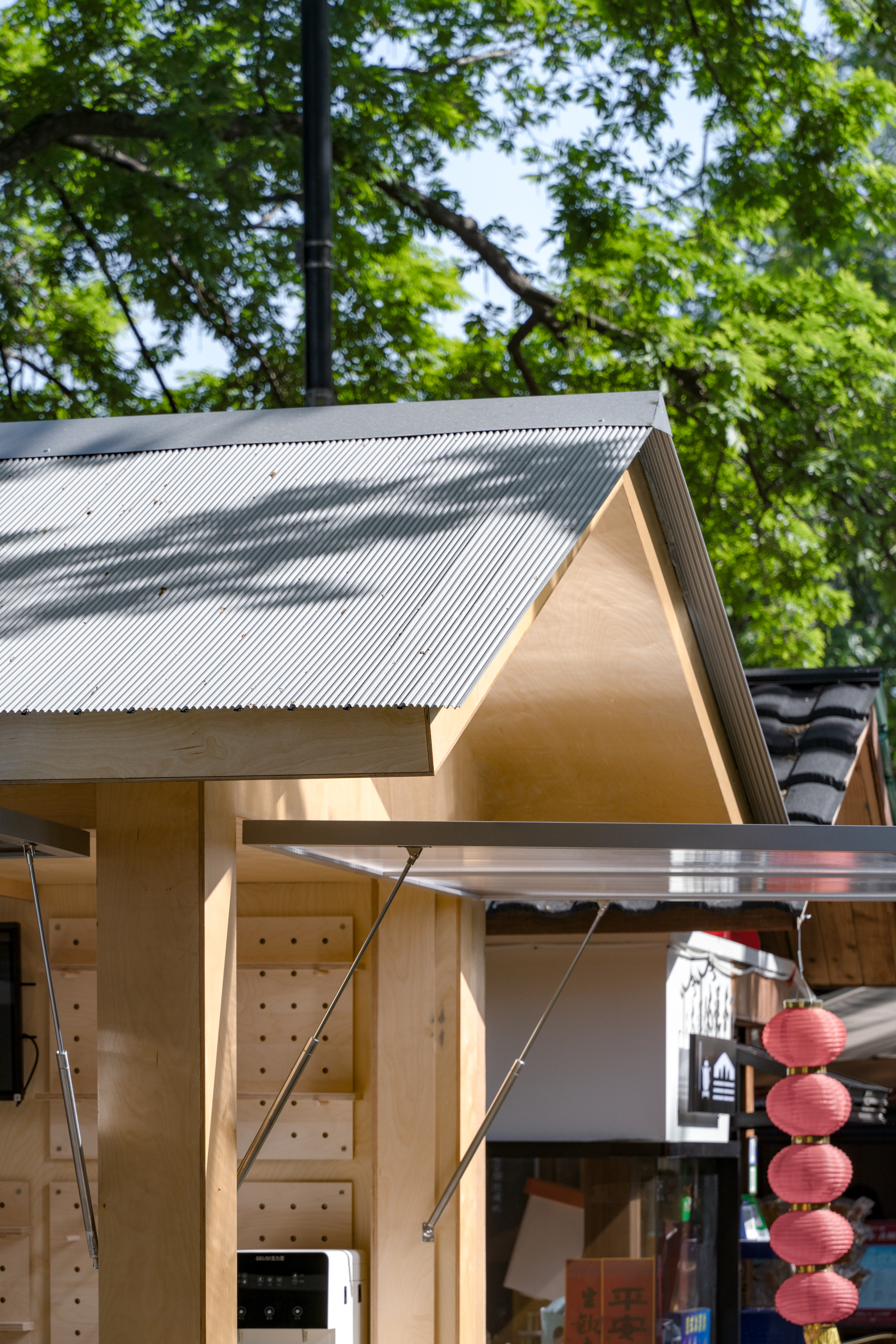
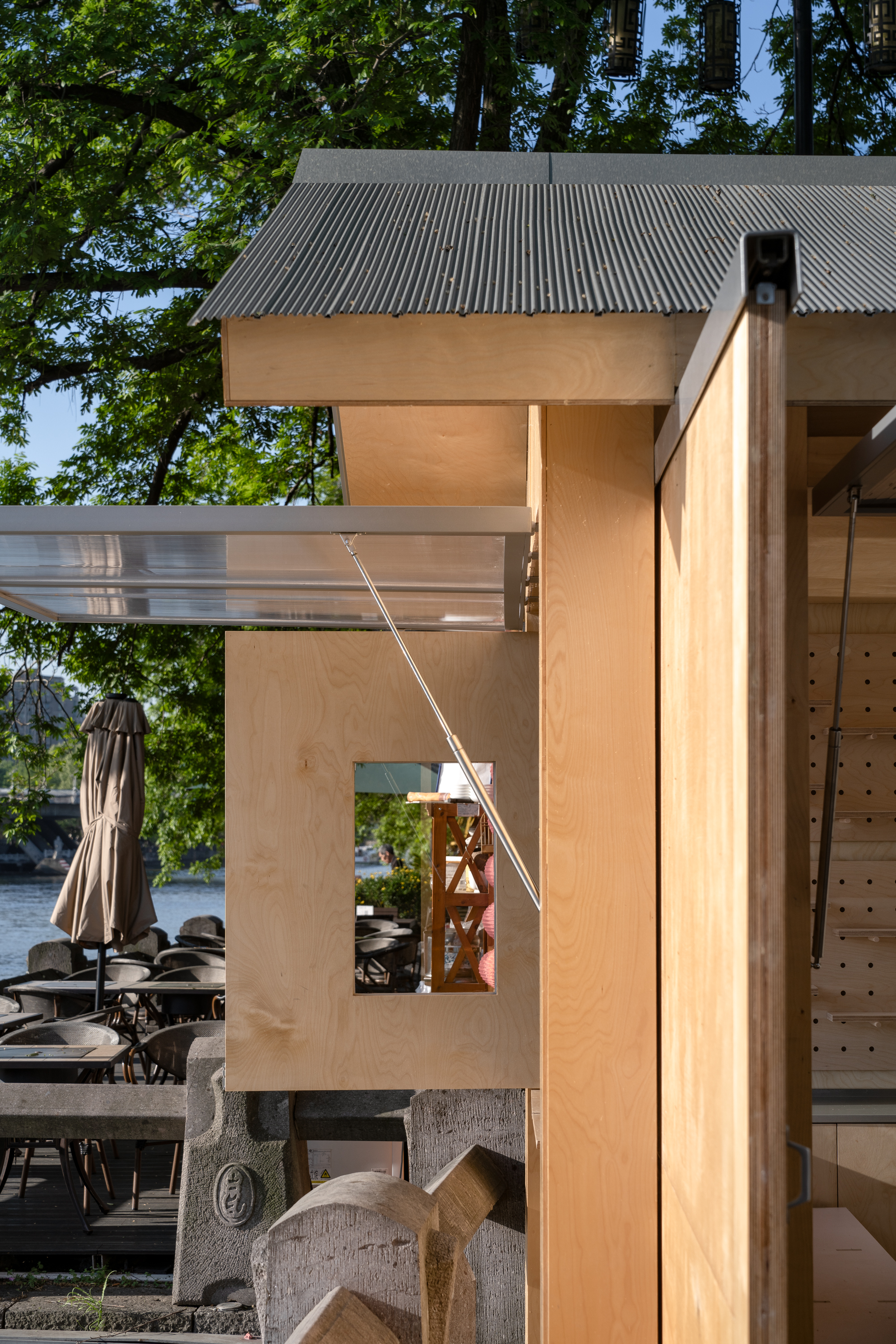
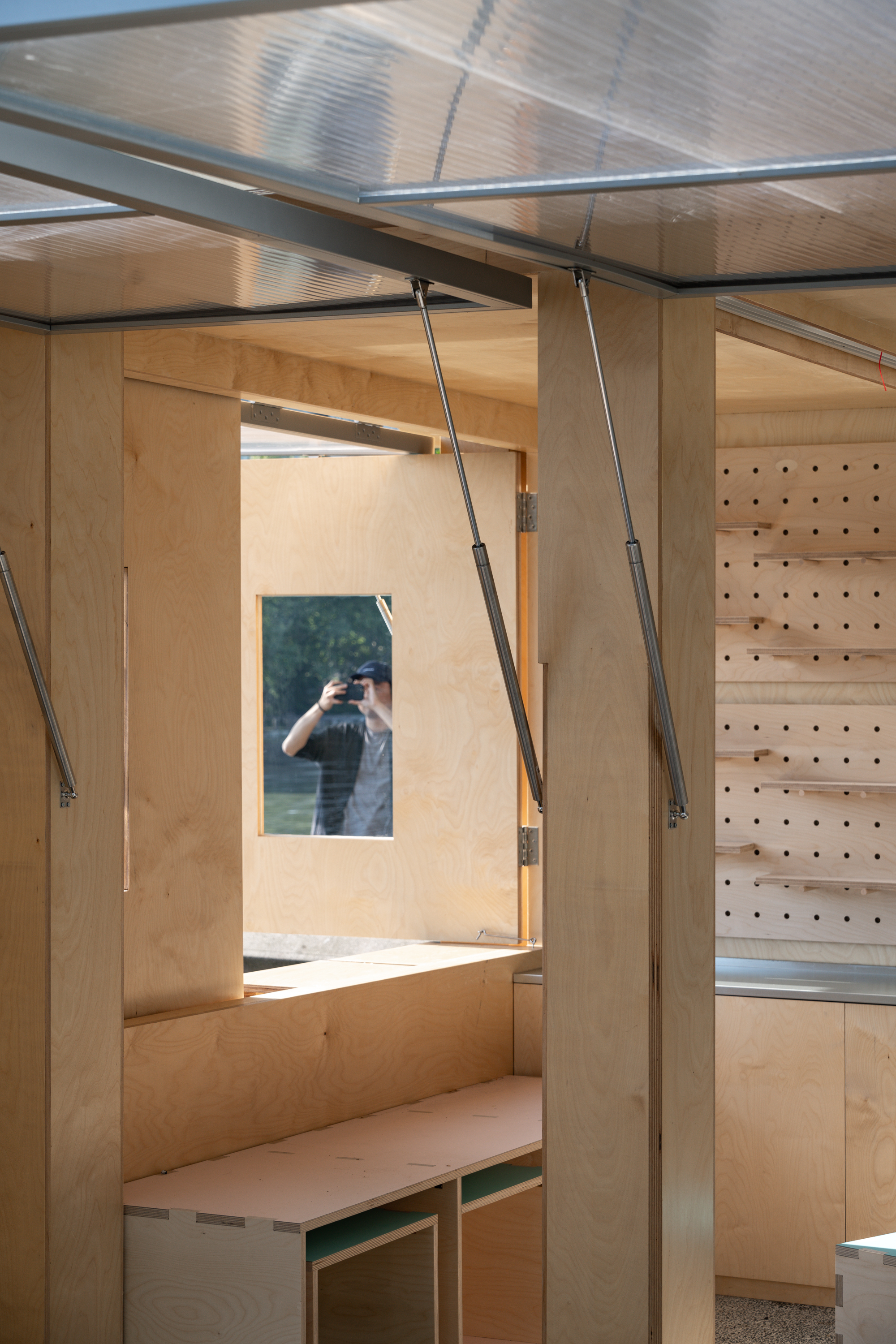
但在向游客完全开放之余,驿站还需提供志愿者工作休息,设施储存等功能——它得是个微型建筑。因此,某种程度上,它可以变形:入口位于长边的小平台处,整个立面可向上打开,成为一种遮盖。临运河一面,有四道开启,上半墙展开成为雨棚,内墙分大小两扇,小扇向运河展开,成为景窗,大扇可以随移轨侧向推出,成为街区文化宣传背景板,然后藏在腰部隔板再上翻,成为窗台。
Yet while being fully open to visitors, the post also needs to serve functions such as providing a rest space for volunteers and storing facilities—it has to be a miniature building. Thus, to some extent, it can transform: the entrance is located at the small platform on the long side, and the entire facade can be opened upward to serve as a cover. On the side facing the canal, there are four opening sections. The upper half of the wall can unfold to become a canopy; the inner wall is divided into two doors, a small one and a large one. The small door can be opened toward the canal to serve as a view window, while the large door can be slid out sideways along a track to act as a backdrop for block cultural promotion. It can then be tucked into the waist partition and flipped upward to become a windowsill.
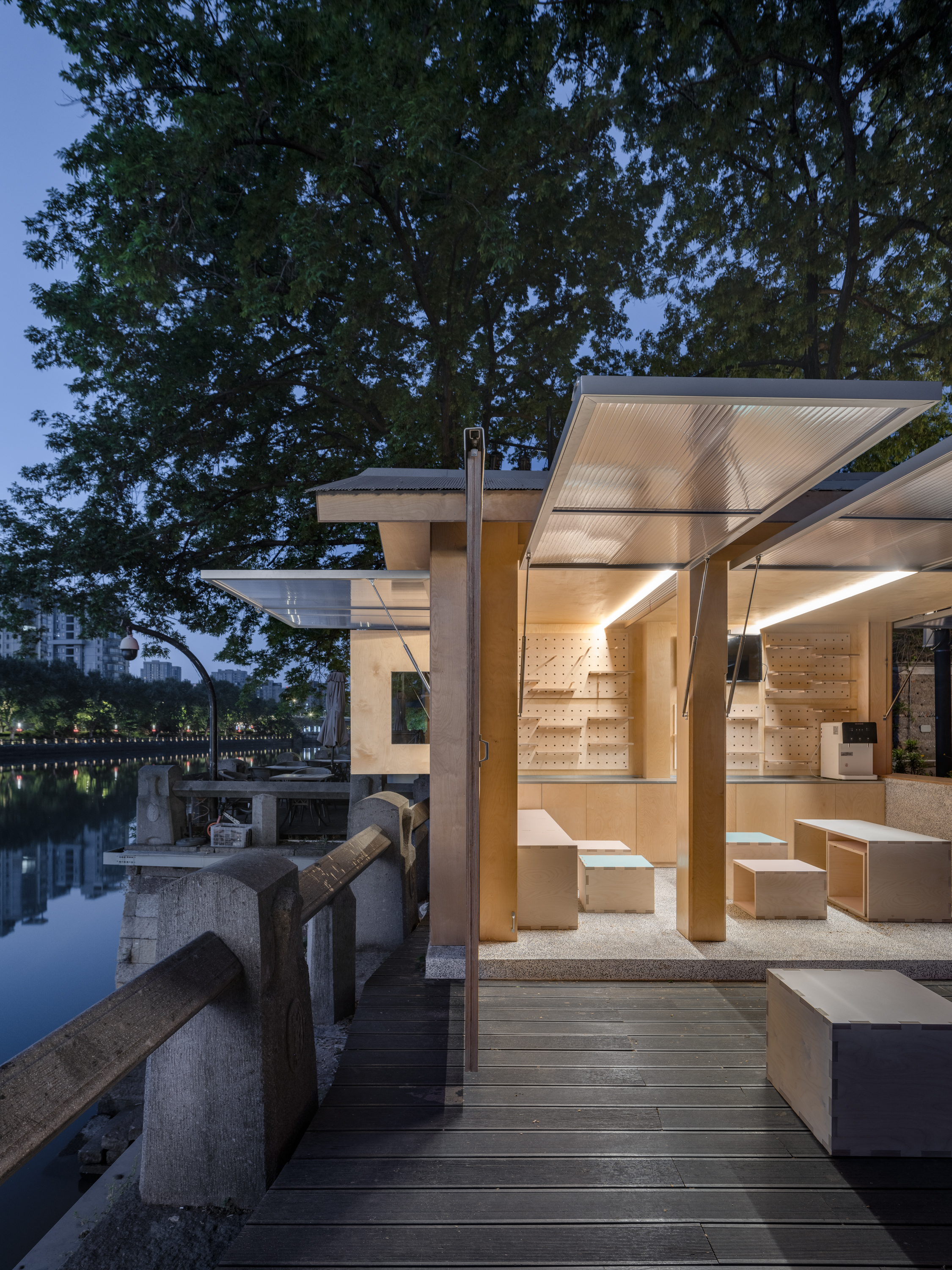
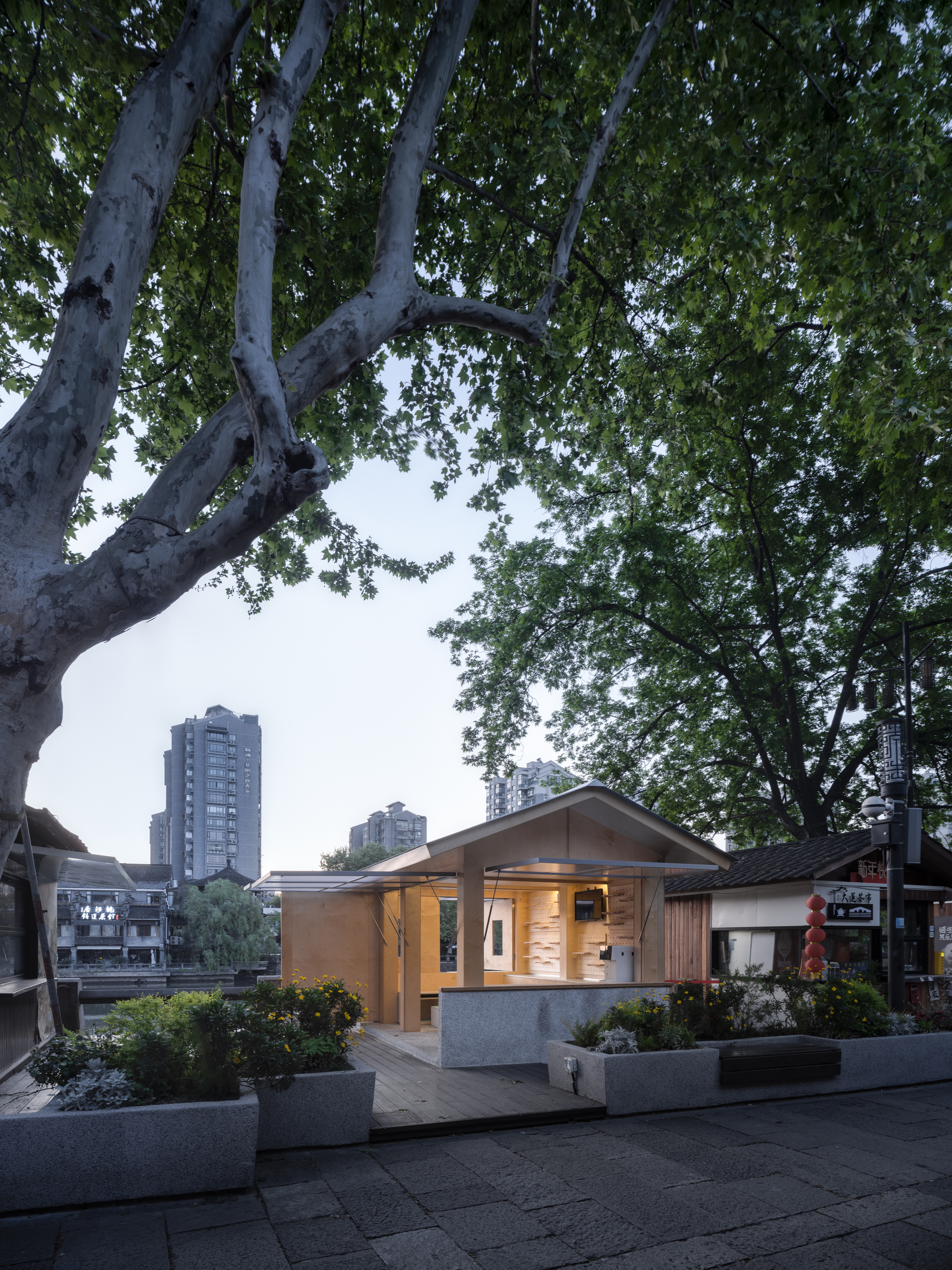
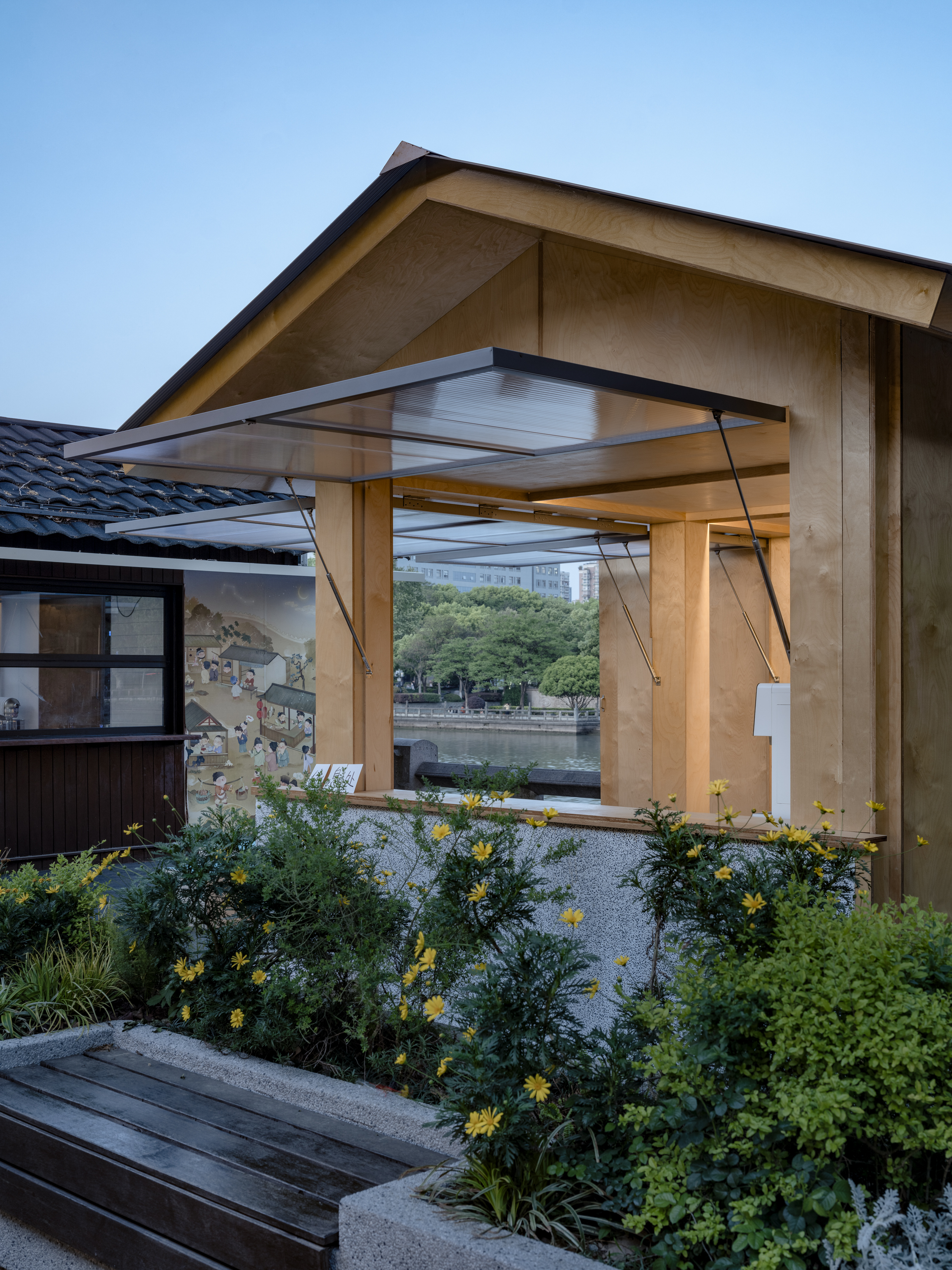
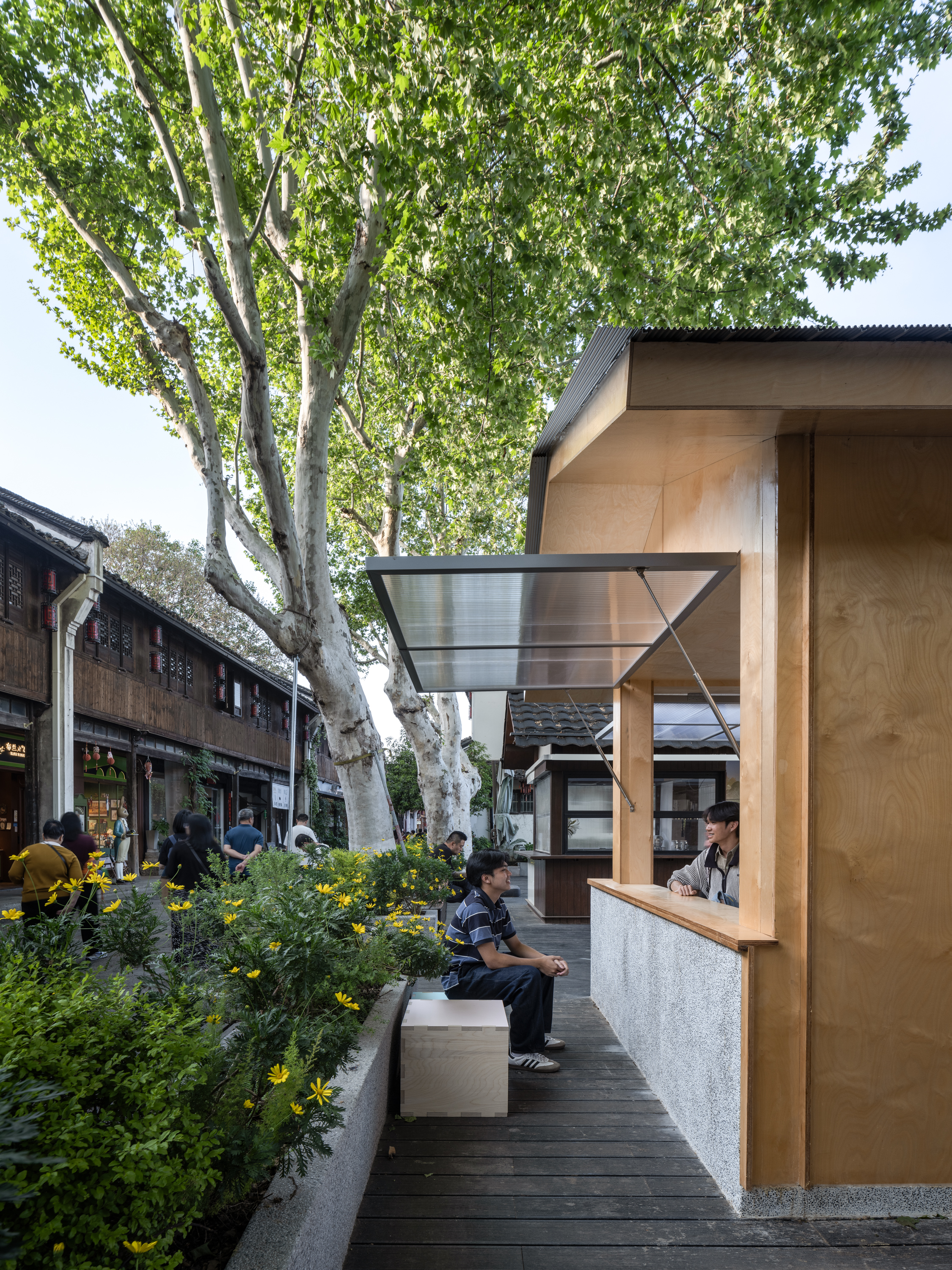
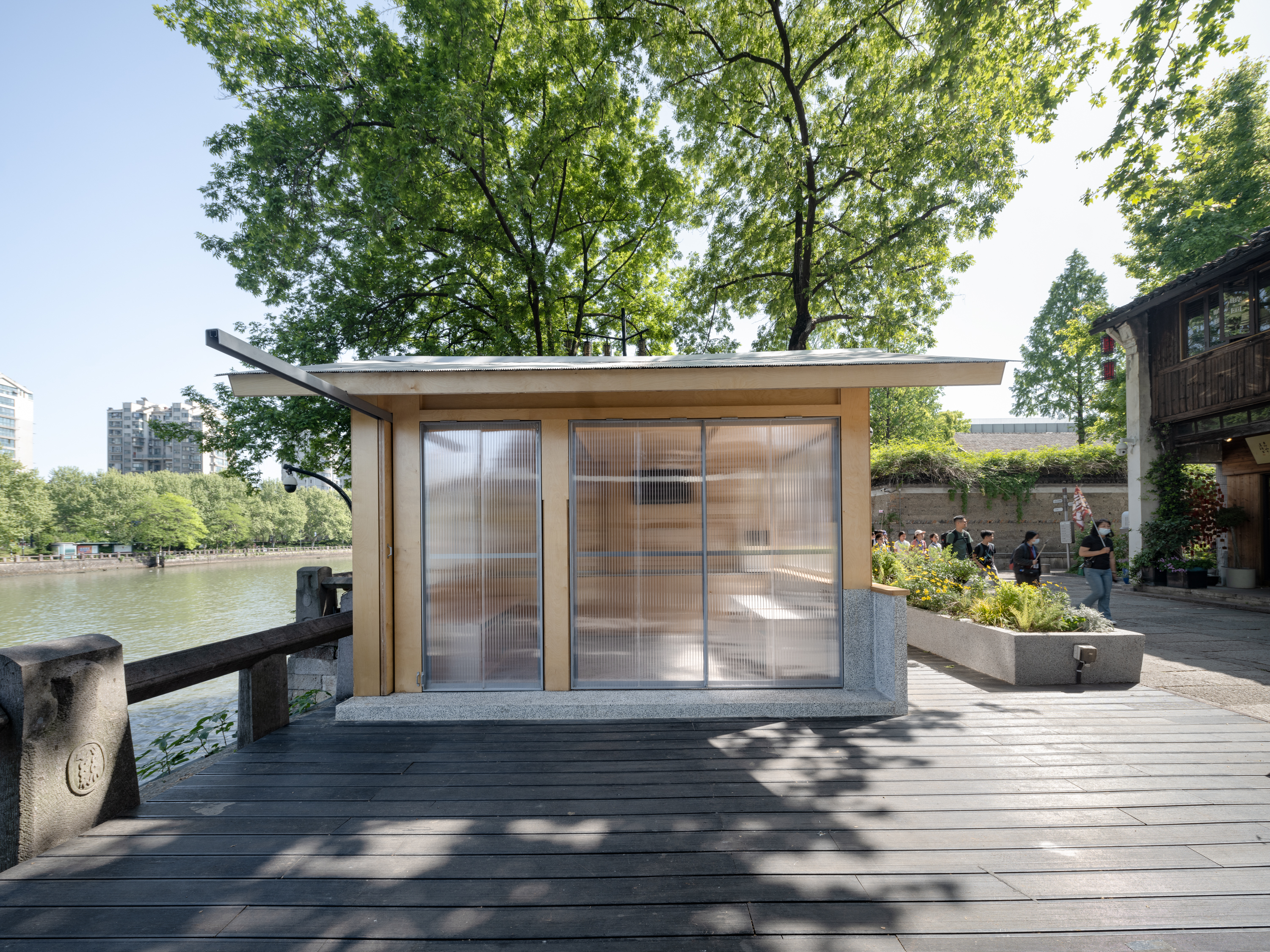
所有活动面由关闭到展开,再到关闭,需要经过一系列固定的程式。或由插销,或经锁扣,或是把手助力,前后有序。驿站甚至因此有了一种仪式感,像上下班一样,切换模式:在闭合状态下,它是个拘谨的小房子,而在开放状态下,它是一处公共休憩亭。
All movable surfaces follow a series of fixed procedures when transitioning from closed to unfolded, and then back to closed. Whether via bolts, latches, or handle-assisted operations, each step follows an orderly sequence. This even gives the post a sense of ritual—like clocking in and out of work, it switches modes: in its closed state, it is a reserved small house; in its open state, it becomes a public rest pavilion.
一些遗憾 Some Regrets
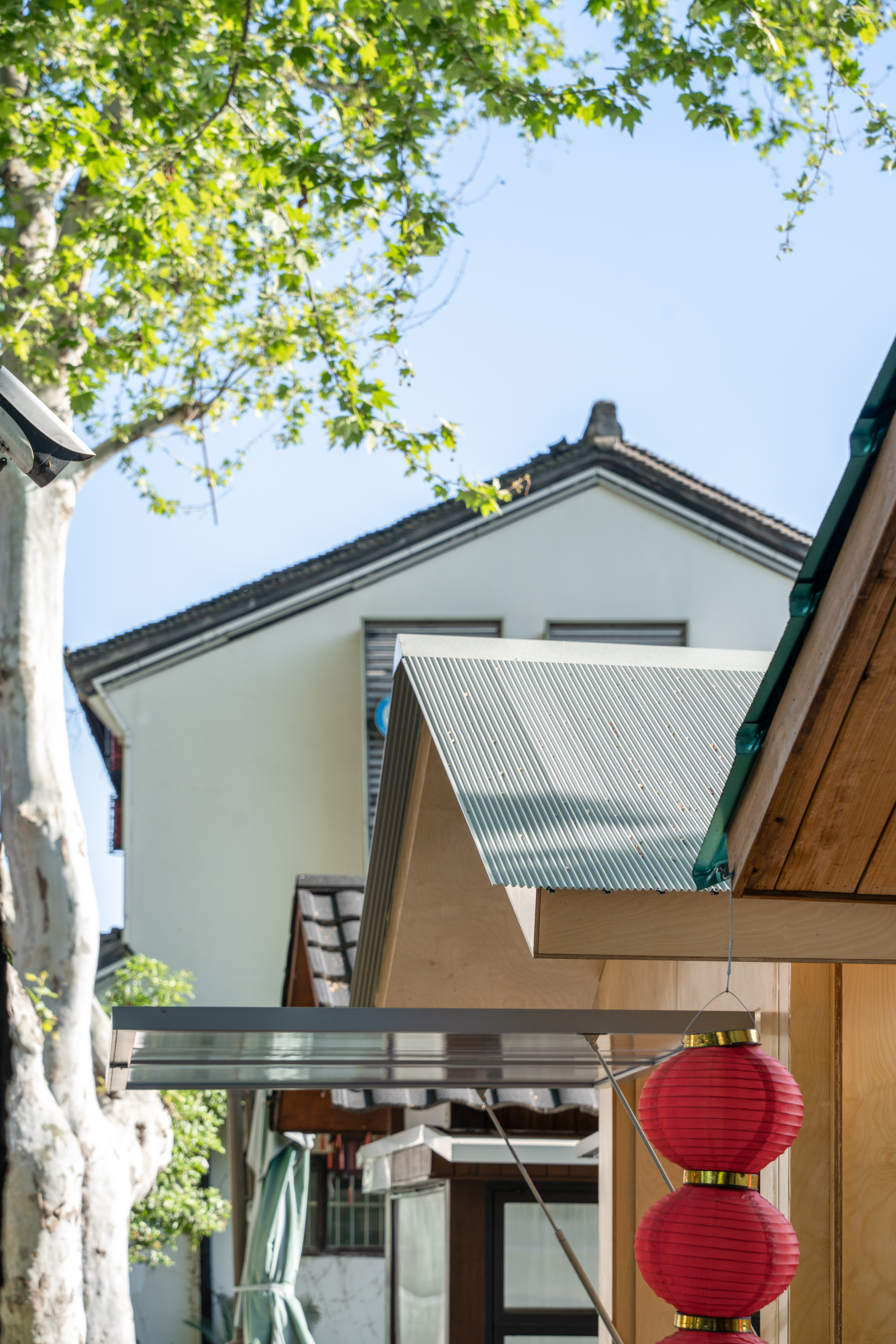
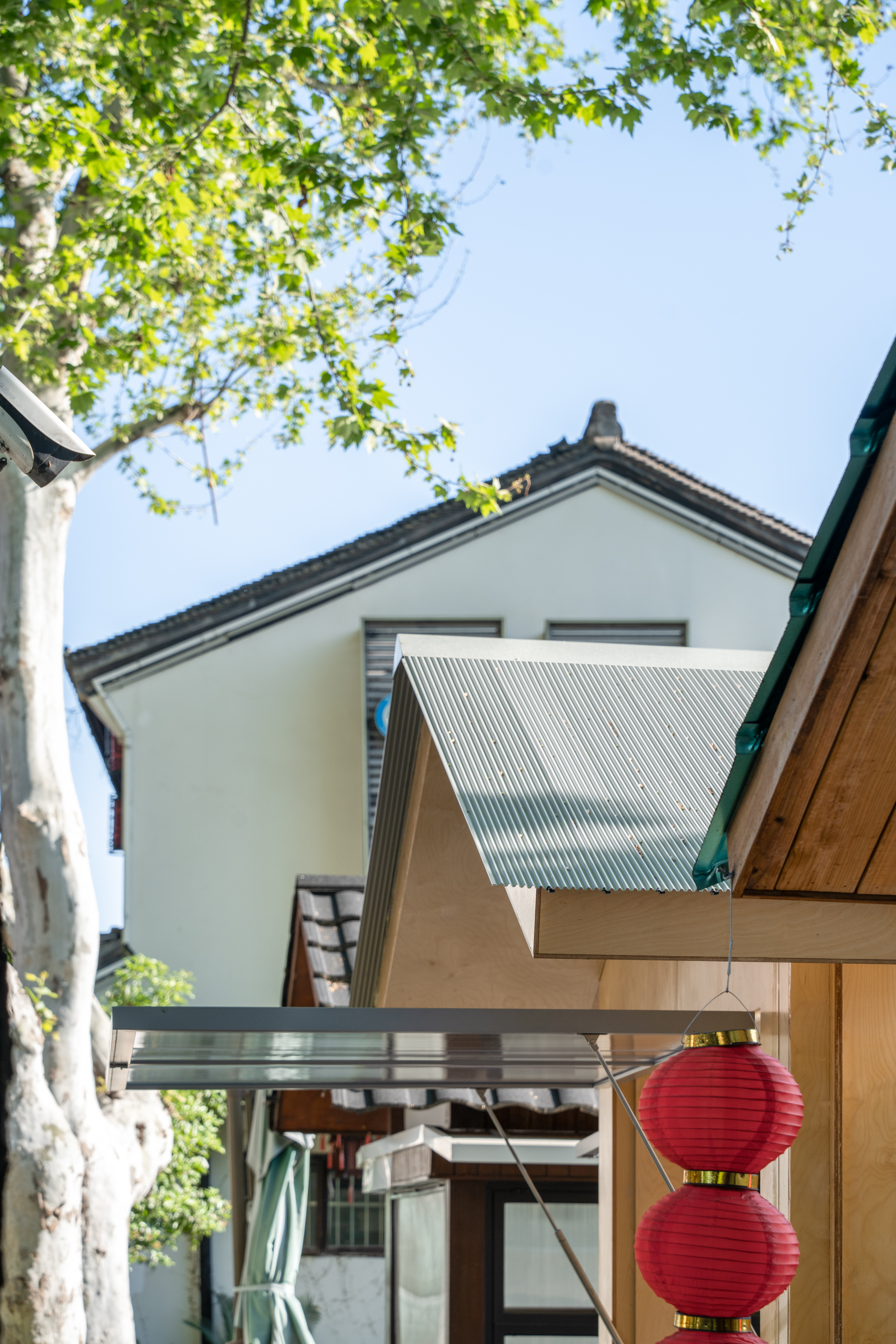
拱宸桥周边的建筑是有风貌约束的,改造不能脱离“双坡木屋”的母题。在造价极限压缩的情况下,原本并没有打算改屋顶和结构。但在施工过程中发现,原始屋檐和黑色铝瓦虽与周边木屋一致,但在本场地中,还是过于厚重了。因此临时修改了方案,在不改动结构的情况下,将立面板材包裹上去,并更换屋面金属板。在这个过程中,海洋板作为主材,它的材料质感被浪费了:其本身是一个需要体现模数化,拼接缝,以及侧边线条的板材,但最终成为了一种简单的包裹。
There are architectural style constraints for buildings around Gongchen Bridge, and the renovation could not deviate from the motif of "gabled wooden houses". With the construction cost being extremely compressed, there were initially no plans to modify the roof or structure. However, during construction, it was found that although the original eaves and black aluminum tiles were consistent with the surrounding wooden houses, they still felt overly heavy in this specific site. Thus, the plan was revised temporarily: without altering the structure, facade panels were used for cladding, and the roof metal sheets were replaced. In this process, the material texture of marine plywood—used as the main material—was wasted. By nature, it is a type of board that should showcase modularity, joint seams, and side lines, but in the end, it was reduced to a simple cladding material.
不过,小驿站作为实验的部分:折叠与开合,在建造中得以呈现,算是一种幸事。
Nevertheless, it is a stroke of luck that the experimental elements of the small post—folding and opening/closing—were successfully realized in the construction.

ETERNITY丨APOLLO Architects & Associates
Cyclesure啡驰空间丨平介设计
Bedding | MAST
盒装微型盆景——造作建筑办公室丨造作建筑工作室
湘北大屋重构 ——汨罗“端午人家”乡村安置聚落丨造作建筑工作室
运河小亭驿Canal Pavilion Post丨造作建筑工作室


Heidentempel Pavilion | Christoph Hesse Architects

昆山玉山书房设计,探索新型复合型书店的多种可能性丨GLC(中国)

HAY!YoungBirds! 2020年亚洲优秀青年大赛三强作品《削笔刀》设计师访谈

订阅我们的资讯
切勿错过全球大设计产业链大事件和重要设计资源公司和新产品的推荐
联系我们
举报
返回顶部