
O Plant-based Thao Dien Cafe丨xưởng xép
xưởng xép ,发布时间2025-06-06 12:22:00





Completion Year: 2024
Category: Architecture, Furniture
Gross Built Area (m2): 93m2
Project Location: Thao Dien, Dist 2, HCMC, Vietnam
Usage: F&B
Design team: Lam Bao, Nguyen Anh Dung, khongphainhan, Trong Nhan, Devon, Kim Nhat Thanh, Nai, Chau Thao Vy
Structure & construction: lam.weavingspace
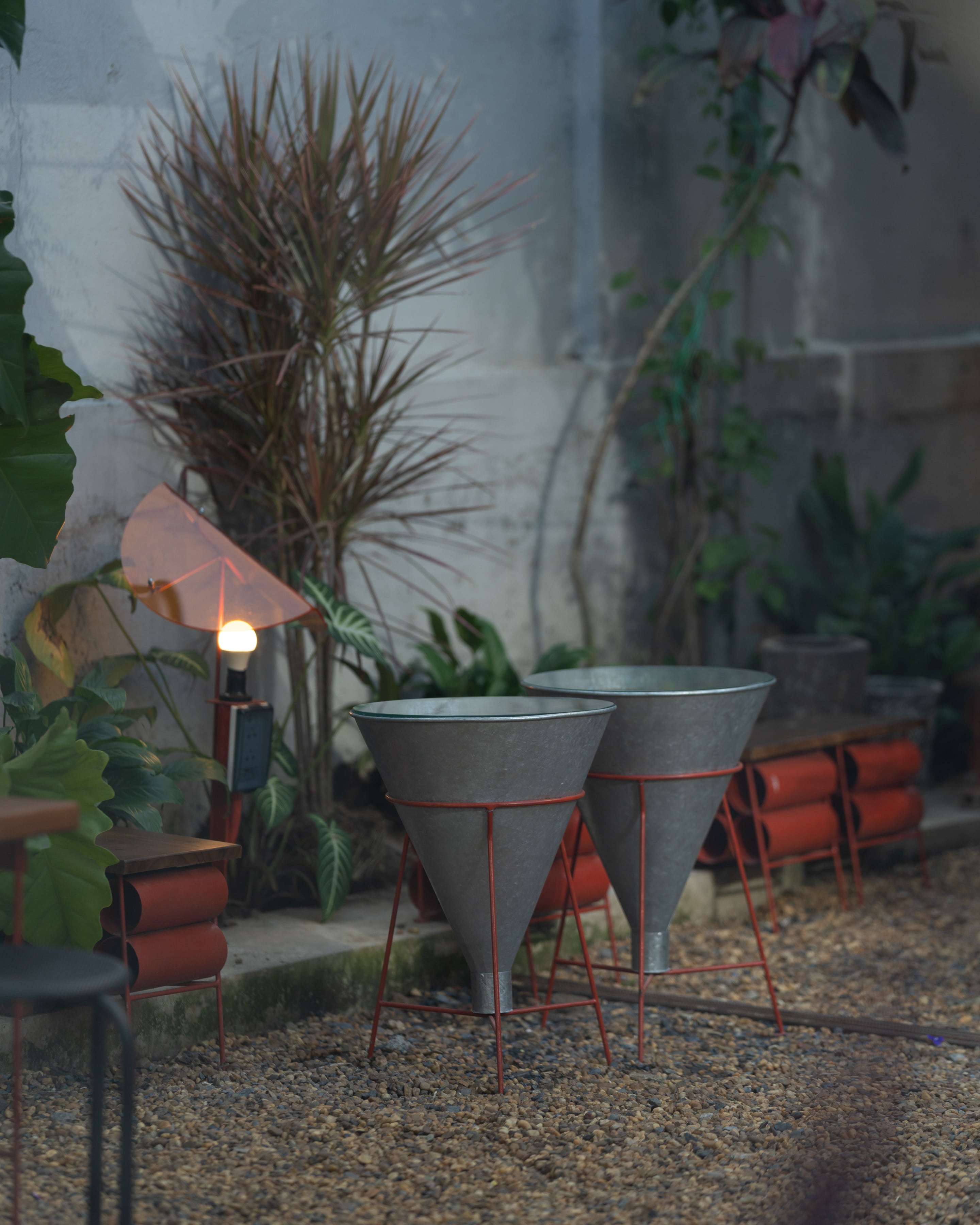
Furniture: Mettacons
Drawings: Nai
Photography: Quang Dam
版权声明:本链接内容均系版权方发布,版权属于 xưởng xép,编辑版本版权属于设计宇宙designverse,未经授权许可不得复制转载此链接内容。欢迎转发此链接。
In architecture, we are often accustomed to adding—a new structure emerging as a mark of human presence imprinted on nature. However, for this project, we chose a different approach: instead of adding, we deliberately subtracted artificial interventions.
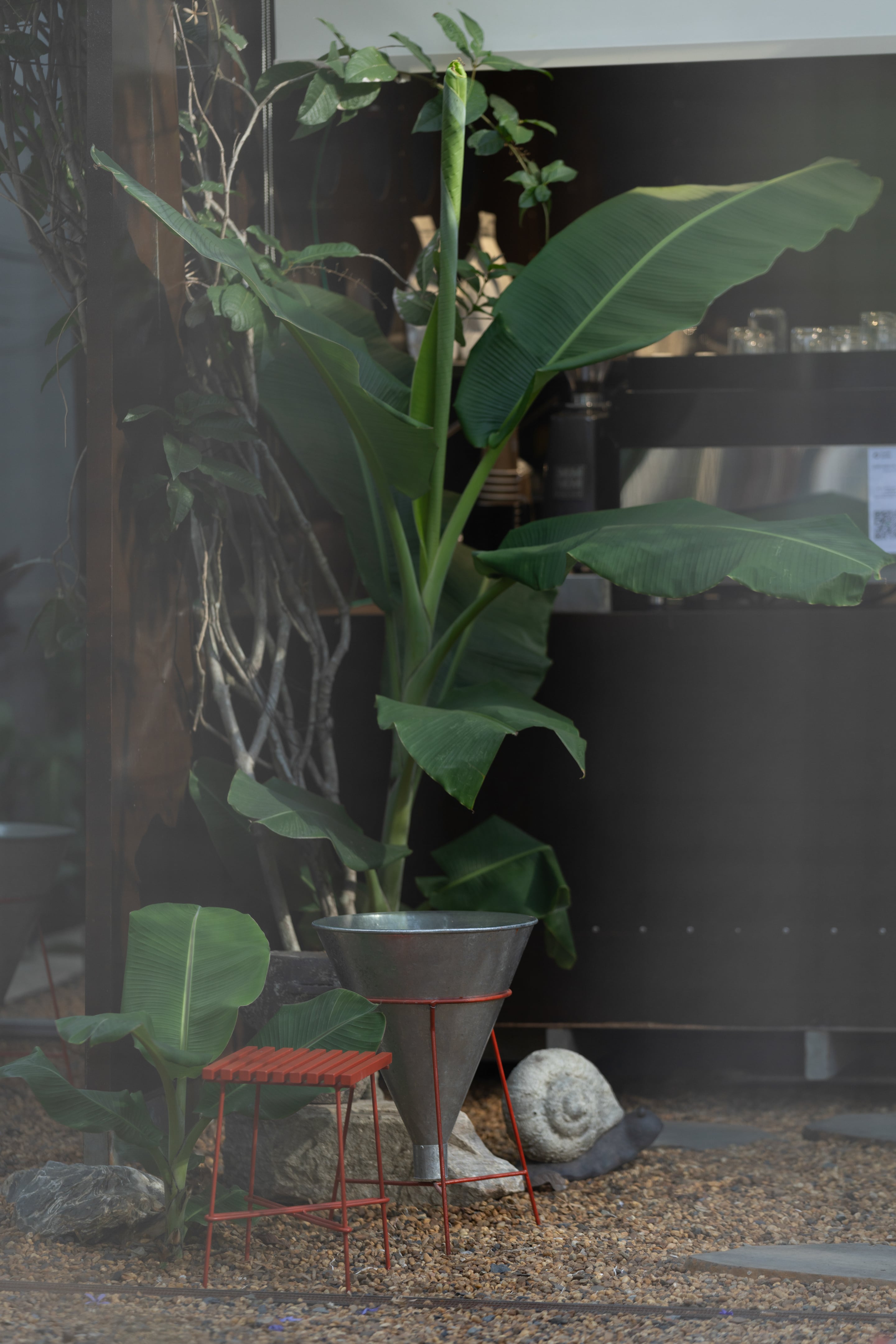
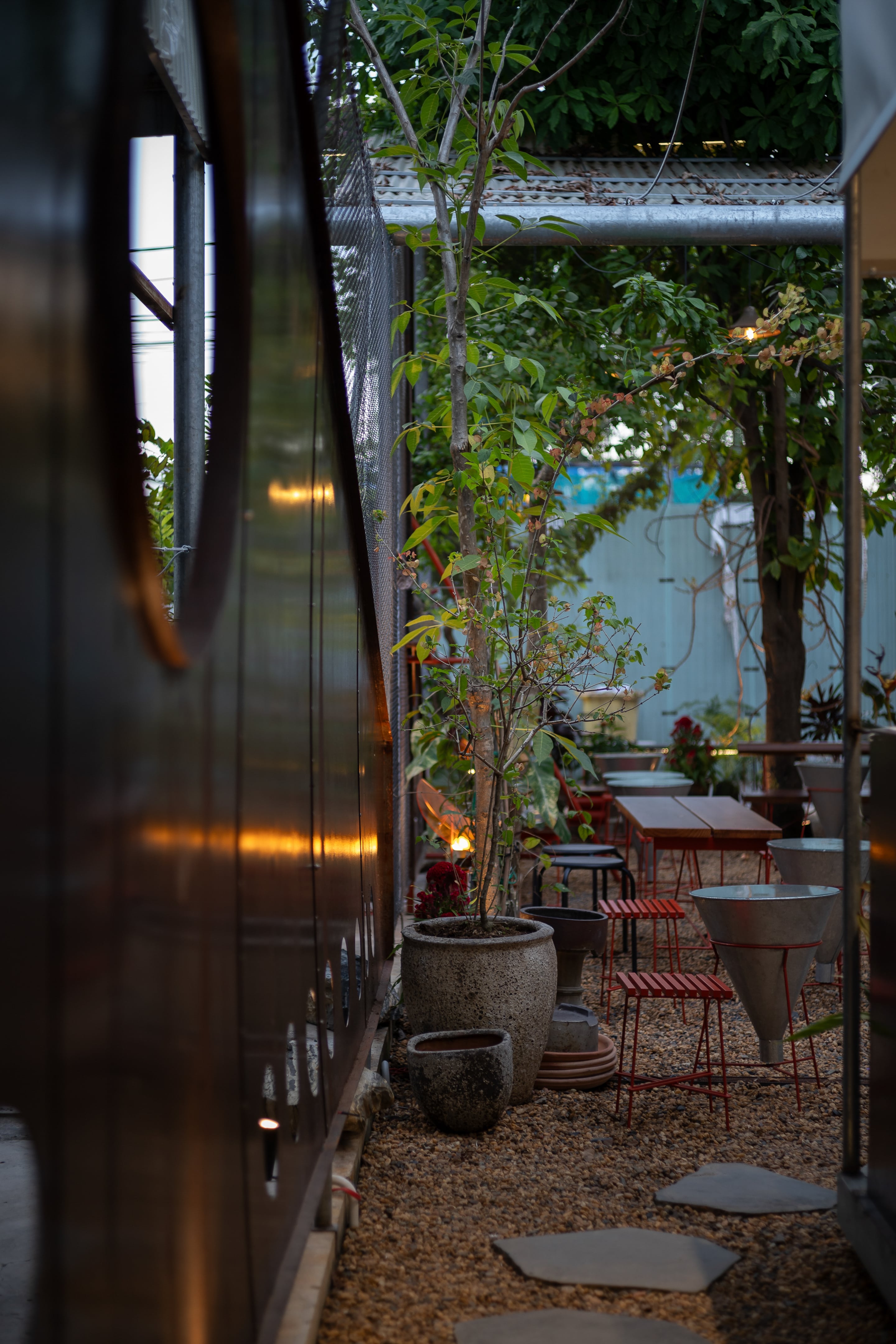
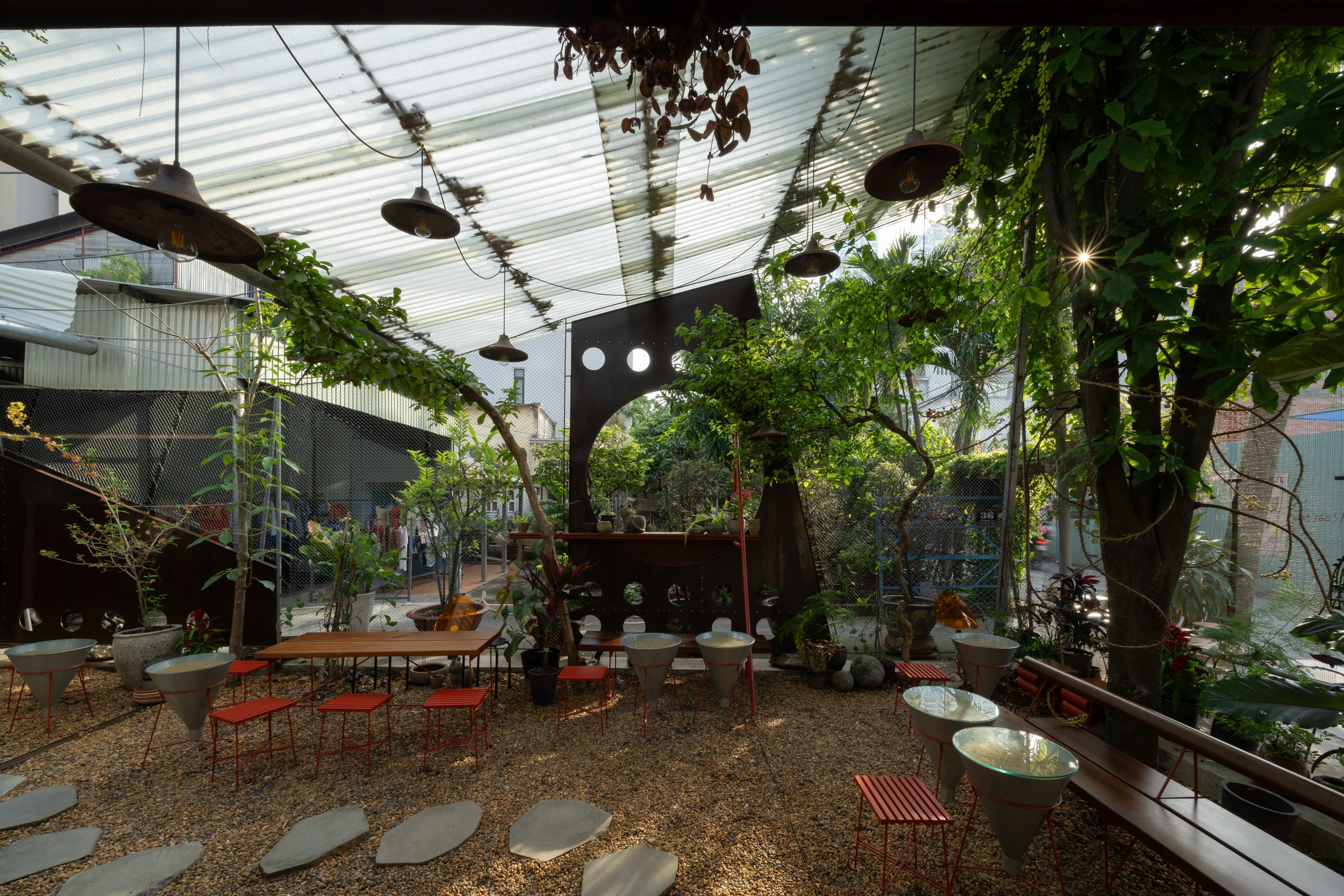
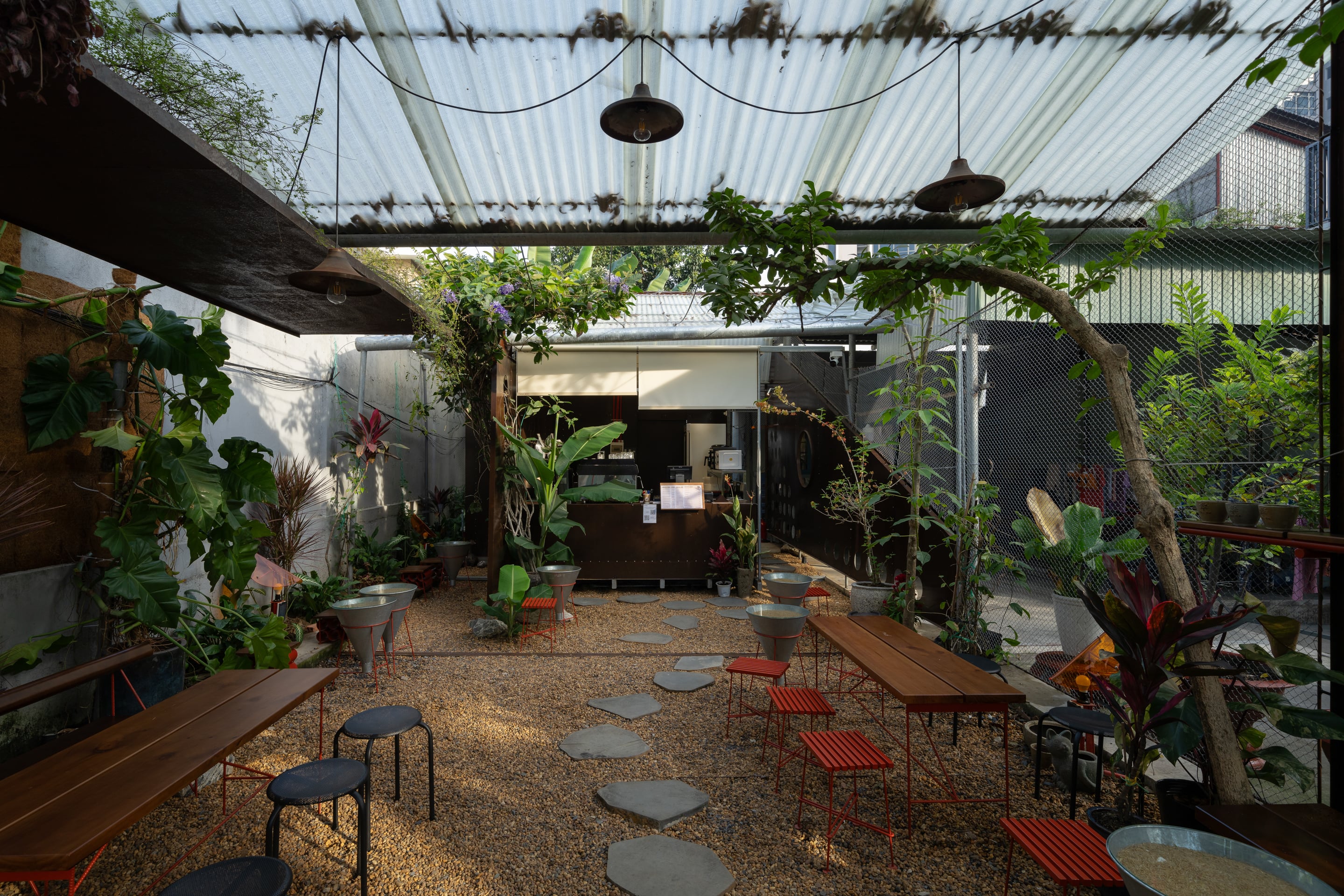
The site was originally a small garden attached to an old house, now repurposed into a café serving plant-based food and beverages. We did not want the presence of architecture to diminish the inherent value of the garden. How could the garden remain part of the house while simultaneously becoming an inseparable part of the café? We opted for a minimalist approach, preserving the essence of the site, making only subtle adjustments to shape a new space without disrupting its existing balance.
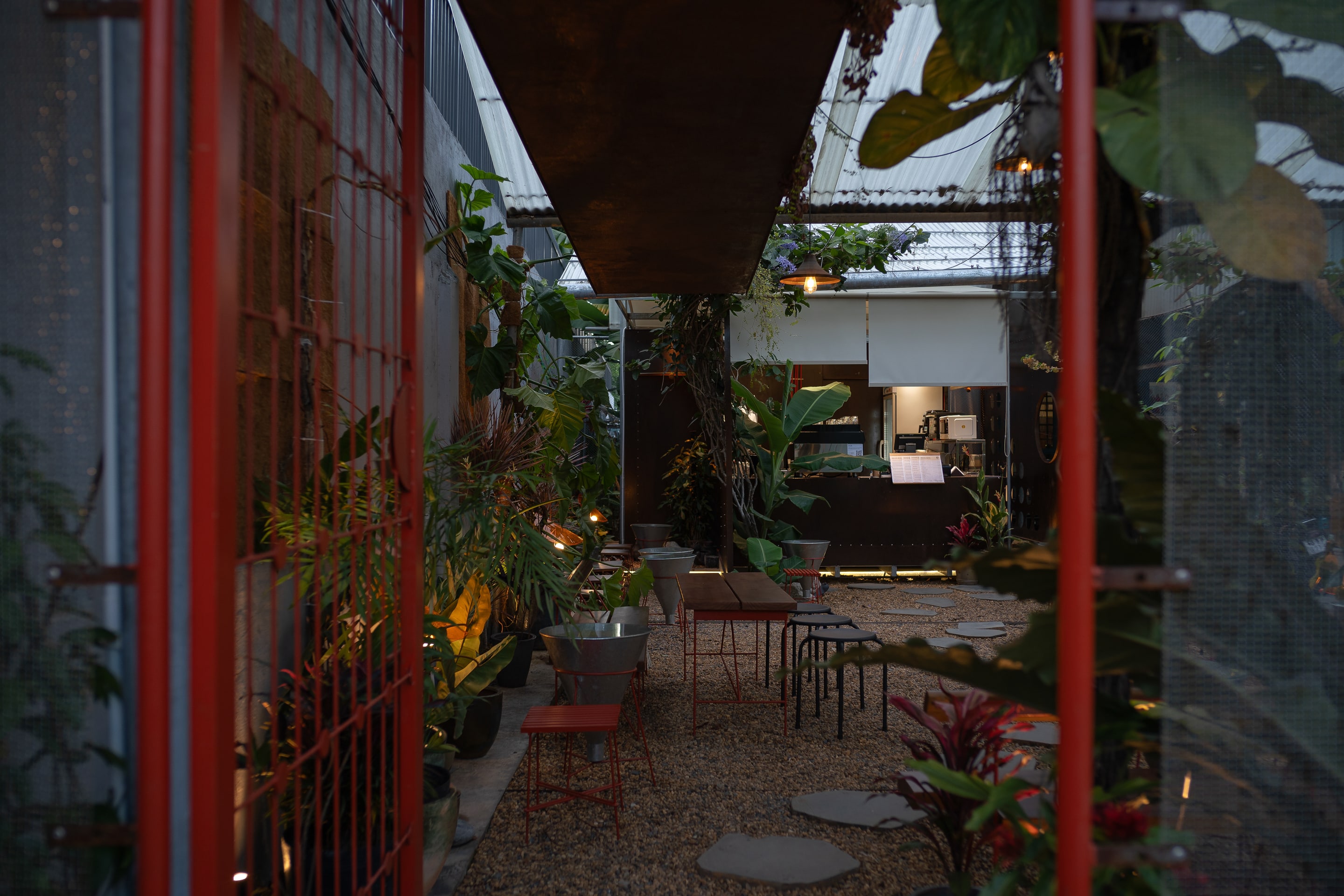
Soft, implied partitions were introduced to define the space in a way that allows for fluid transitions rather than rigid boundaries. These elements establish functional zones naturally, ensuring privacy while maintaining a strong connection to the garden. The same green space now serves both the house and the café, allowing them to coexist and share its value in a new way.
Beginning with volumetric studies, we refined the design through multiple iterations, gradually eliminating unnecessary elements until the space reached its purest form. Throughout this process, it felt as though the site itself was engaging in a dialogue with us: it did not need more; it needed less—an approach that was lighter, more restrained. And so, we began a process of subtraction—removing unnecessary boundaries to make the architecture more open, allowing it to converse more harmoniously with nature.
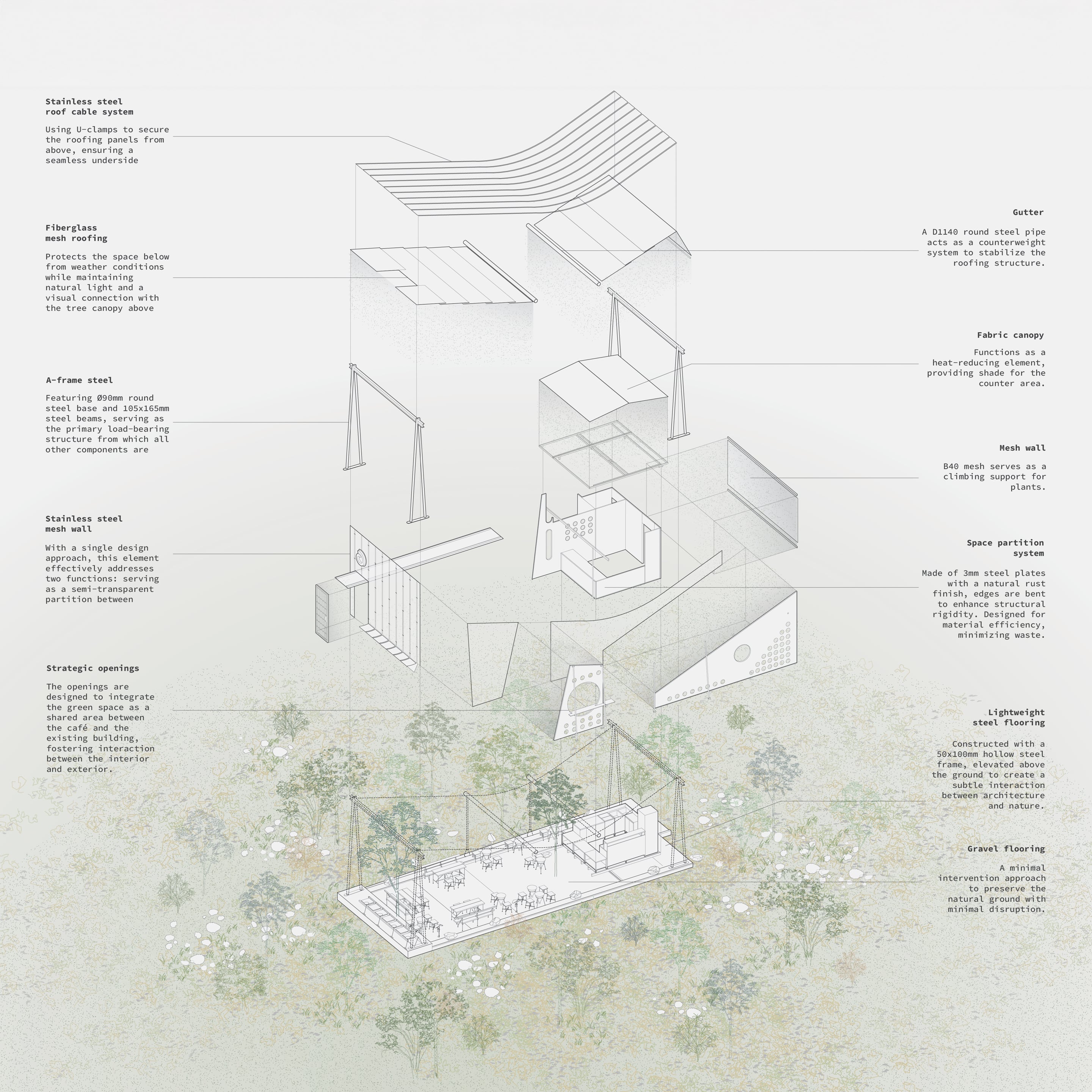
The structural system follows a minimalist yet effective principle. Columns, roofing, and gutters were all carefully refined so that each element serves a clear purpose, with nothing in excess. In terms of materials, we selected lightweight solutions that interact naturally with the surroundings. The roofing system is designed as a delicate, undulating layer—like a drifting cloud—providing shade without completely blocking natural light. The partitions are “tailor-made” from 3mm weathered steel sheets, their edges bent for reinforcement, evoking the warmth of aged wooden beams. The façade, woven from steel mesh, helps reduce the visual mass of the structure while fostering a seamless integration between architecture and greenery.
With this approach, architecture does not impose itself upon the space but instead acts as a subtle intervention that enhances what already exists. The garden remains a garden, but now, it is no longer just part of the old house—it has become an integral part of a shared communal space—a natural transition between people and landscape, between old and new, between the present and future possibilities.













ETERNITY丨APOLLO Architects & Associates
Cyclesure啡驰空间丨平介设计
Bedding | MAST
O Plant-based Thao Dien Cafe丨xưởng xép
xuong xep Office and Reading Room丨xưởng xép


Heidentempel Pavilion | Christoph Hesse Architects

昆山玉山书房设计,探索新型复合型书店的多种可能性丨GLC(中国)

HAY!YoungBirds! 2020年亚洲优秀青年大赛三强作品《削笔刀》设计师访谈

订阅我们的资讯
切勿错过全球大设计产业链大事件和重要设计资源公司和新产品的推荐
联系我们
举报
返回顶部