

洋葱之家丨犬摇建筑
犬摇建筑WAG Architects ,发布时间2024-11-11 10:30:00





项目名称: 洋葱之家——一次屋解实验
设计公司:犬摇建筑事务所
主创建筑师:汪丹惟
项目地点:北京
项目状态:已建成
竣工时间:2023年5月
Project Name: The Onion Apartment —— A self-anatomy experiment
Architecture Firm: WAG Architects
Lead Architects: Danwei Wang
Address: Beijing
Project Status: Built
Photo Credits: 犬摇建筑事务所WAG Architects
版权声明:本链接内容均系版权方发布,版权属于 犬摇建筑WAG Architects,编辑版本版权属于设计宇宙designverse,未经授权许可不得复制转载此链接内容。欢迎转发此链接。
我们对居住环境的塑造传达出了很多关于我们内心的信息,包括我们的性格、价值观、兴趣爱好等等。在这个室内改造项目中,我们希望做出一个大胆的尝试,摆脱所有的设计套路,从研究“自我”出发,把“我”的印记刻在“家”的空间当中,让居住与“我”合二为一。
The way we shape our living environment conveys our inner selves, including our personalities, values, and interests. In this interior renovation project, we aim to make a bold attempt to break away from all design conventions. Starting from the study of individual's "self," we imprint the essence of "me" into the home, unifying the living space with the inhabitant's identity.
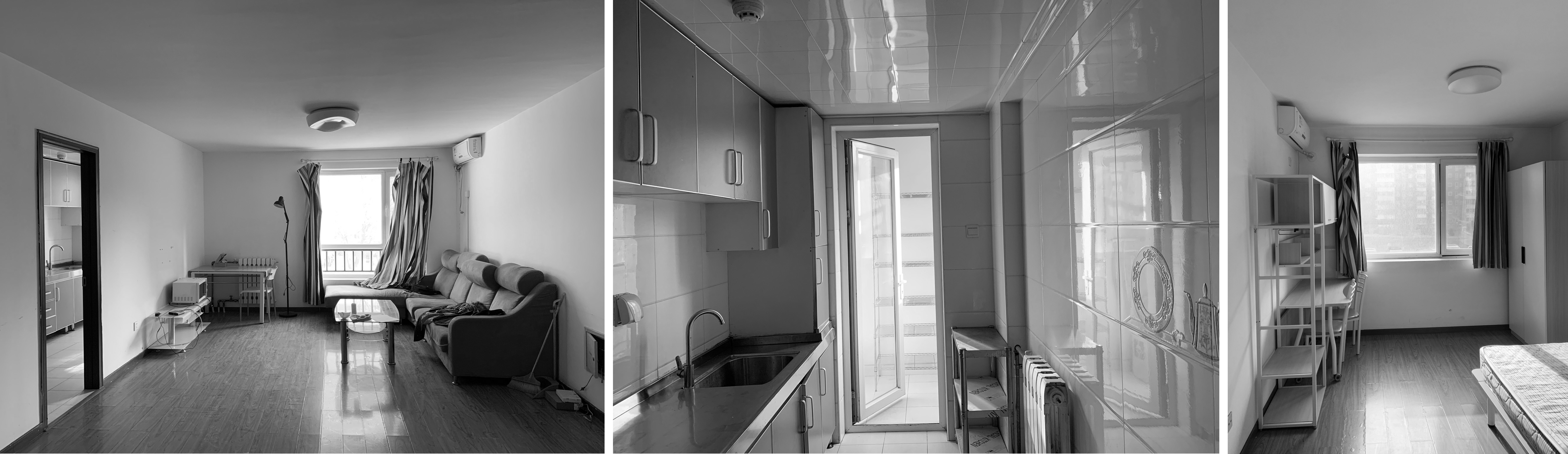
改造前 Before renovation
“我”的洋葱理论
Onion Theory
在设计之前,我们充分收集了关于“我”的信息,去了解“我”、分析“我”、解剖“我”的内心世界。“我”就像一颗洋葱,最外面的一层最坚实也被最多人看到,越往里越柔软,被看到的人也越少。这对应家中的空间:客厅象征“对外”的展示,而卧室则是反映“本我”的真实精神世界。
通过对屋主和其朋友的走访,我们发现屋主在外人眼中大胆有创造力,活泼而乐观;但自我描述中,谨慎、安静、注重独处成为关键词。这种“活泼vs安静”“大胆vs谨慎”的矛盾成为我们设计的另一个实验目标:让心理矛盾映射到空间中。
Before designing, we thoroughly gathered information about "me," to understand "me," and to analyze "me". "Me" is like an onion, with the outermost layer being the most solid and seen by the most people, while the inner layers are softer and seen by fewer. This “onion” also applies to our home: the outermost layer is the living room, displayed to outsiders, while the bedroom truly belongs to oneself and reflects the most authentic mental world.
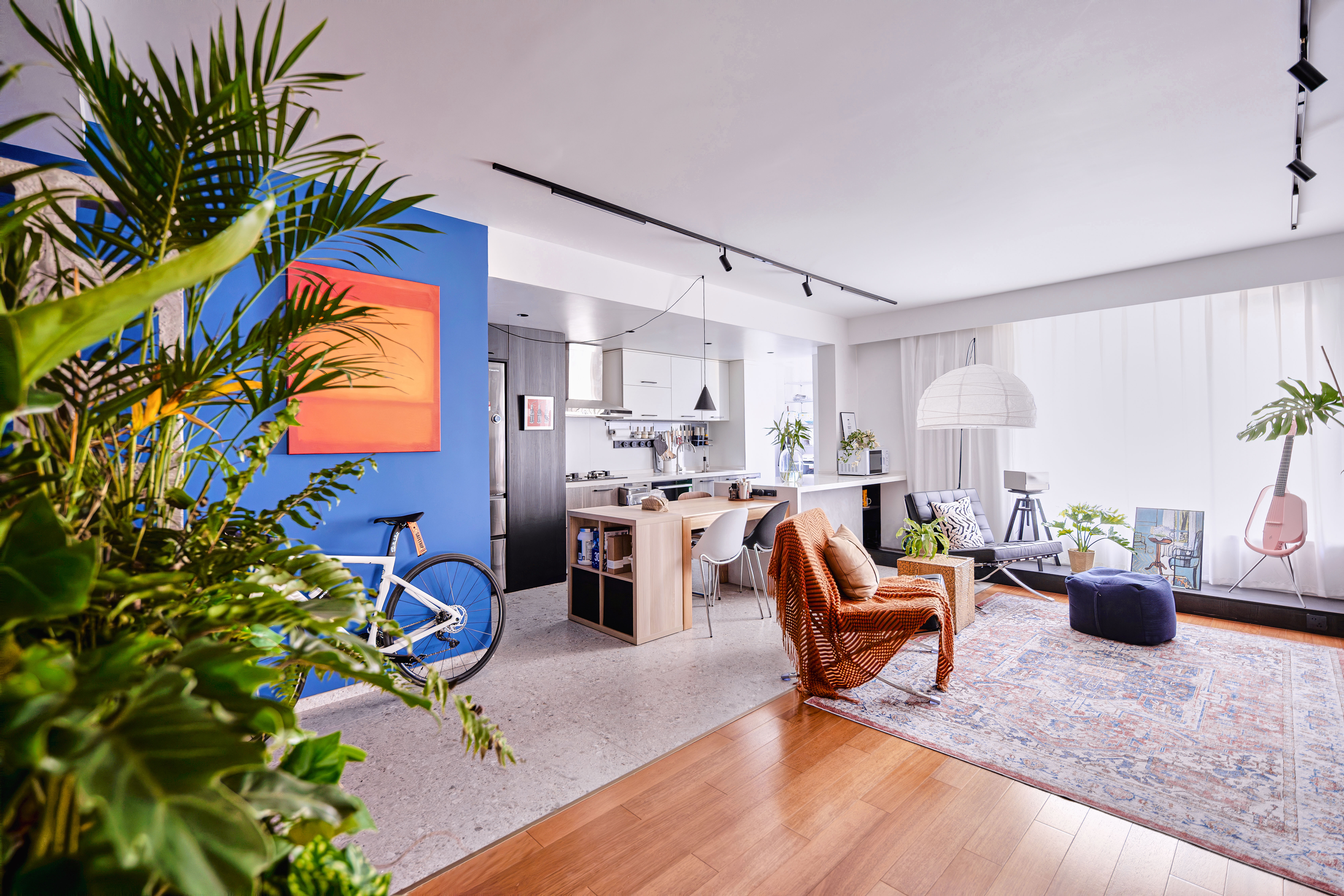
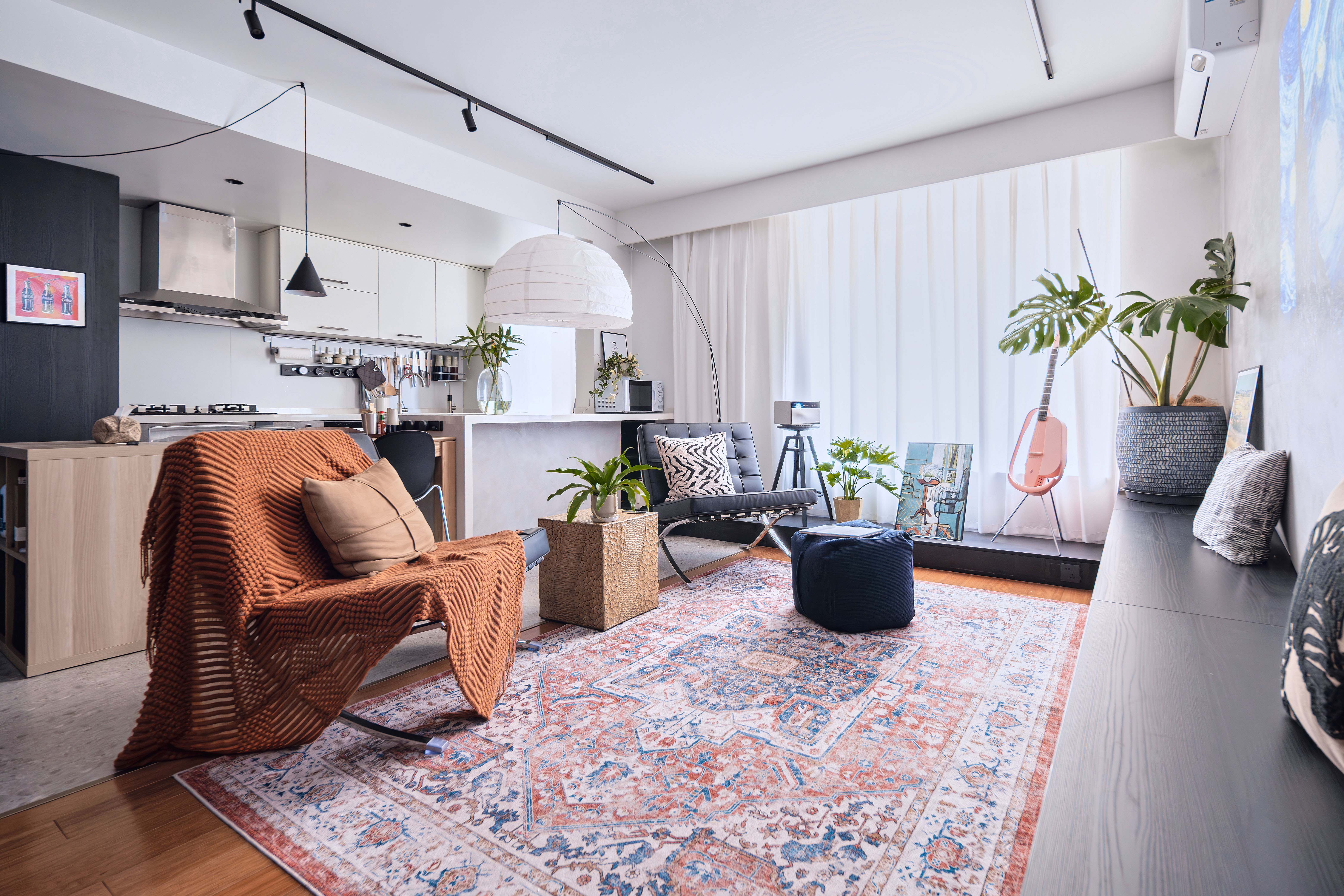
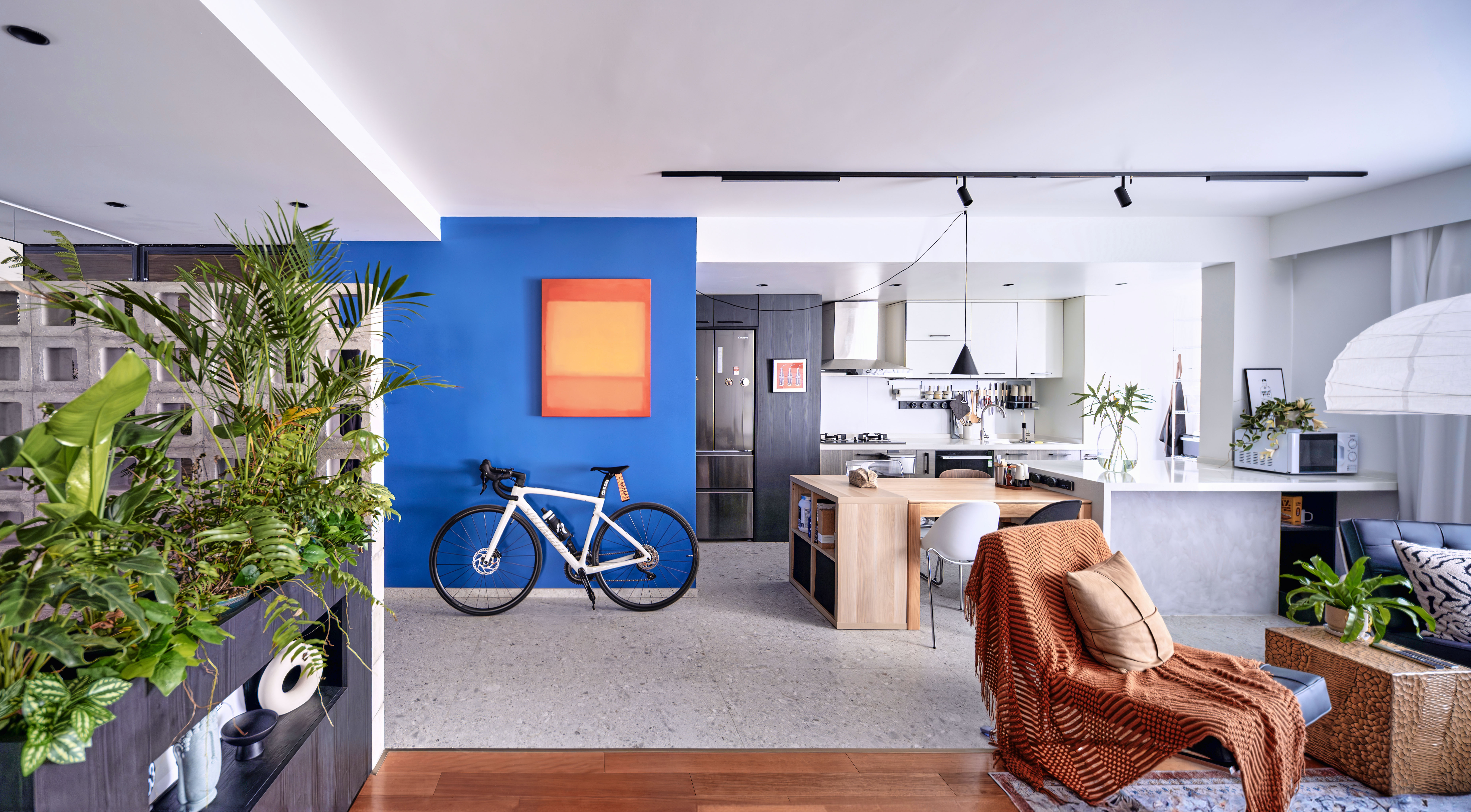
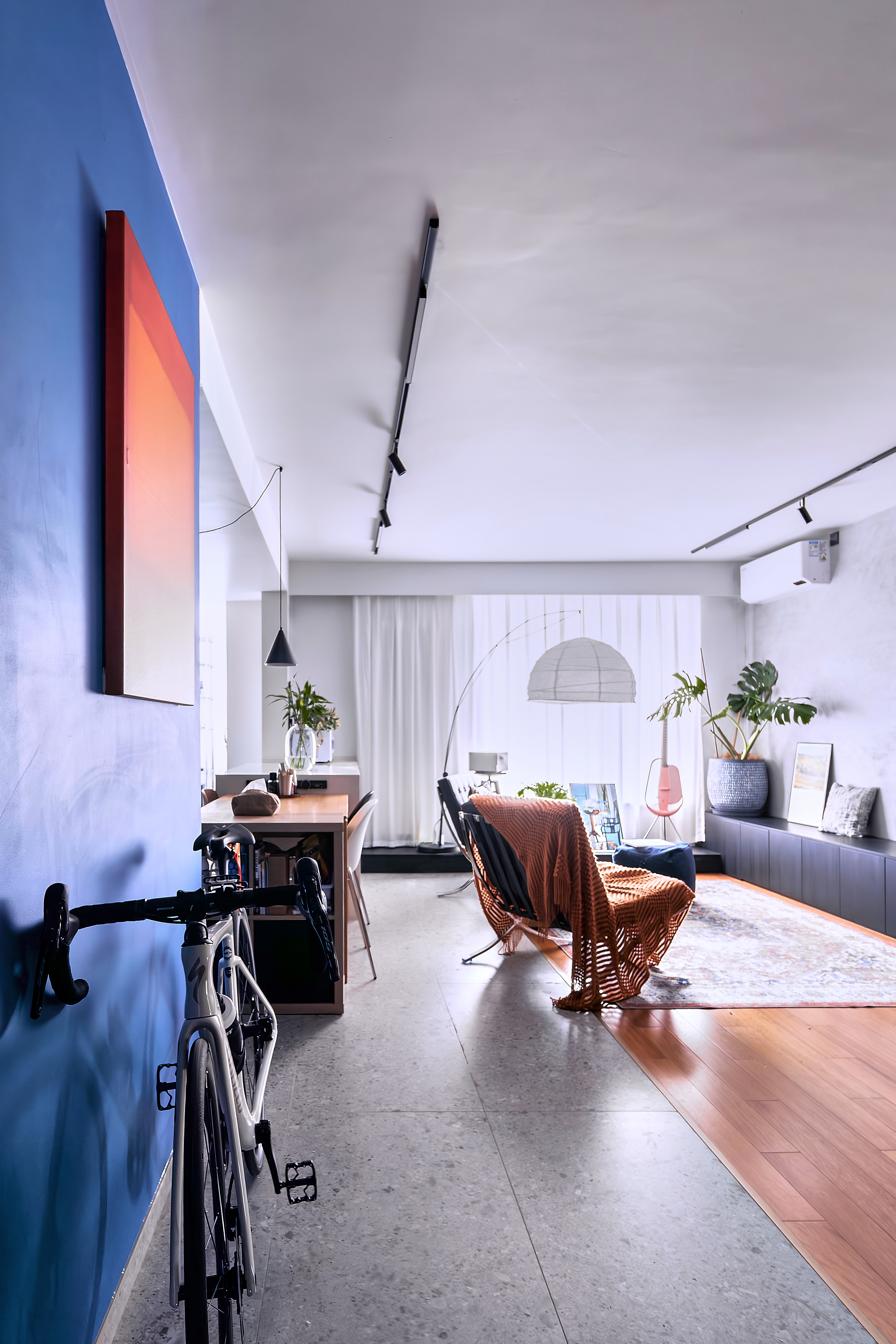
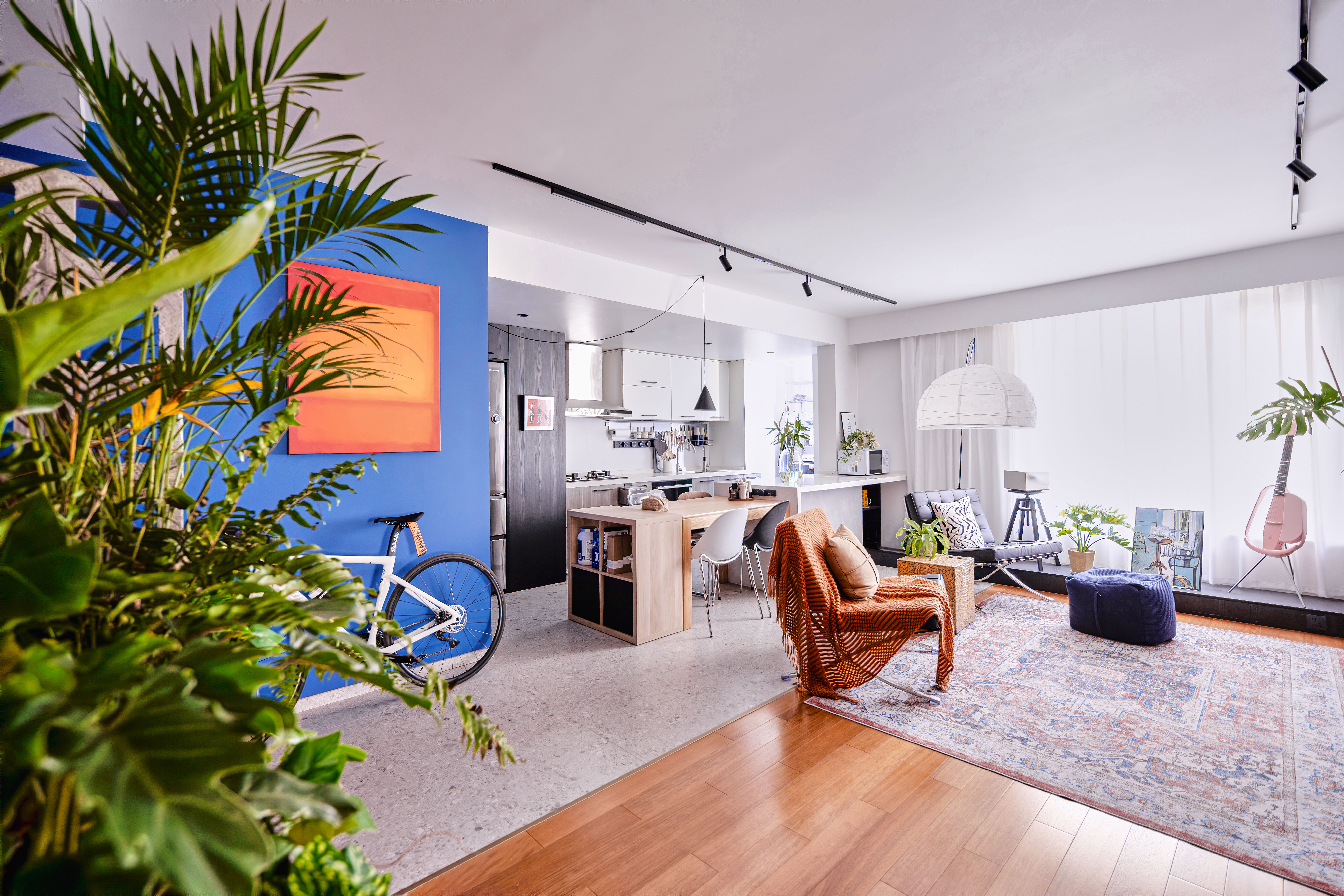
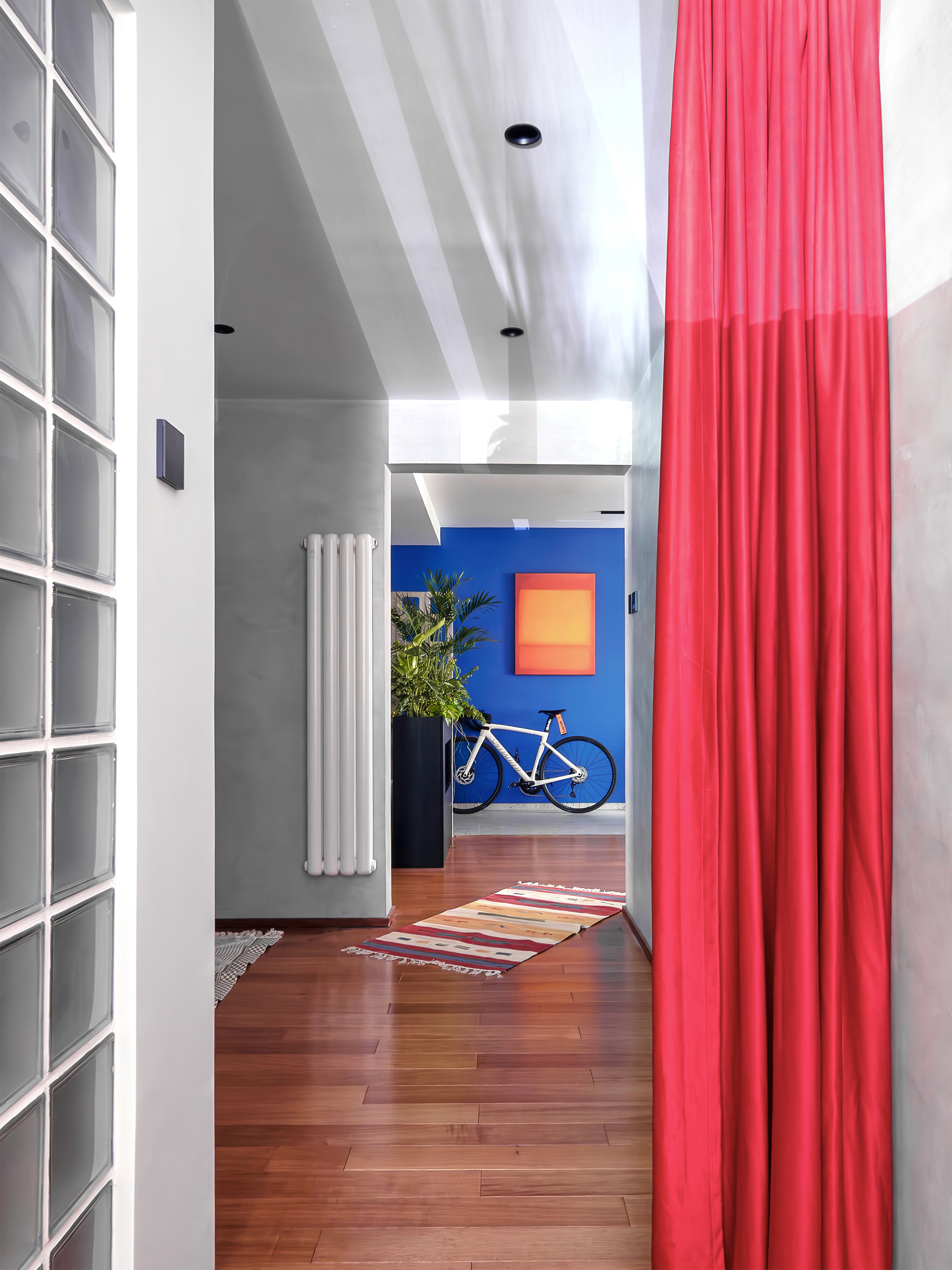
 客厅采用大胆鲜艳的颜色来体现主人的“活泼”,“大胆”,“有创造力”的特质
The living room features bold and vibrant colors to reflect the homeowner's traits of being "lively," "bold," and "creative."
解决空间的问题
Solving Spatial Problems
设计的核心目的一直都是解决空间问题。这套三室一厅的居室存在着很多布局问题,例如客厅采光严重不足,连接三间卧室和客厅的狭长走廊没有任何采光。
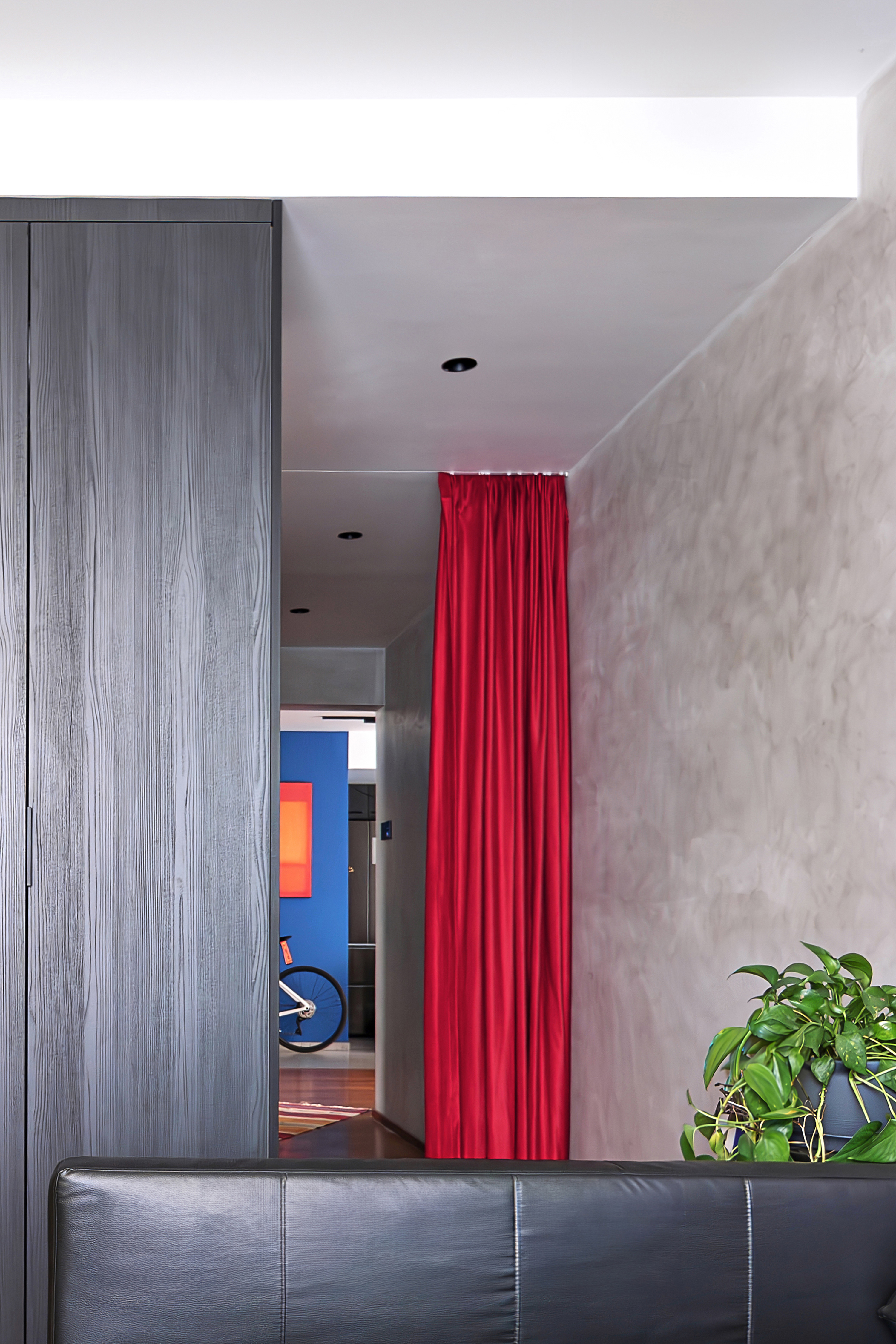
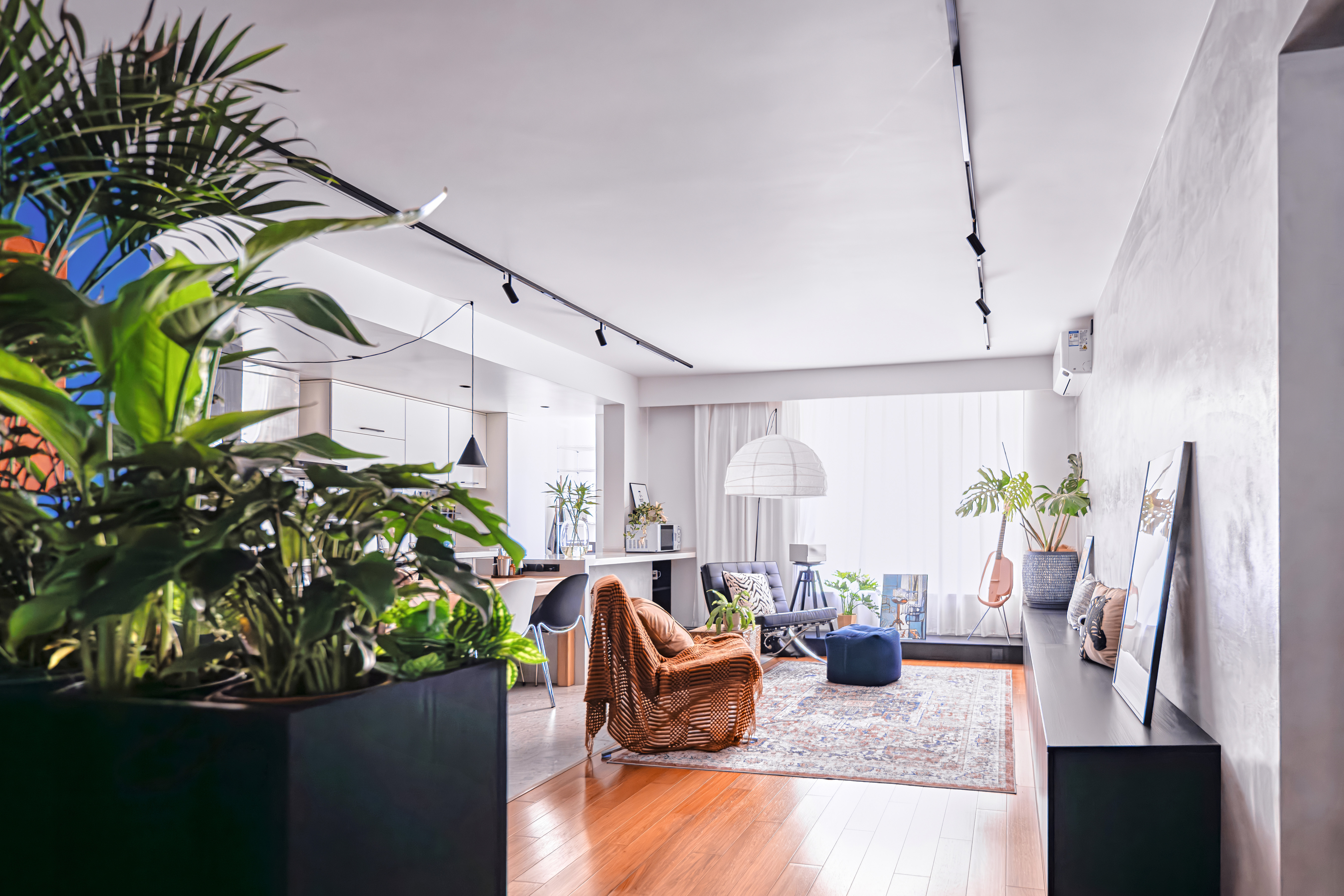
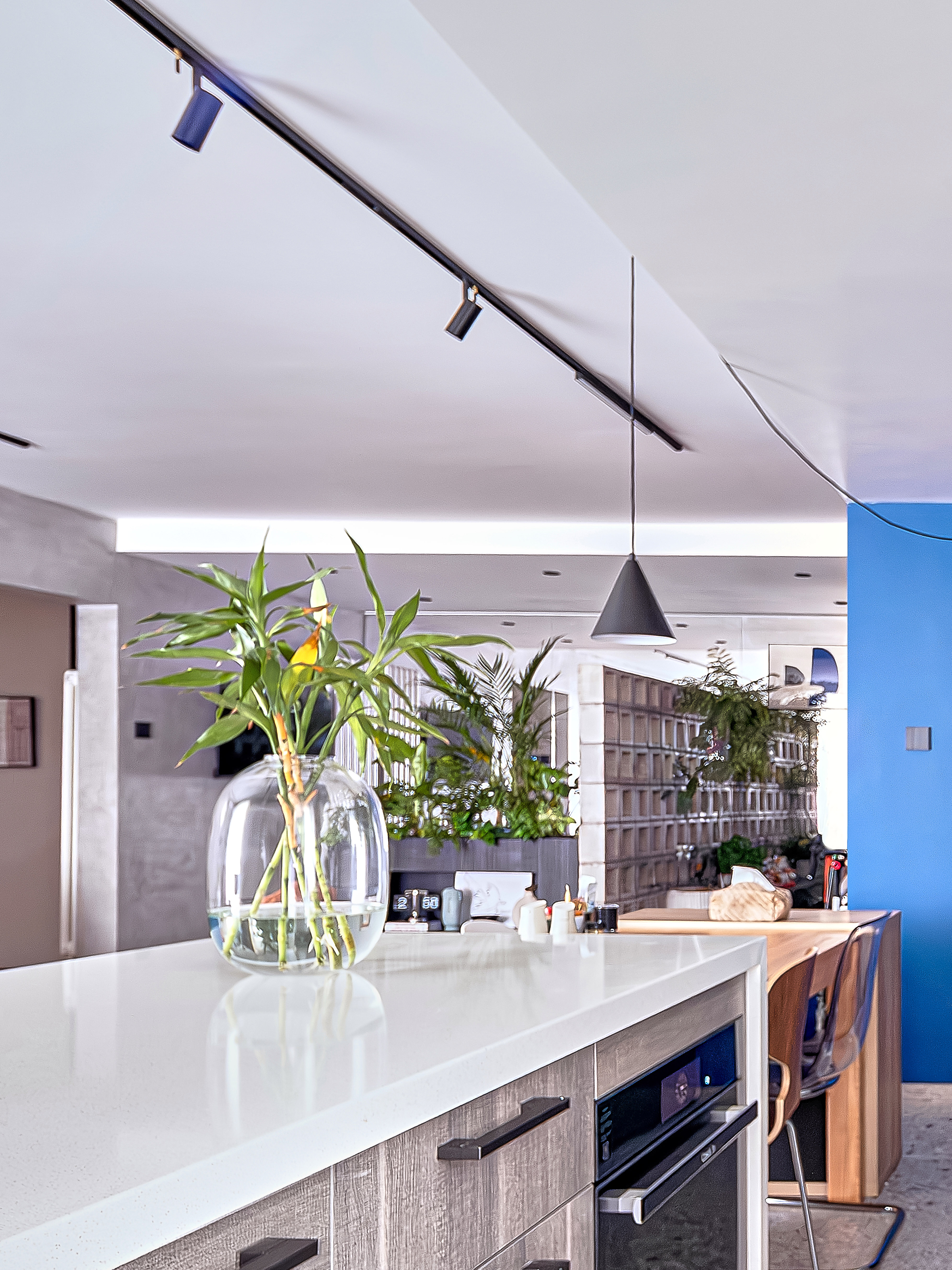
由于房子平时多为屋主一人居住,我们将南向的次卧与客厅打通,拓宽走廊成为小厅,改善采光。并在次卧与小厅之间加装门帘,以保护客人隐私。为增加亮度,客厅一侧的整面墙安装了镜子以反射光线。同时,我们打通厨房与客厅间的隔墙,将厨房的光也引入客厅,使其更通透明亮。
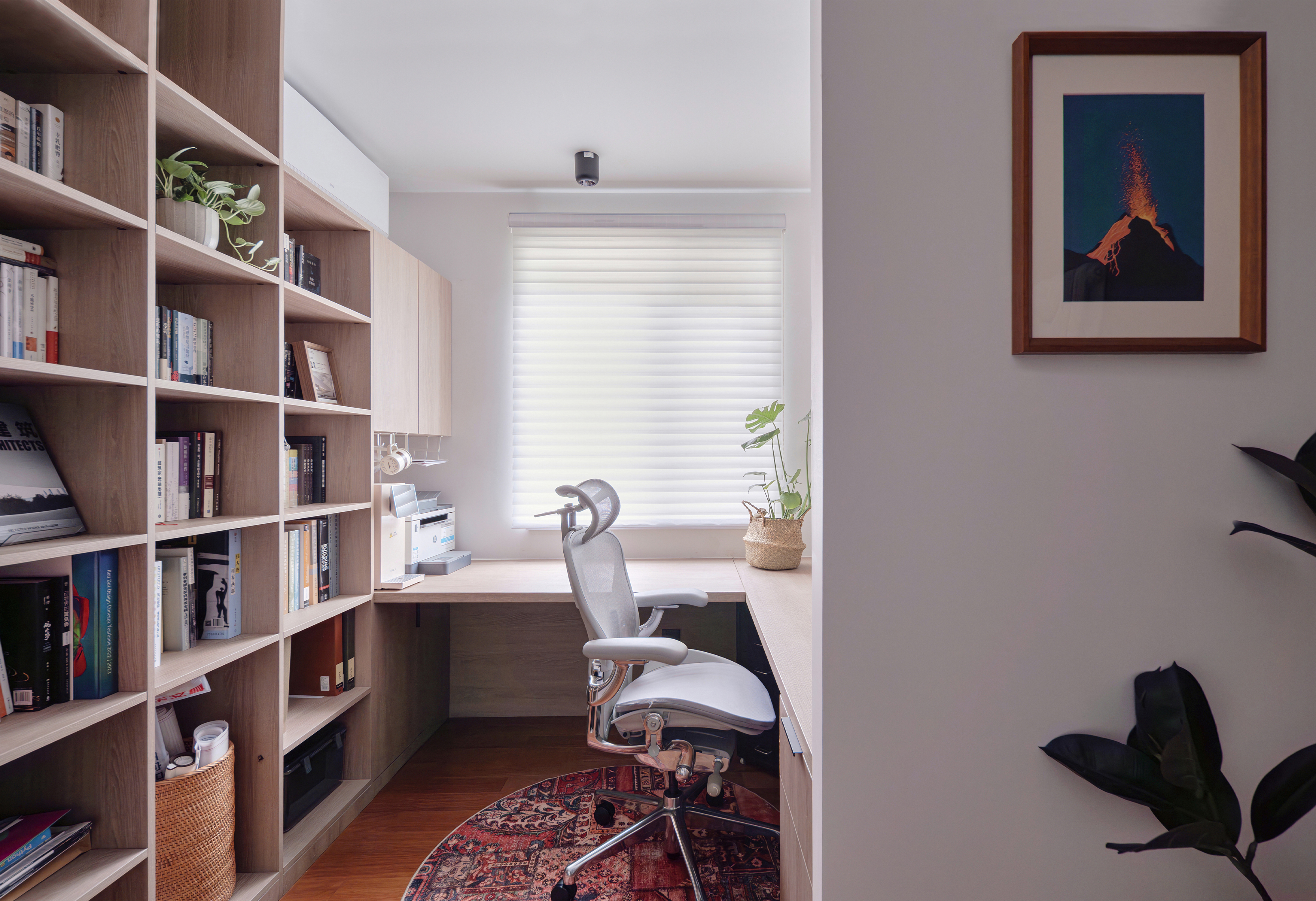
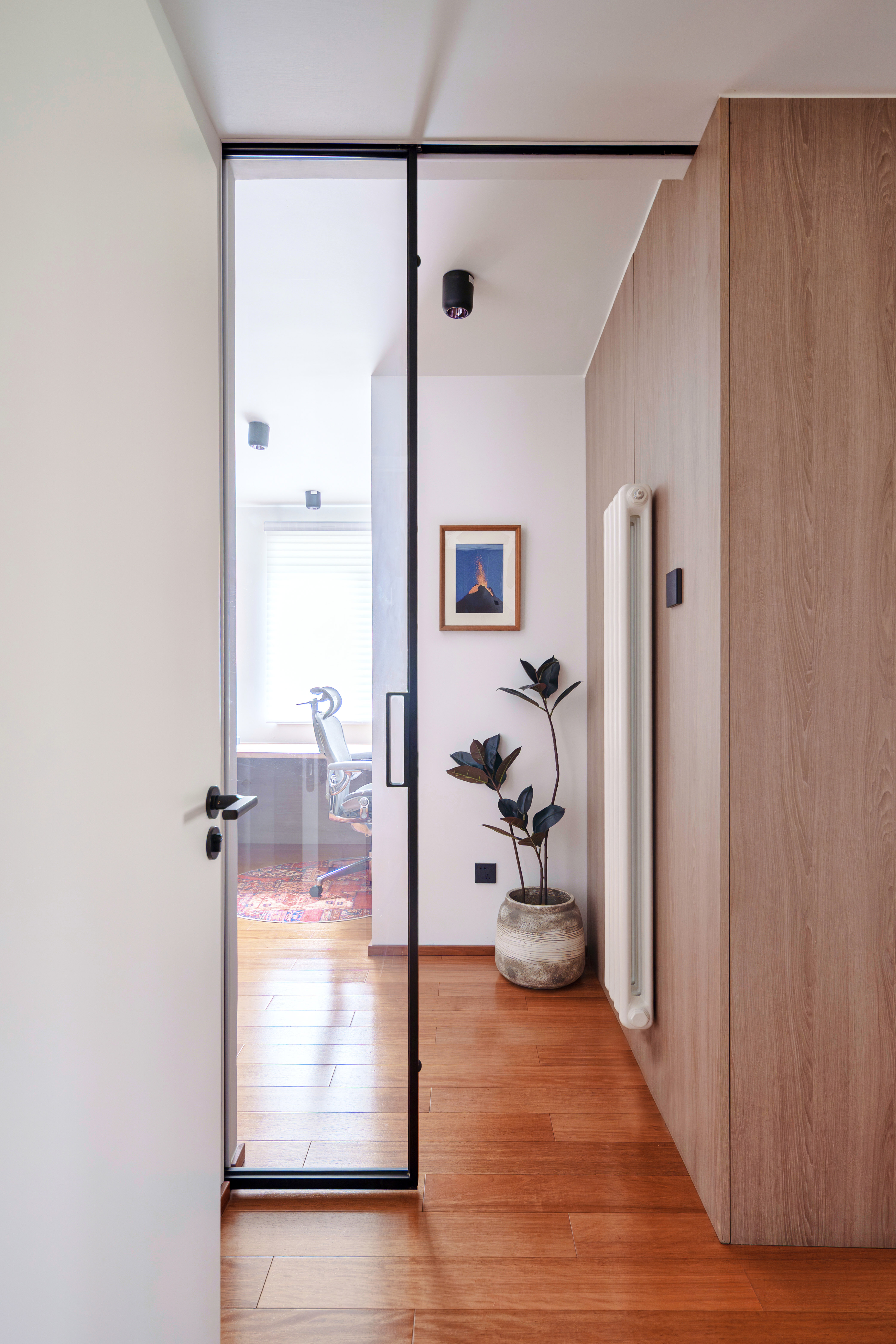
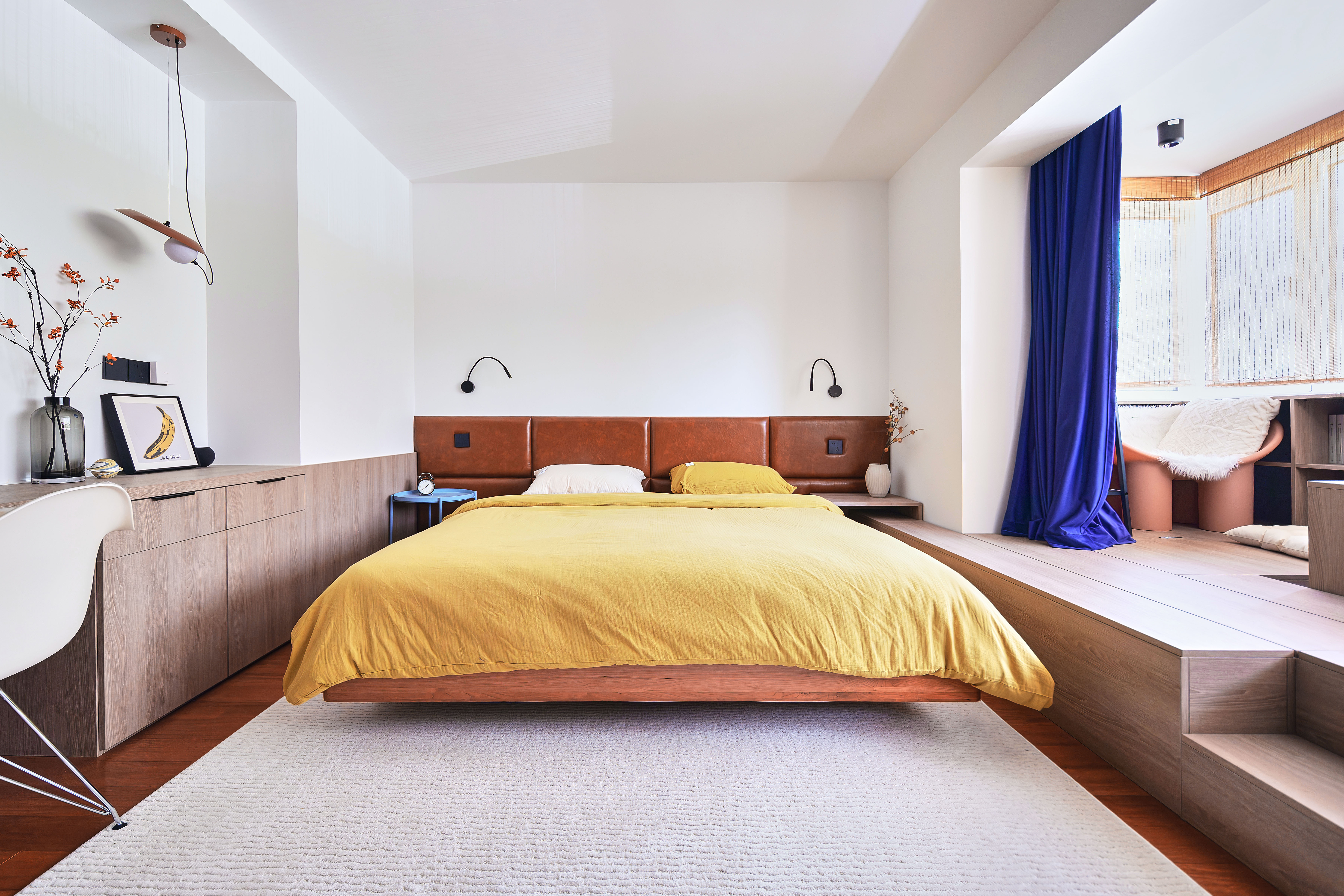
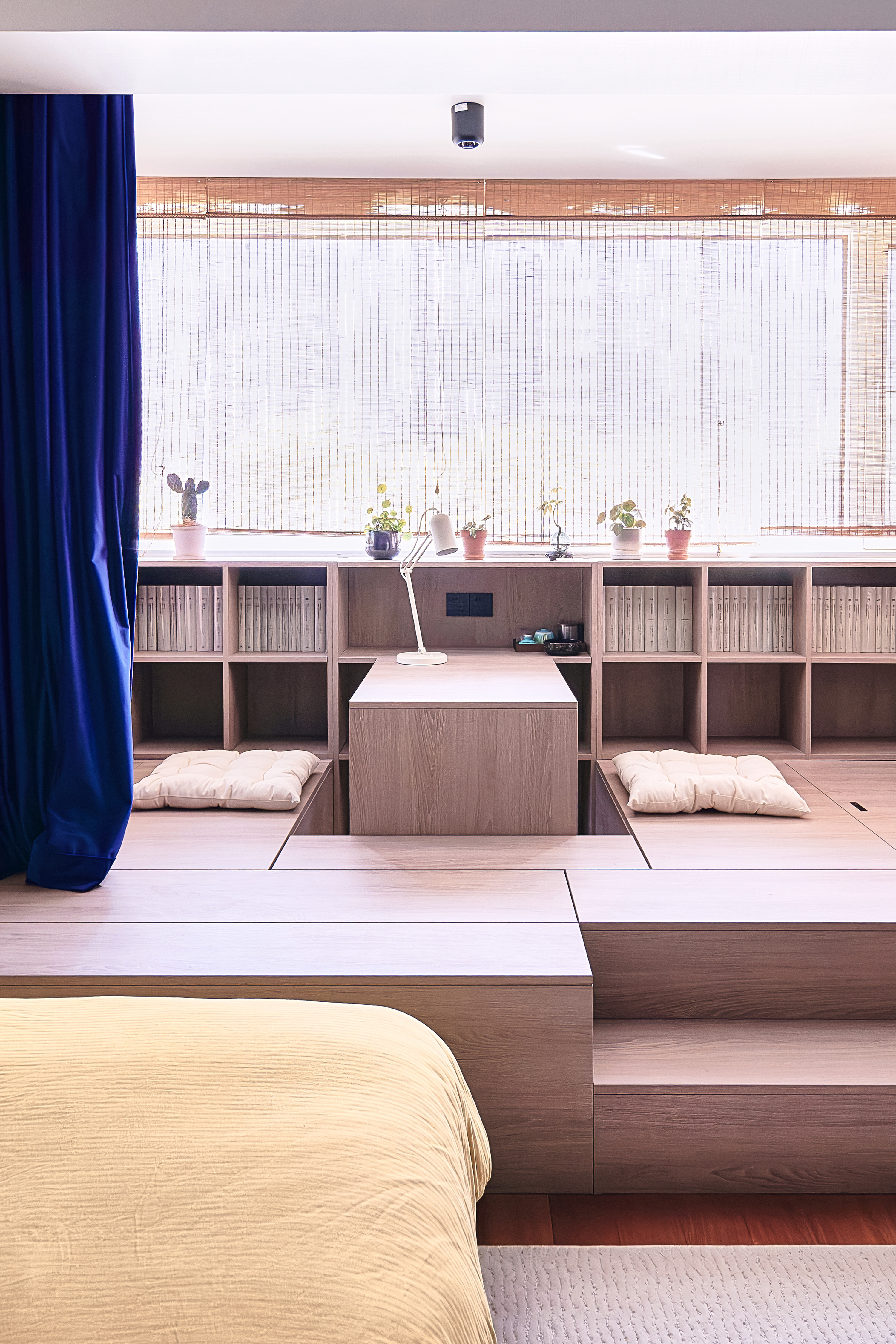
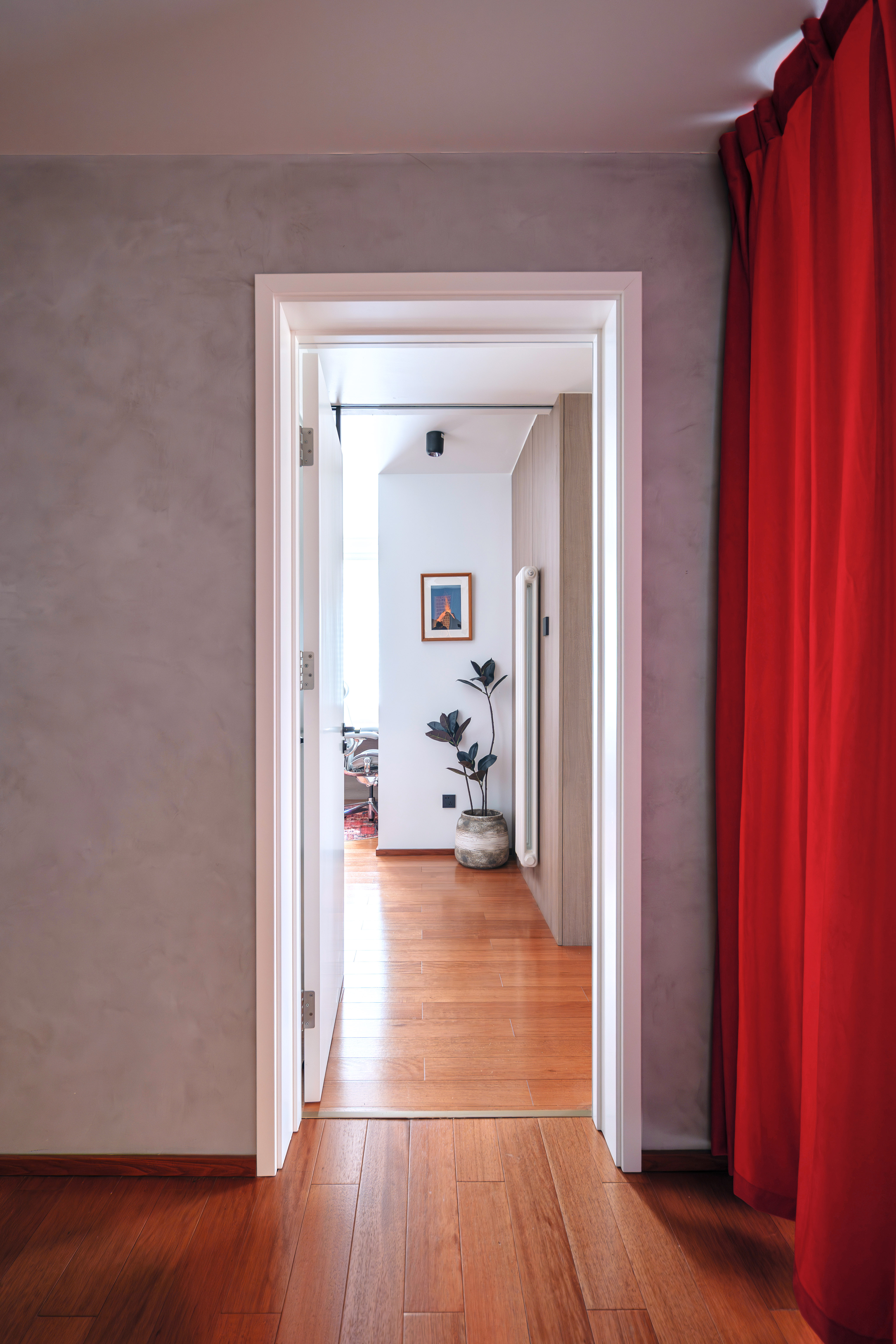
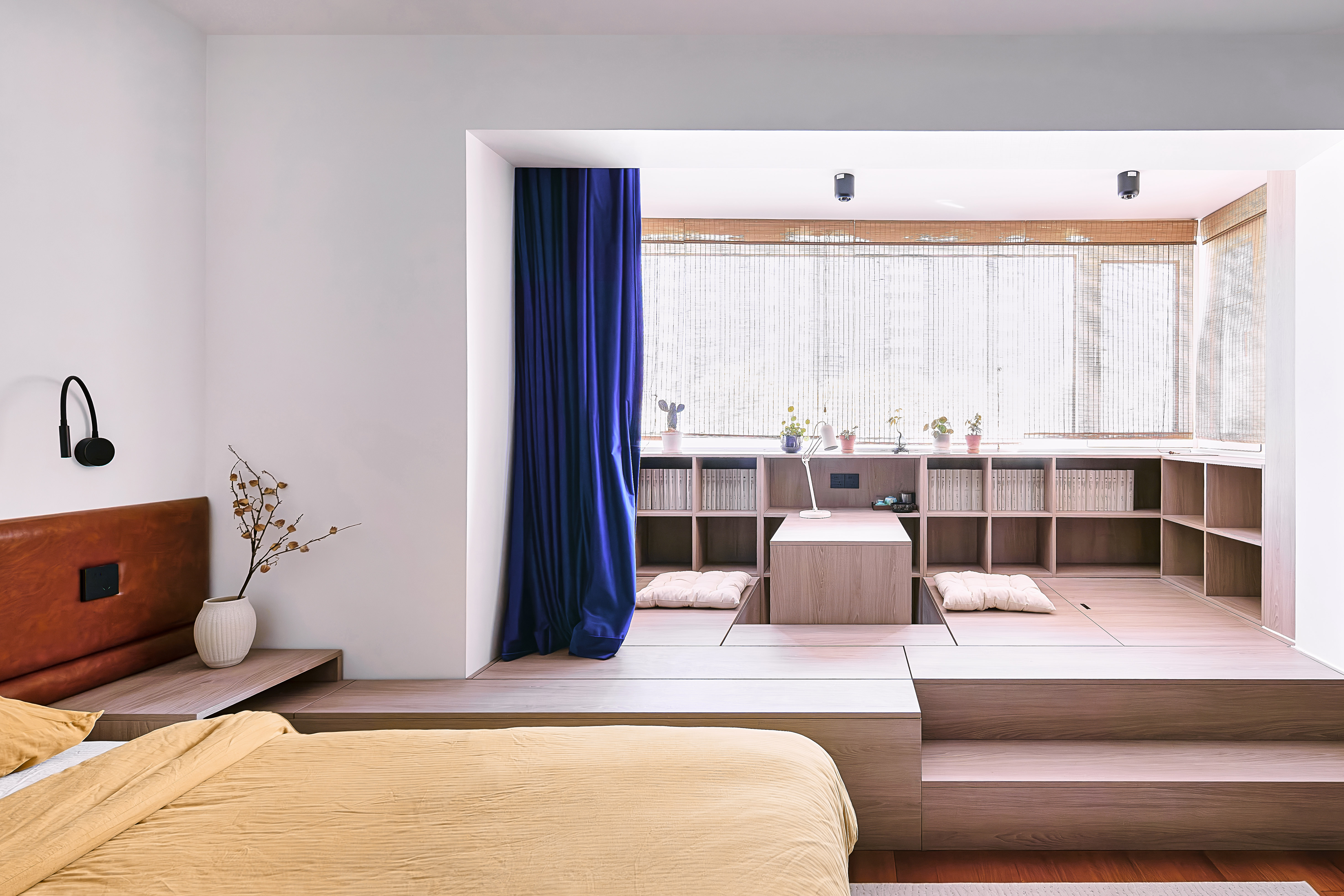
为了让屋主有更舒适的独处体验,我们将主卧旁边的另一间卧室改造成书房并与主卧打通,形成一个套间。原来主卧旁被闲置的阳台被设计成了一个茶室,为屋主提供了一个“没有必要就可以不出卧室门”的居住体验。
通过对空间的调整,原来的三室一厅变成了两大空间组合——以客厅为主的对外空间以及以主卧为主的对内空间。客厅组合就像洋葱的外皮一样包裹着主卧组合。
The main purpose of renovation is always to solve spatial problems. In this project, the home's existing layout posed challenges, such as poor daylighting in the living room and narrow corridors.
Since the apartment is mostly occupied by the homeowner alone, we opened up the south-facing secondary bedroom to the living room and widened the corridor, turning it into a small hall. A curtain is installed between the bedroom and the small hall to protect guests' privacy when needed. A huge mirror was added to the living room to reflect daylight, and the kitchen wall was opened to make the living space brighter and more welcoming.
The private space was redesigned for comfort and introspection. The adjacent bedroom became a study connected to the master bedroom, forming a suite. A previously unused balcony next to the master bedroom was transformed into a tearoom, allowing the homeowner to enjoy solitude without leaving personal space.
Through the adjustments, the original home layout was transformed into two main space combinations: an outward-facing space centered on the living room and an inward-facing space centered on the master bedroom. The outer combination wraps around the inner combination like the layers of an onion, forming a new spatial configuration.
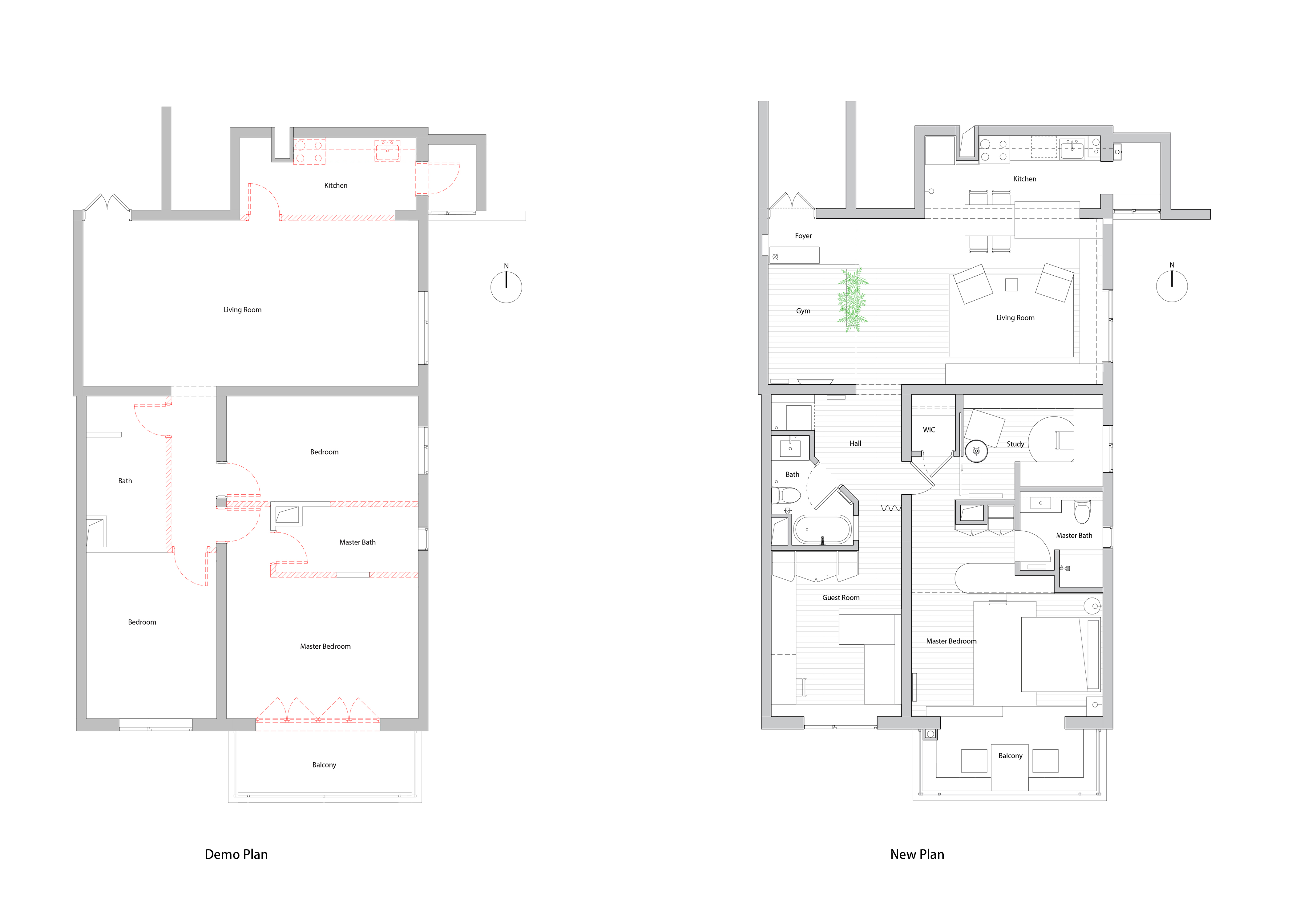
平面(改造前+改造后)Plans (Before + After)
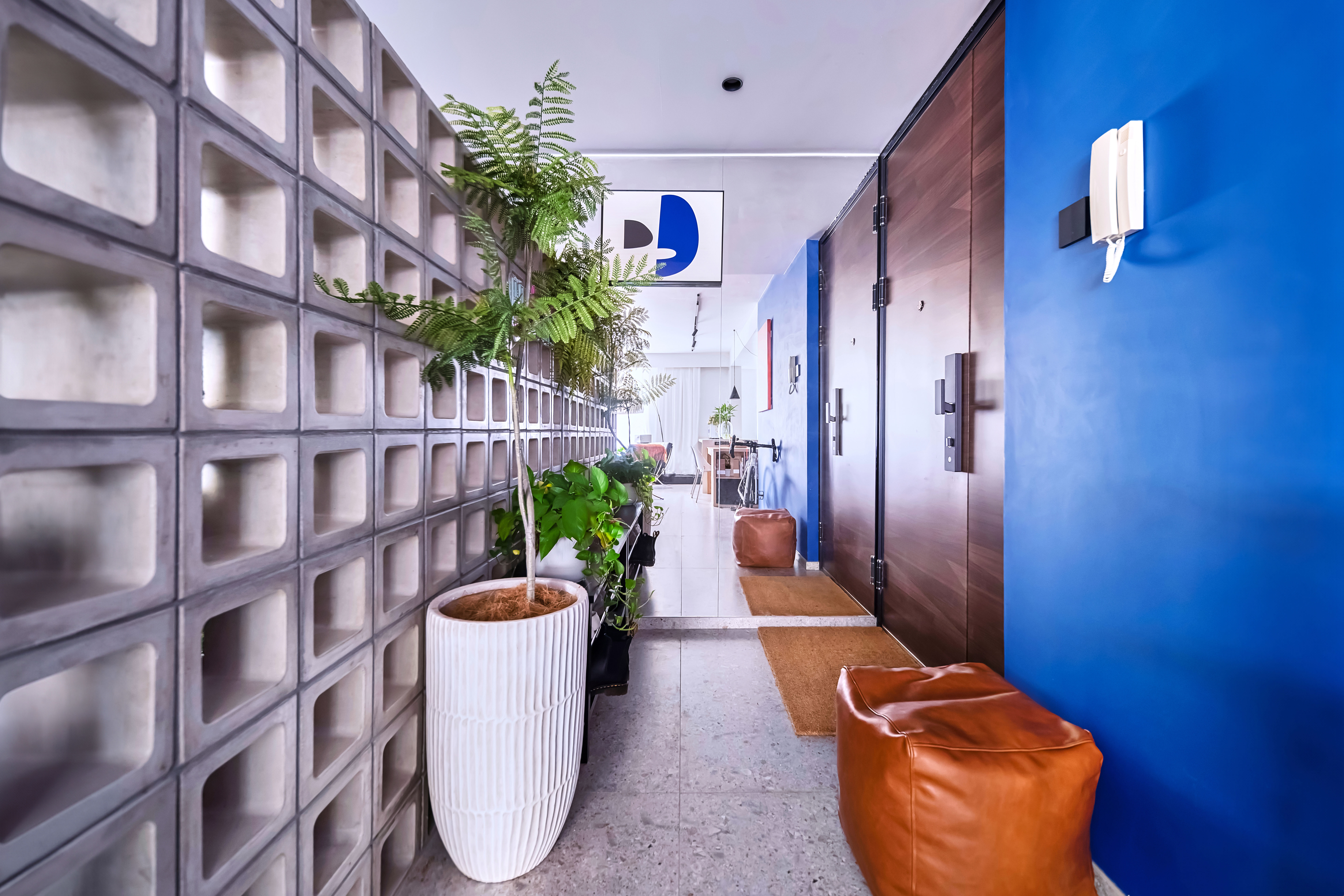
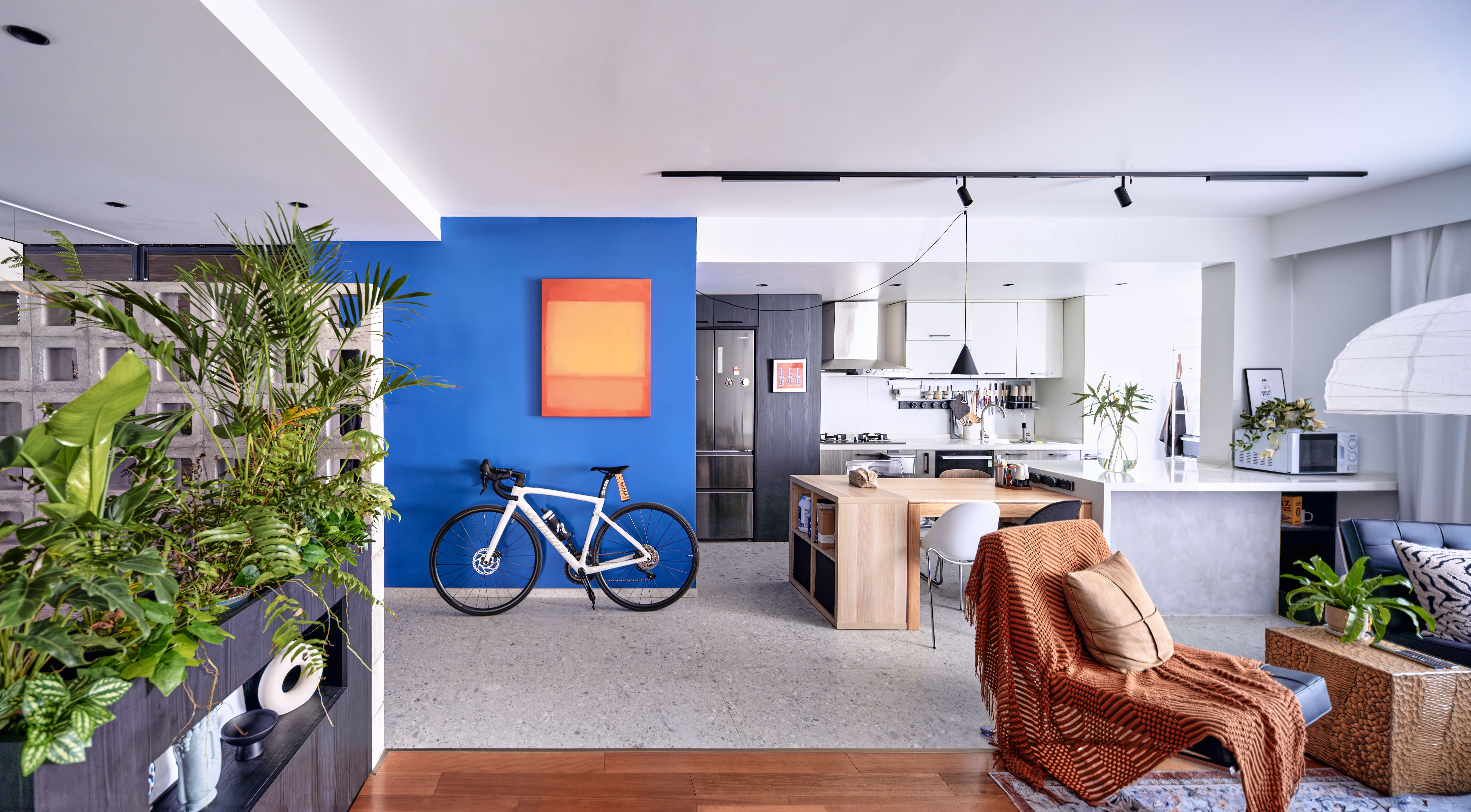
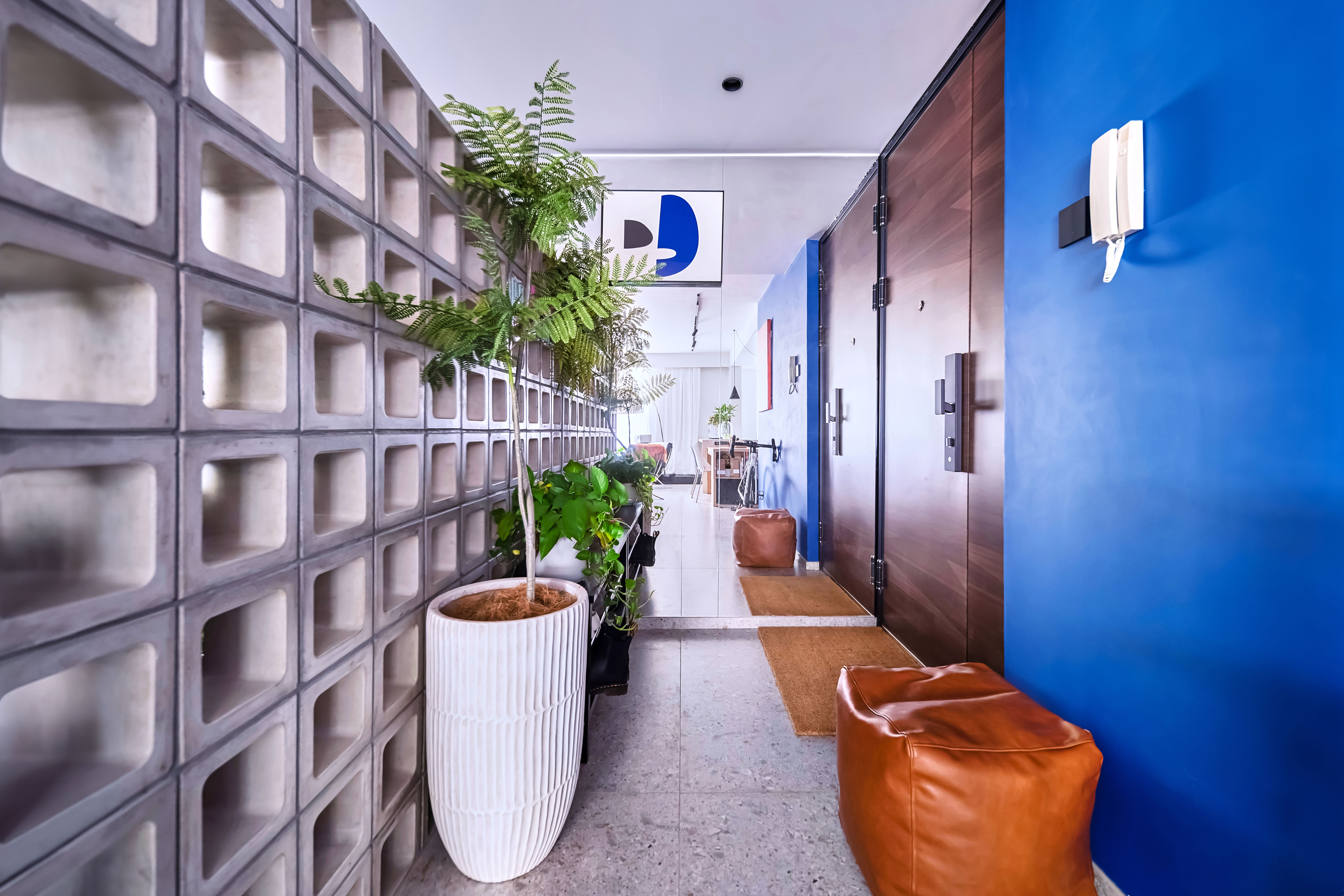
玄关:利用混凝土空心砖和镜子来强调空间纵深感
Concrete hollow bricks and mirrors are used to emphasize the sense of spatial depth.
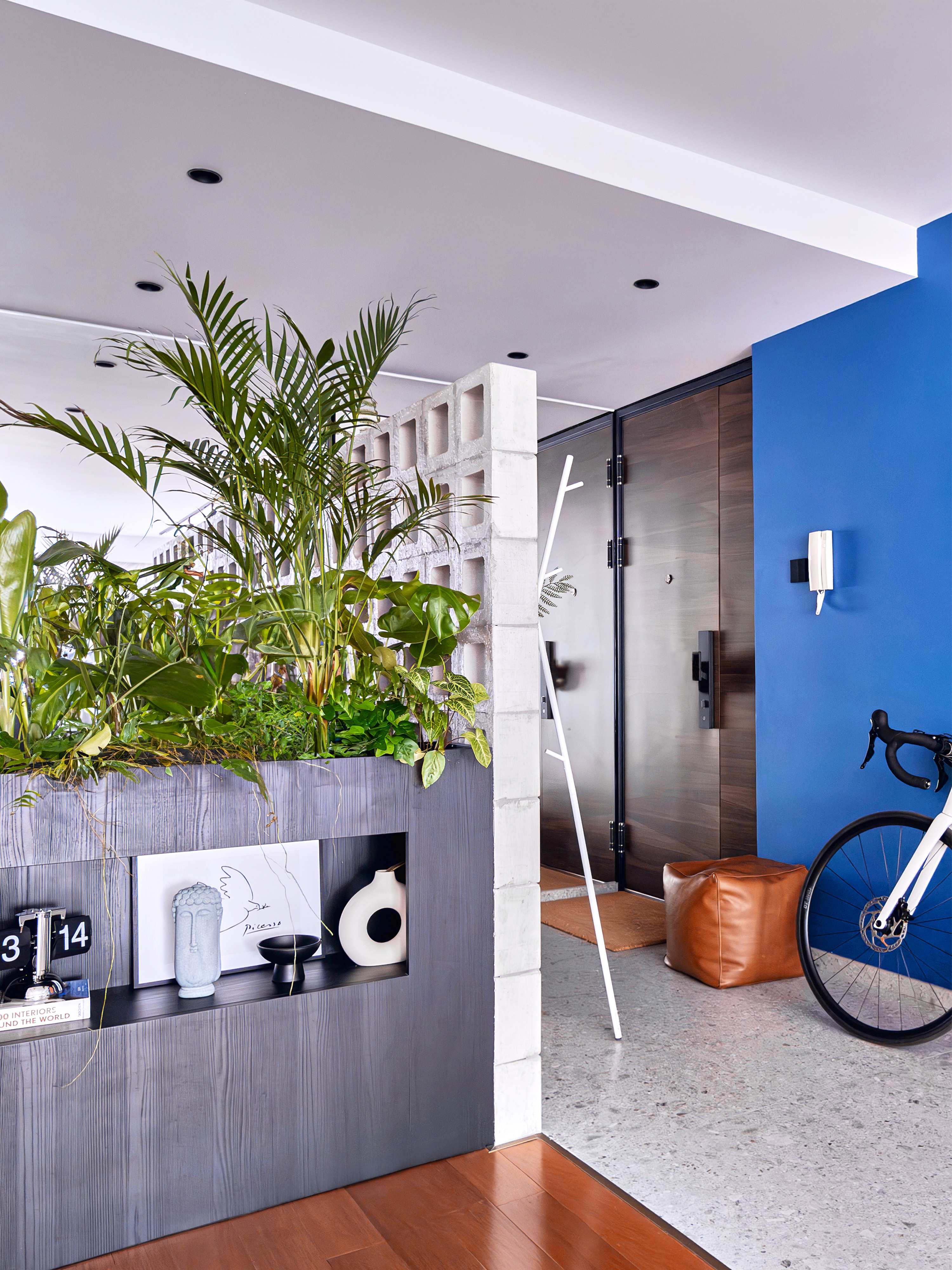
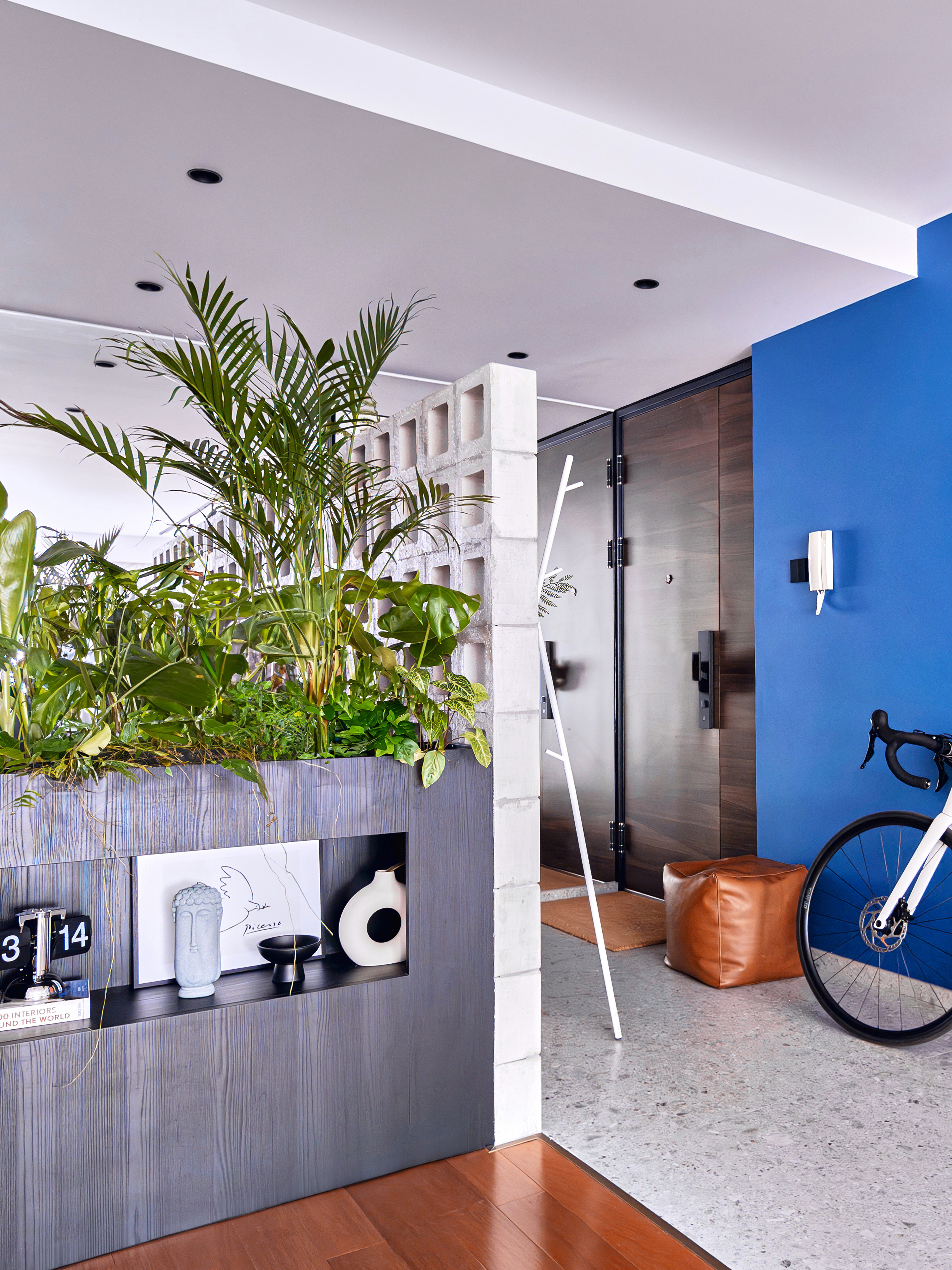 矮墙与花柜 Low Wall and Flower Cabinet
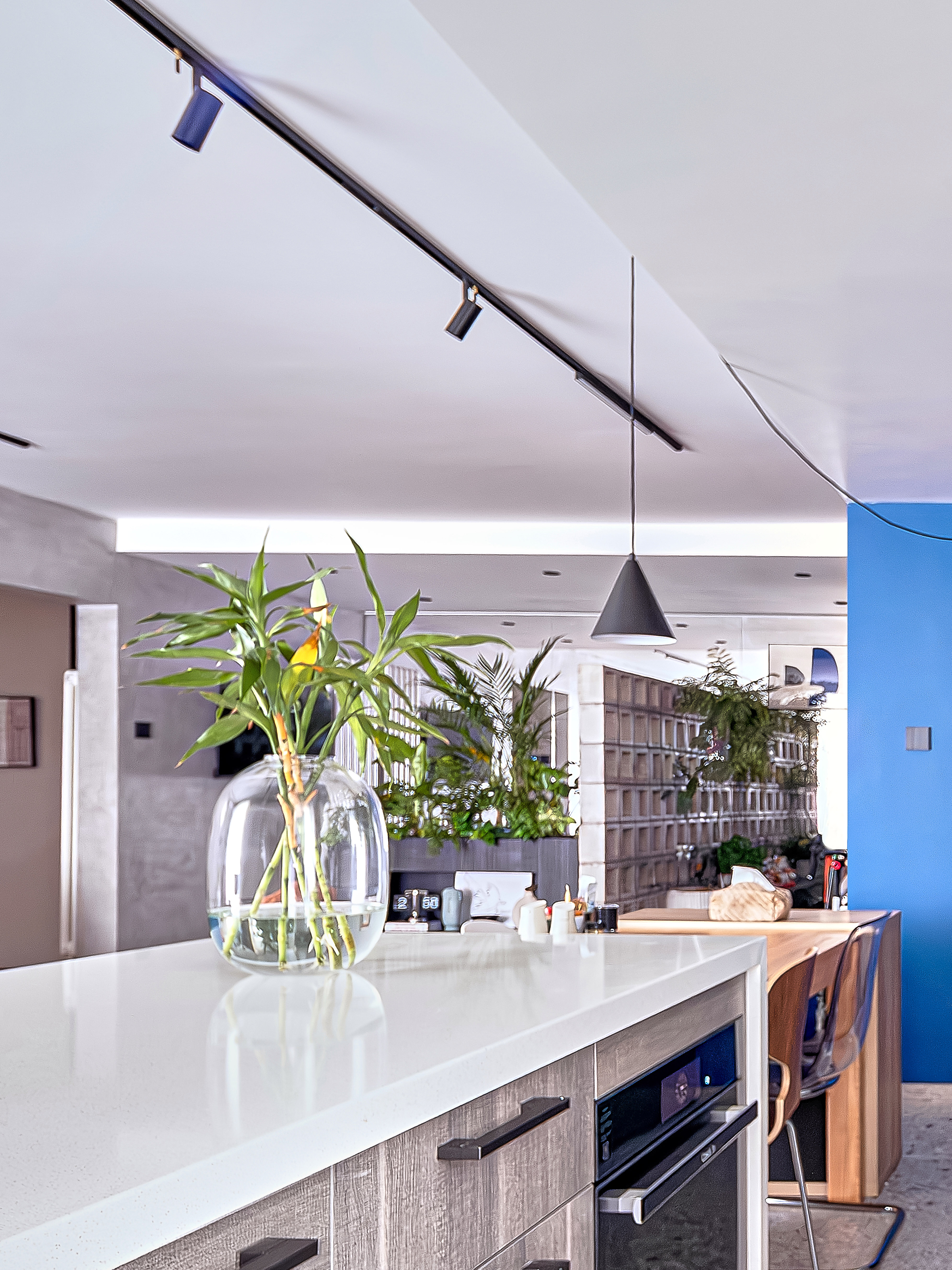
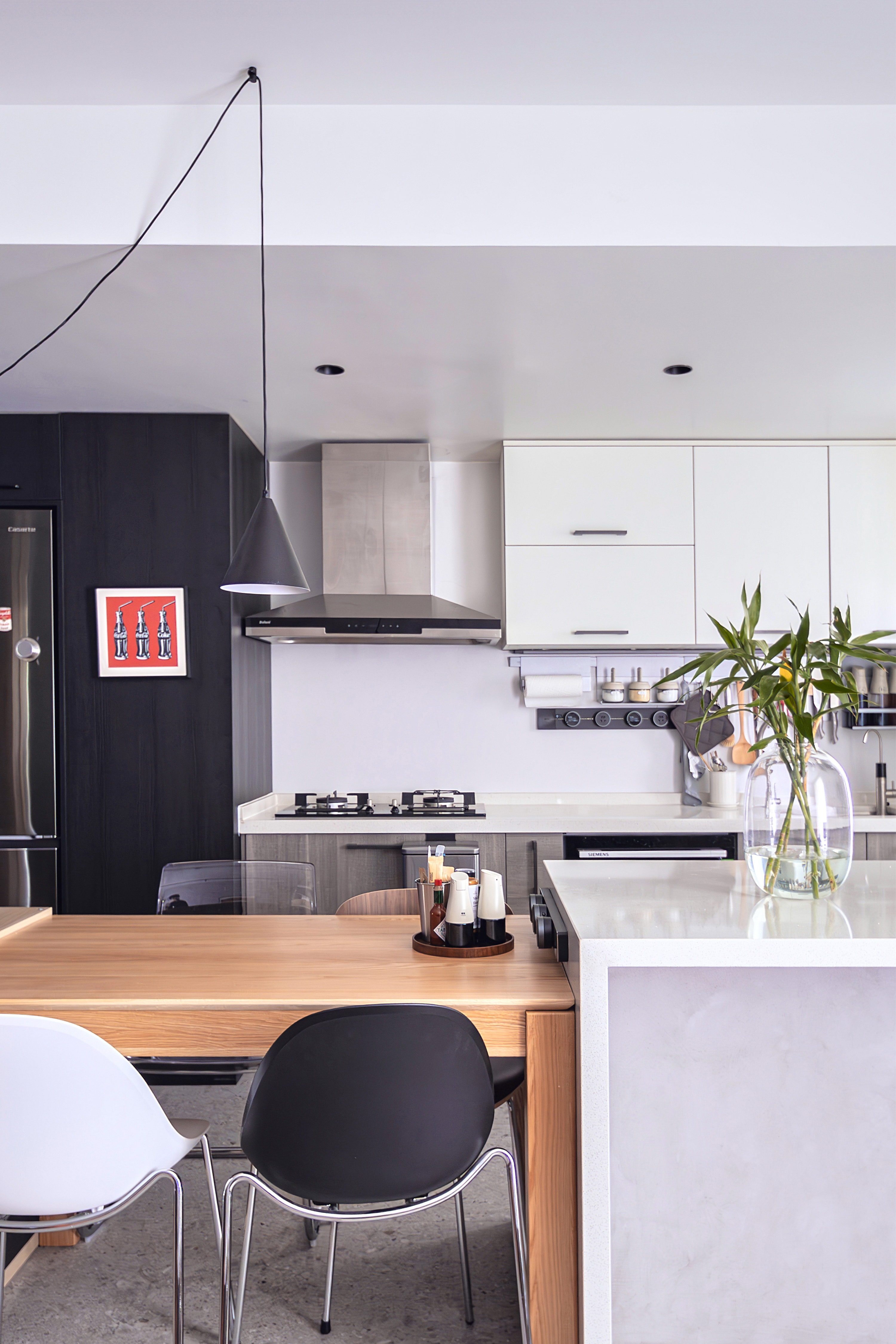 开放式厨房 Open kitchen
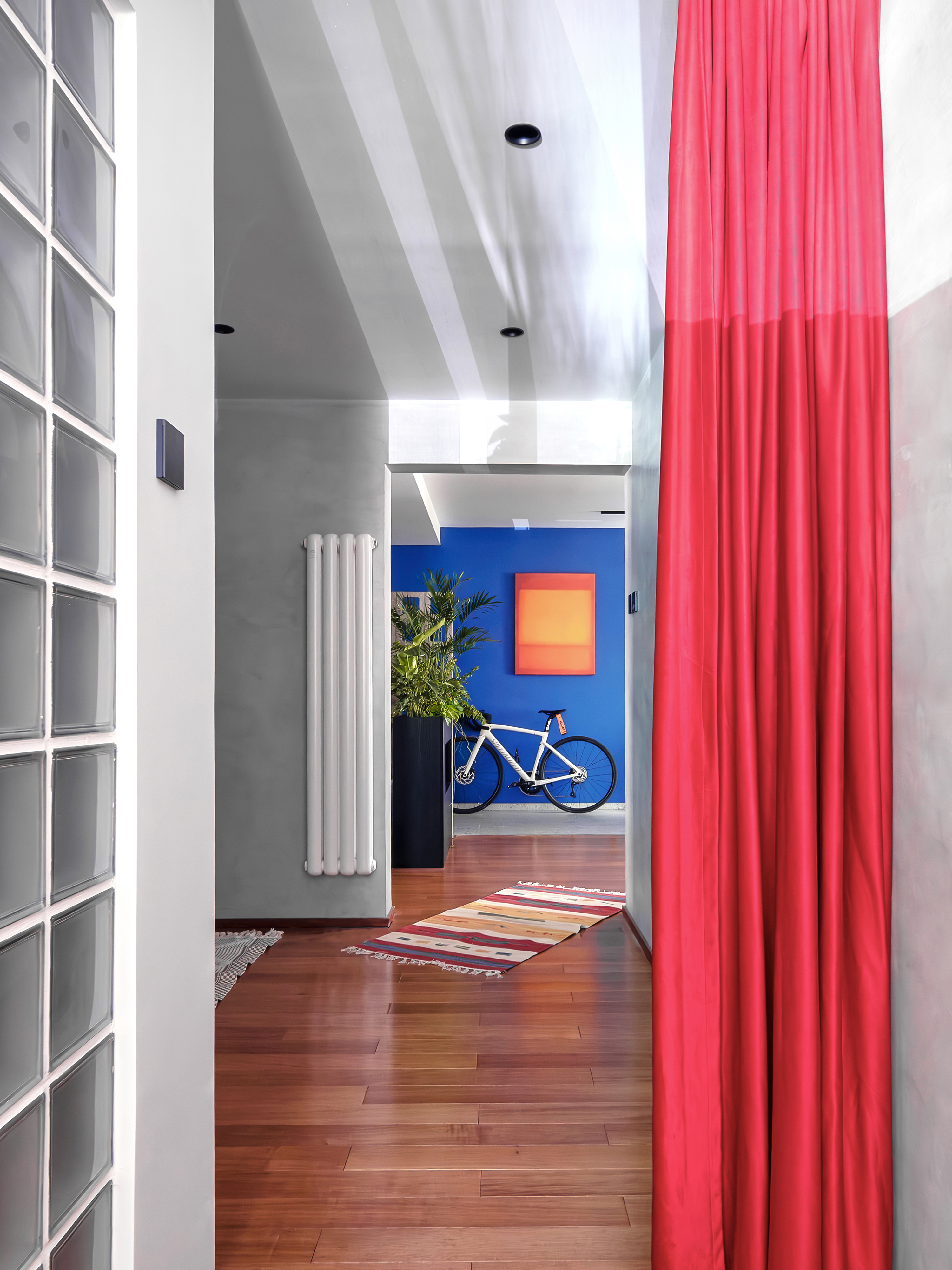
将南侧客卧打通后,阳光得以进入客厅,使客厅更加明亮
By opening up the southern guest bedroom, sunlight can now enter the living room, making it brighter.
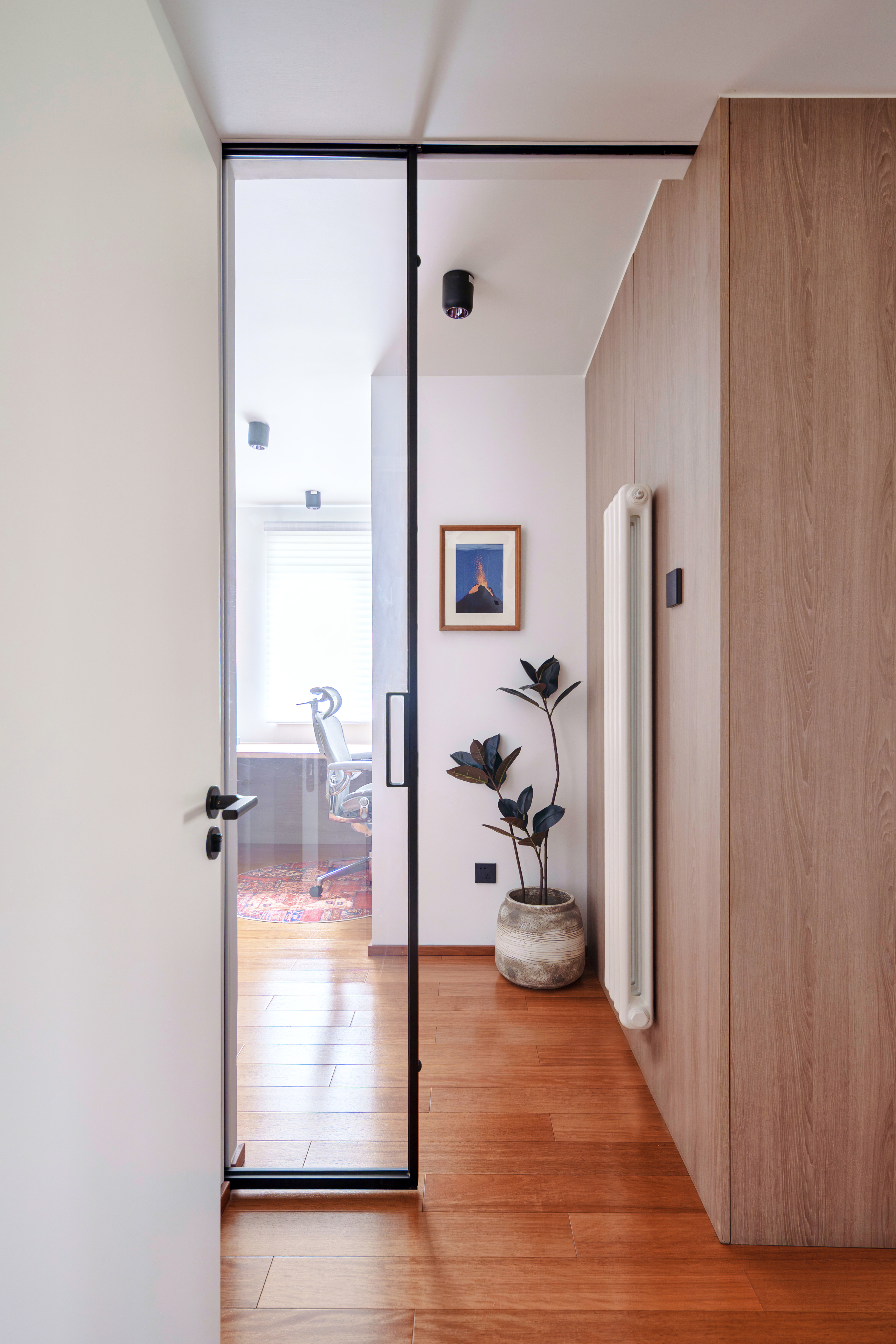
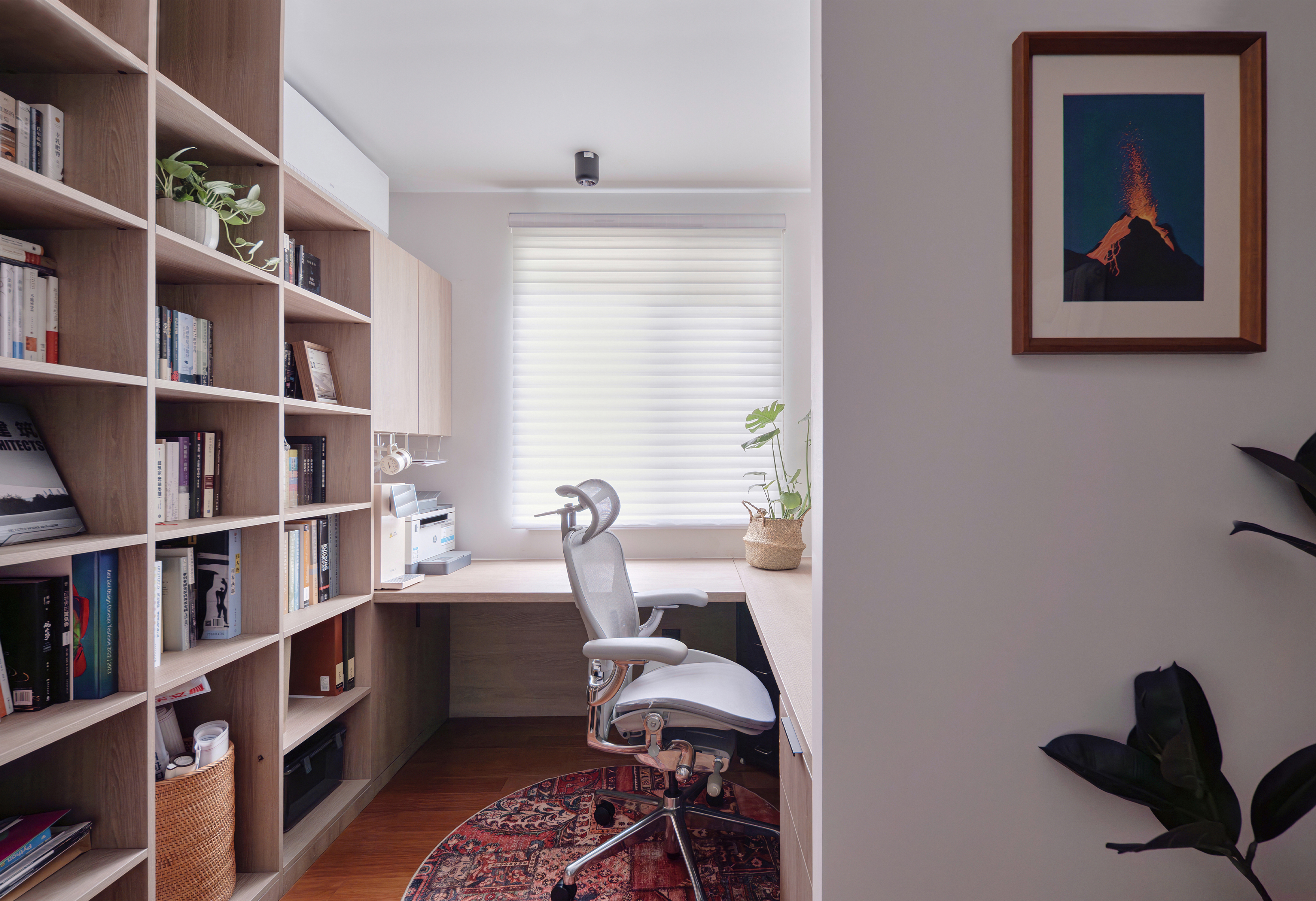
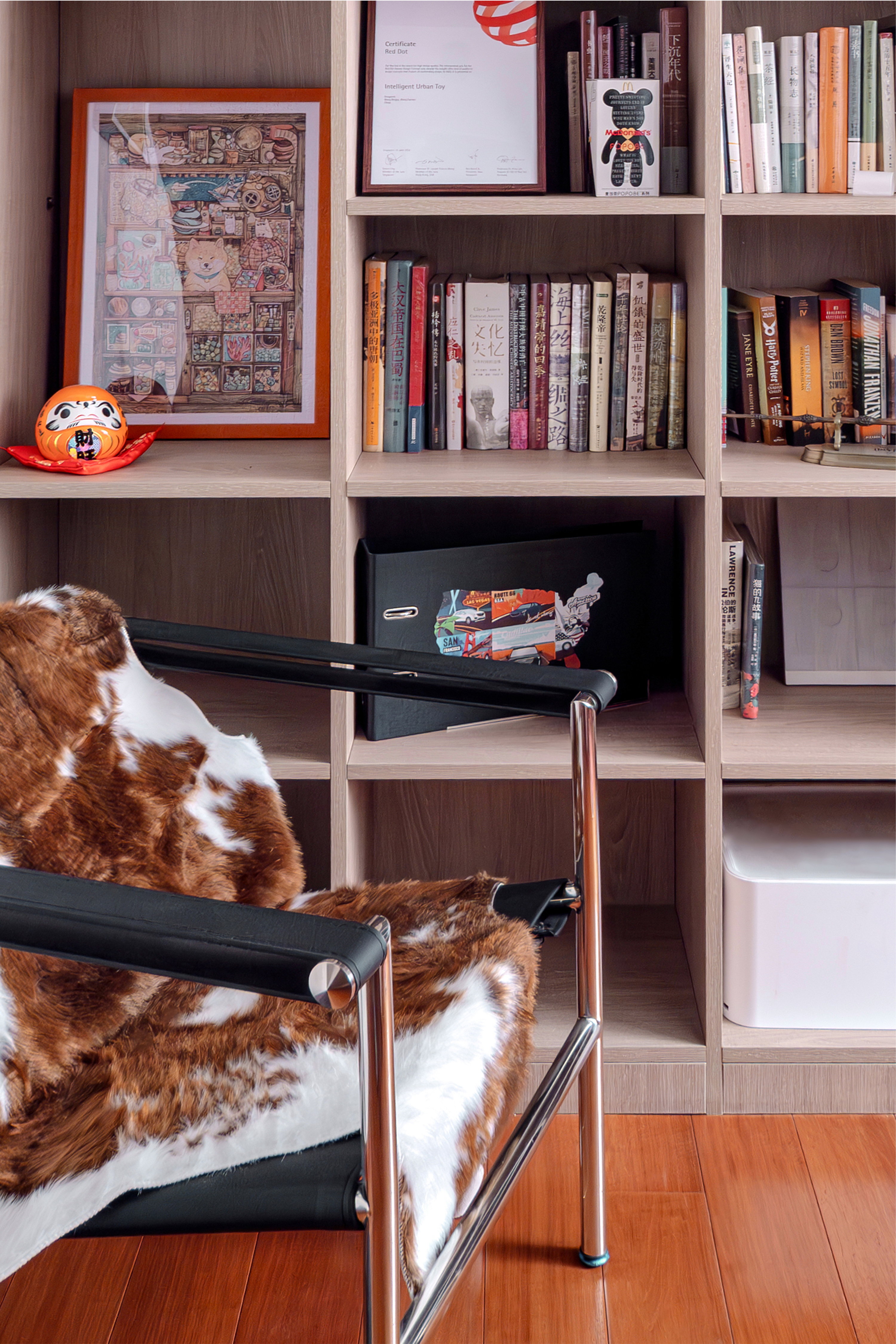
书房 Study room
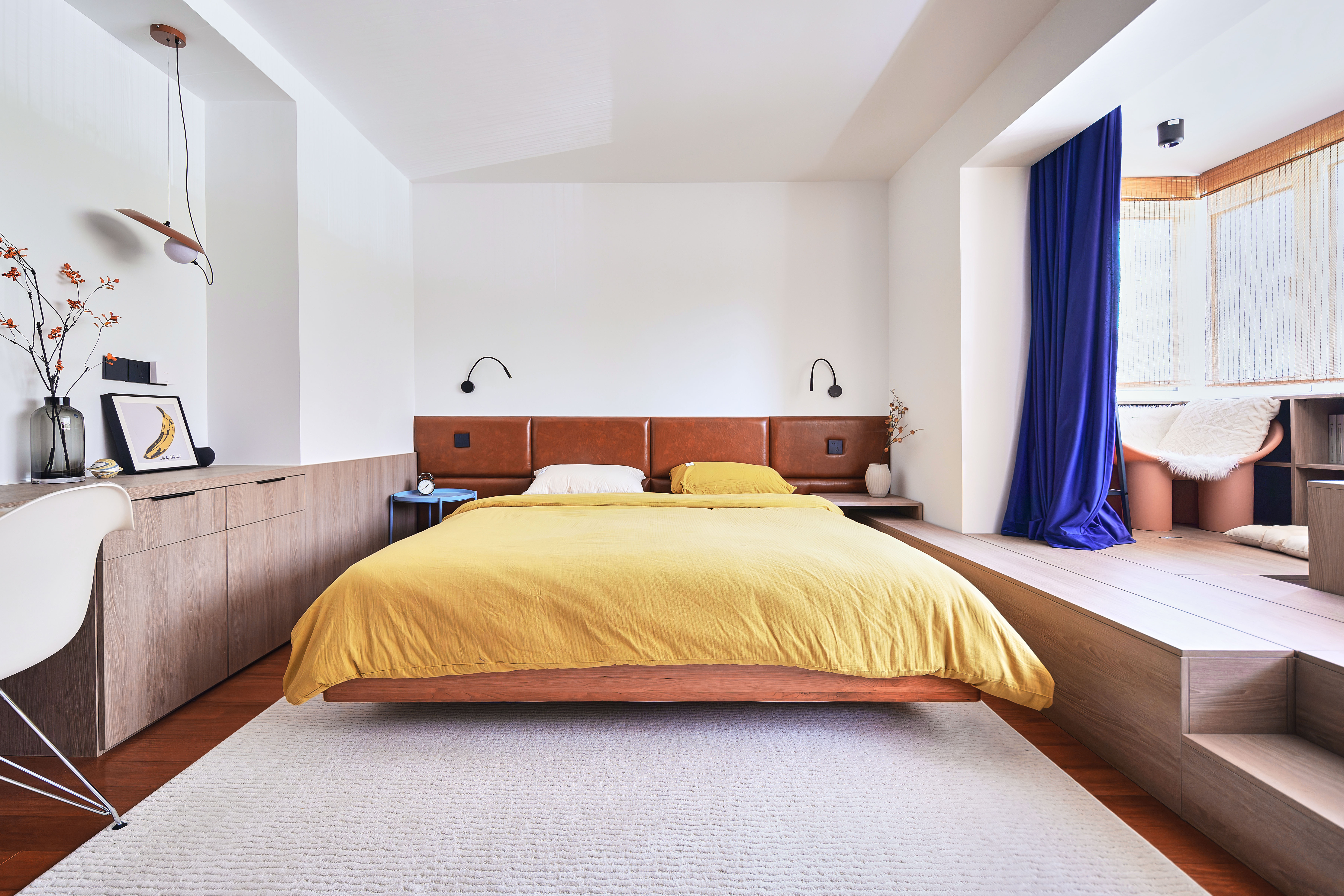
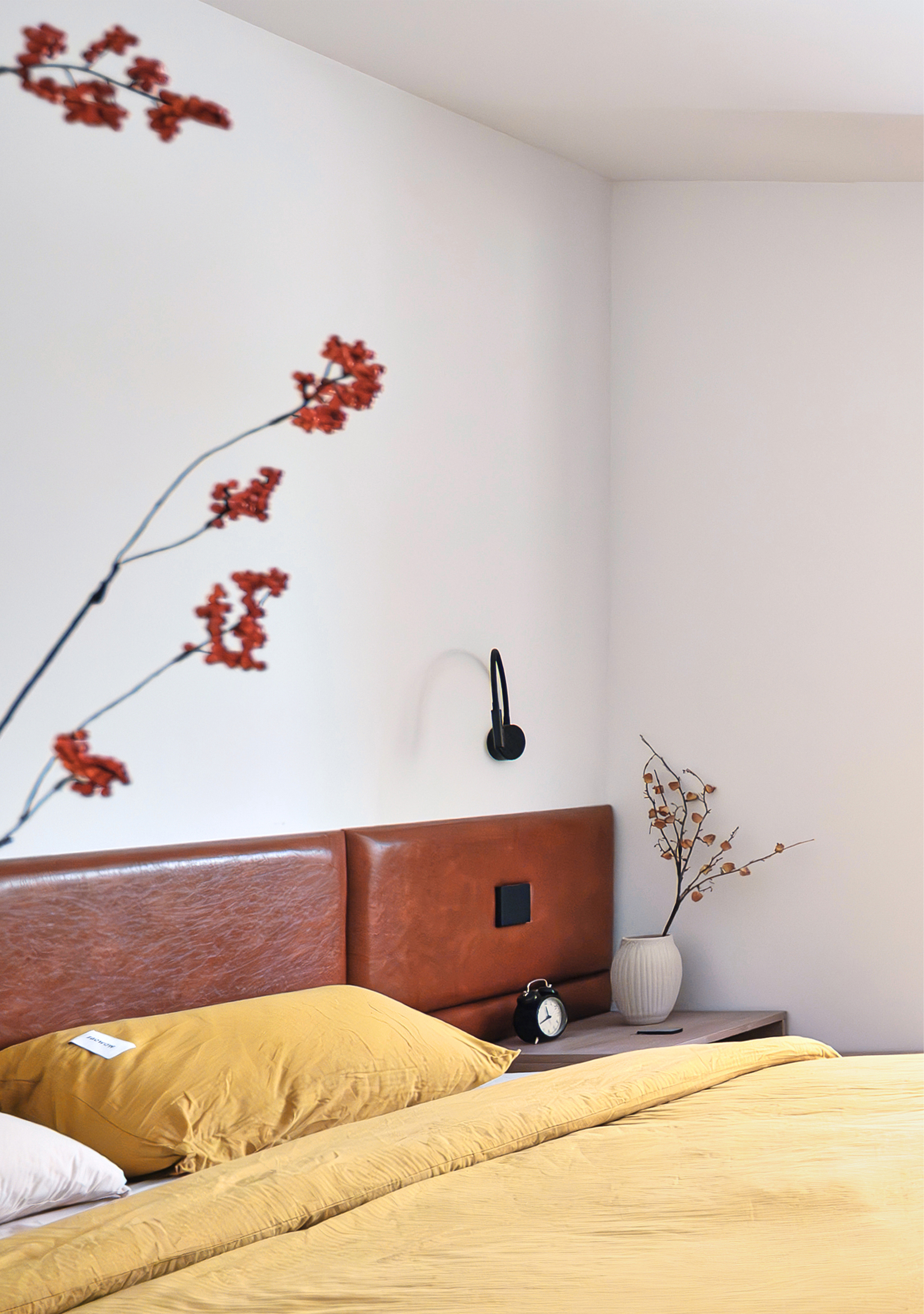
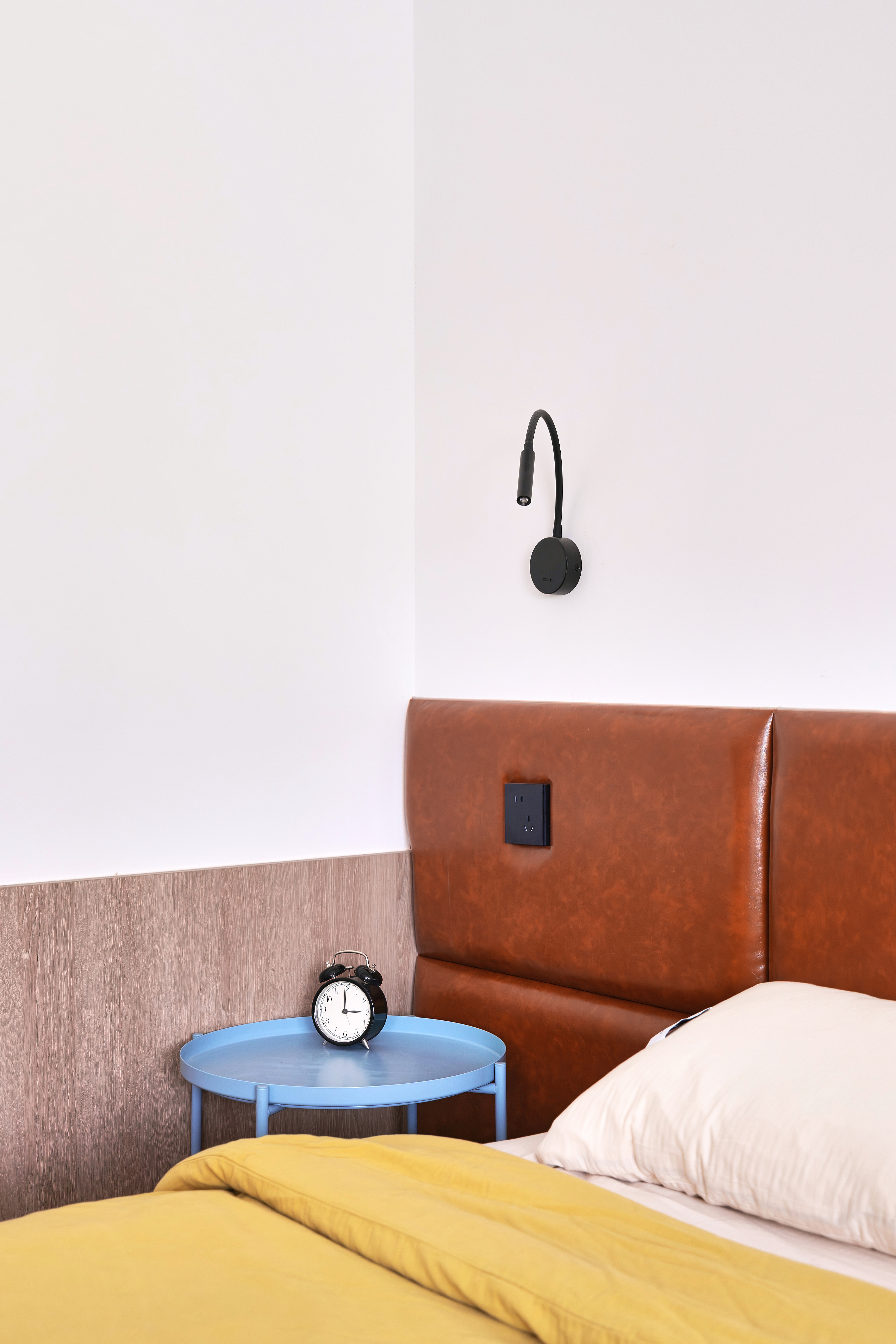
主卧 Master bedroom
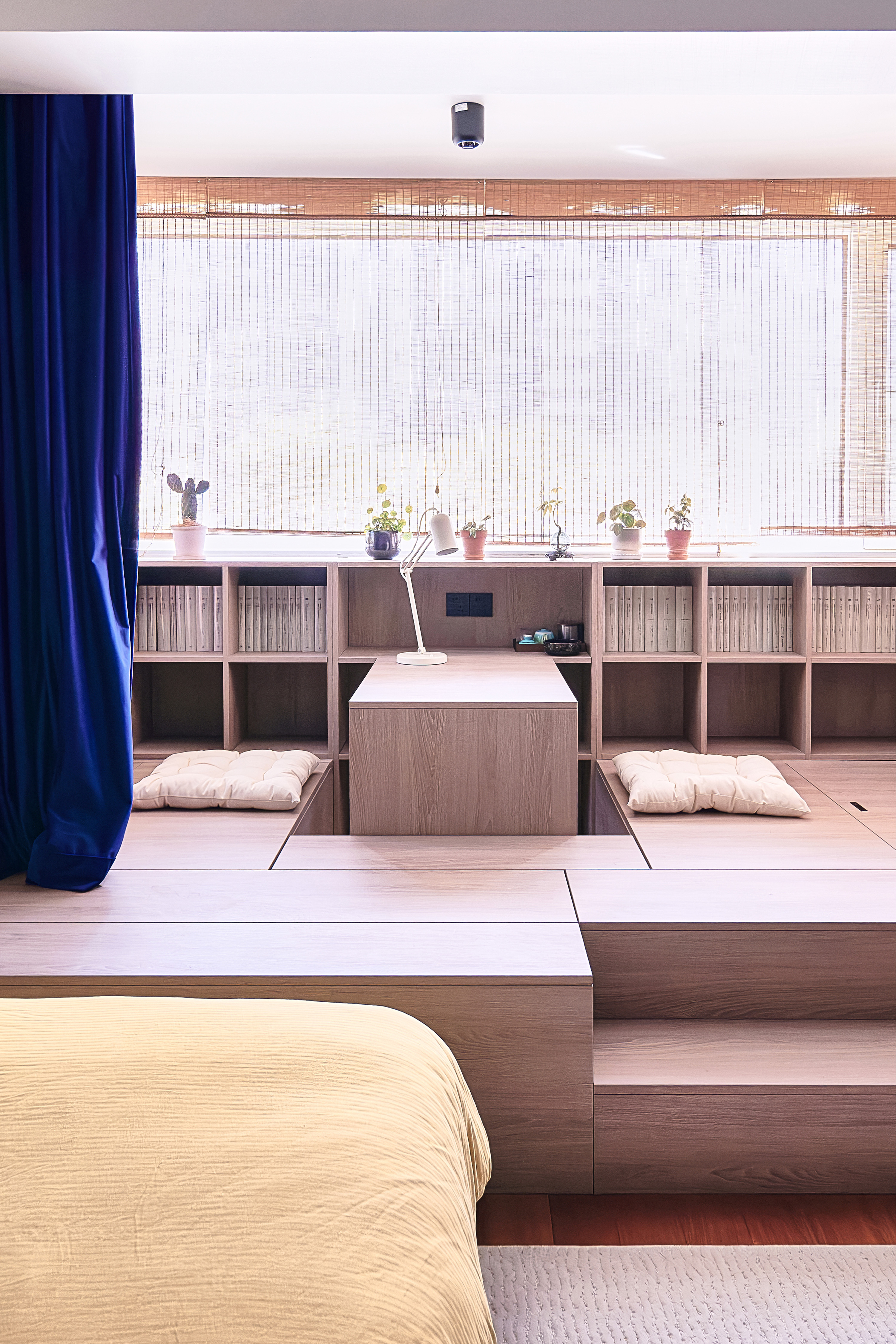 茶室 Tea house
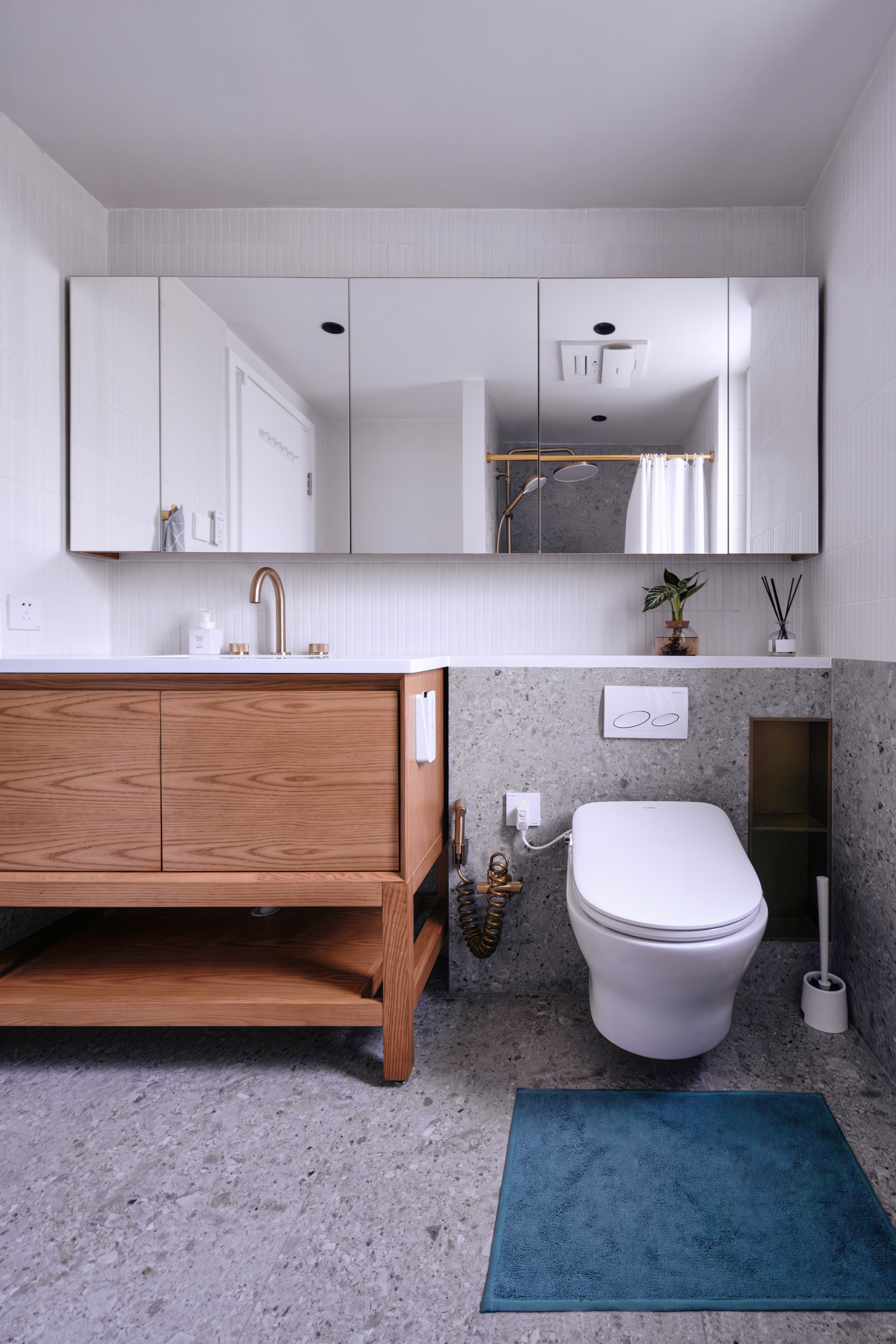
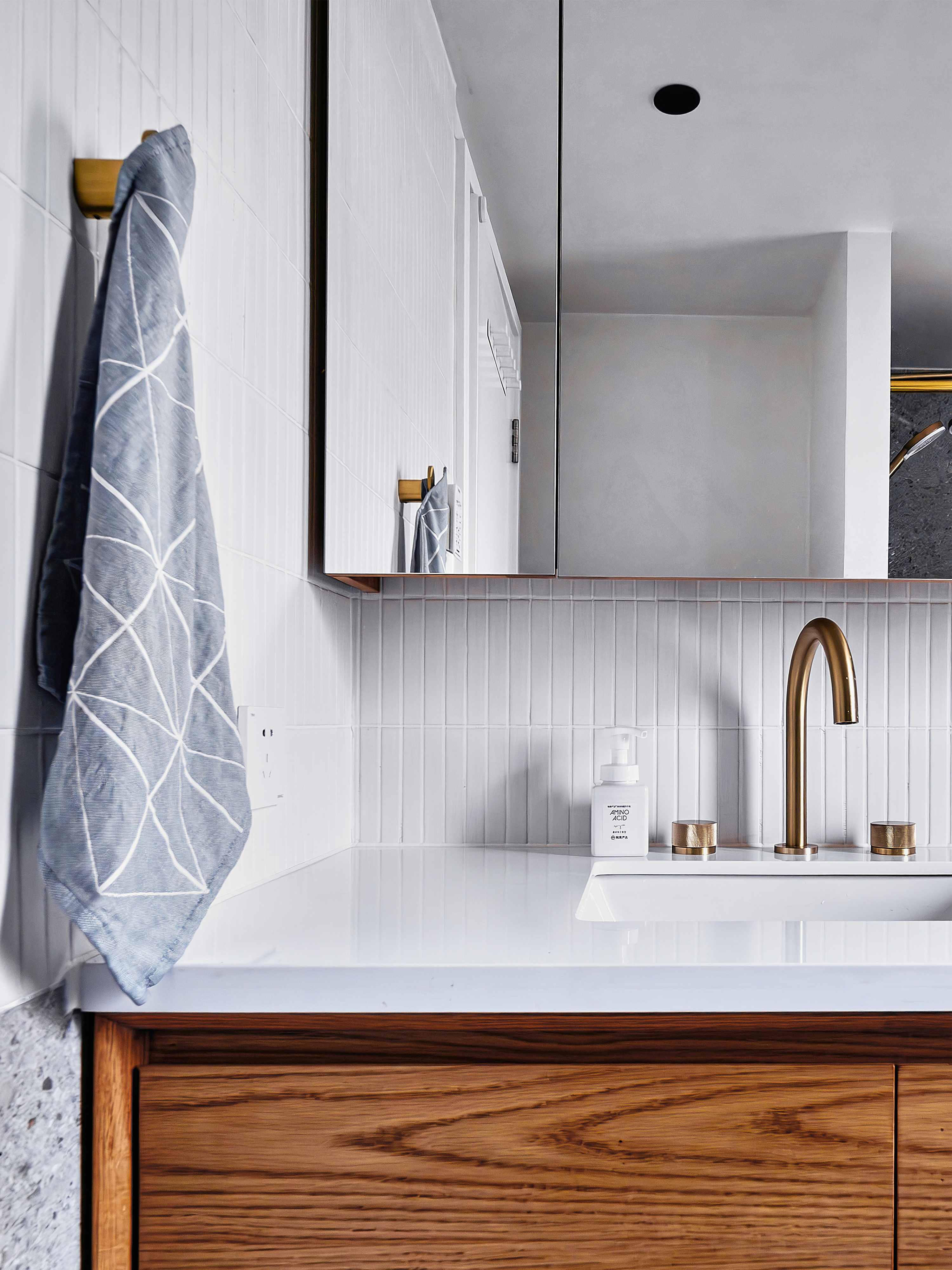
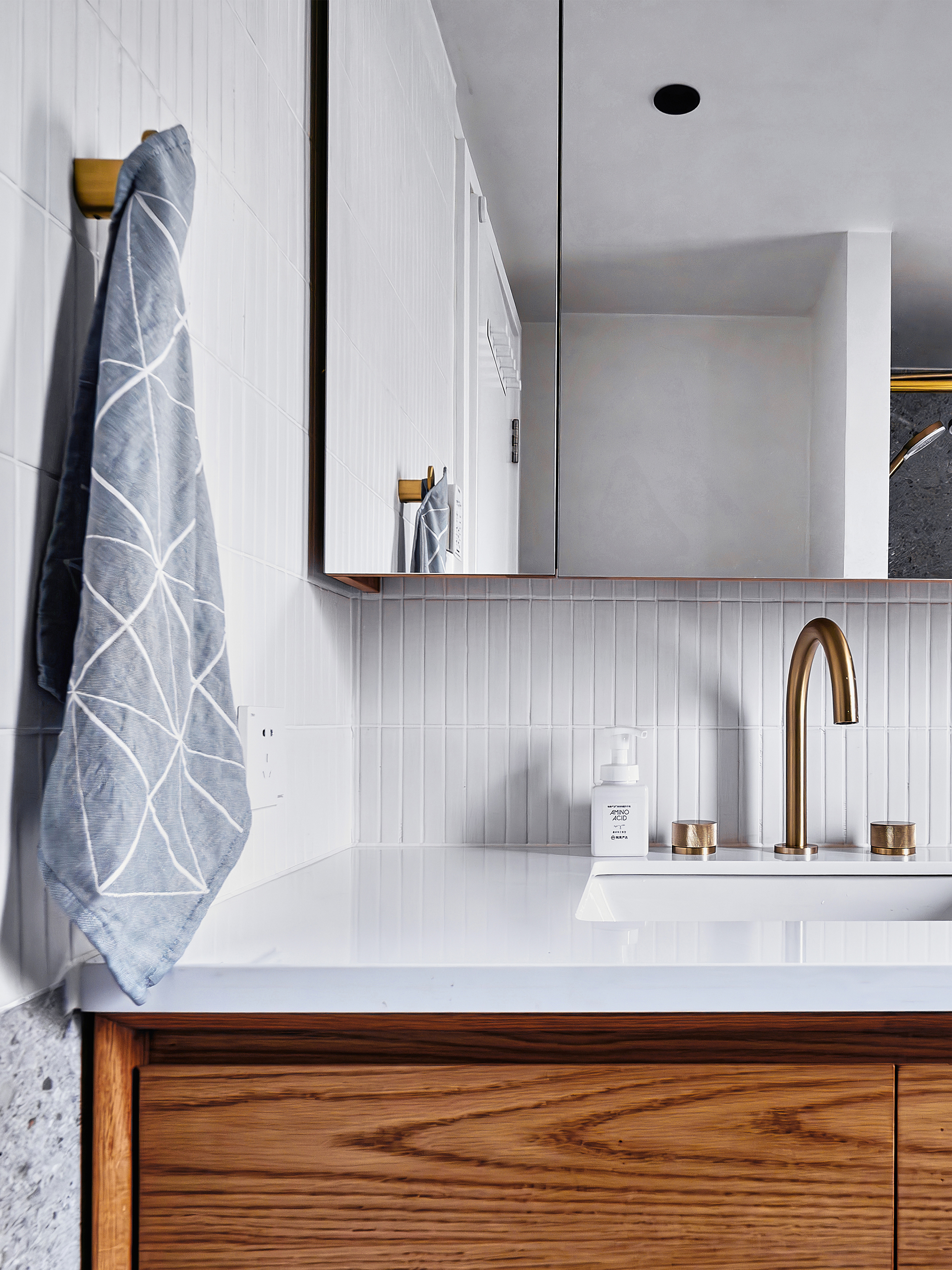
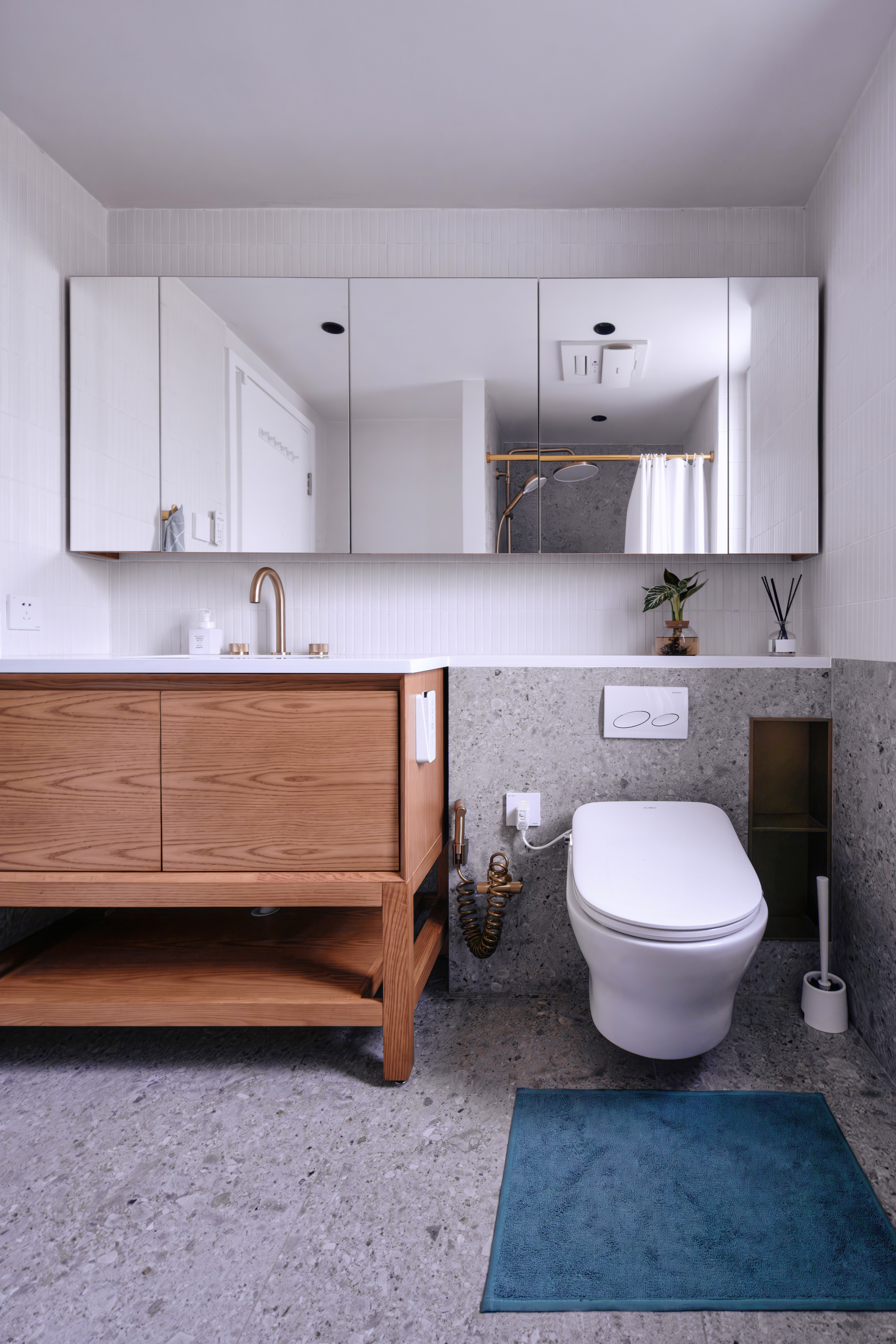
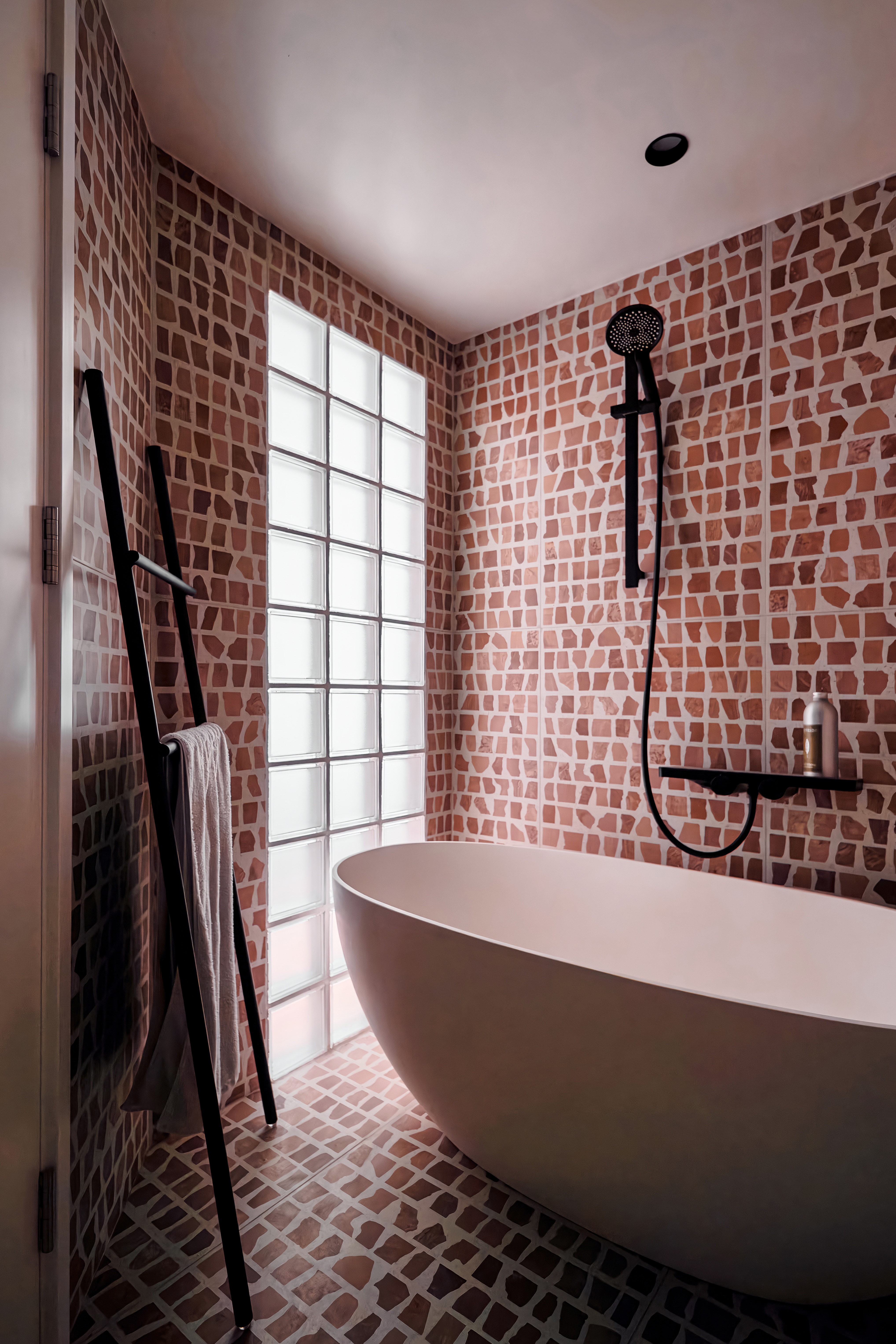
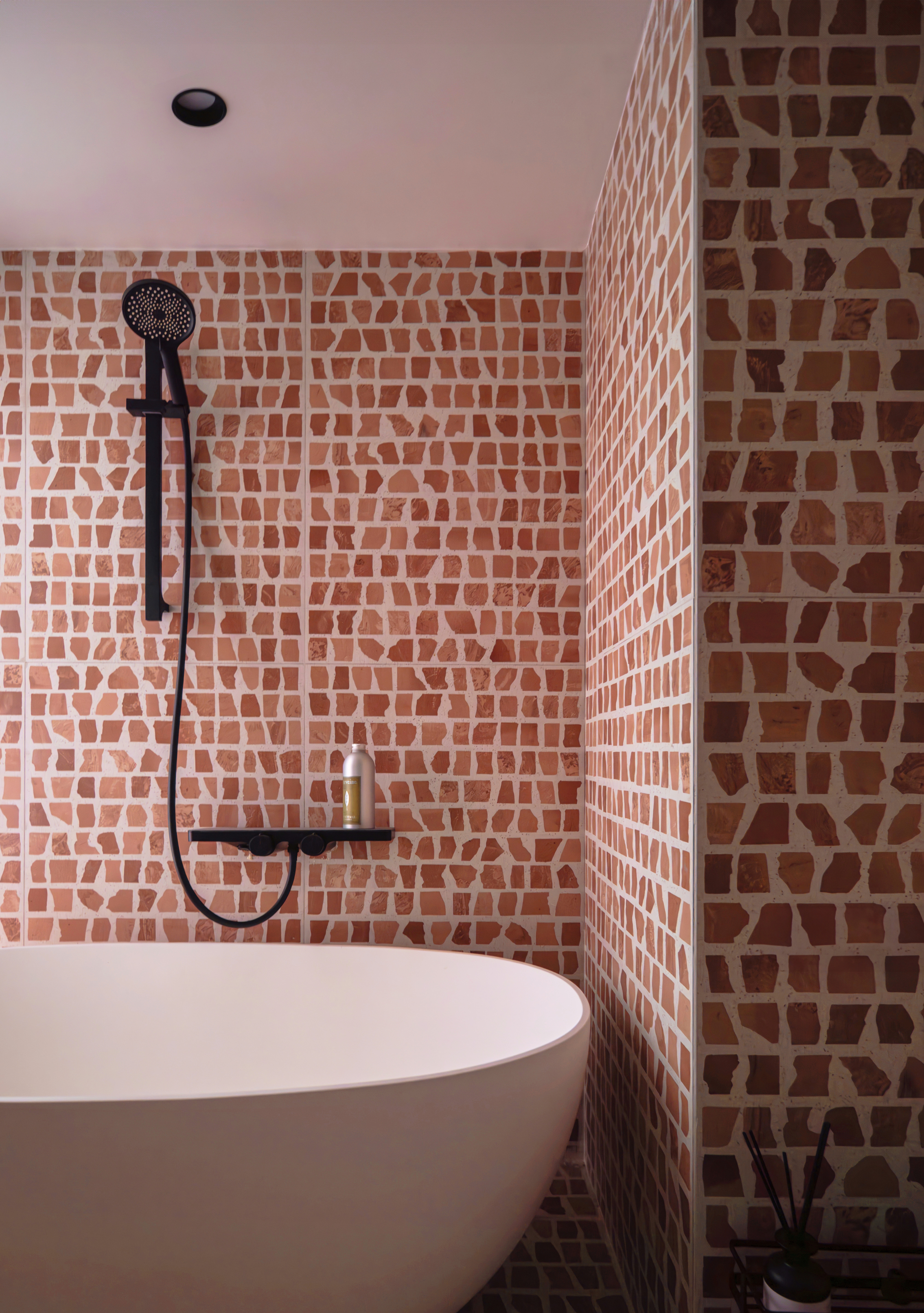
主卫 Master Bath
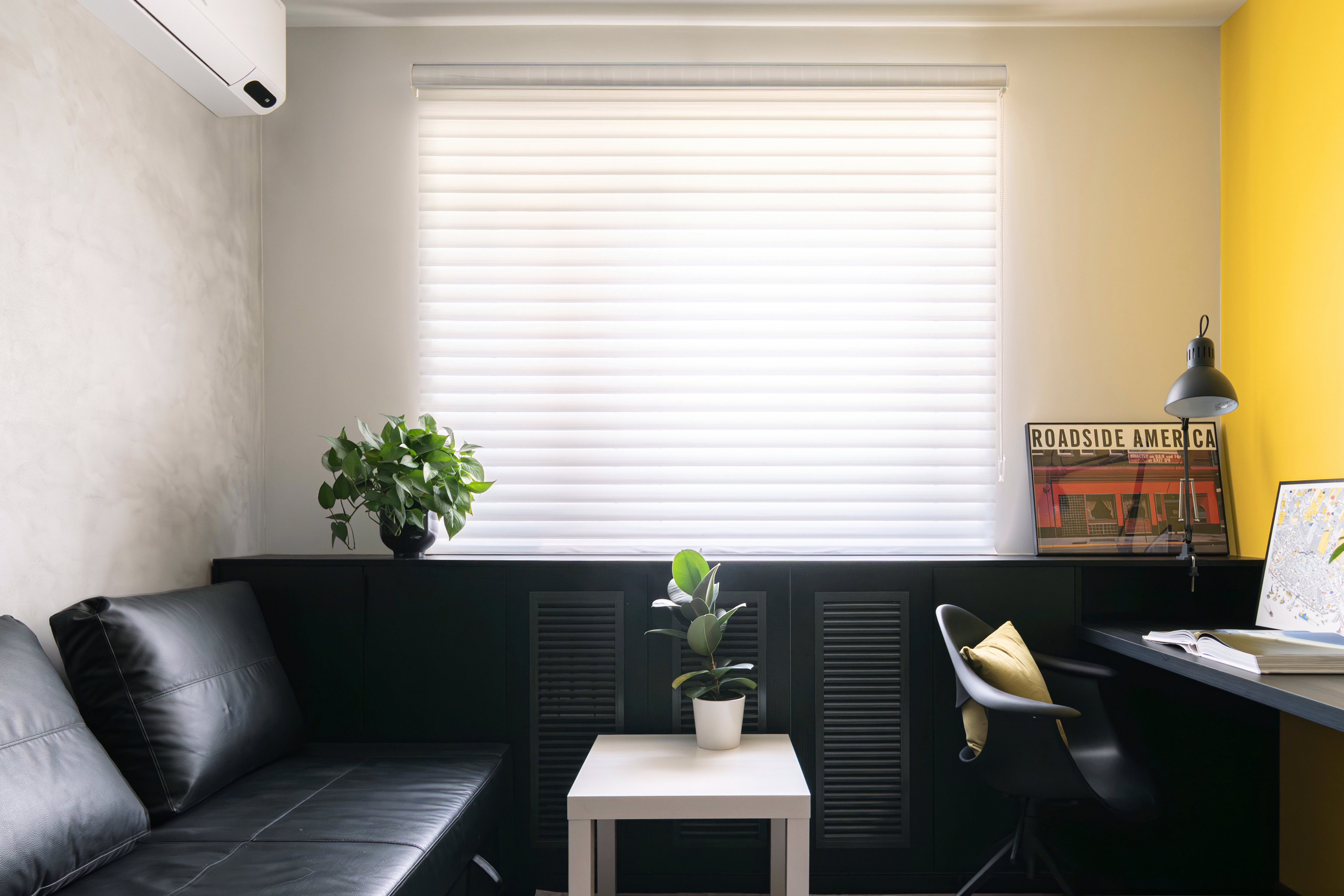
客卧 Guest room
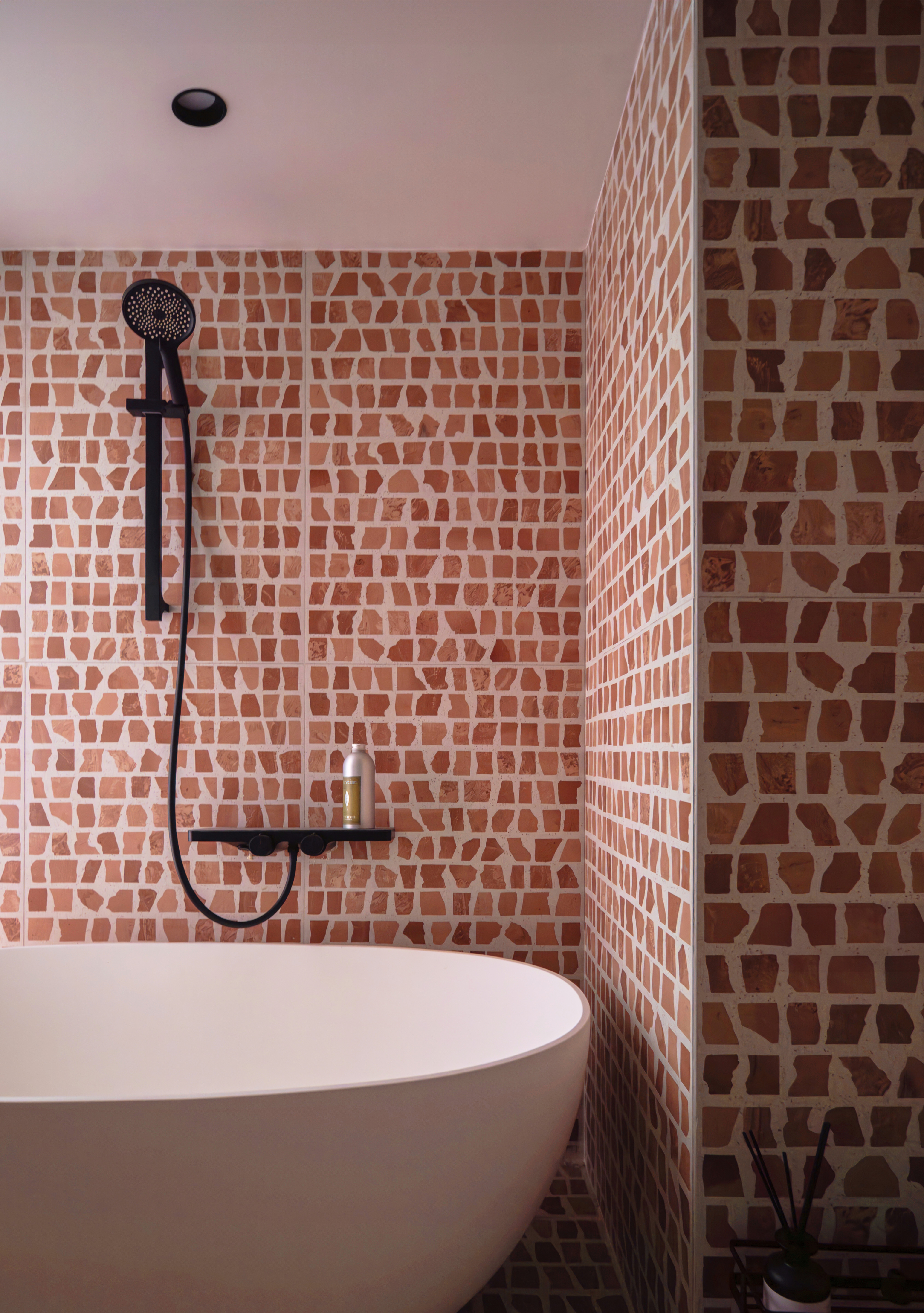
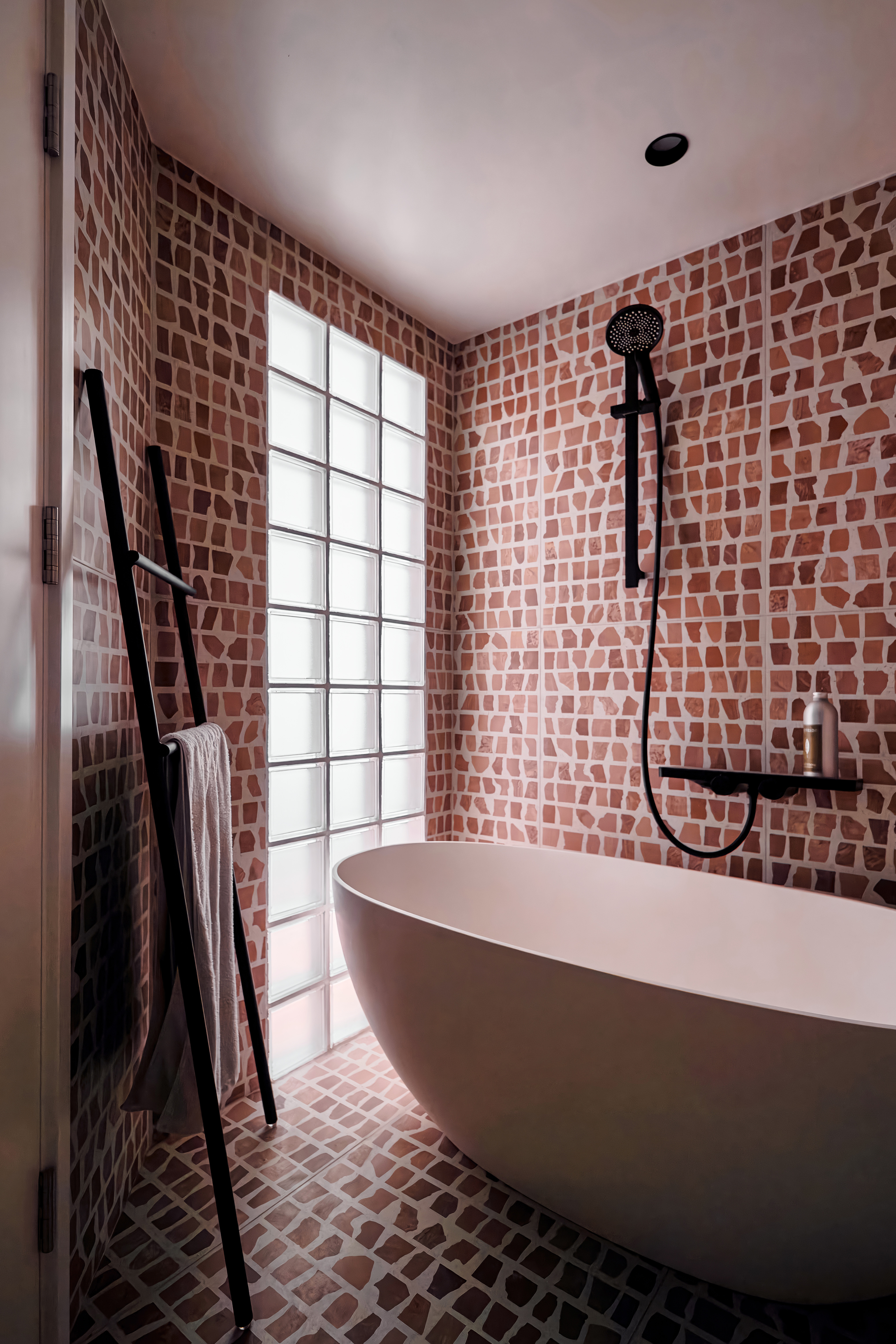
客卫 Guest bath
把“我”变成空间
Turning "Me" into Space
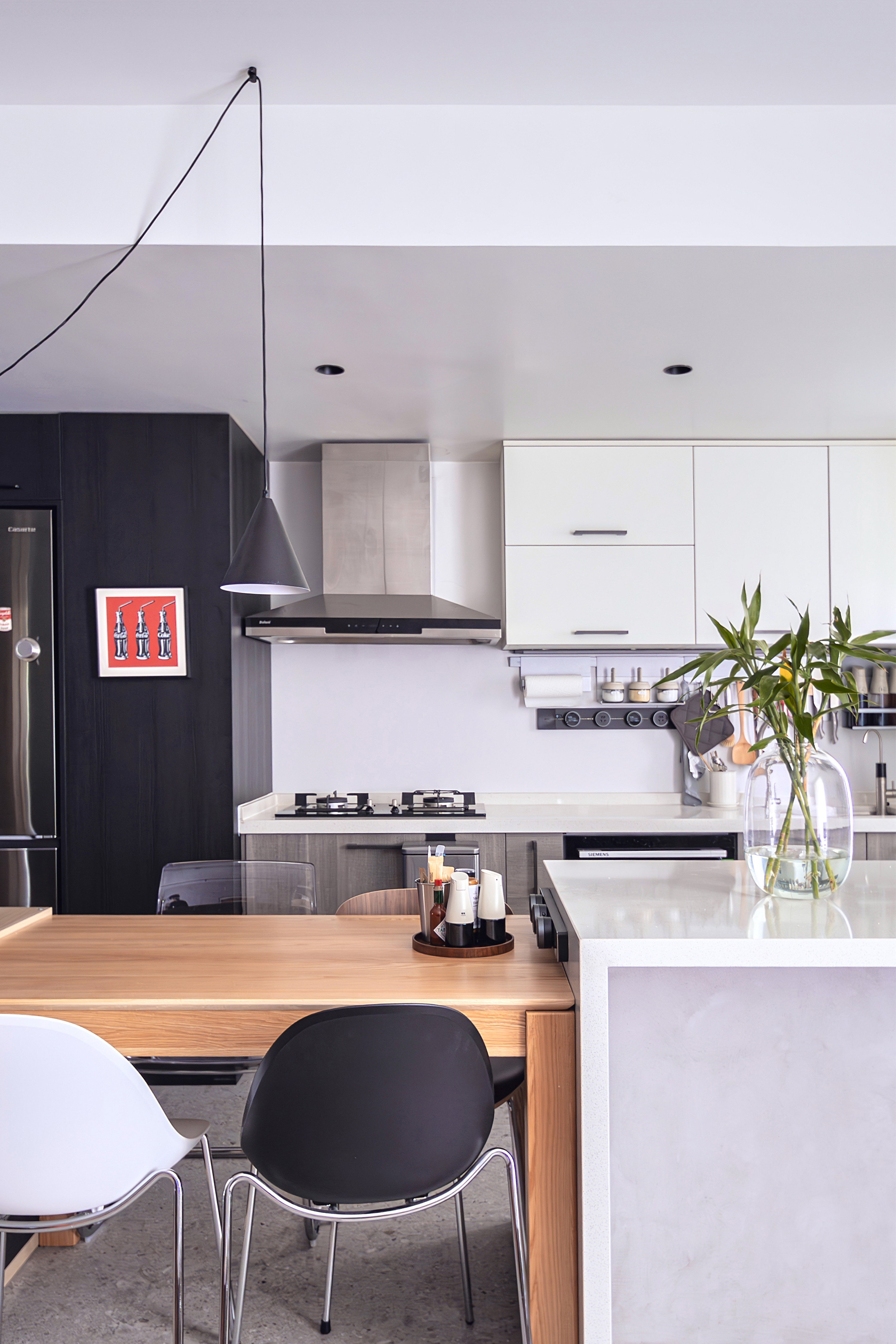
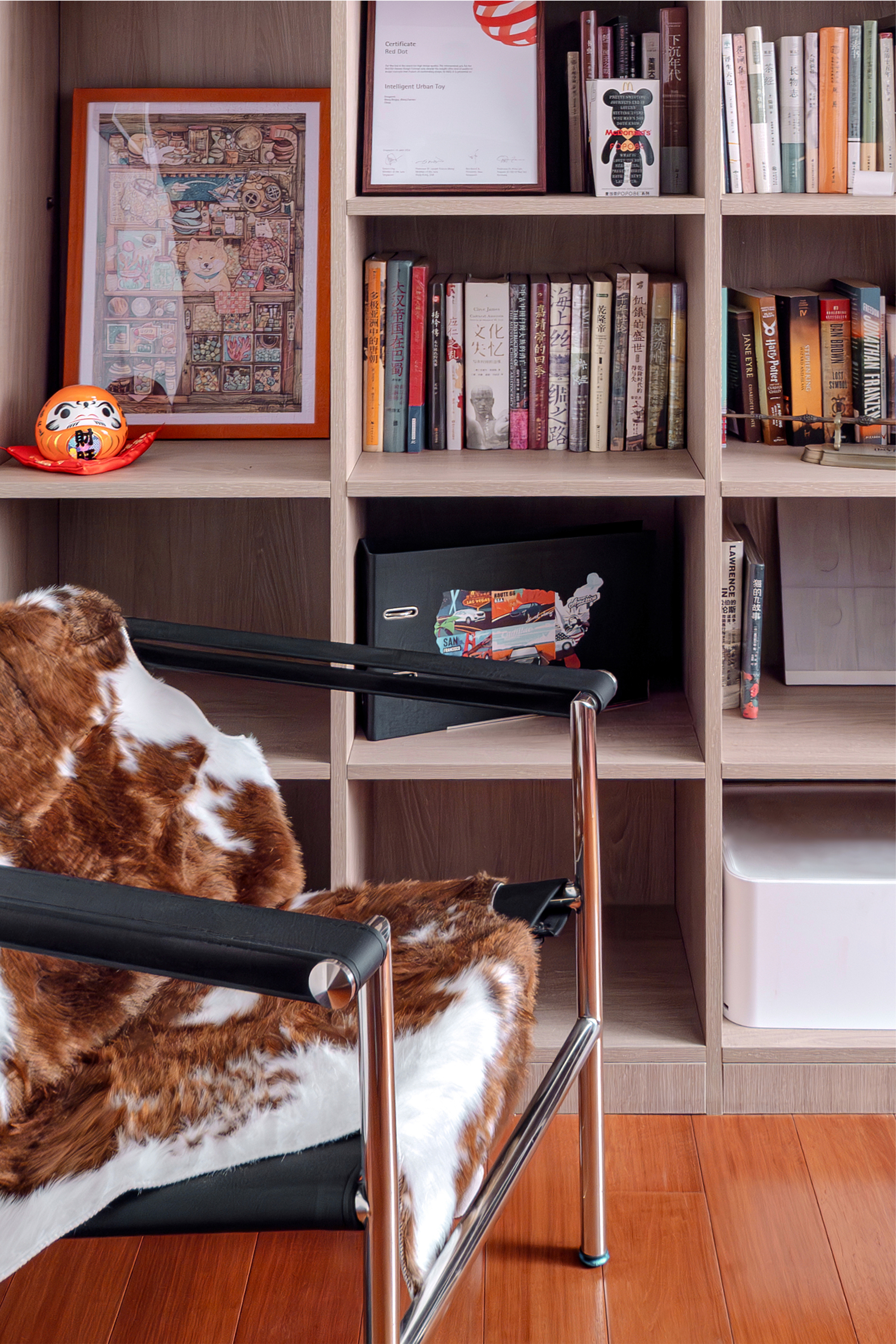
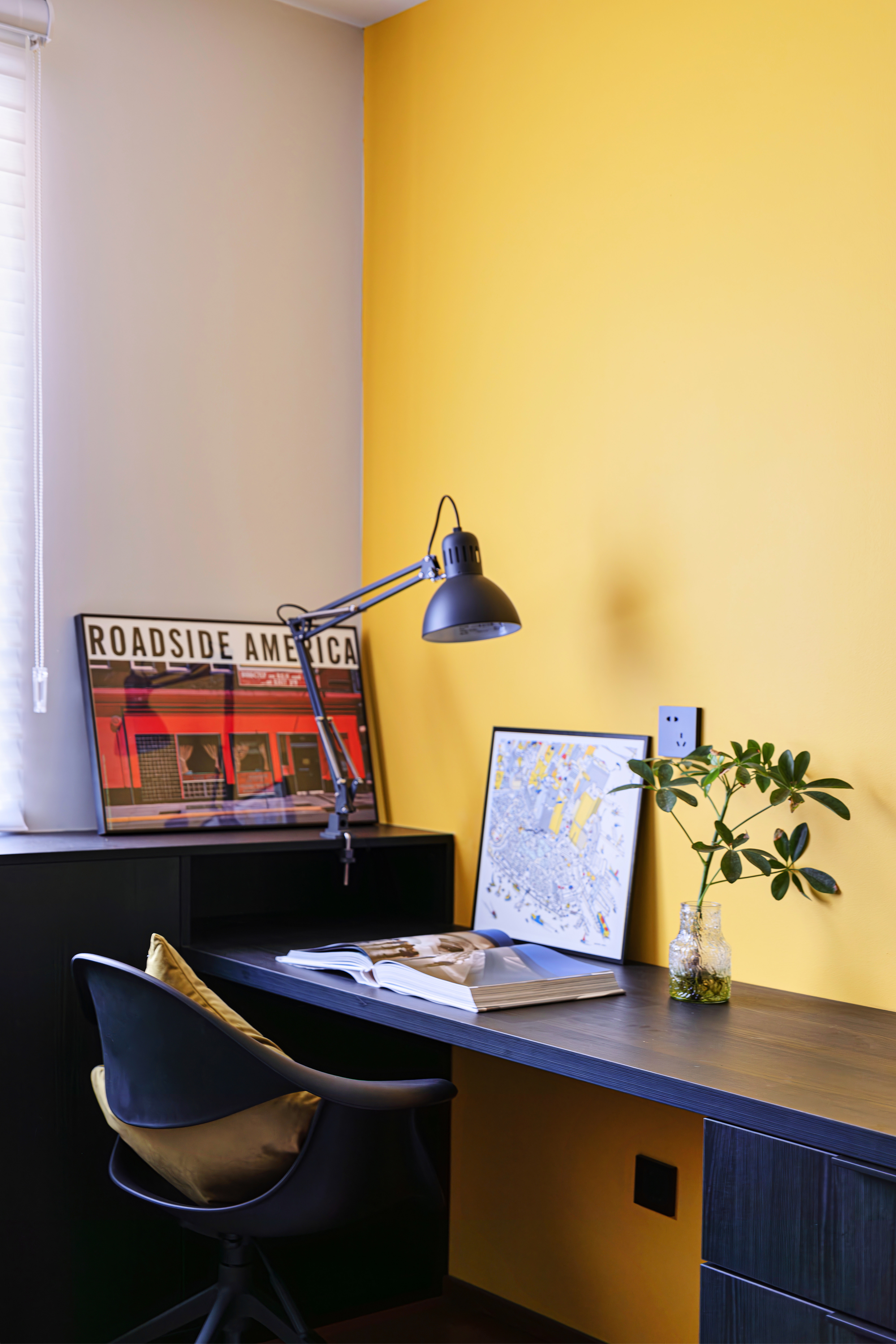
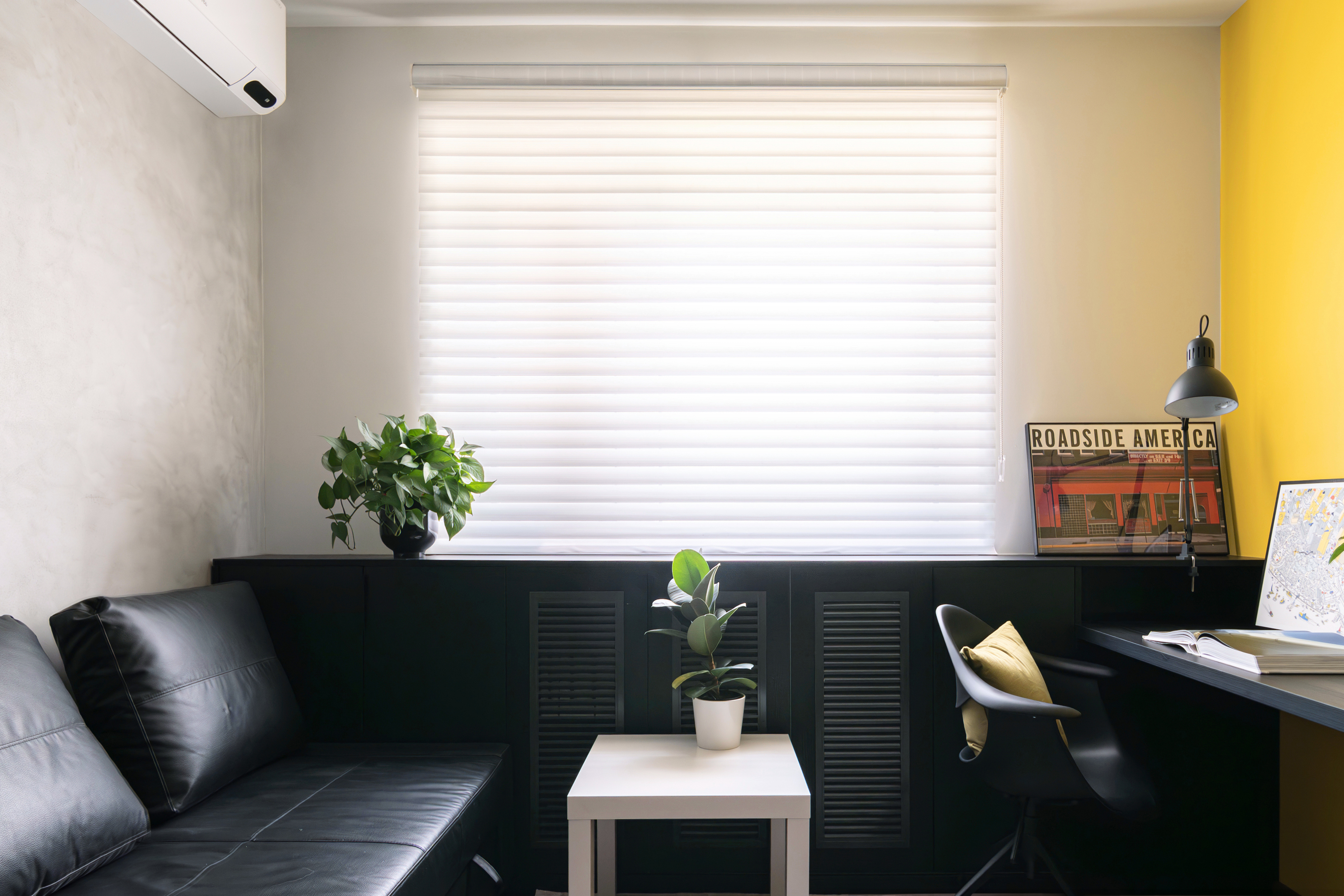
调整空间后,我们开始思考如何将屋主的个性融入设计。在对外空间中,我们采用了蒙德里安的红黄蓝三原色,展现屋主大胆、活泼的特质,并加入水磨石和木材,创造出视觉对比,体现屋主的包容性。在对内空间中,我们采用木材为主调,凸显屋主内心的安静沉稳,同时加入少量亮色,反映出内外性格的交织与复杂性。
Design elements reflect the homeowner's dual nature. The outward-facing spaces feature bold, lively colors, we adopted Mondrian's primary red, yellow, and blue, to convey creativity and energy. To reflect psychological contradiction, we incorporated terrazzo and wood alongside the vibrant, dynamic colors. This material contrast not only emphasizes the vividness of the colors but also enhances the texture of the space, reflecting the homeowner's inclusiveness.
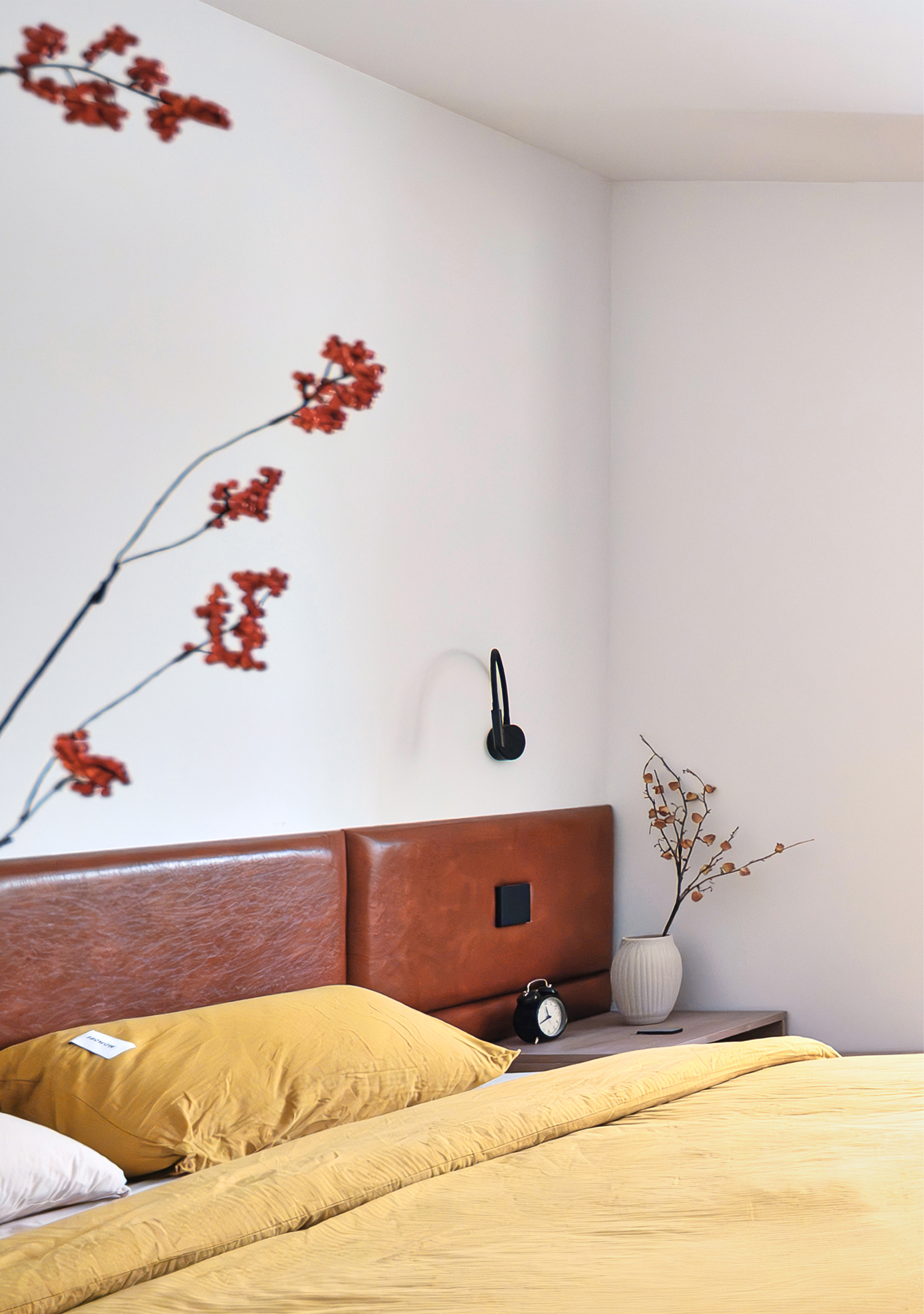
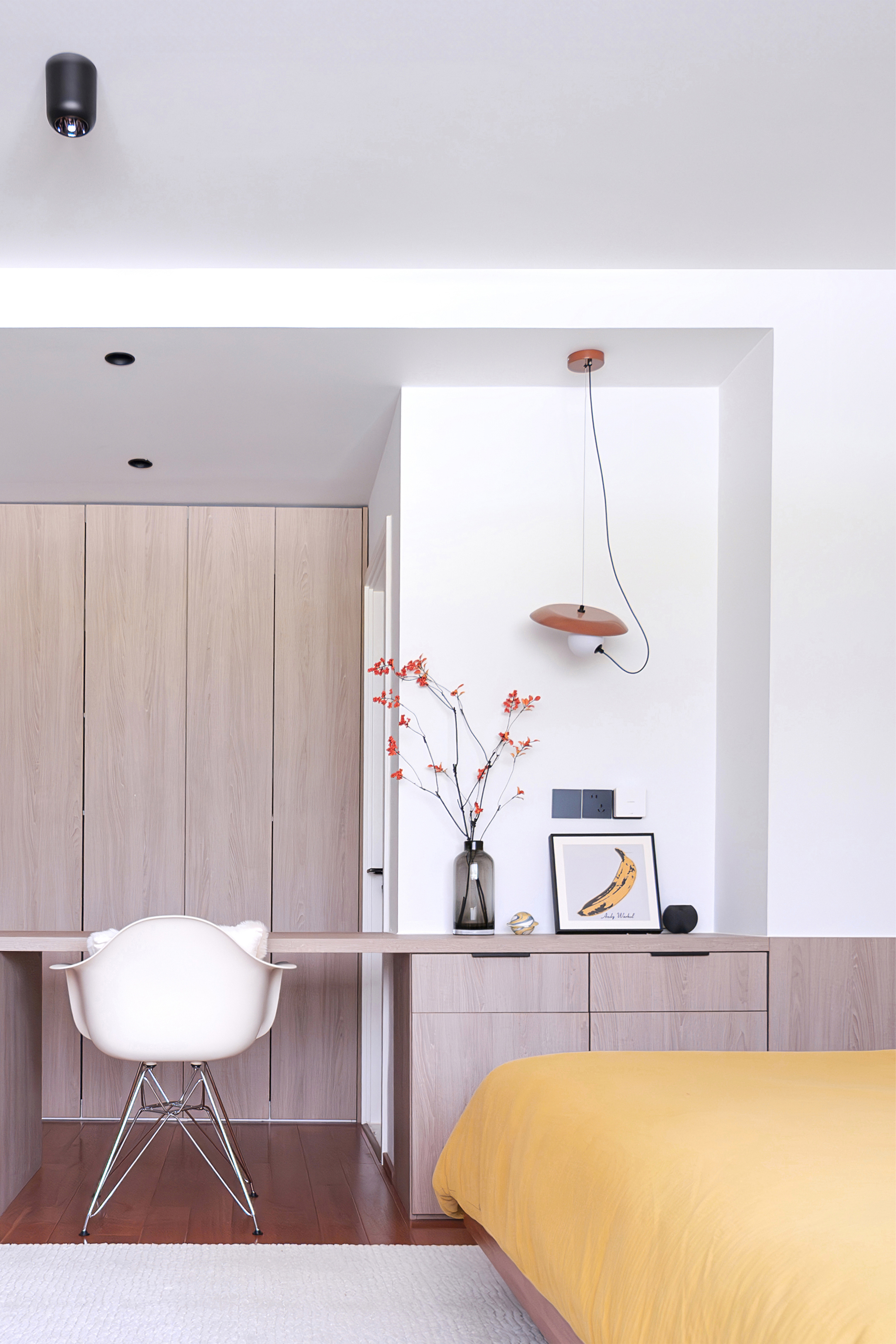
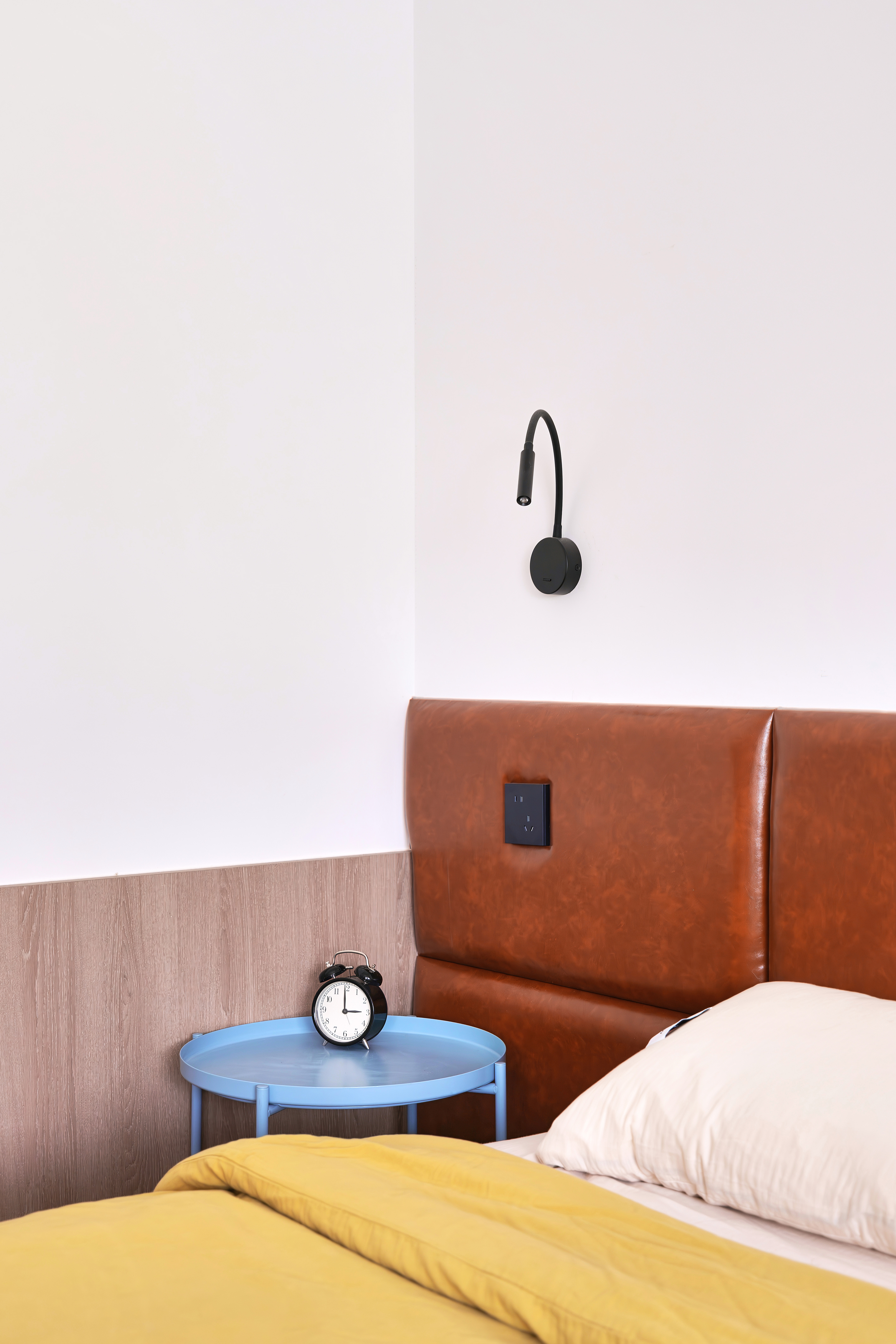
Meanwhile, the inward-facing spaces emphasize warmth and calm, with wood tones dominating, yet with occasional bright accents to reflect the complexity of human psychology. This thoughtful design unifies the space with the homeowner's identity, creating a home that reflects both outward presentation and inner self.
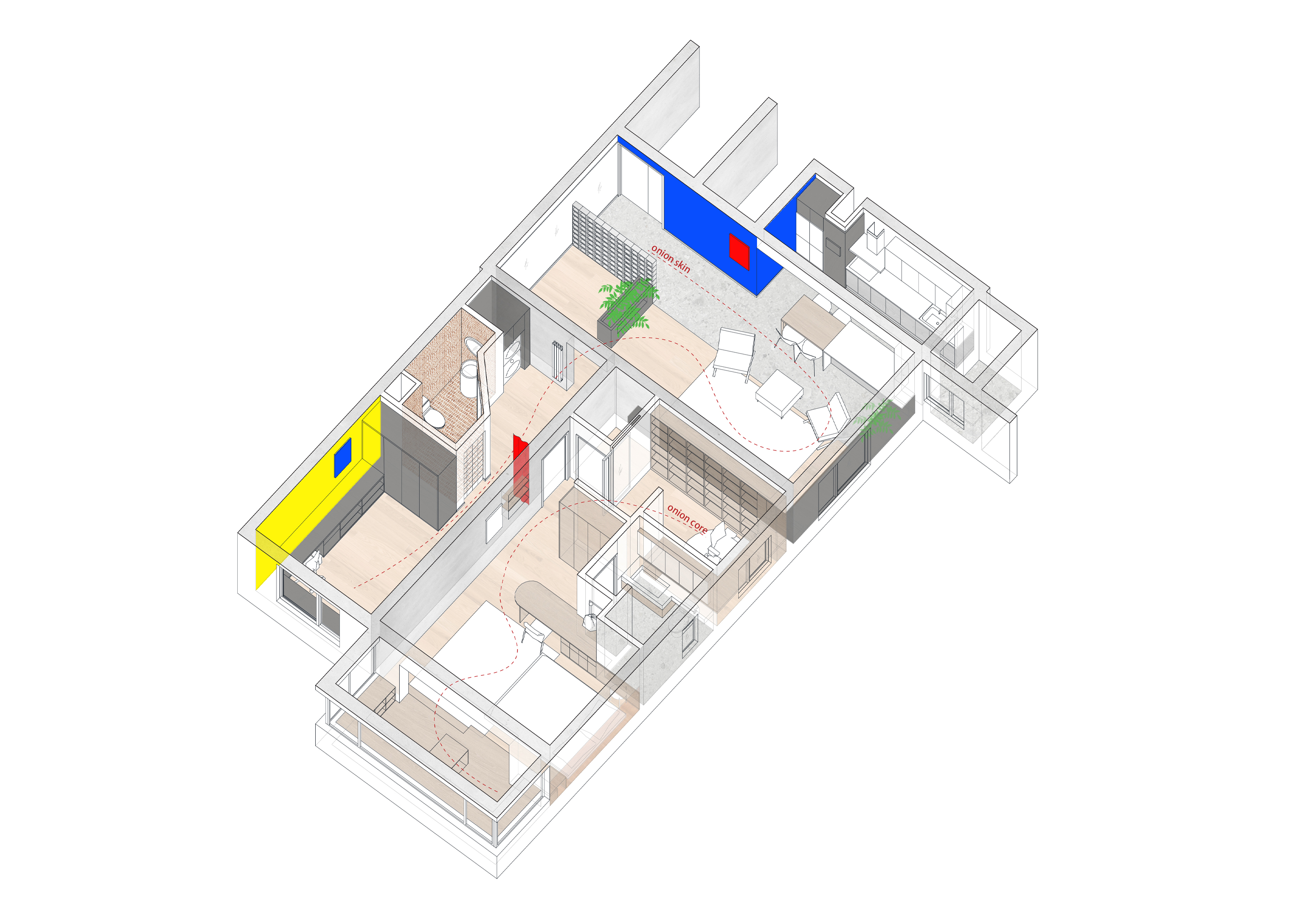
轴测图 Axon
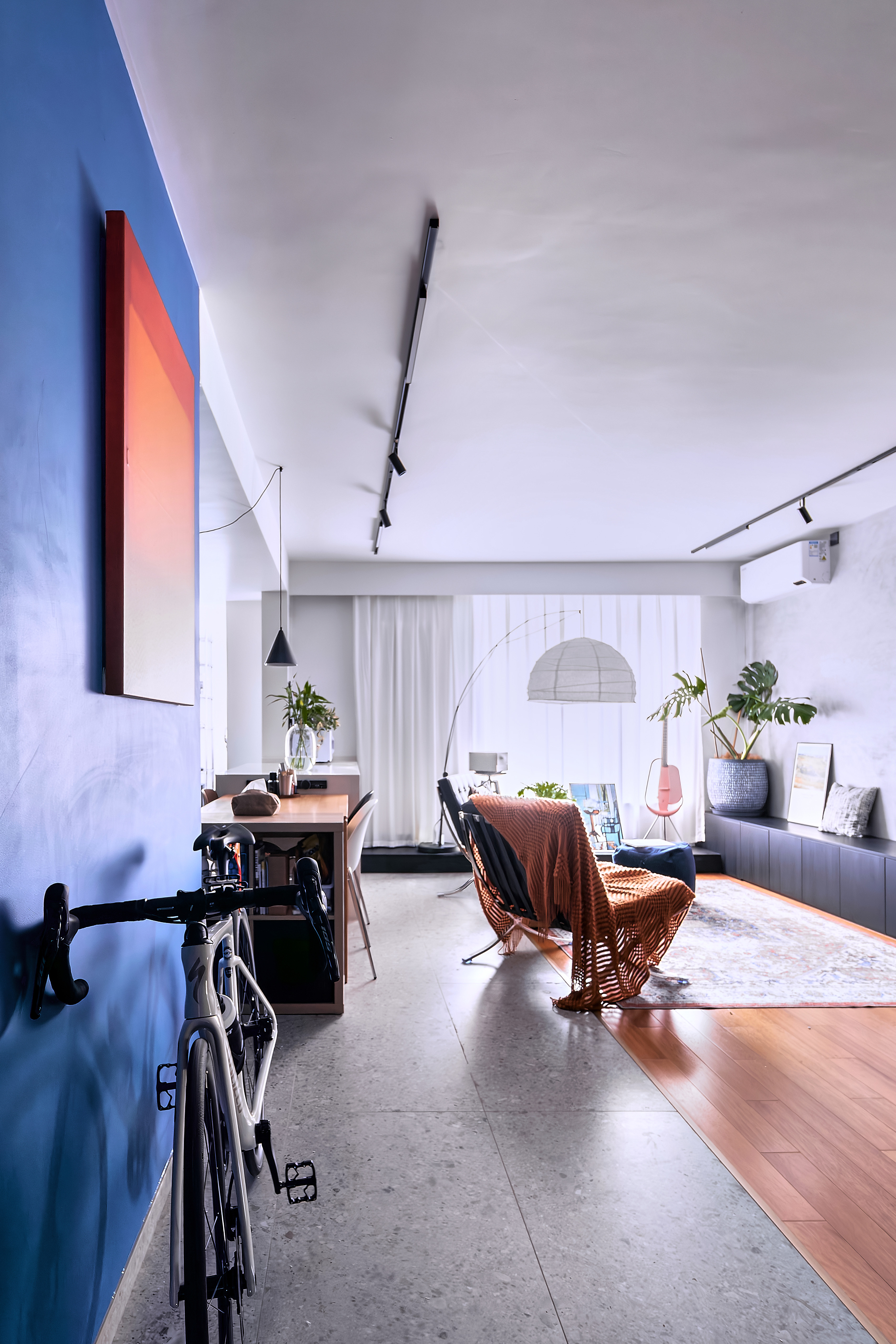
客厅的“蓝” "Blue" in living room
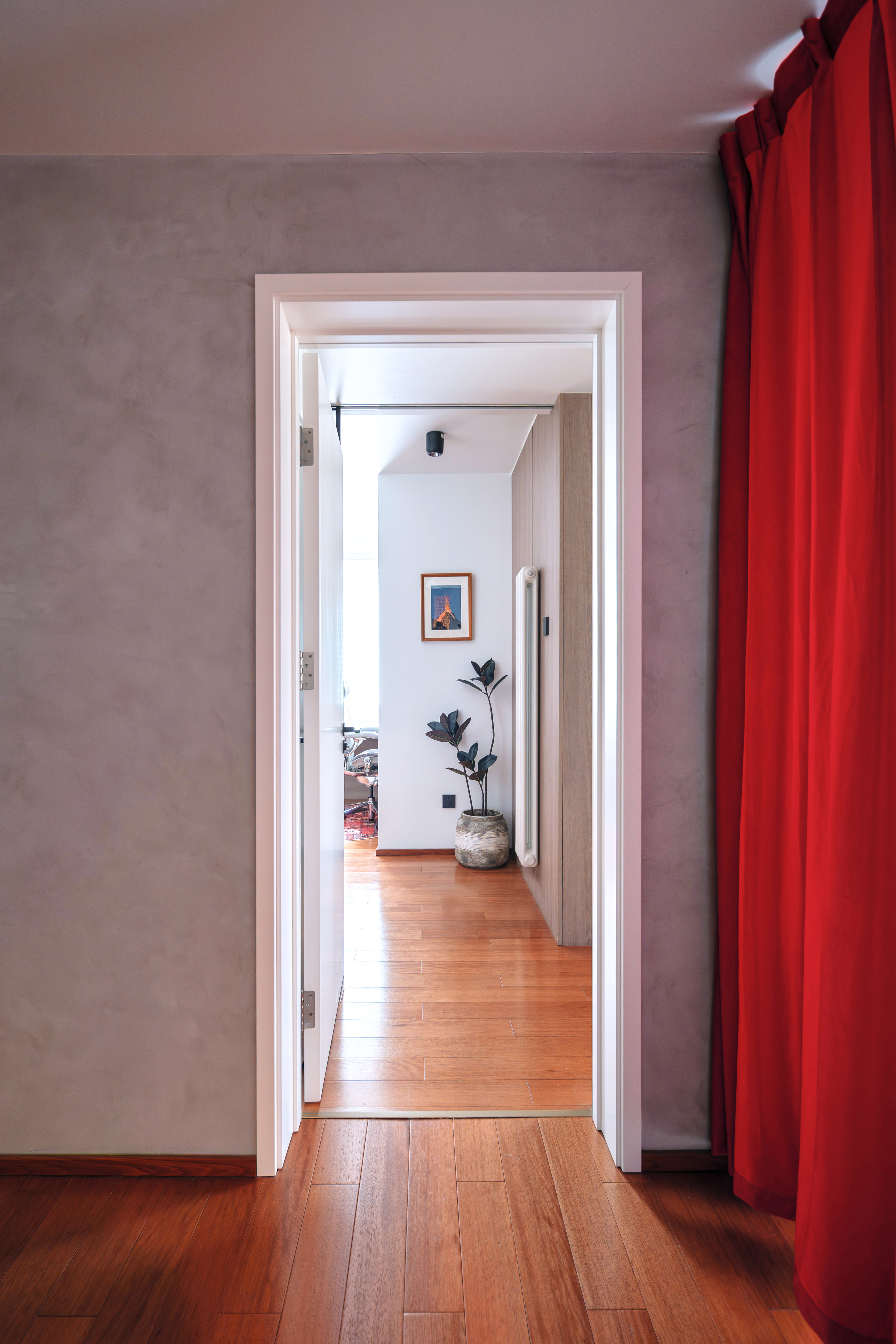
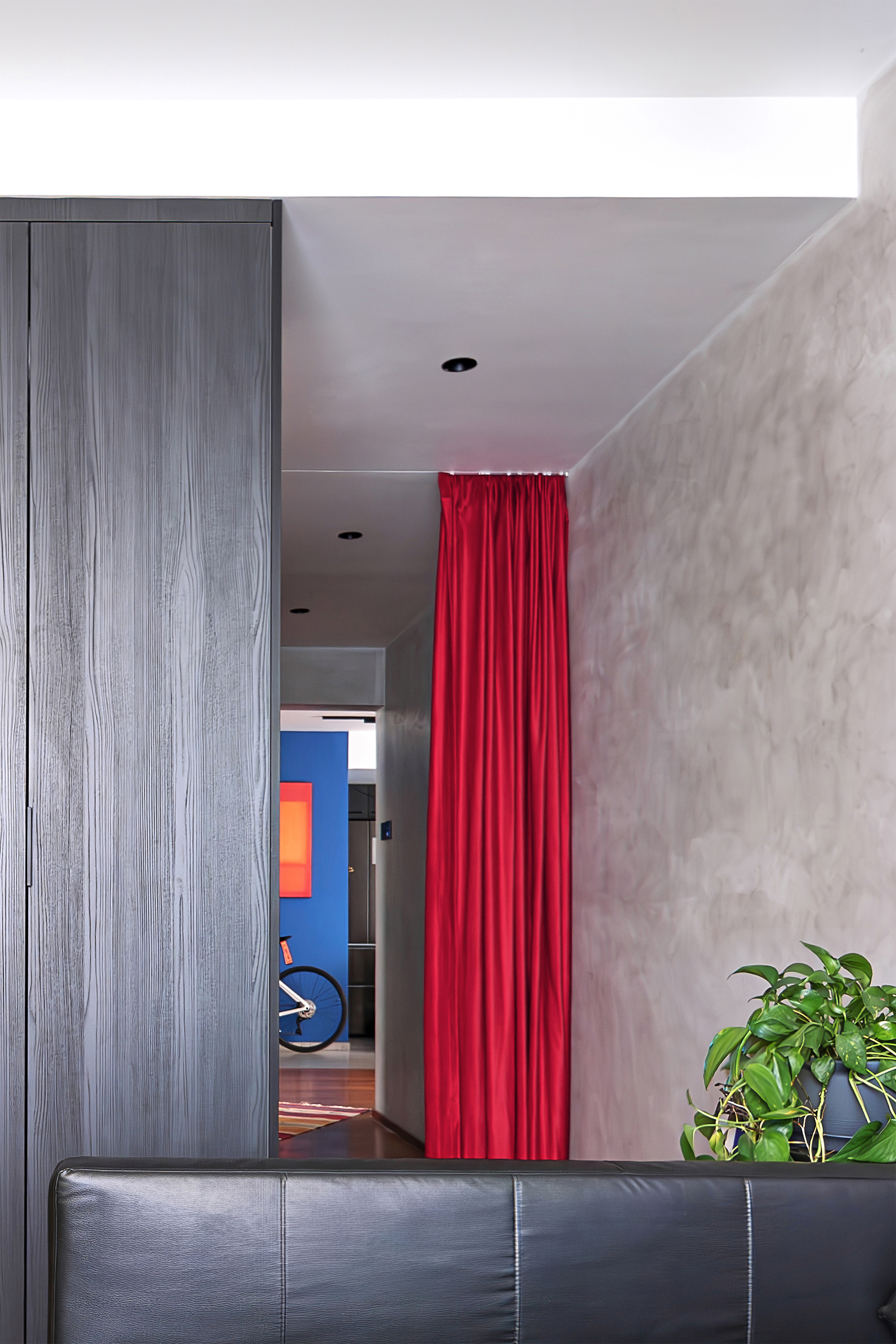
分割空间的“红” "Red" to divide spaces
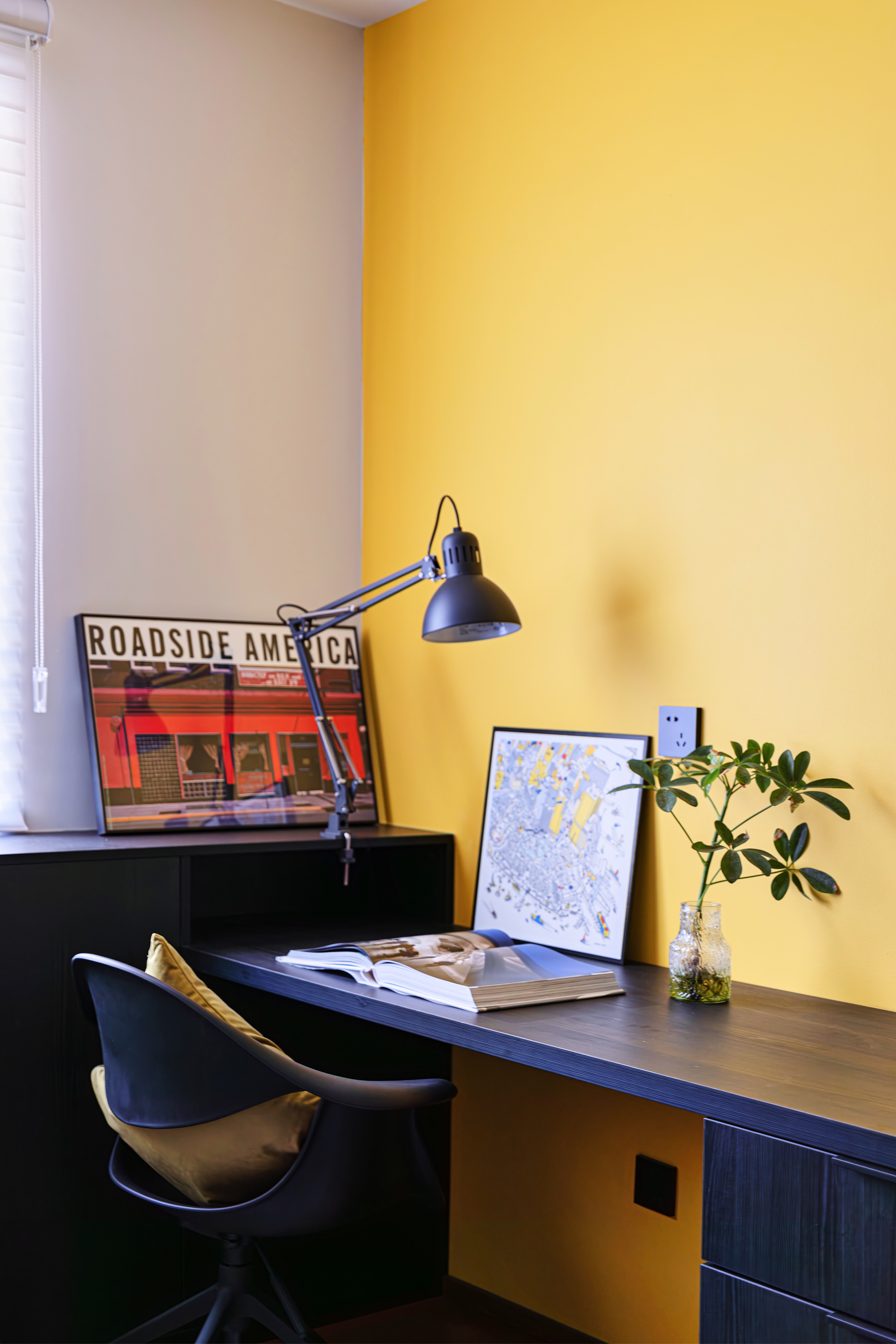
温暖客卧的“黄” Warm "yellow" in guest room
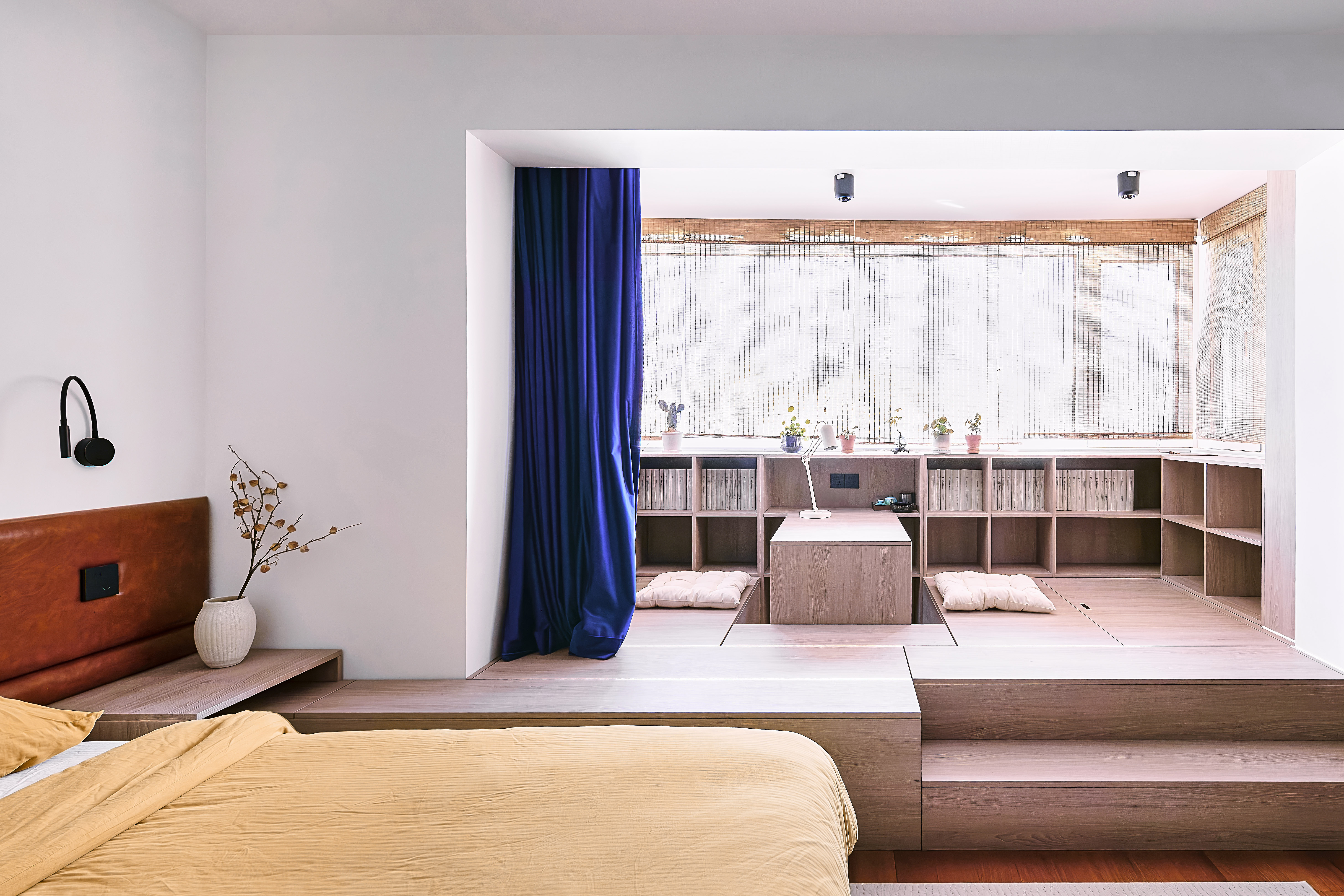
主卧点缀的“蓝” Interspersed "blue" in master bedroom
ECCO创意新空间,一处为创意工作者而生的灵感孵化场丨红山设计
北京森与天成社区中心丨PLAT ASIA
160平三代同居的适老之家丨慧空间设计机构
洋葱之家丨犬摇建筑

会跳舞的石林 | 犬摇建筑
智能城市玩具 | 犬摇建筑

溧阳万豪酒店:精打细算呈现高品质城市地标丨三益建筑设计


Heidentempel Pavilion | Christoph Hesse Architects

HAY!YoungBirds! 2020年亚洲优秀青年大赛三强作品《削笔刀》设计师访谈

订阅我们的资讯
切勿错过全球大设计产业链大事件和重要设计资源公司和新产品的推荐
联系我们
举报
返回顶部