


Max House | Studio Lotus
Studio Lotus ,发布时间2023-01-30 09:45:04







Typology: Commercial (Multi-Tenanted Building)
Name of Project: Max House
Location: Okhla, New Delhi
Name of Client: Mr. Analjit Singh
Name of Client’s Firm: Max Estates
Contact Person: Mr.Anil Malhotra
Address: Max House, 1, Dr Jha Marg, Okhla Phase III, Okhla, New Delhi, Delhi 110020
Tel No:+91-9910338630
Email: anil.malhotra@maxestates.in
URL: www.maxestates.in
Design Firm: Studio Lotus
Design Team: Sidhartha Talwar, Ambrish Arora, Rana Shil, Subrata Ray
Site Area:33,272 sq.ft.
Built-Up Area: 1.4 lakh sq.ft.
Start Date: 4th October 2017
Completion Date: August 2021
Photographer: Noughts & Crosses LLP, Max
版权声明:本链接内容均系版权方发布,版权属于 Studio Lotus,编辑版本版权属于设计宇宙designverse,未经授权许可不得复制转载此链接内容。欢迎转发此链接。
版权声明:本链接内容均系版权方发布,版权属于Studio Lotus,编辑版本版权属于设计宇宙designverse,未经授权许可不得复制转载此链接内容。欢迎转发此链接。
Copyright Notice: The content of this link is released by the copyright owner Studio Lotus. designverse owns the copyright of editing. Please do not reproduce the content of this link without authorization. Welcome to share this link.
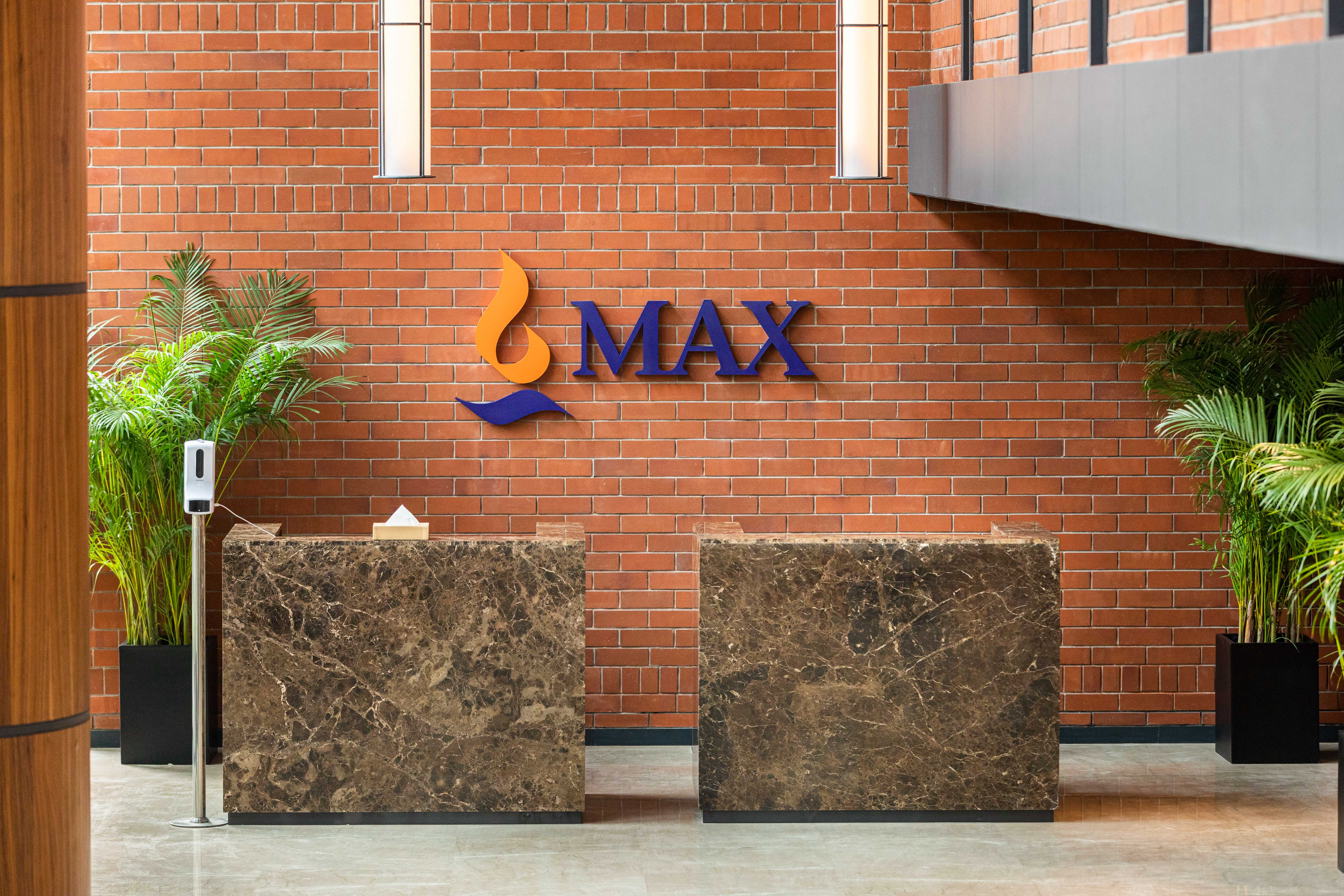
Max House is a corporate campus developed by Max Estates, the premium real estate arm of the Max Group of Companies. Located in New Delhi’s Okhla industrial area, the development comprises two multi-tenant buildings placed within a verdant campus—two new towers designed to accommodate a myriad of workspaces and an existing building to be adapted into a community hub that integrates the ground plane of the towers.
© Max
© Max
© Max
© Max
Max Estates’ project brief succinctly underscored the need for a multi-storey office building that would ease into the landscape and nod to its context while aiming to set a benchmark for timeless architecture. The client expressed a desire for the building to echo the brand’s underlying design philosophy rooted in sustainability, resilience, and environmental harmony. The building was to be designed in a way that its architecture and interior expression would reflect responsible sourcing and use of materials and unite it with state-of-the-art workspaces and high-performance systems.
© Max
© Max
© Max
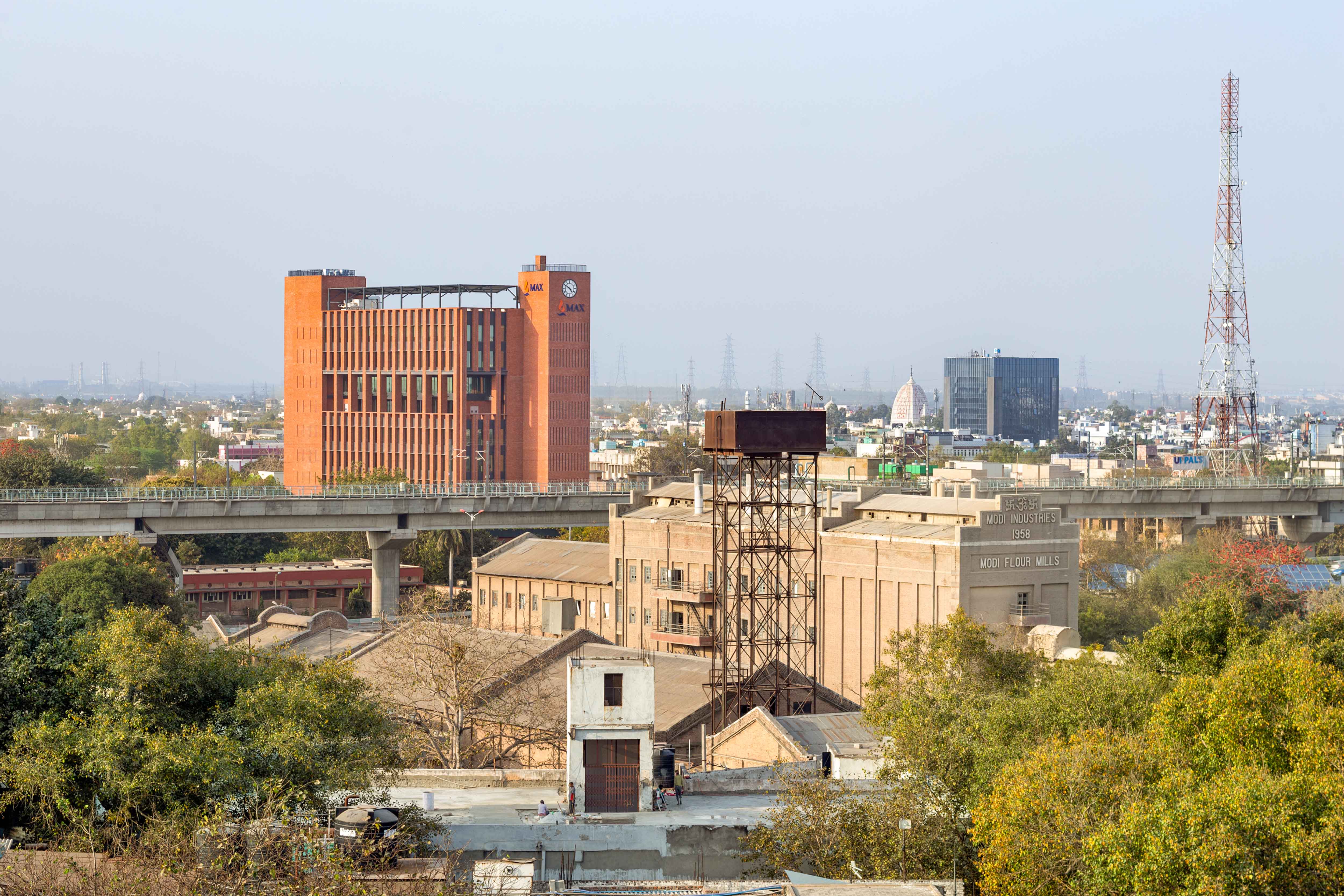
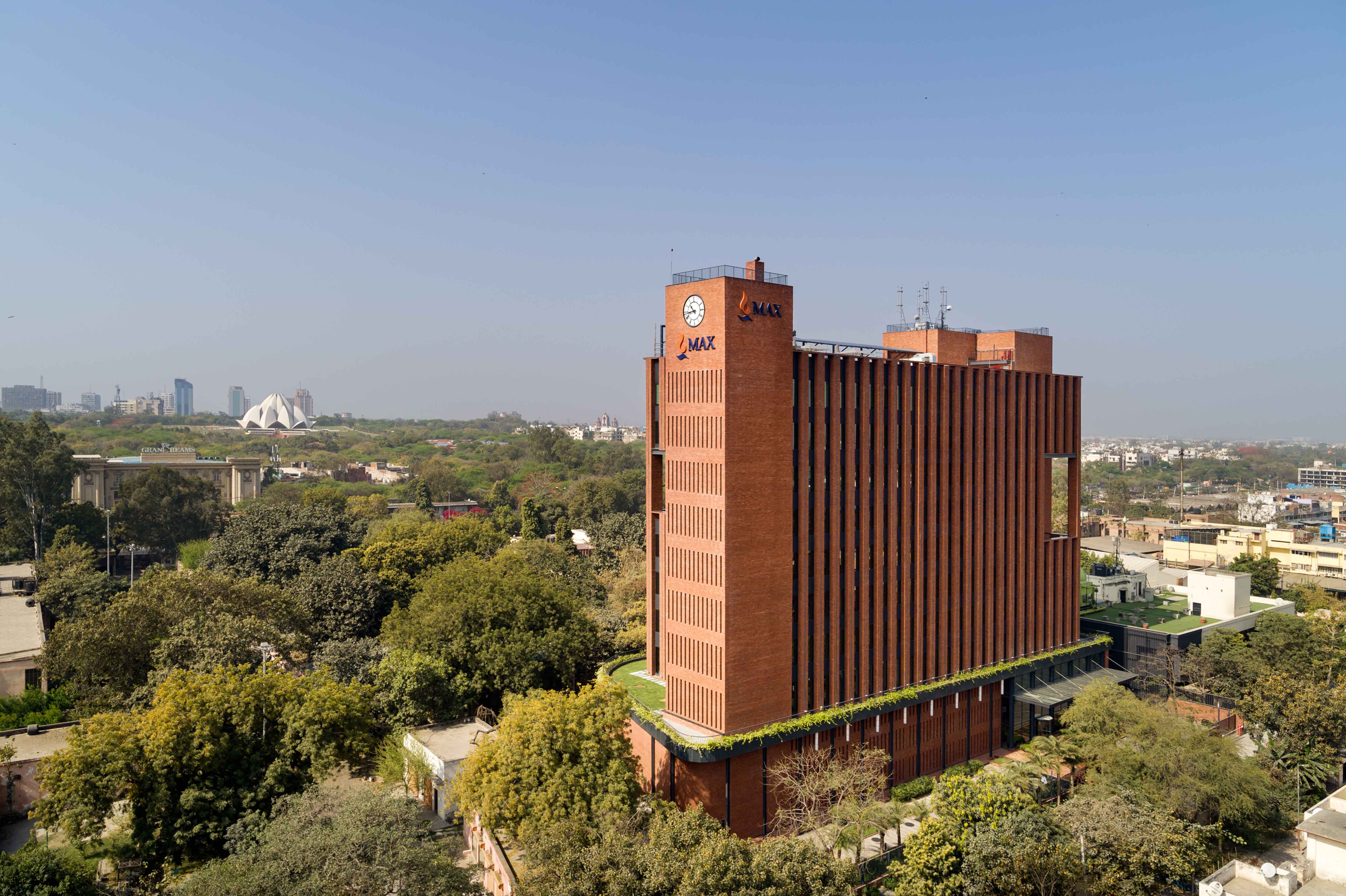
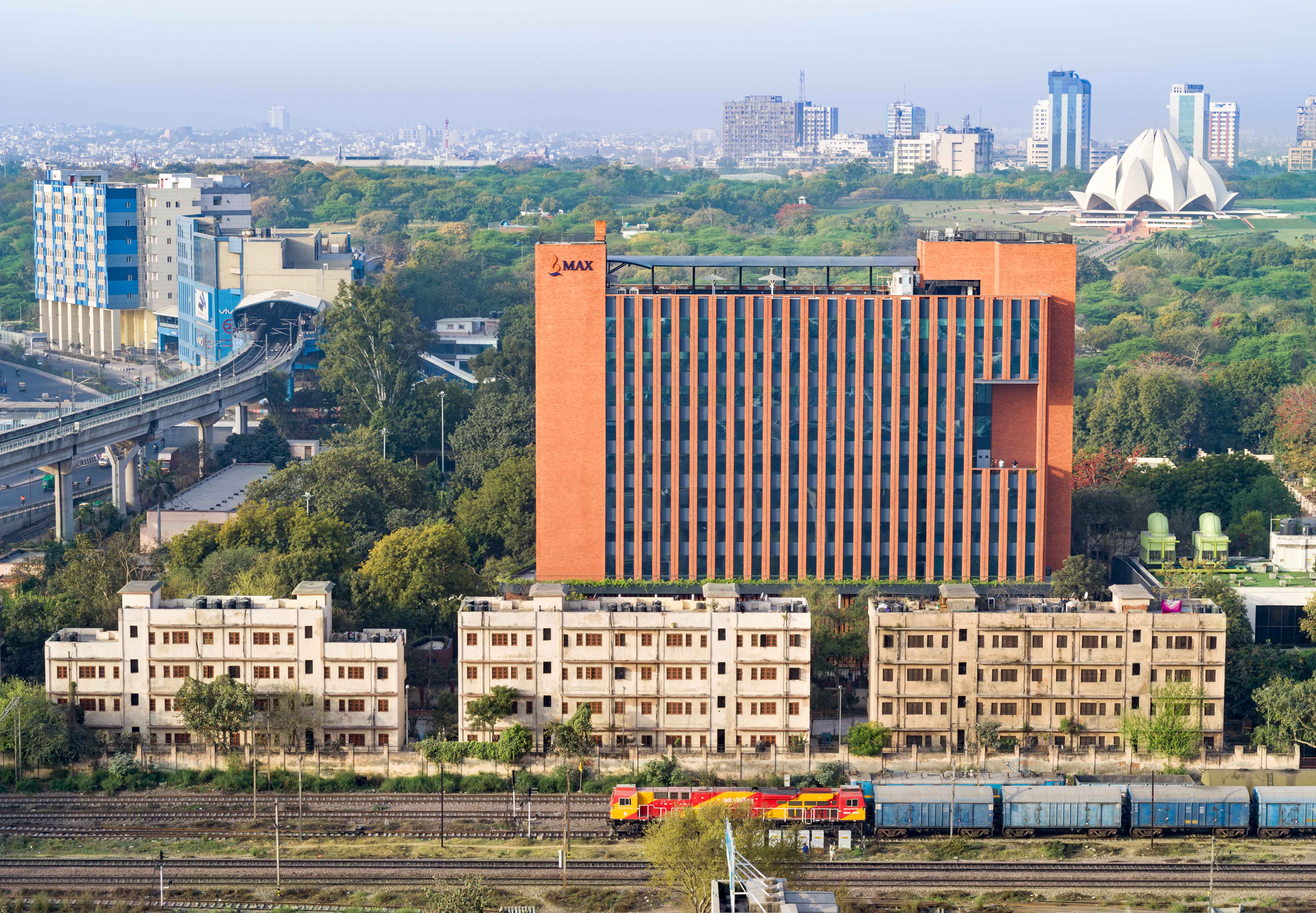
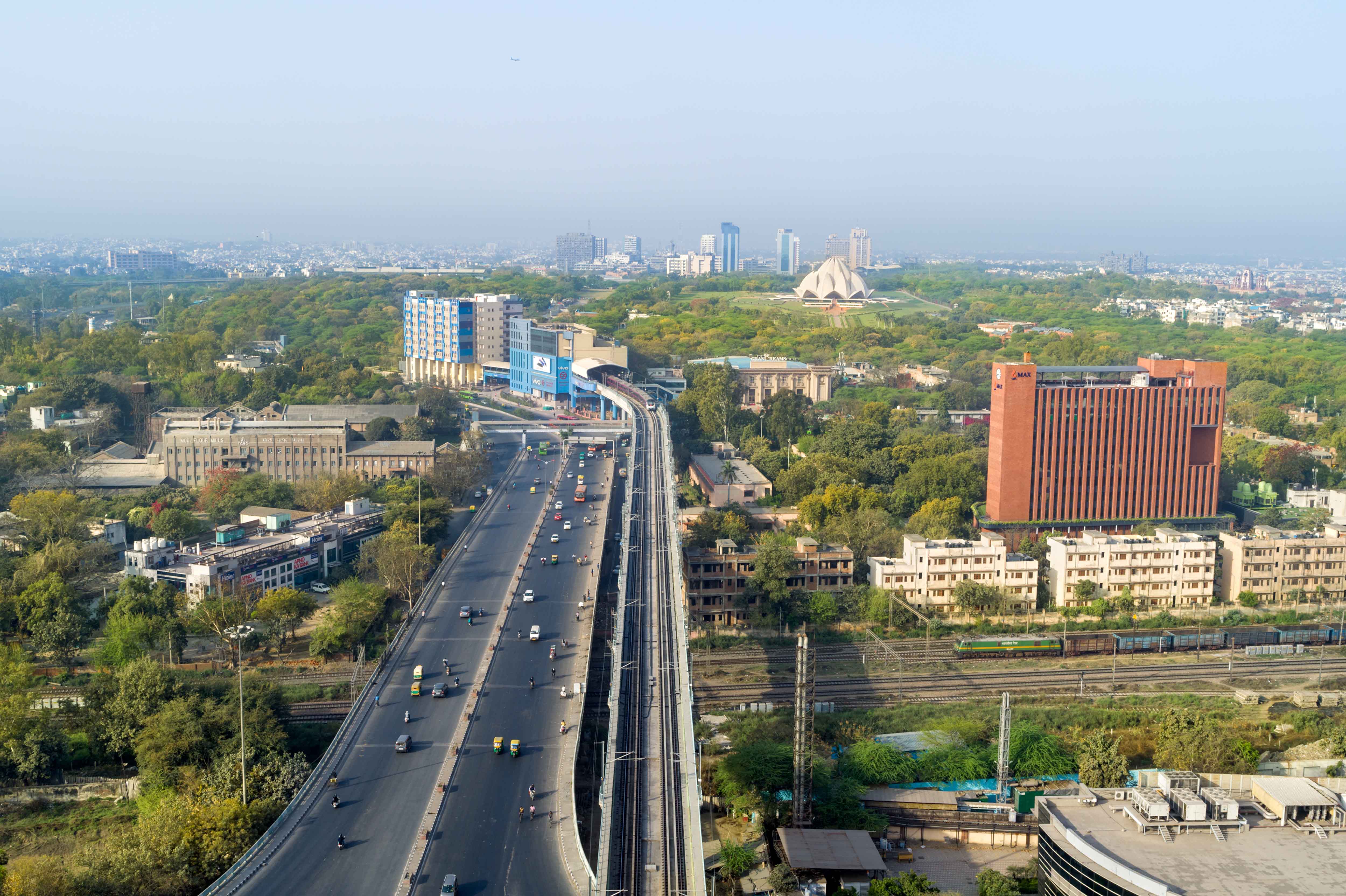
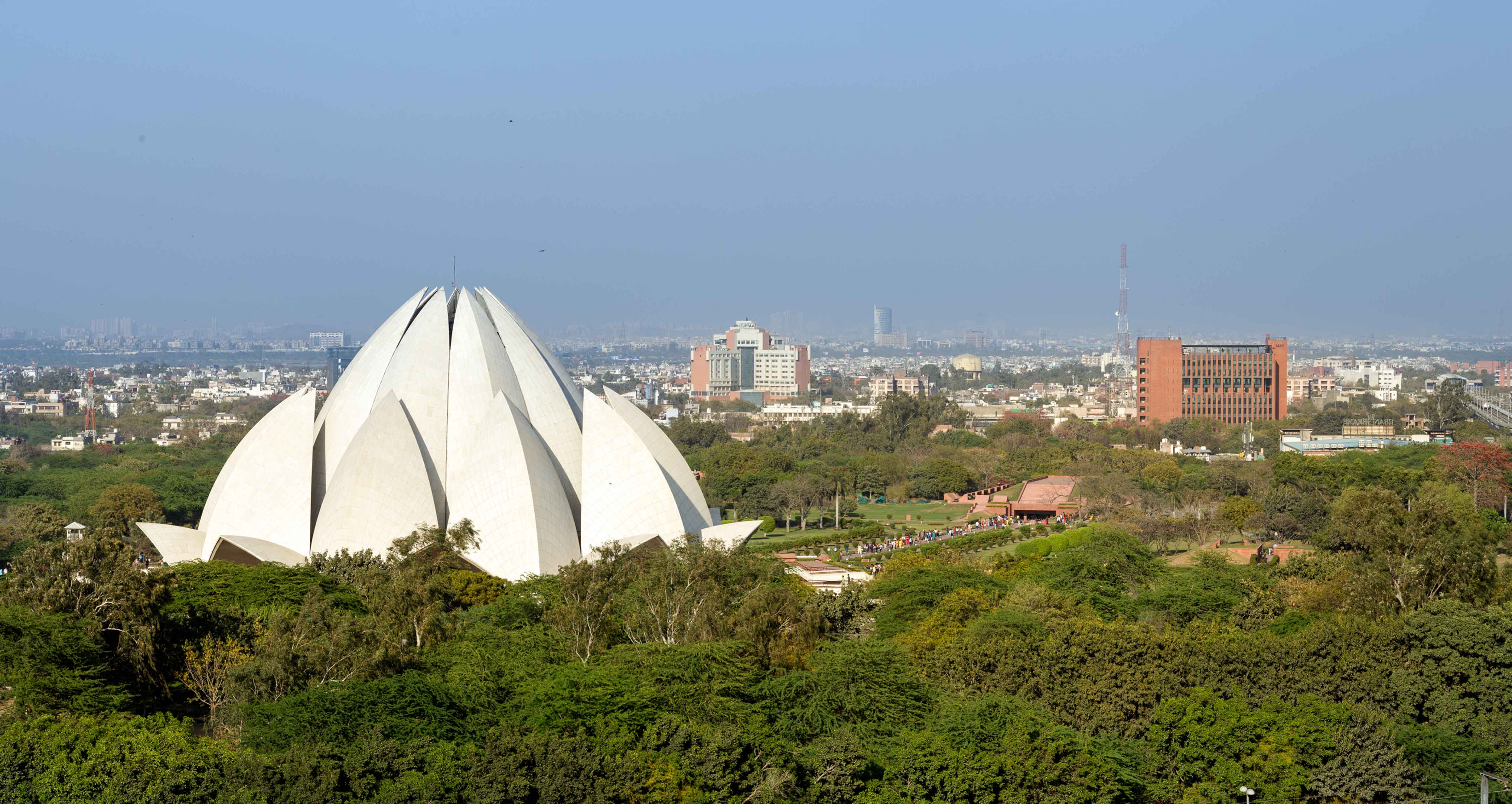
The site adjoins a bustling thoroughfare, sitting across from an east-west metro corridor, and is a stone’s throw from old industrial buildings such as the Modi Flour Mills and the Baha'i House of Worship, an iconic landmark and tourist attraction. This presented an opportunity for the studio to determine the development's overall design vocabulary.
© Noughts & Crosses LLP
© Noughts & Crosses LLP
© Noughts & Crosses LLP
© Noughts & Crosses LLP
© Noughts & Crosses LLP
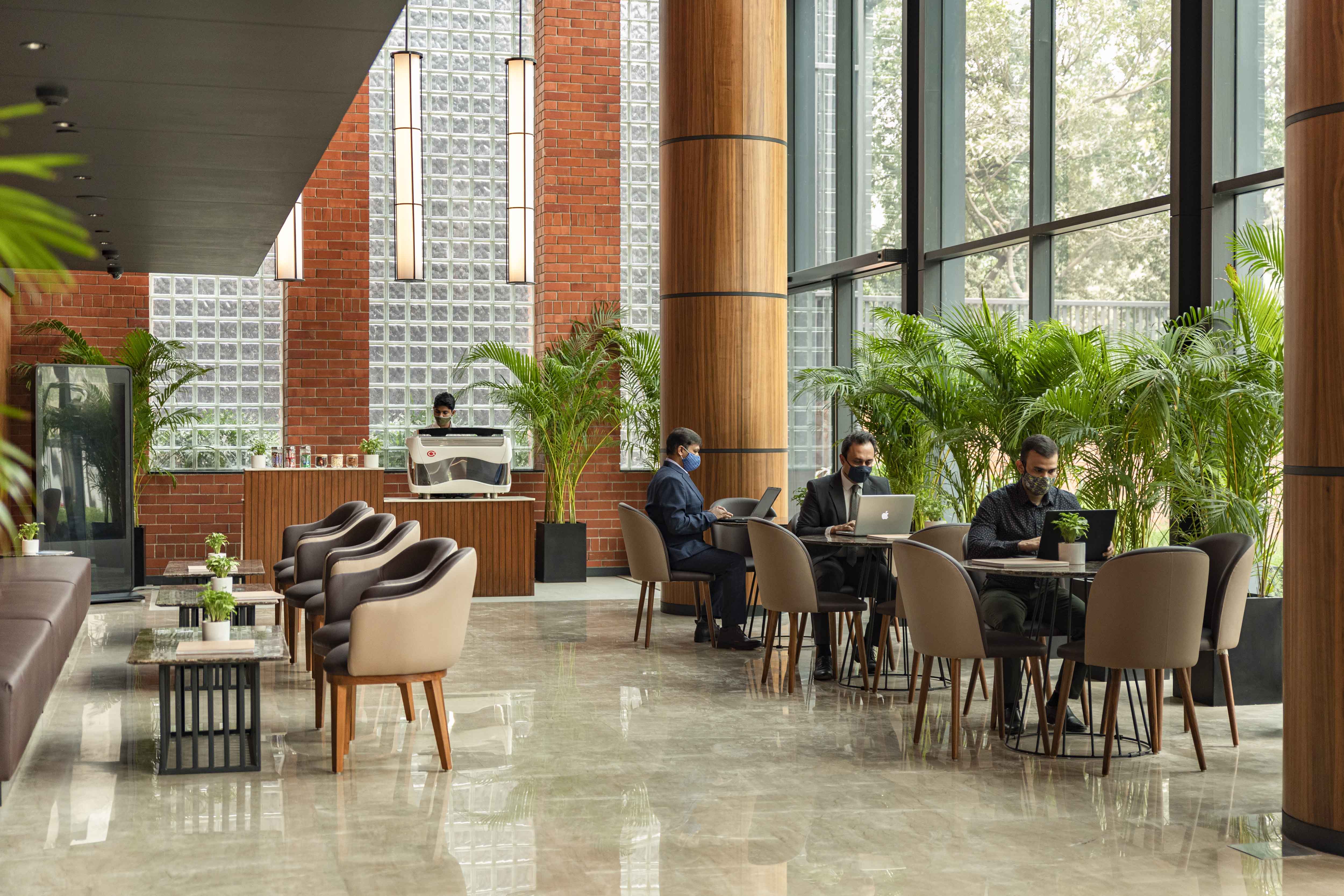
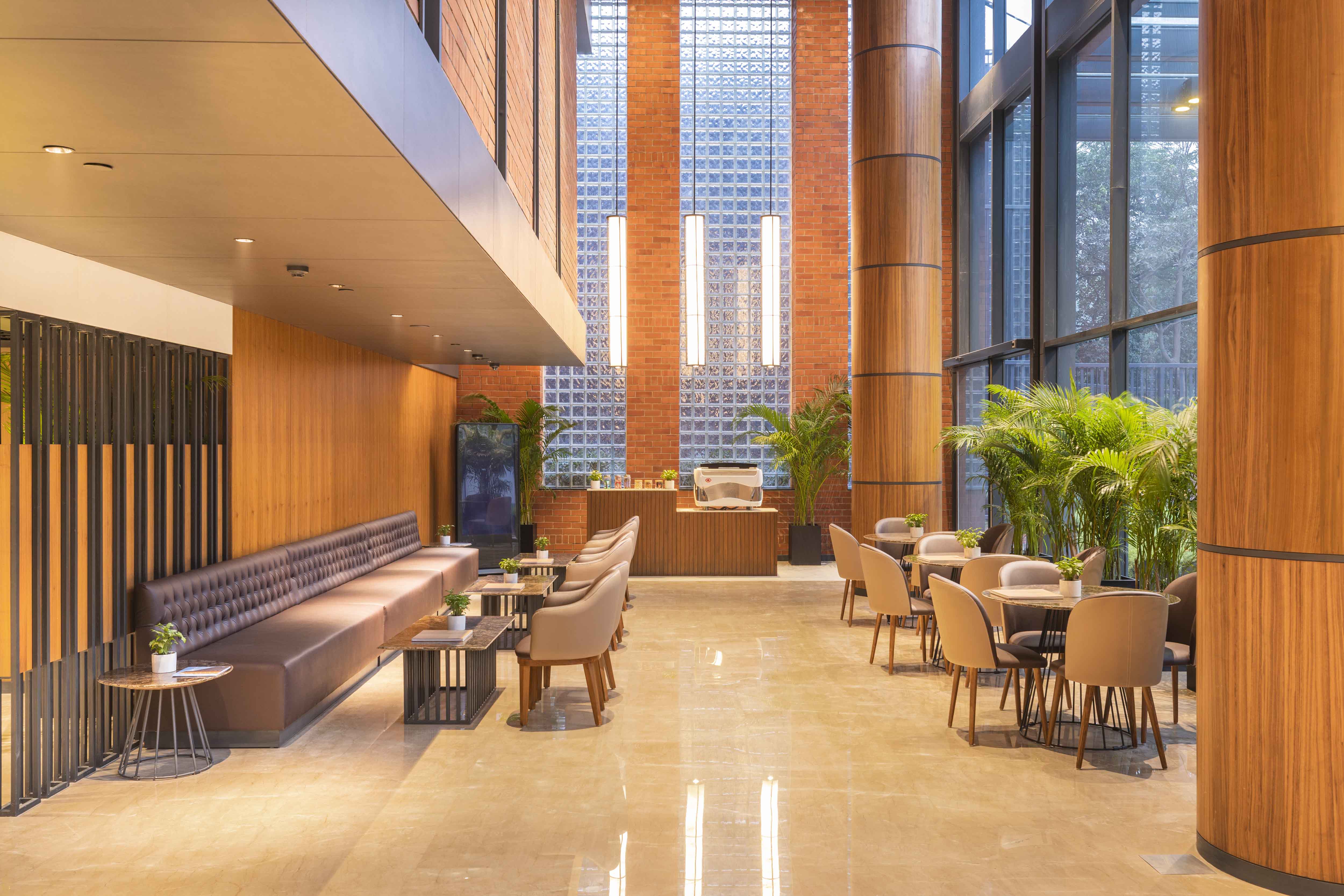
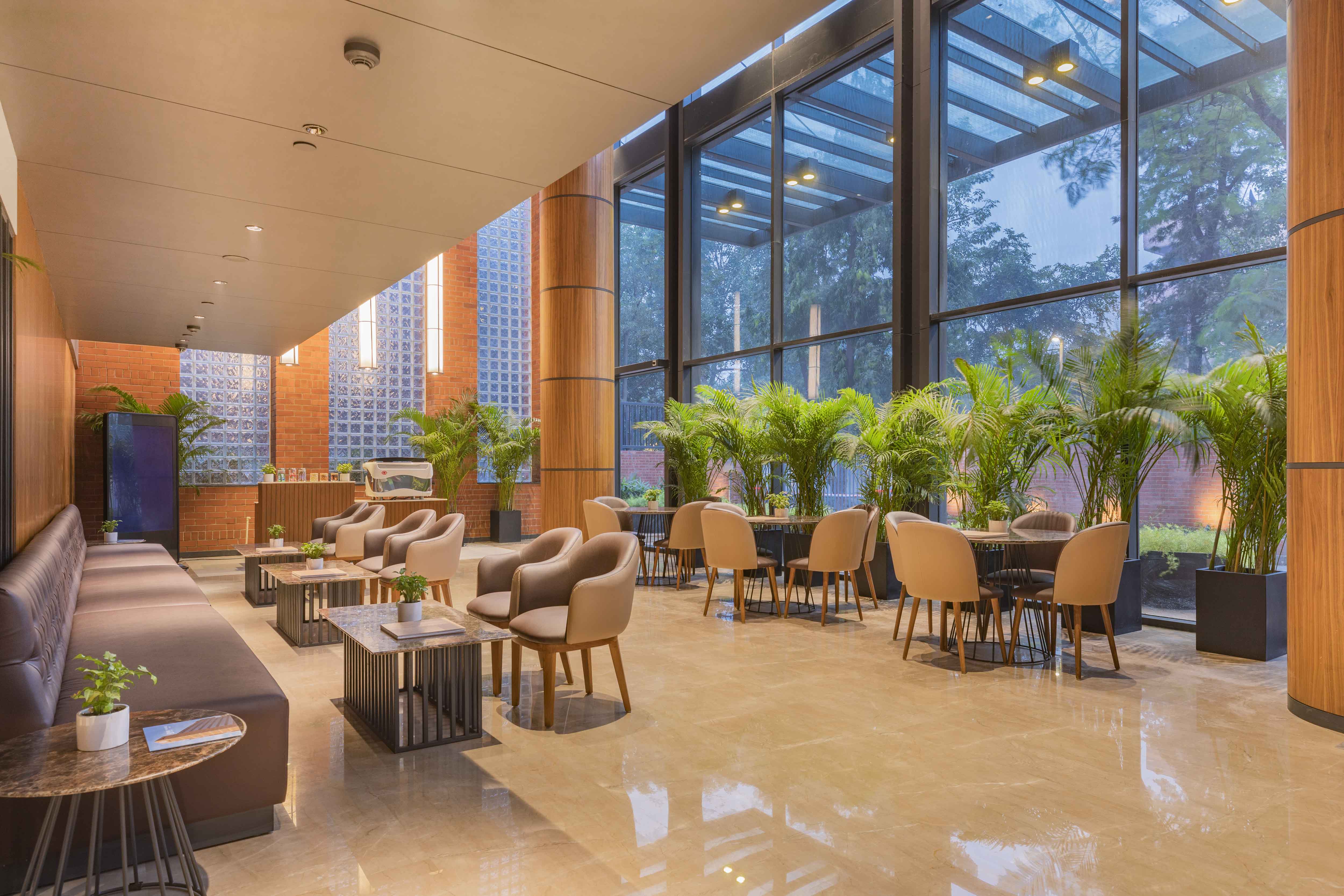
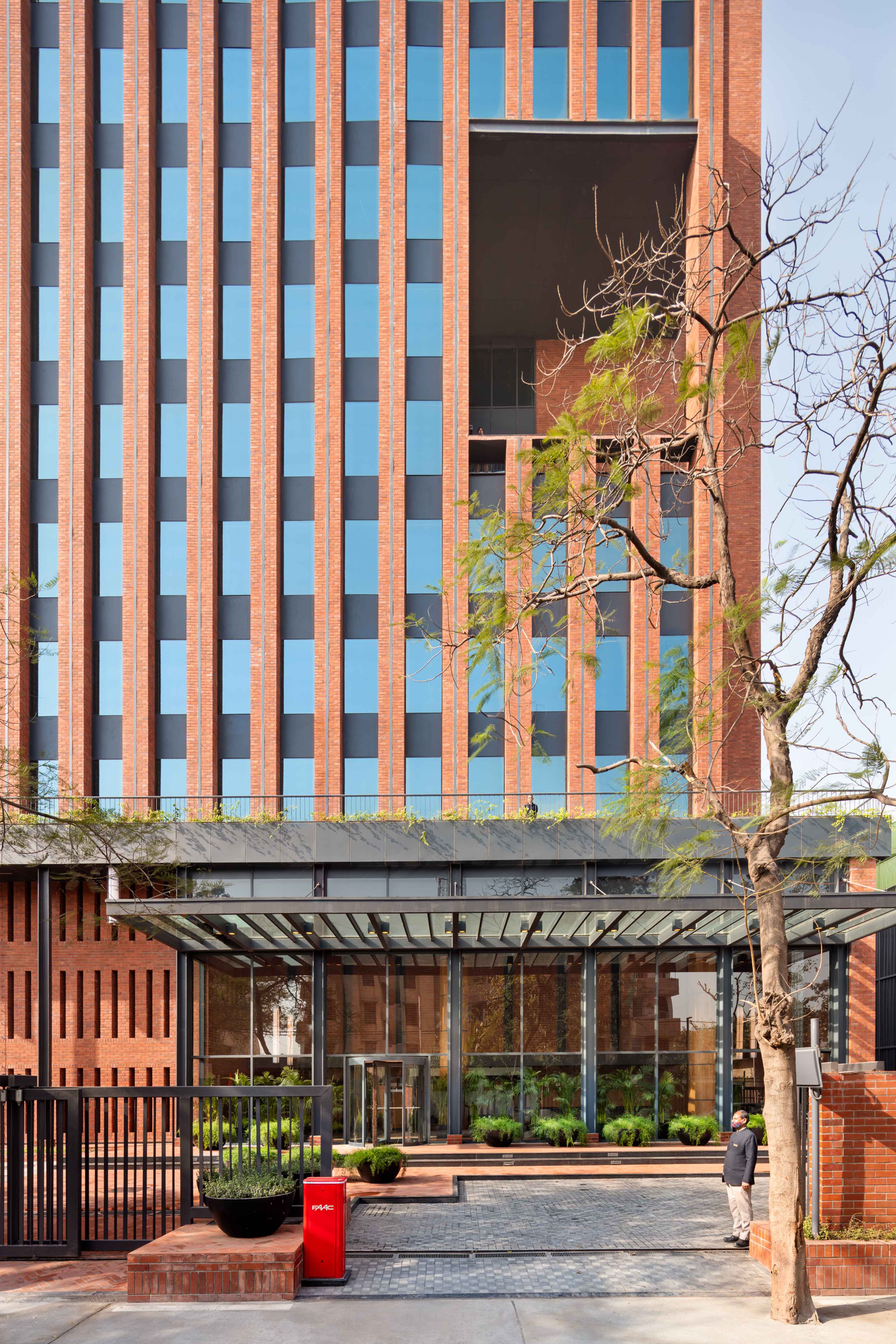
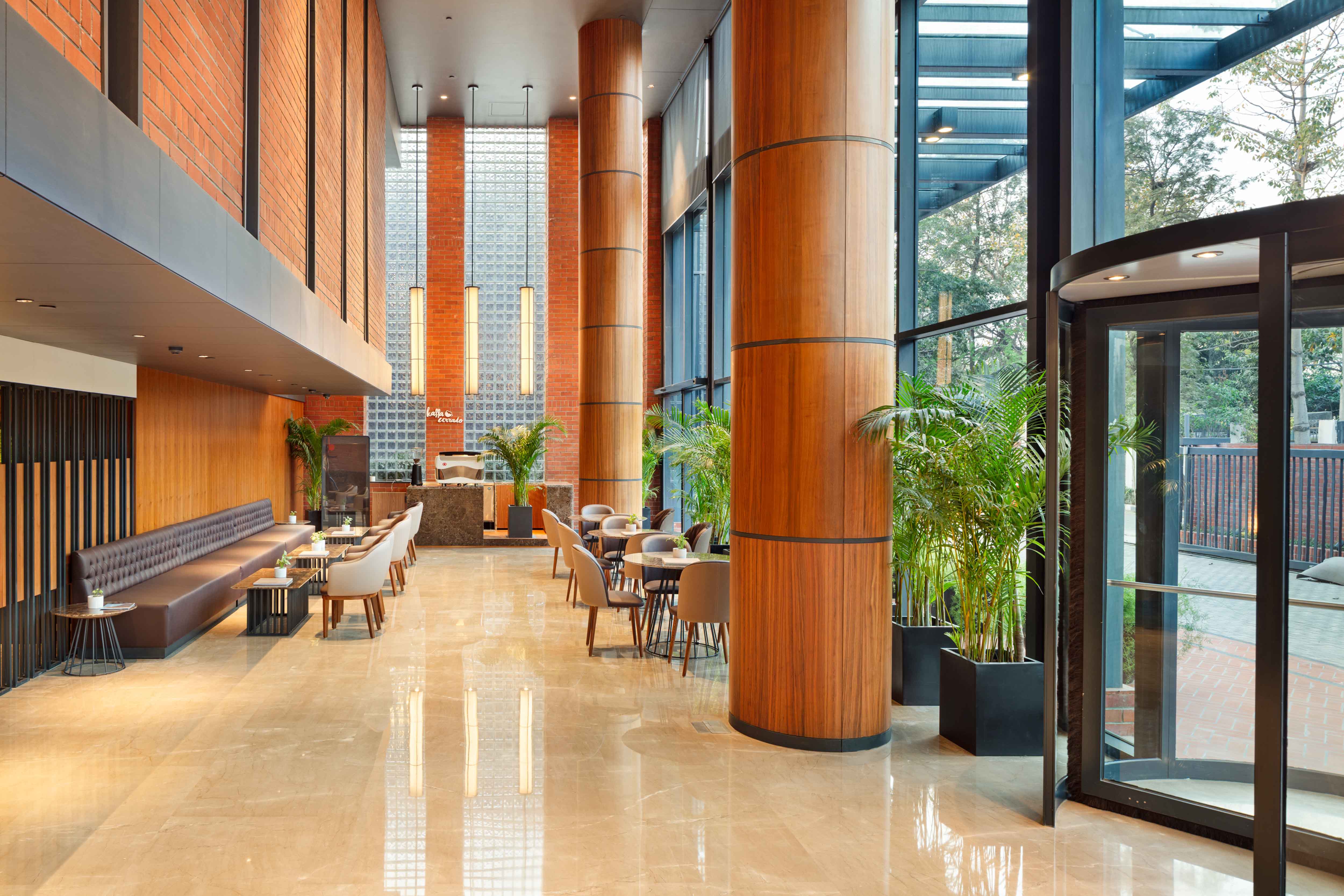
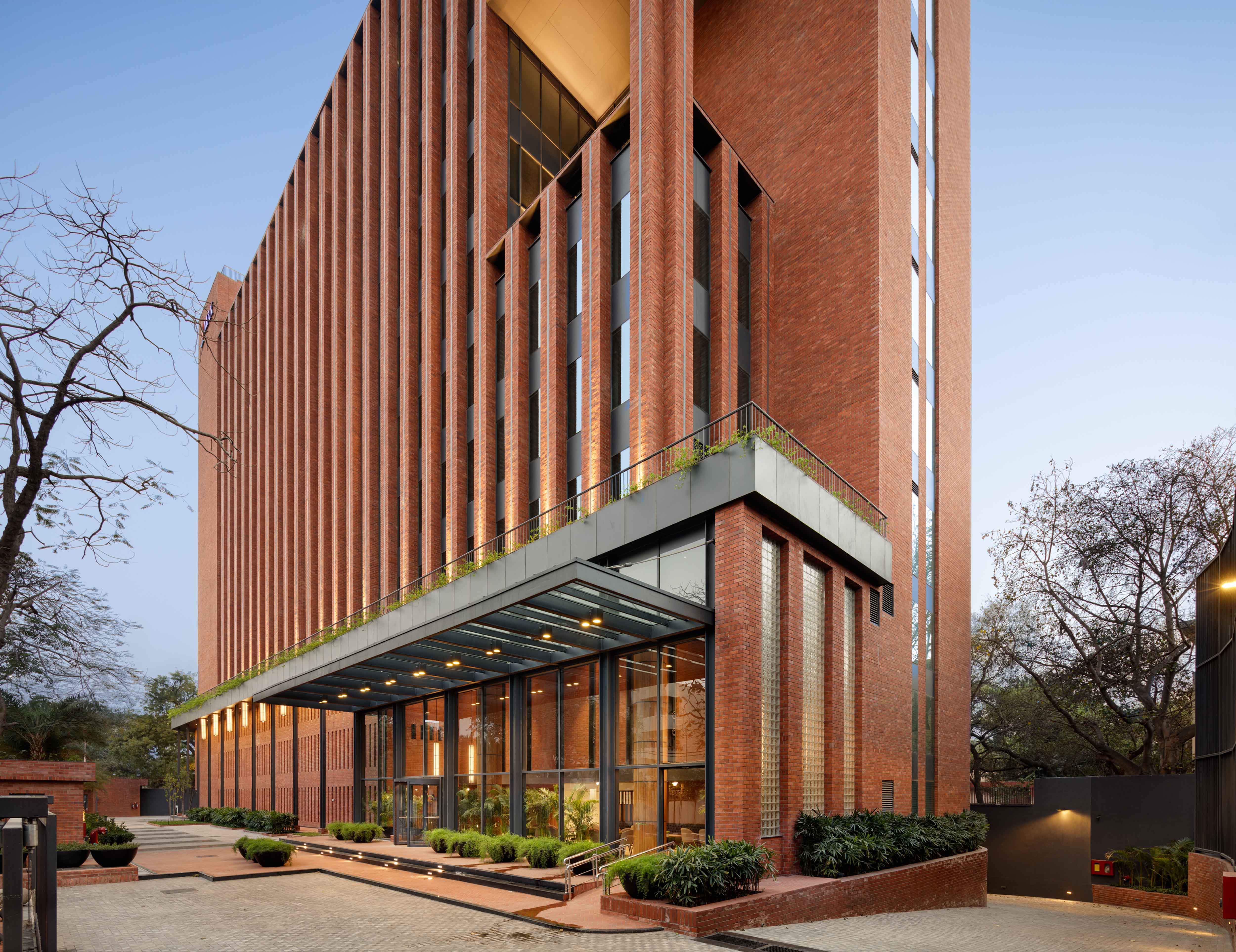
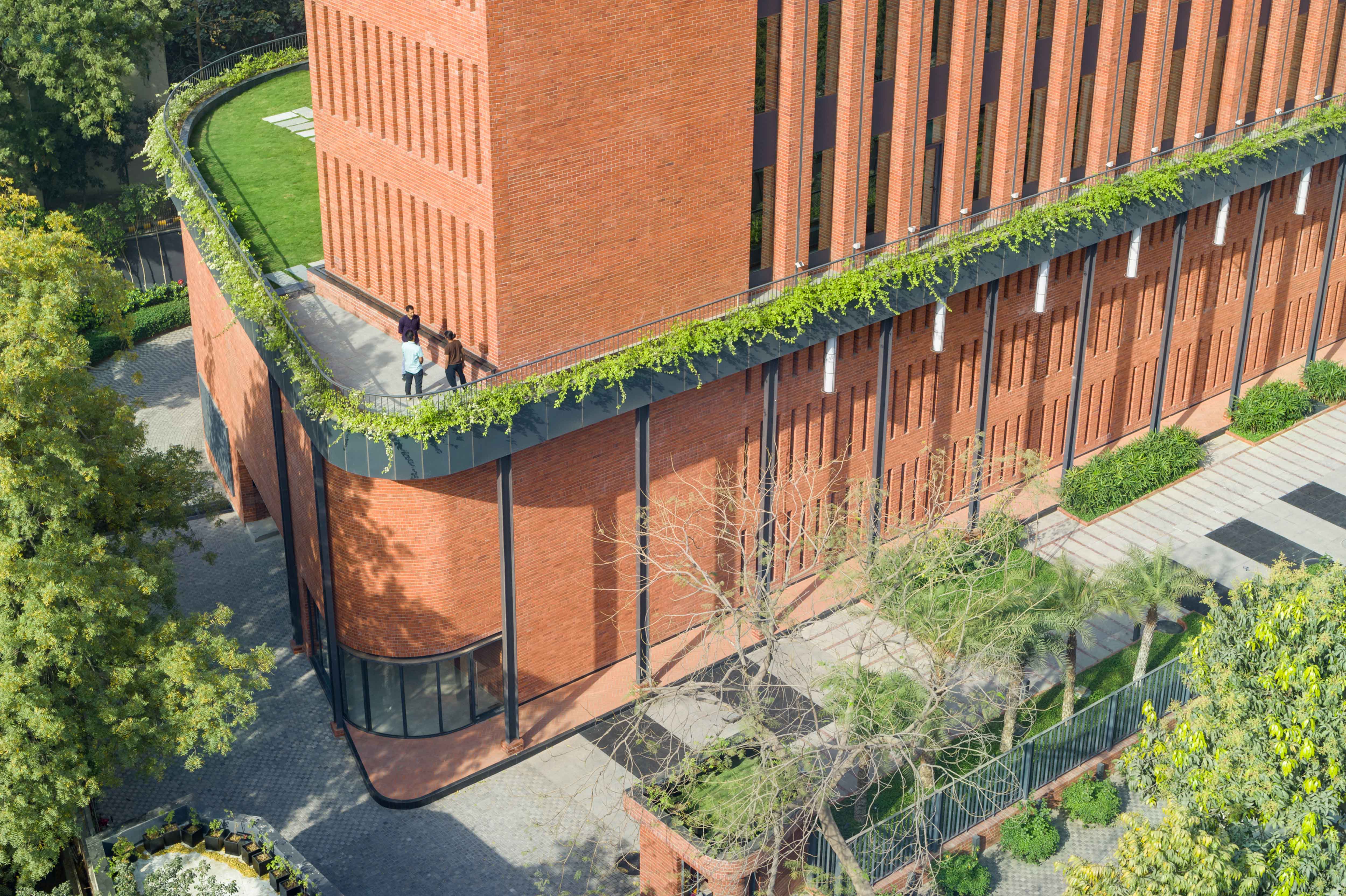
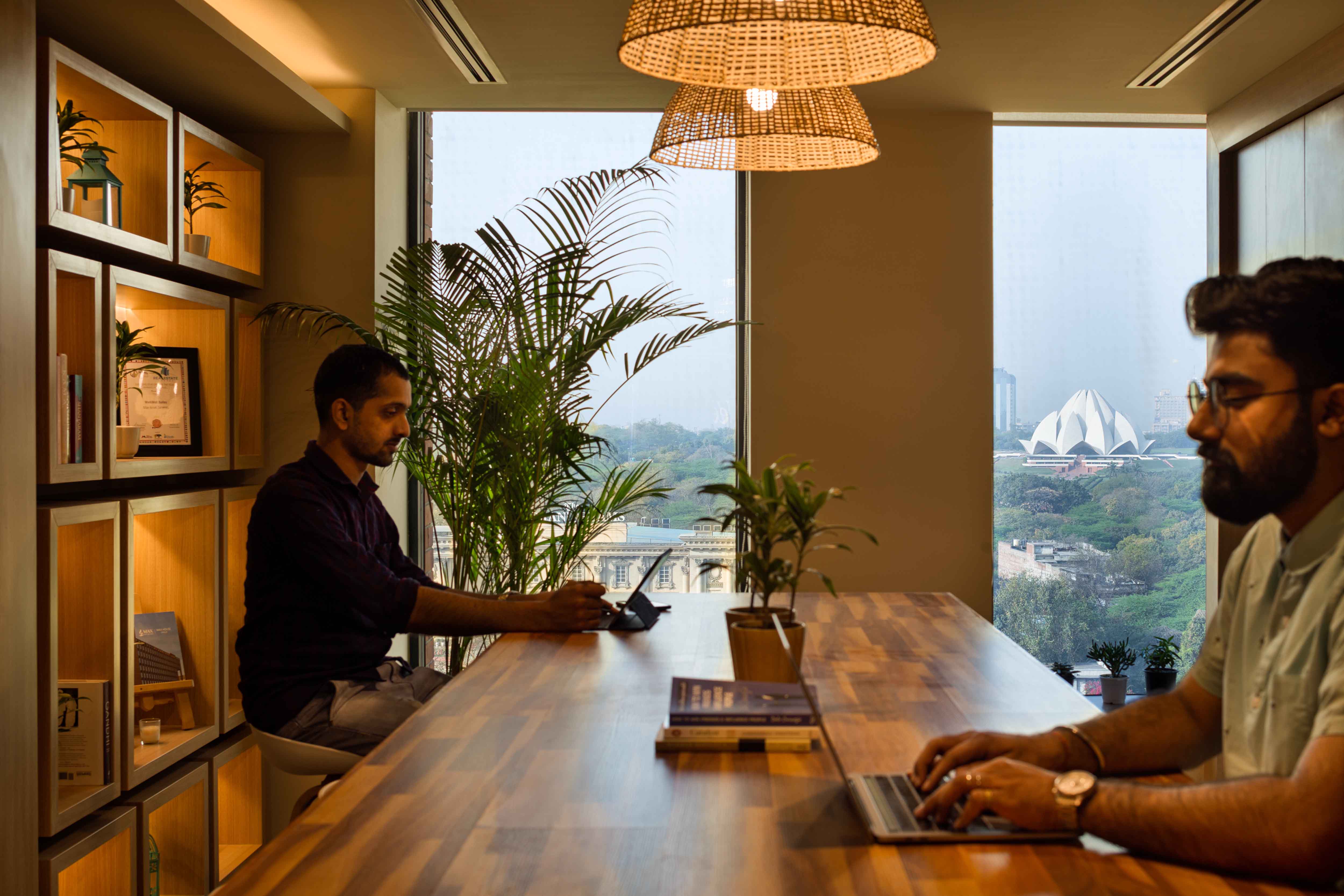
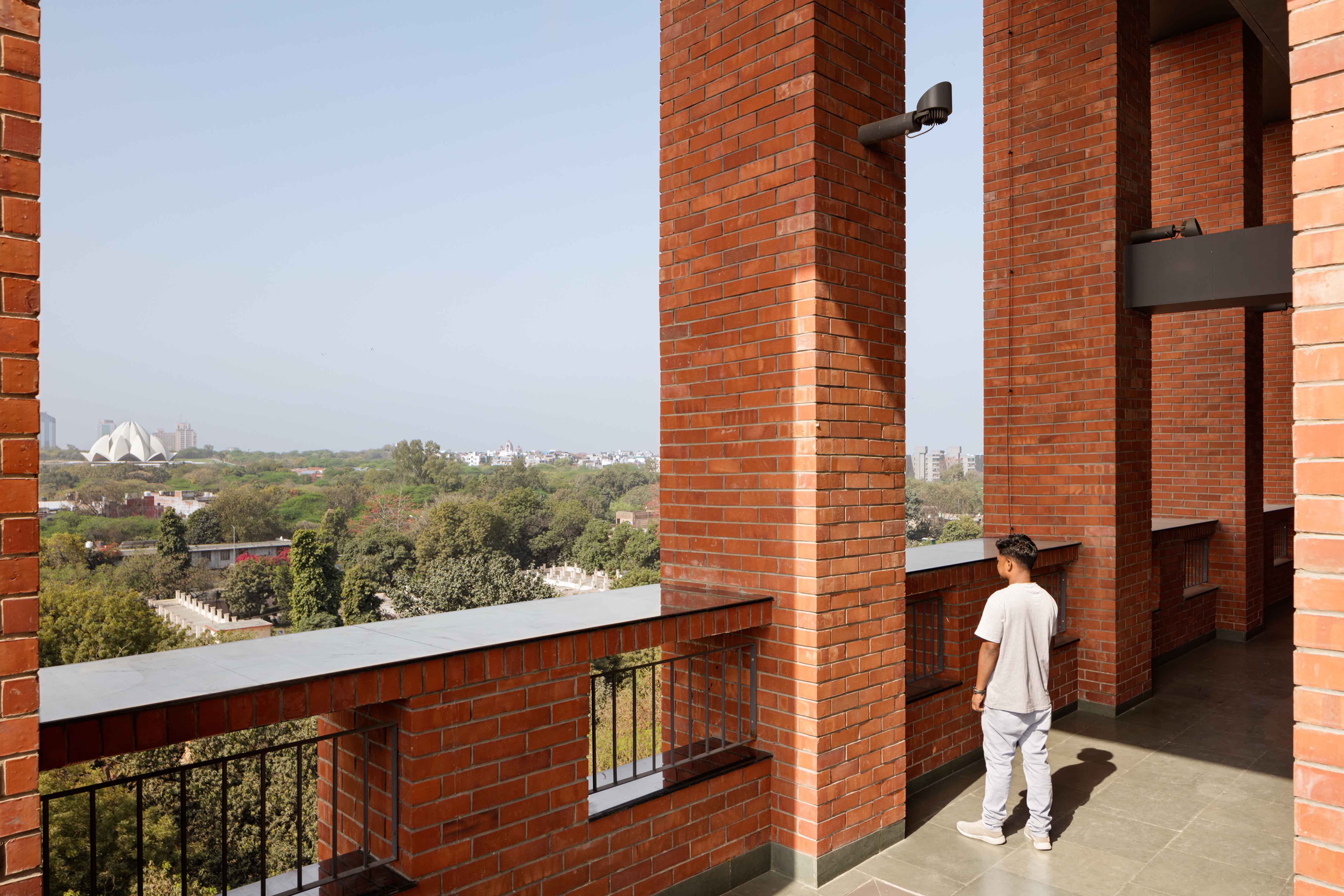
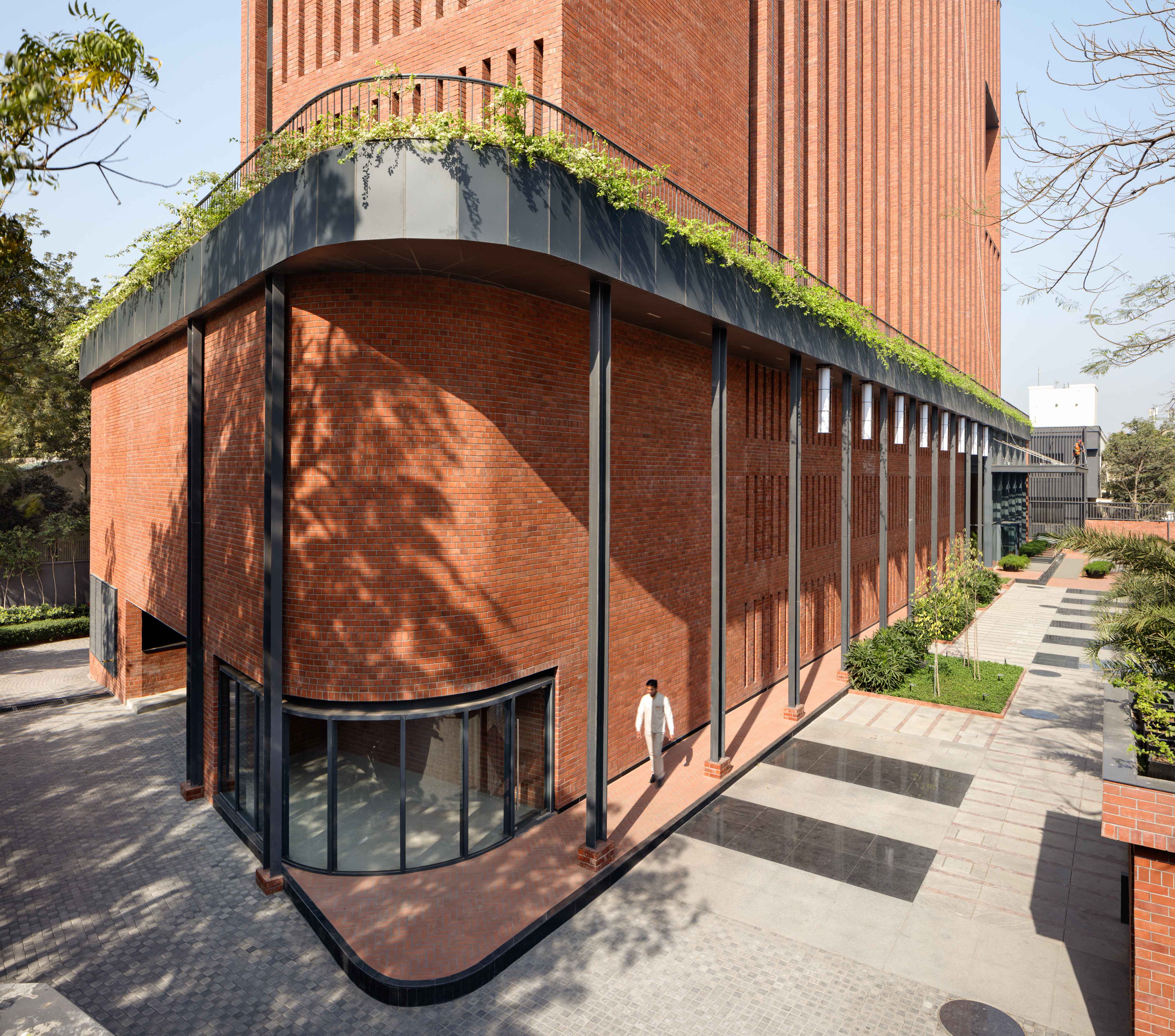
Since the development is in proximity to the Yamuna floodplain, the high water table meant that soil conditions in the area would prove to be unfavourable for deep excavations. Additionally, traffic impact analyses necessitated the need for a two to three-basement deep vehicular parking, thus posing an unusual challenge for the design team. To account for vehicular parking for the eight-storey Block A that was to come up on the site, a parking podium was devised that simultaneously opens up volume for the creation of a spacious triple-height reception lobby at the ground level. The resultant intervention also optimizes vistas — while the reception lobby offers occupants views of lush vegetation flanking the building, the terrace level from the first floor and onwards afford virtually unimpeded views of the Baha'i House of Worship, and the skyline beyond. Moreover, the podium has so been configured, along the building’s northwest, that its height is roughly the same as that of the adjacent railway colony, thereby maximizing views along this part of the building as well.
© Noughts & Crosses LLP
© Noughts & Crosses LLP
© Noughts & Crosses LLP
© Noughts & Crosses LLP
© Noughts & Crosses LLP
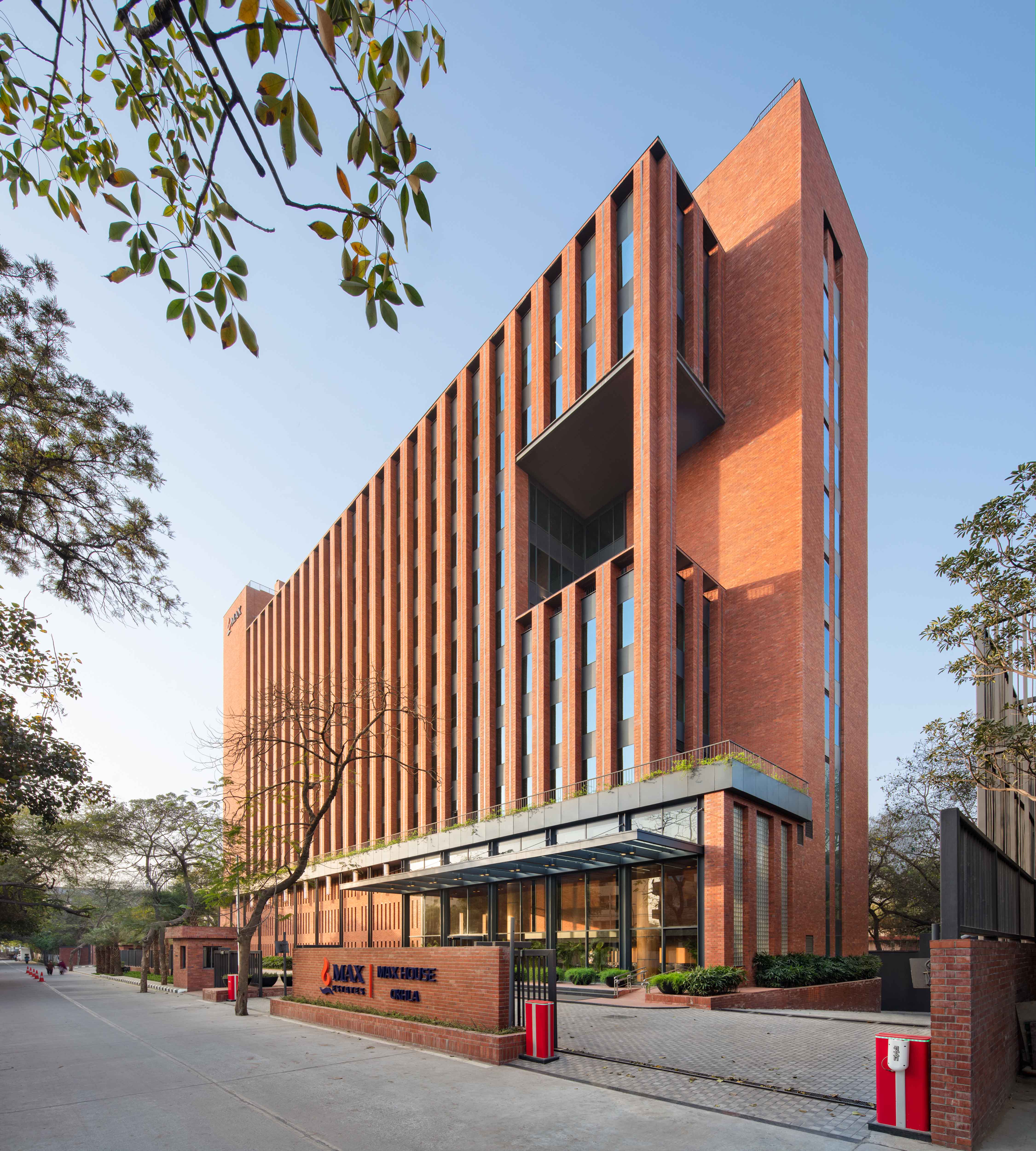
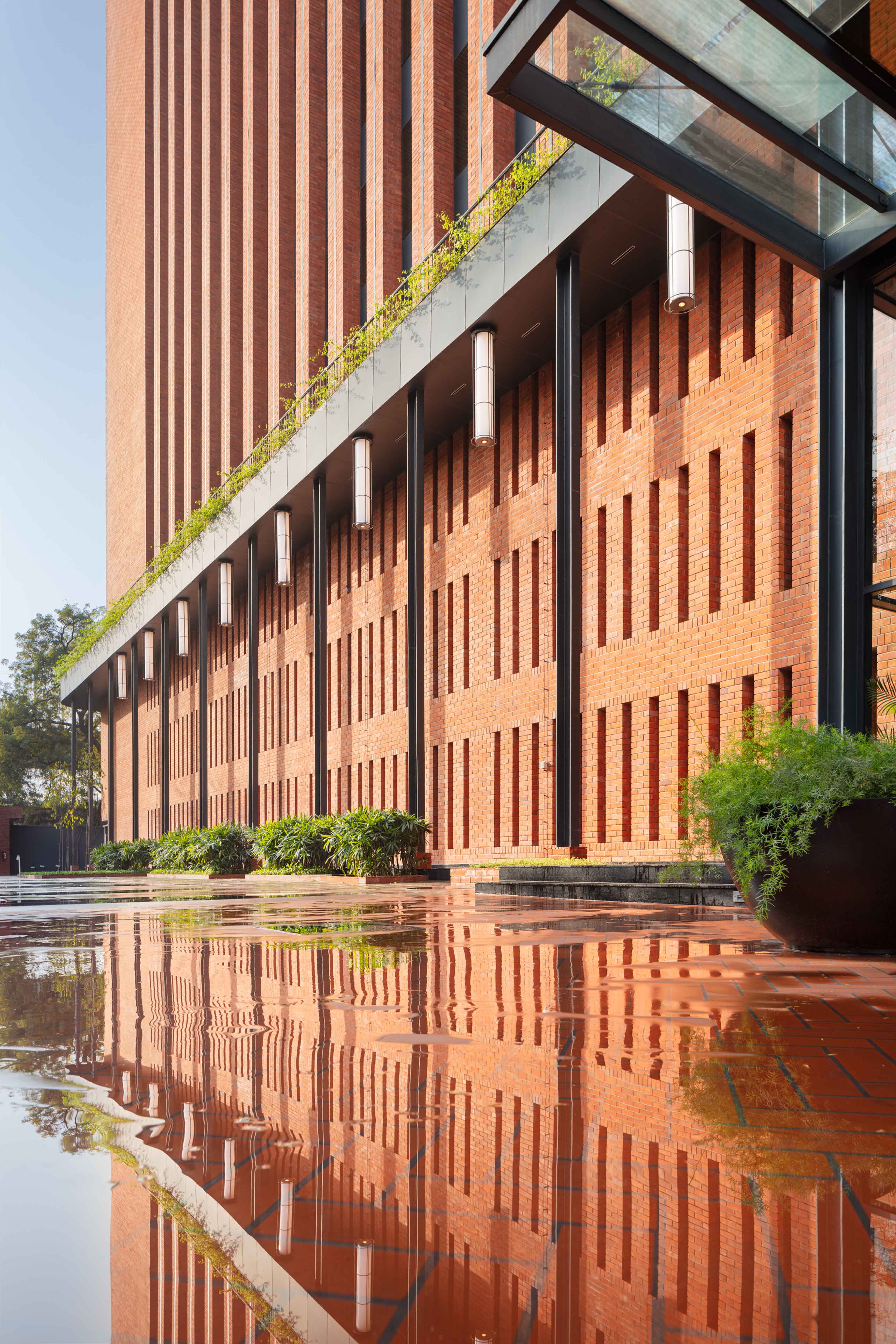
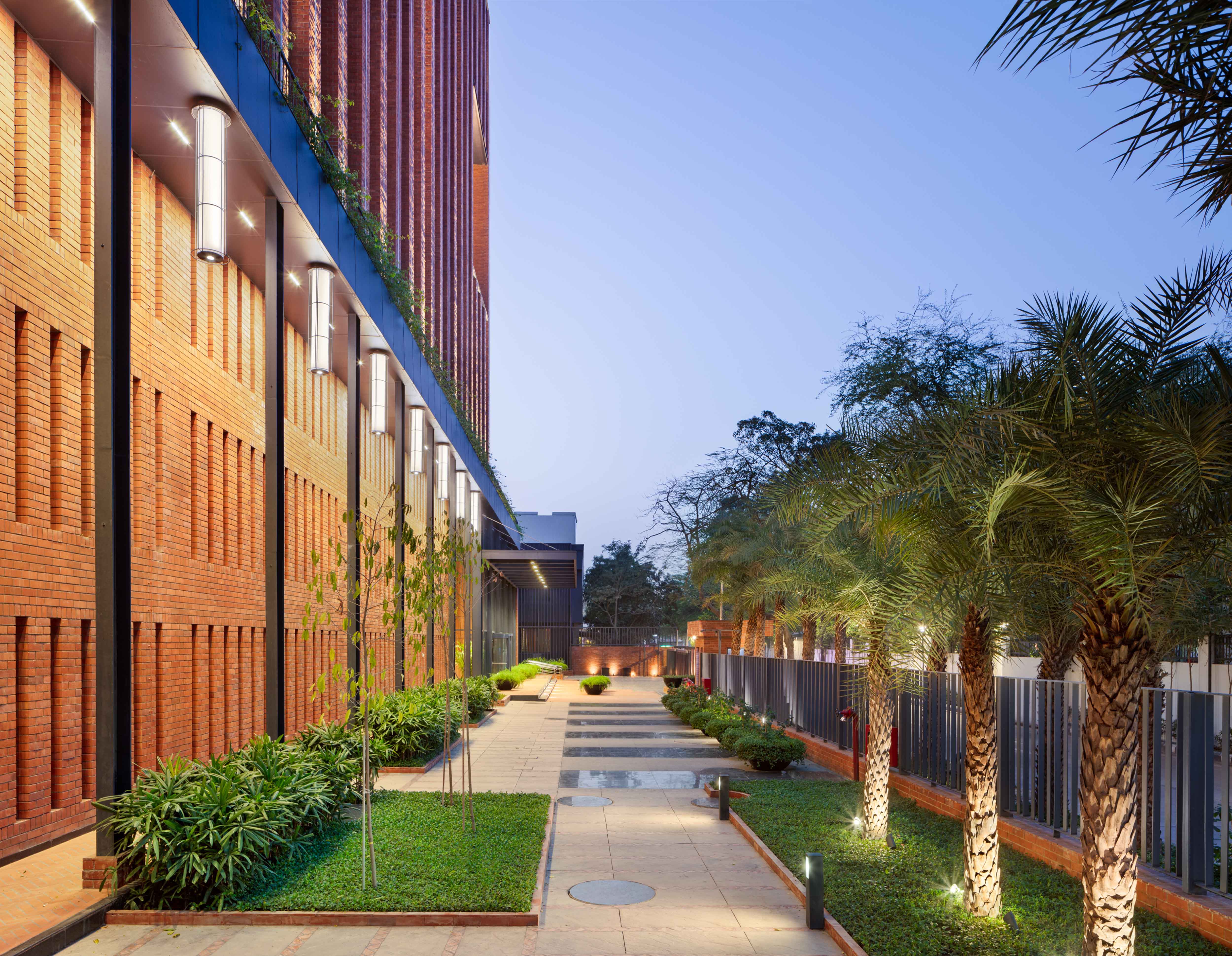
The buildings are planned to create a wide promenade on the ground level, to facilitate vehicular access up to the building line. The site periphery, in turn, has been reserved for pedestrian access. This access has been transformed through two primary interventions — the setting back of the site boundary to cede space to the city and the neighbouring traffic, and the softening of the site boundaries through landscaping to enable greater physical and visual connection between the complex and its immediate context. Through the formation of this expansive, almost porous forecourt, Max House integrates itself with its surroundings, a marked departure from typical gated commercial developments.
© Noughts & Crosses LLP
© Noughts & Crosses LLP
© Noughts & Crosses LLP
© Noughts & Crosses LLP
© Noughts & Crosses LLP
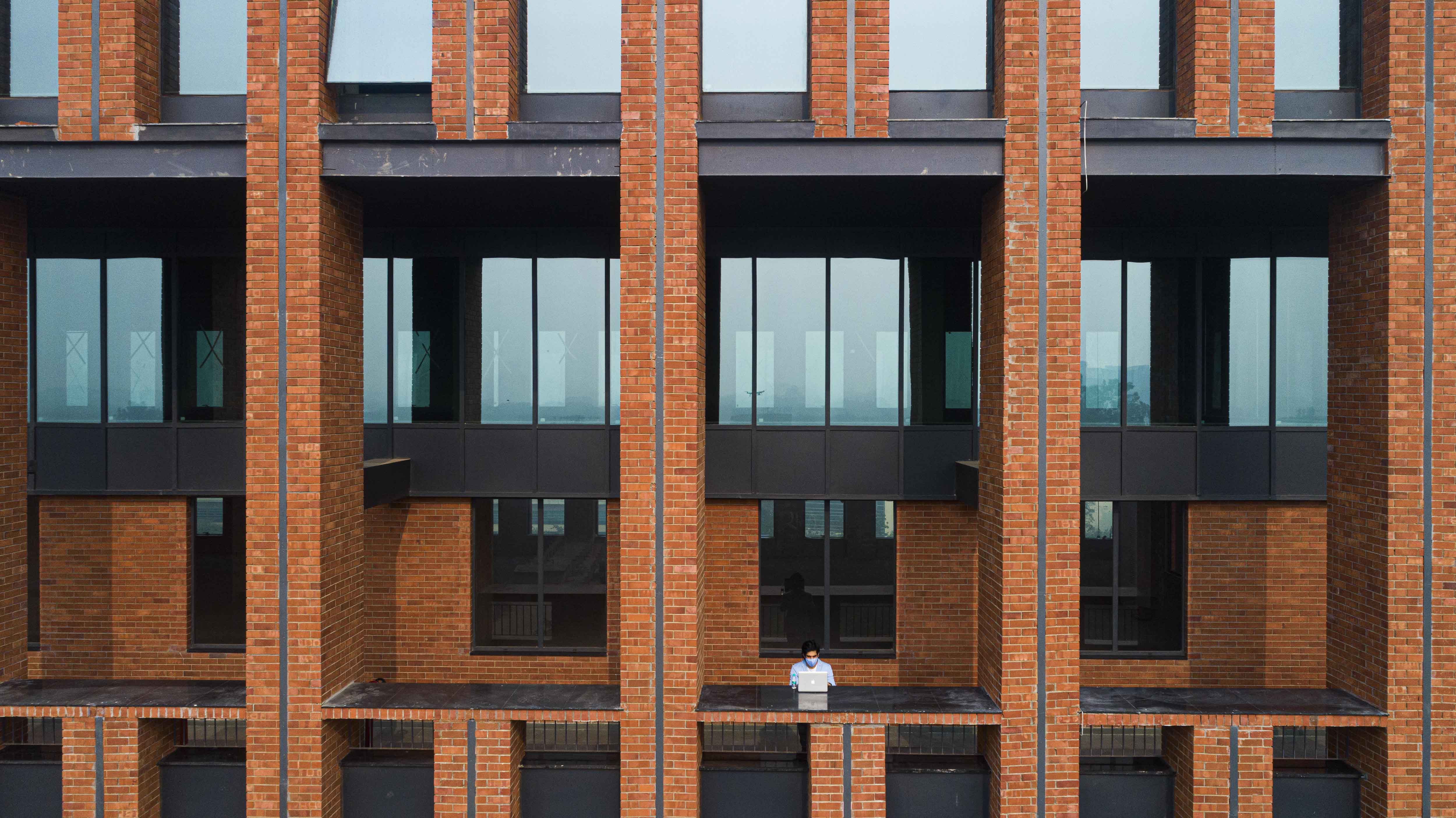
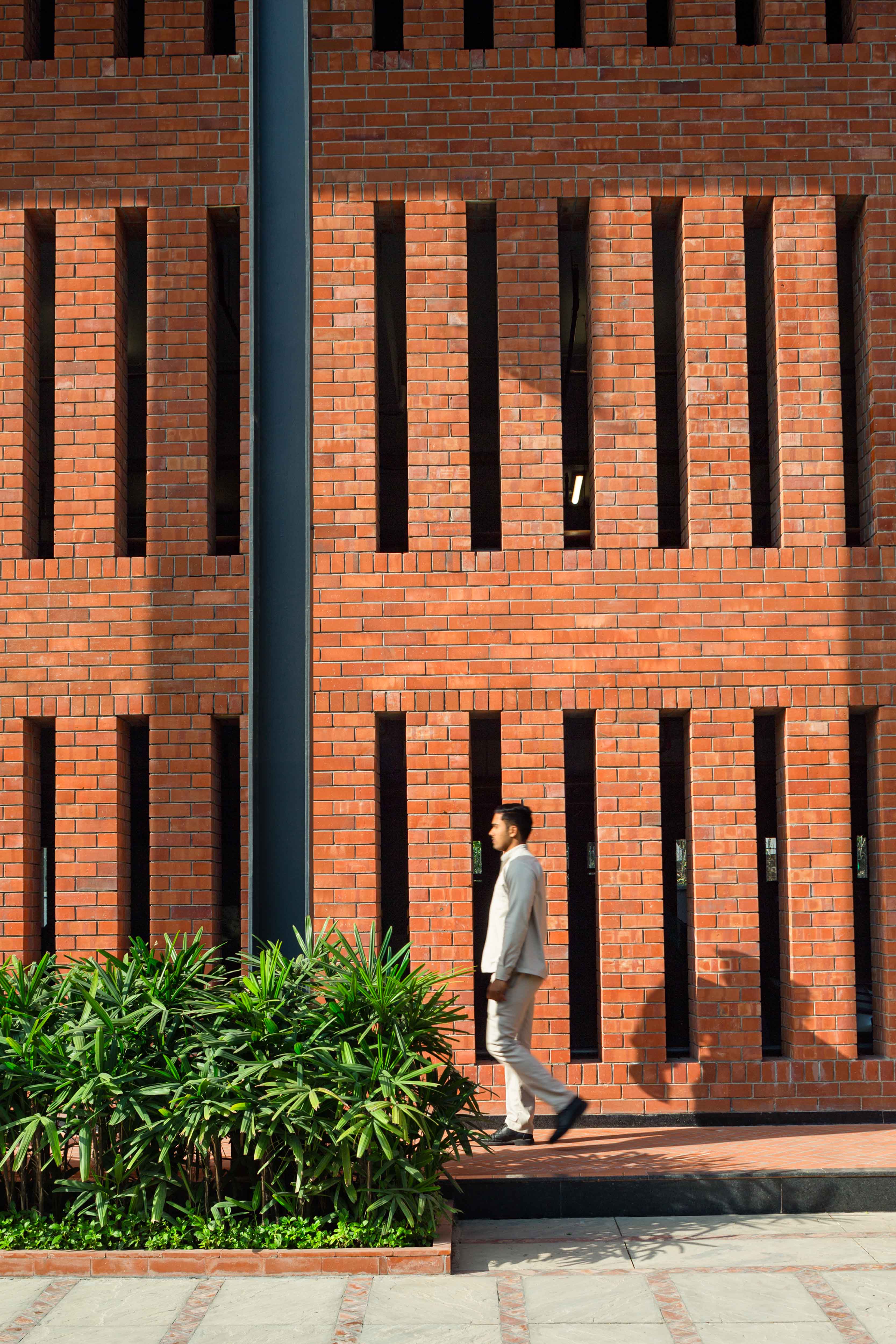
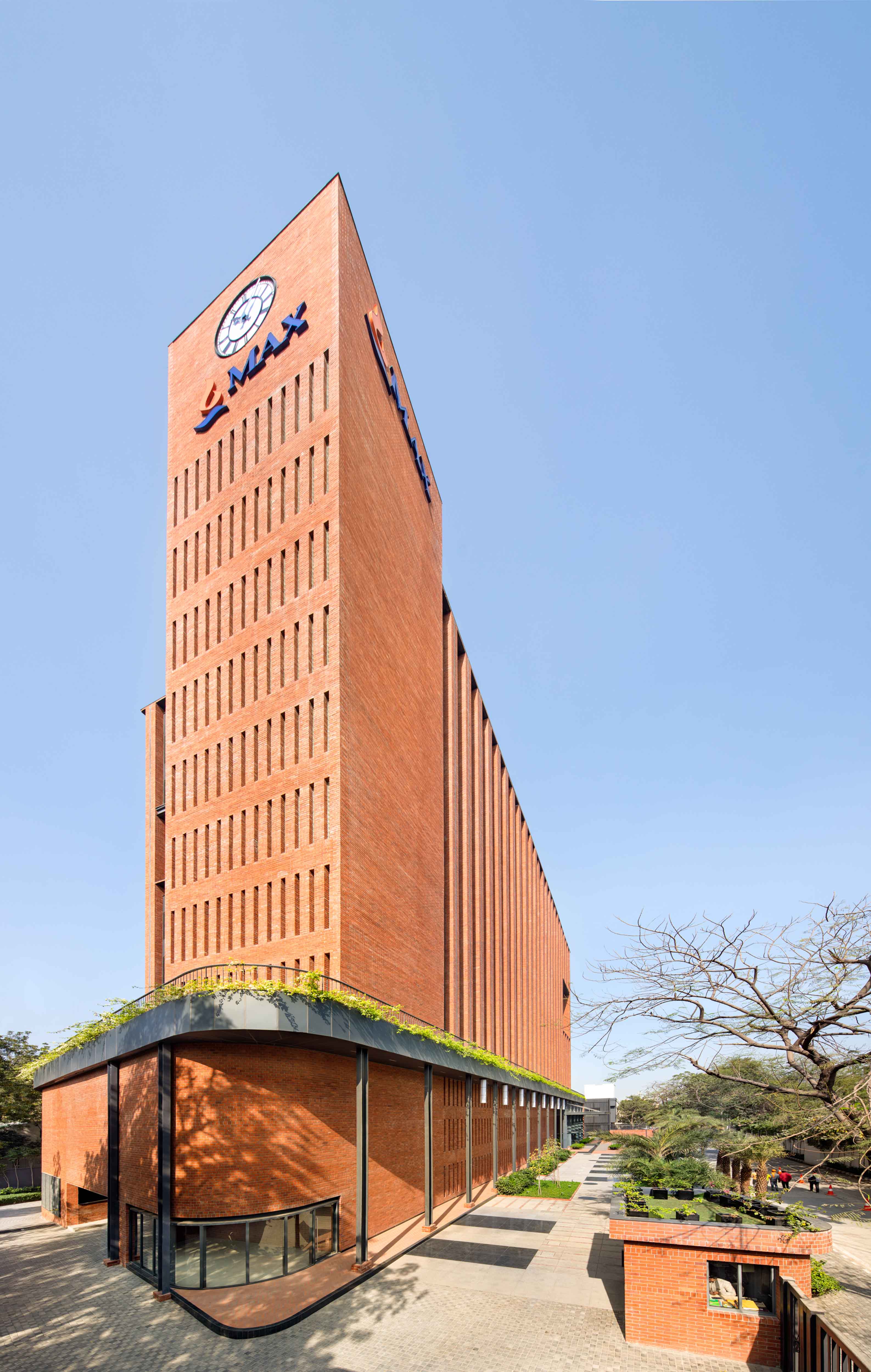
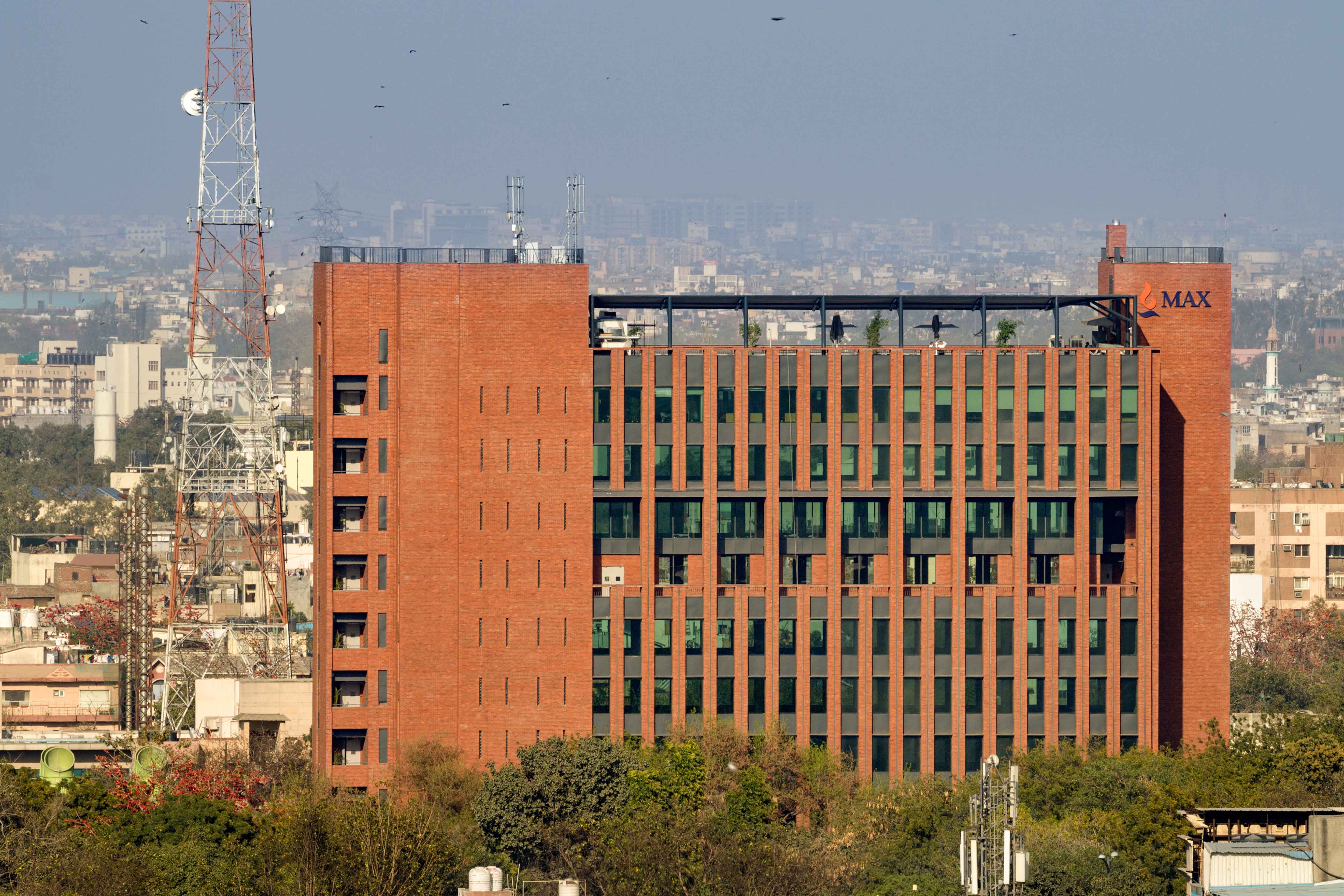
Distinguishing itself from its neighbours while remaining firmly embedded in its industrial context, the design vocabulary of Max House extends the narrative set by the old Modi Flour Mills in the vicinity and adapts it for a contemporary workspace. The tower’s façade references the Flour Mills building through its distinctive bands of alternating brick and glass, punctuated by spandrel panels, deep-set balconies and community terraces. While the ground floor is primarily allocated for the podium parking spaces, the first floor features extended terraces, doubling as an elevated park for the users.
© Noughts & Crosses LLP
© Noughts & Crosses LLP
© Noughts & Crosses LLP
© Noughts & Crosses LLP
© Noughts & Crosses LLP
© Noughts & Crosses LLP
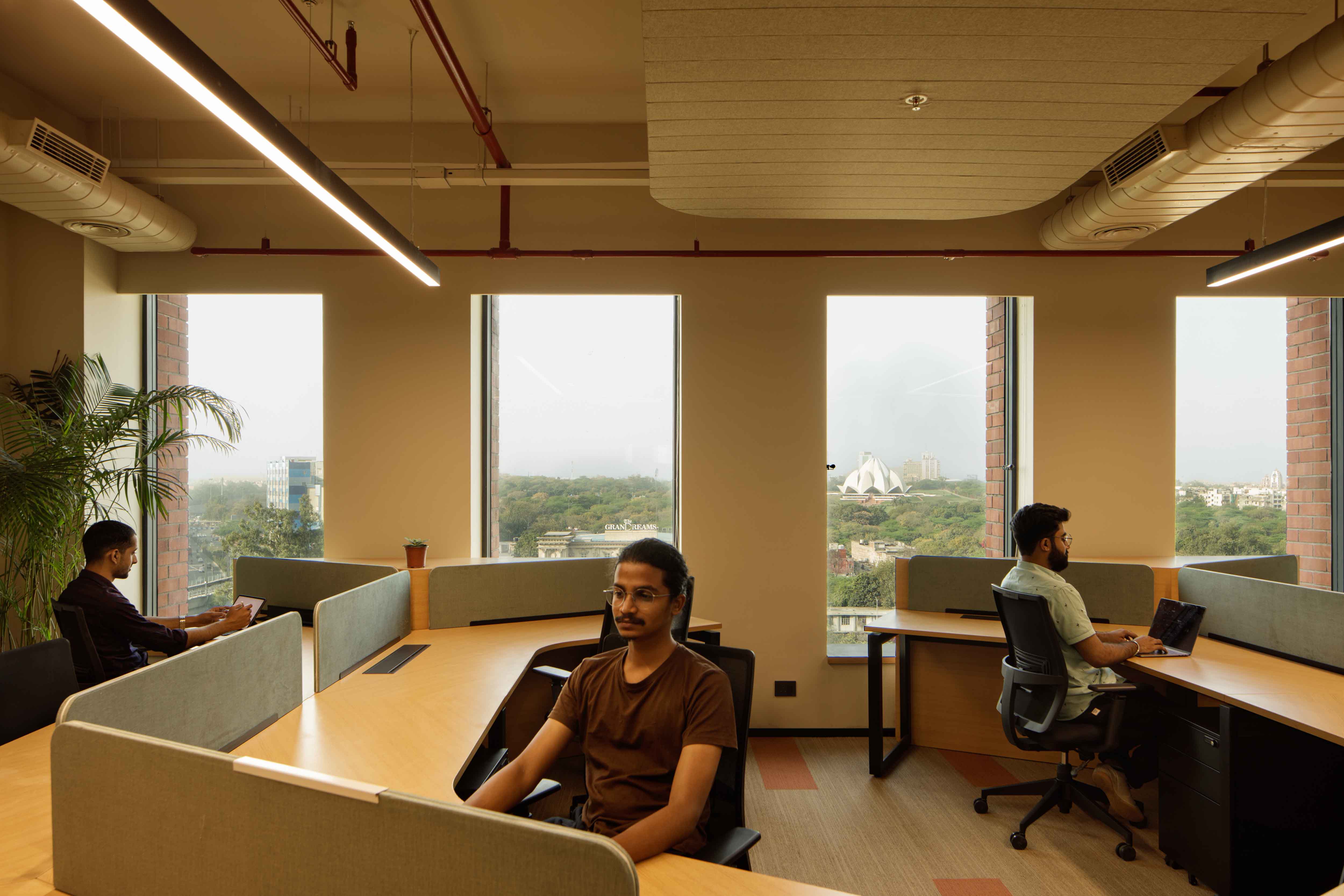
The tower features a floor-to-ceiling height of 3.75 metres. The floor plates and the modulating façade have been designed to ensure optimal daylight penetration without concurrent glare, almost eliminating the dependence on artificial means of lighting in the day. The lift and service cores are positioned along the two ends of the buildings, creating an open, rectangular floor plate that allows for maximum flexibility in terms of use. The floor plate configuration, in conjunction with the facade’s significantly low wall-to-window ratio of 60:40 and shading spandrels to cut down solar glare, significantly elevate the passive design parameters of the building, a unique proposition in new-age office building design. The rooftop is designed to accommodate an event space and al fresco dining while providing visitors panoramic vistas of the surrounding landscape.
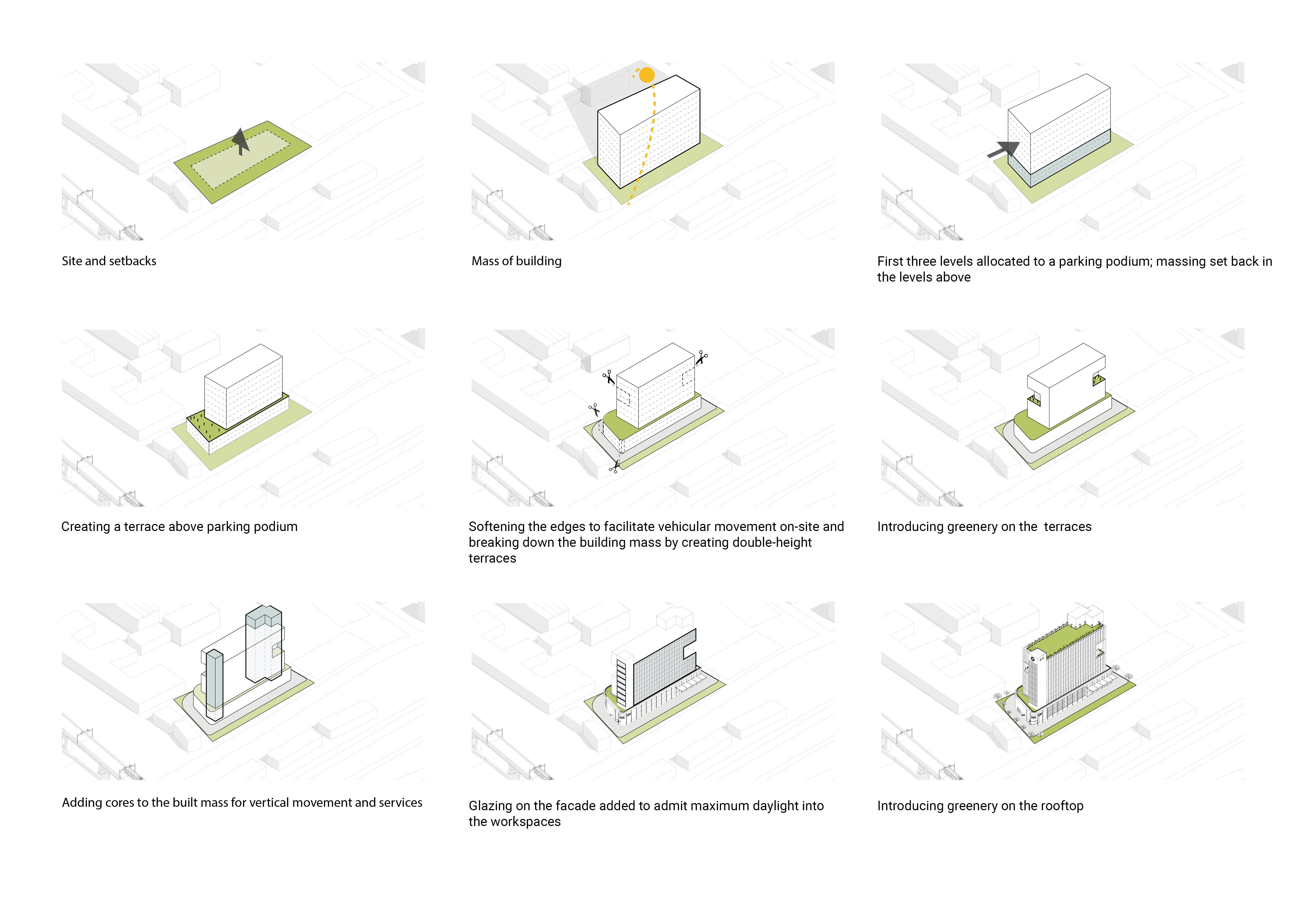
Building Development © Studio Lotus
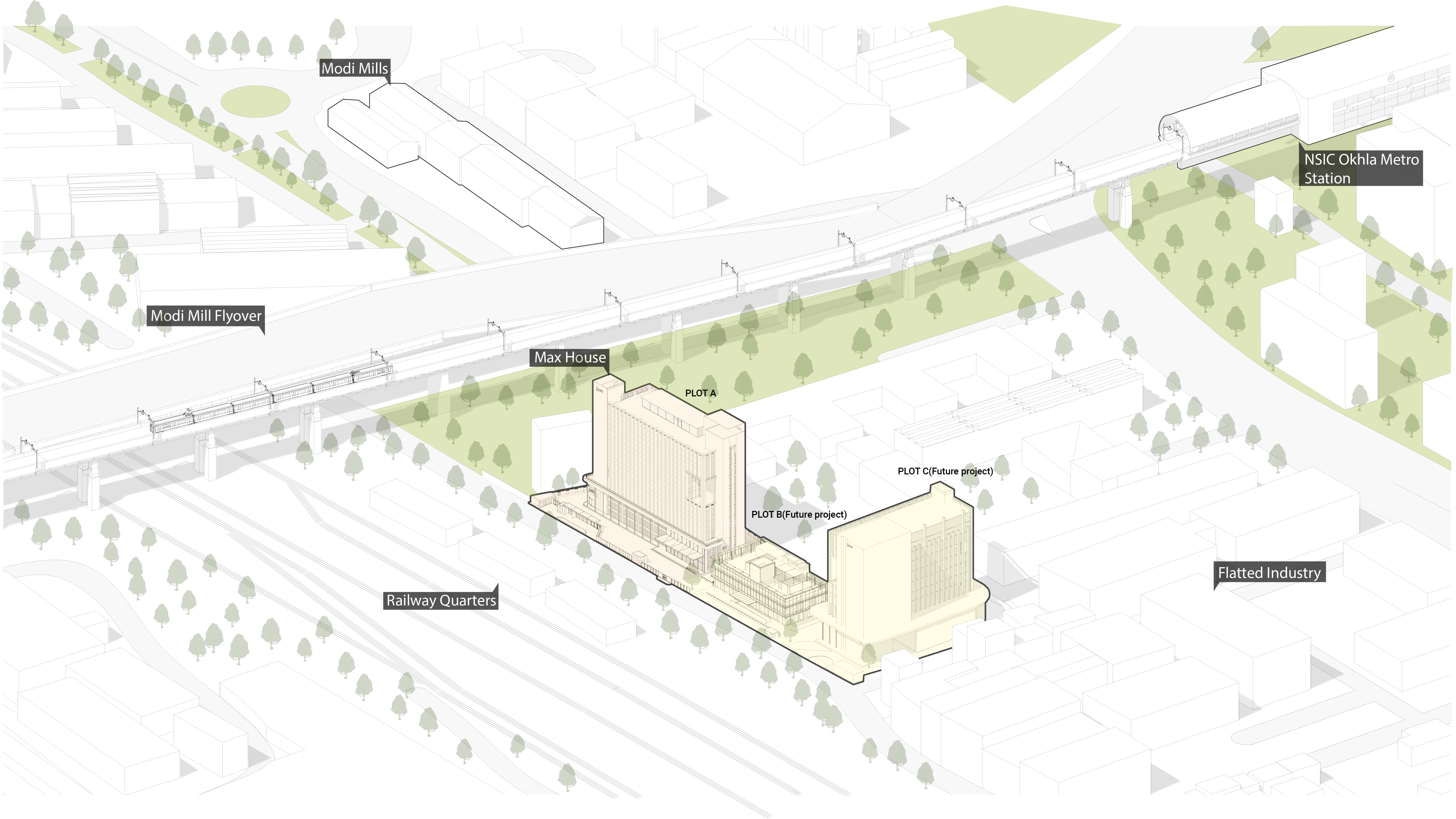
Site Context © Studio Lotus
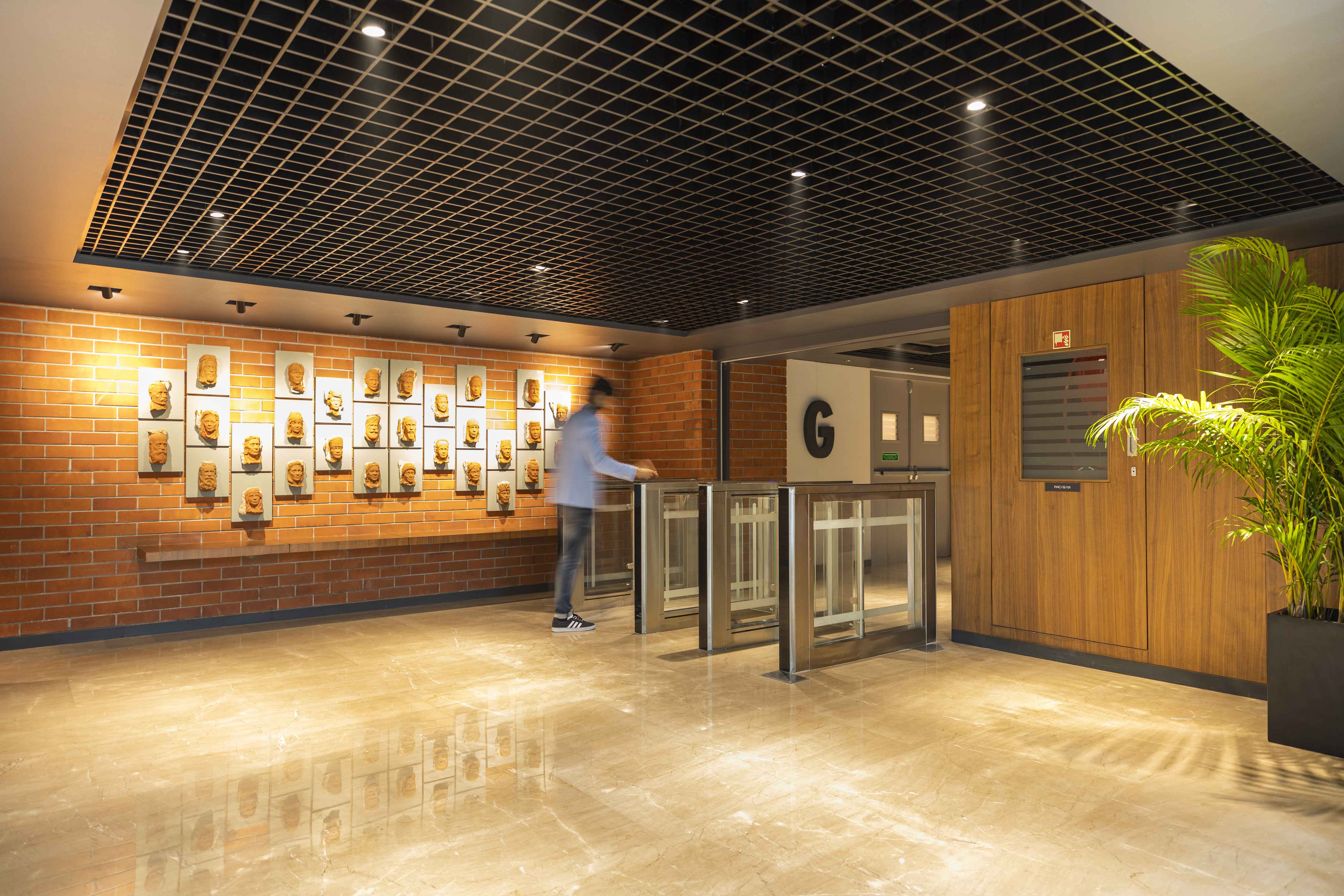
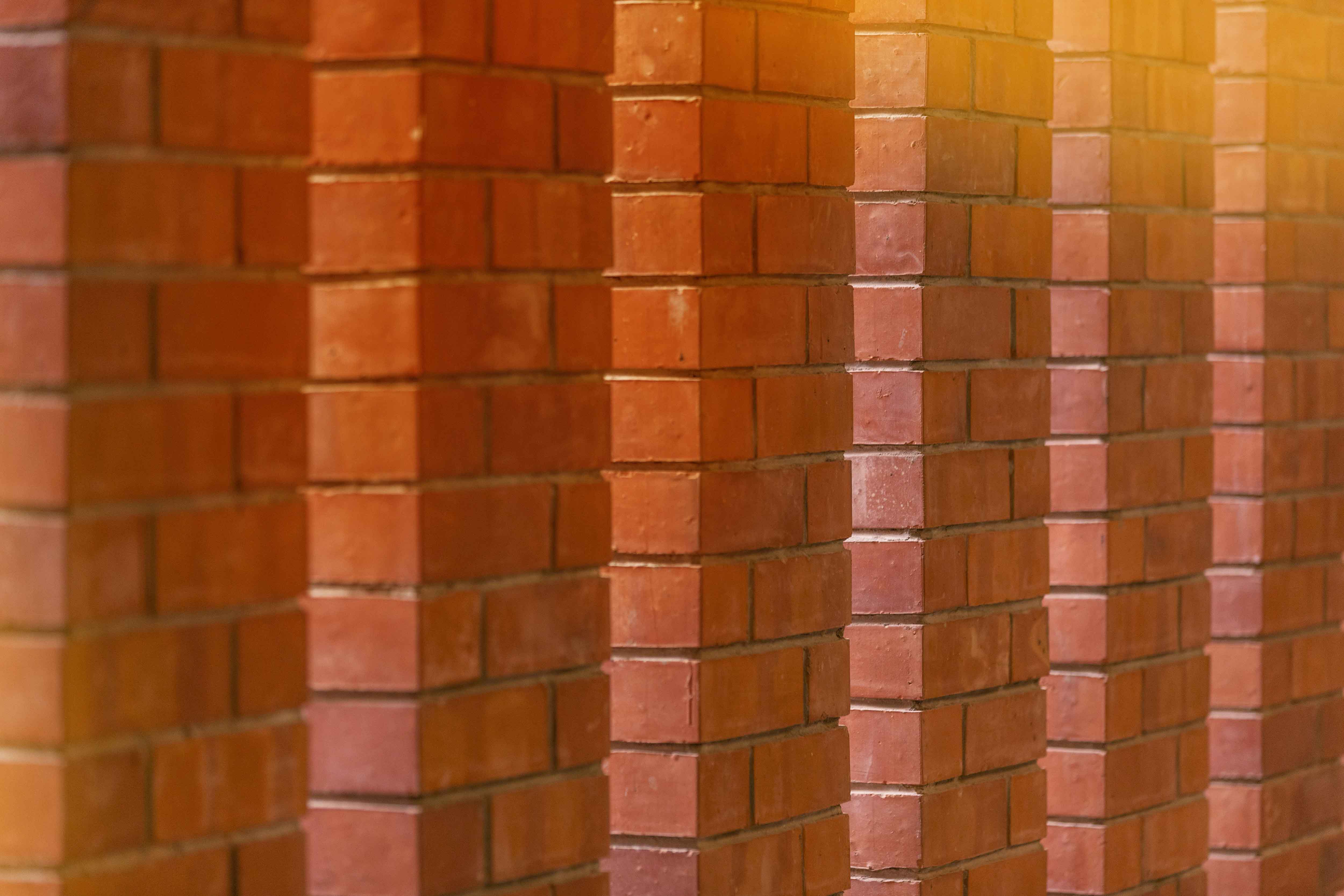
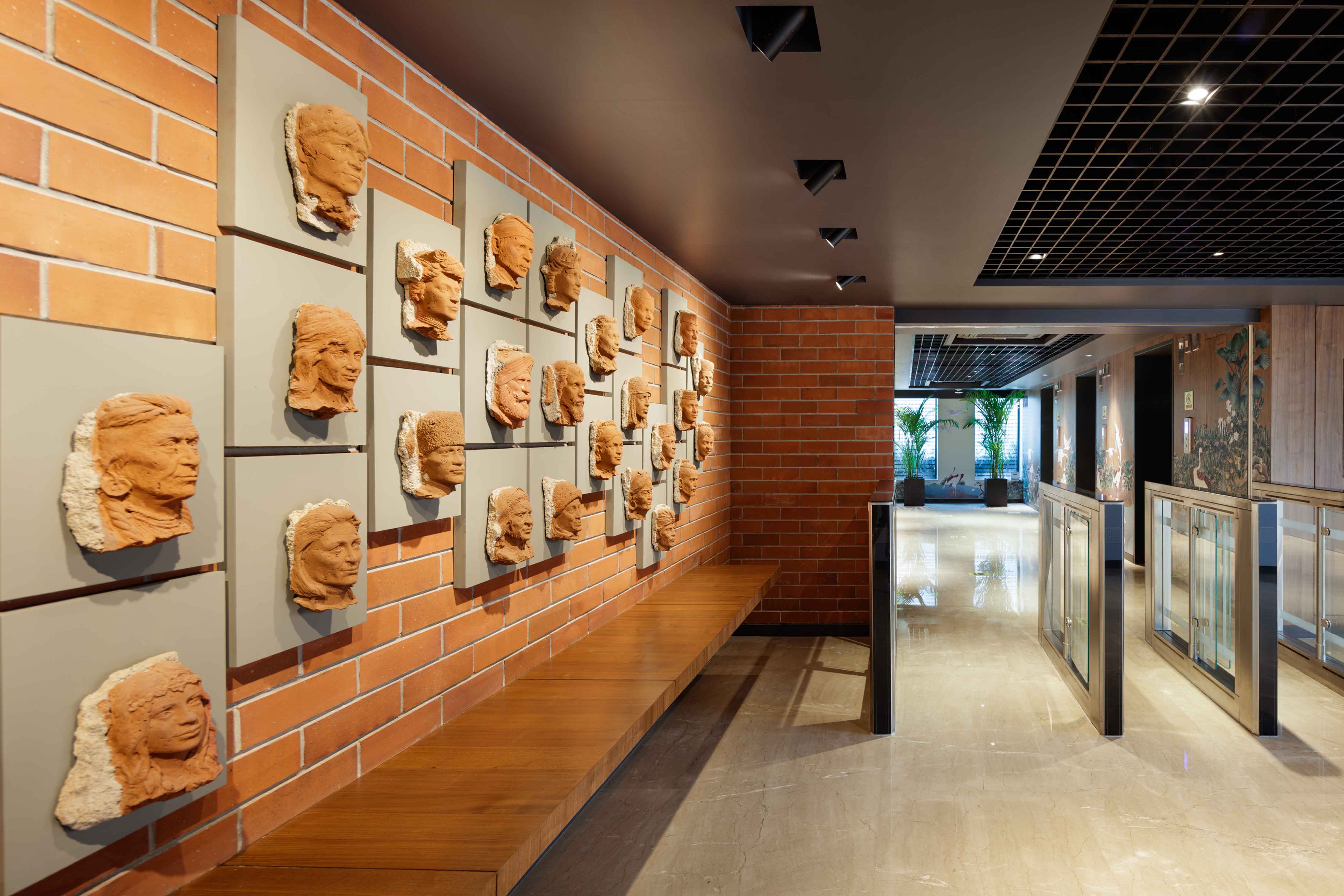
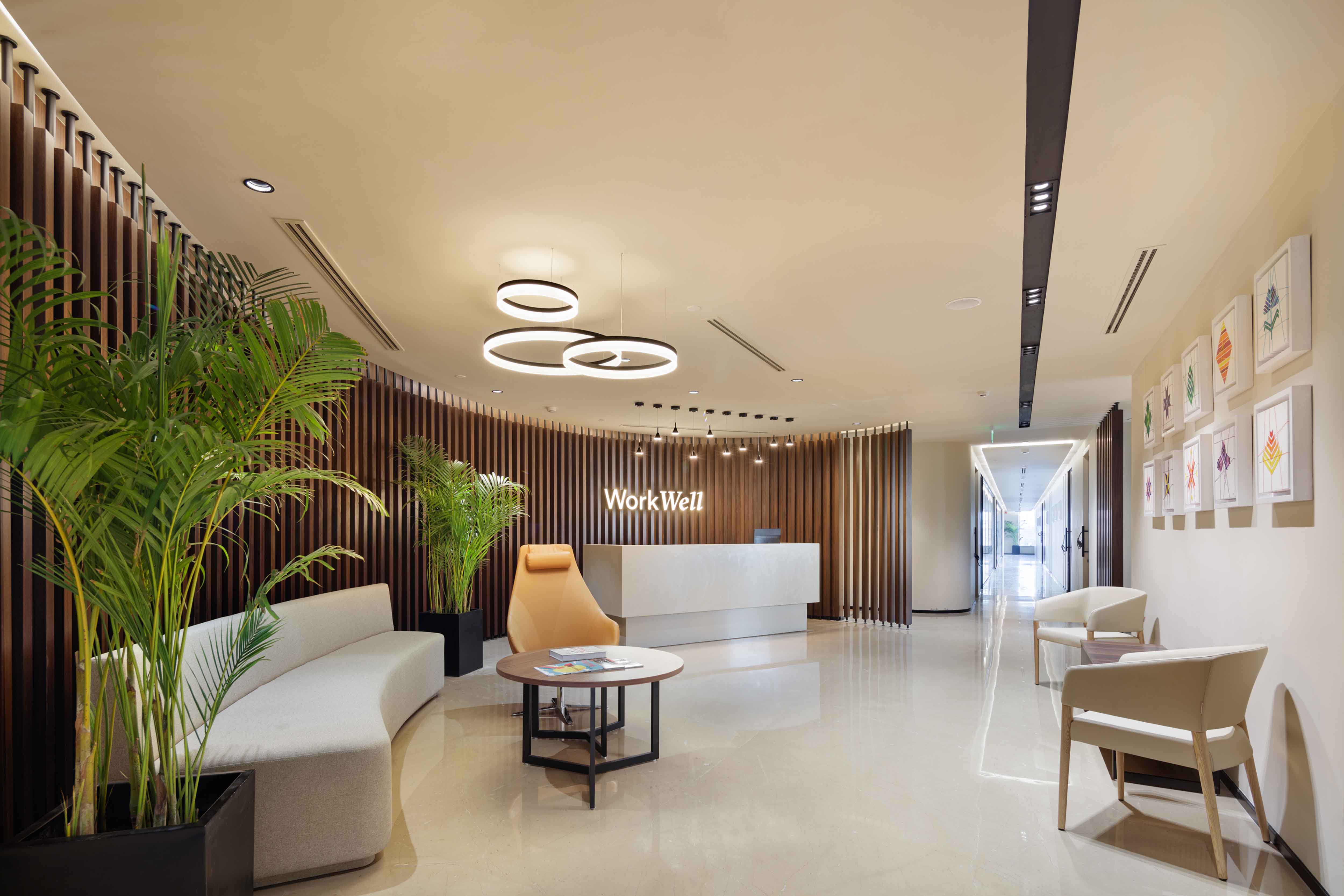
The design scheme extends the expression of exposed brickwork into the interiors, injecting spaces with a natural, ‘handcrafted’ appeal. While brickwork and glass blocks create the retro chic approach to the interiors of the triple-height lobby, neutral tones of stone and veneer imbue the surfaces with understated elegance.
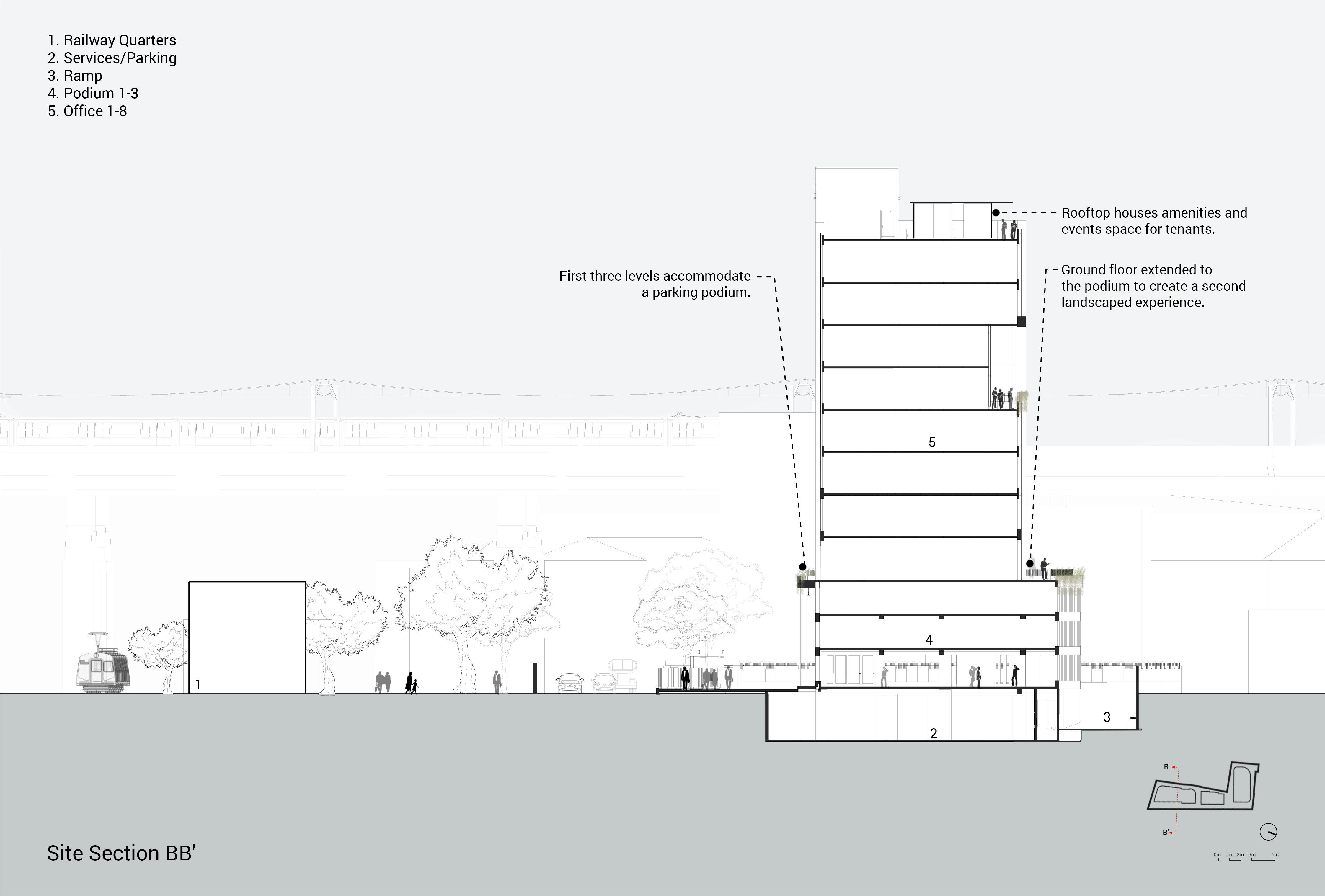
Section BB © Studio Lotus
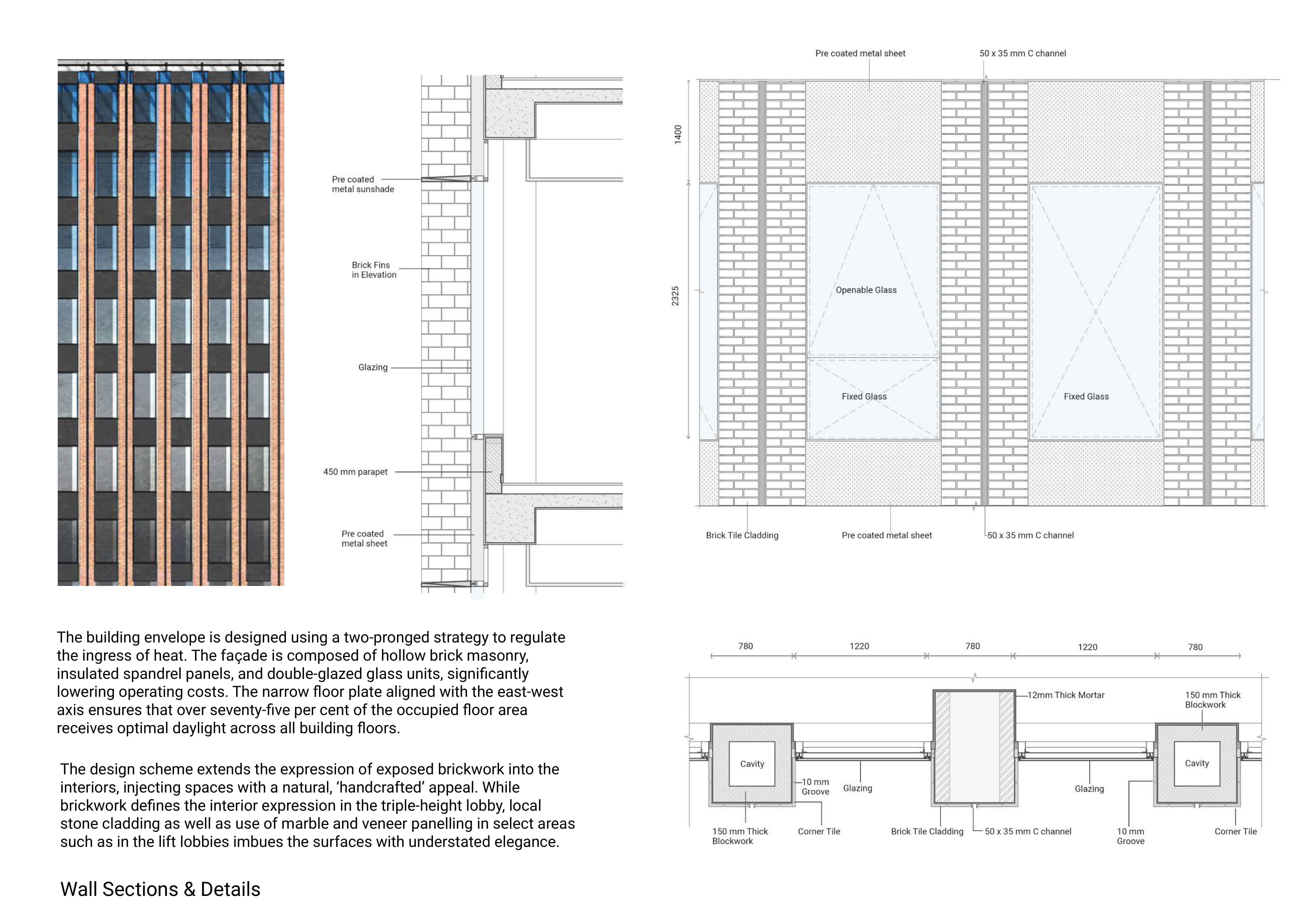
Facade Detail © Studio Lotus
A collaboration with ROHA for the precinct’s landscape design aimed to harness existing resources, i.e. native vegetation and water, and mitigate the heat island effect. The interventions include an efficient stormwater management network as well as on-site water rainwater management treatments such as the integration of bioswales, infiltration trenches, rain gardens, bioretention areas, and open grid pavers in hardscaped areas.
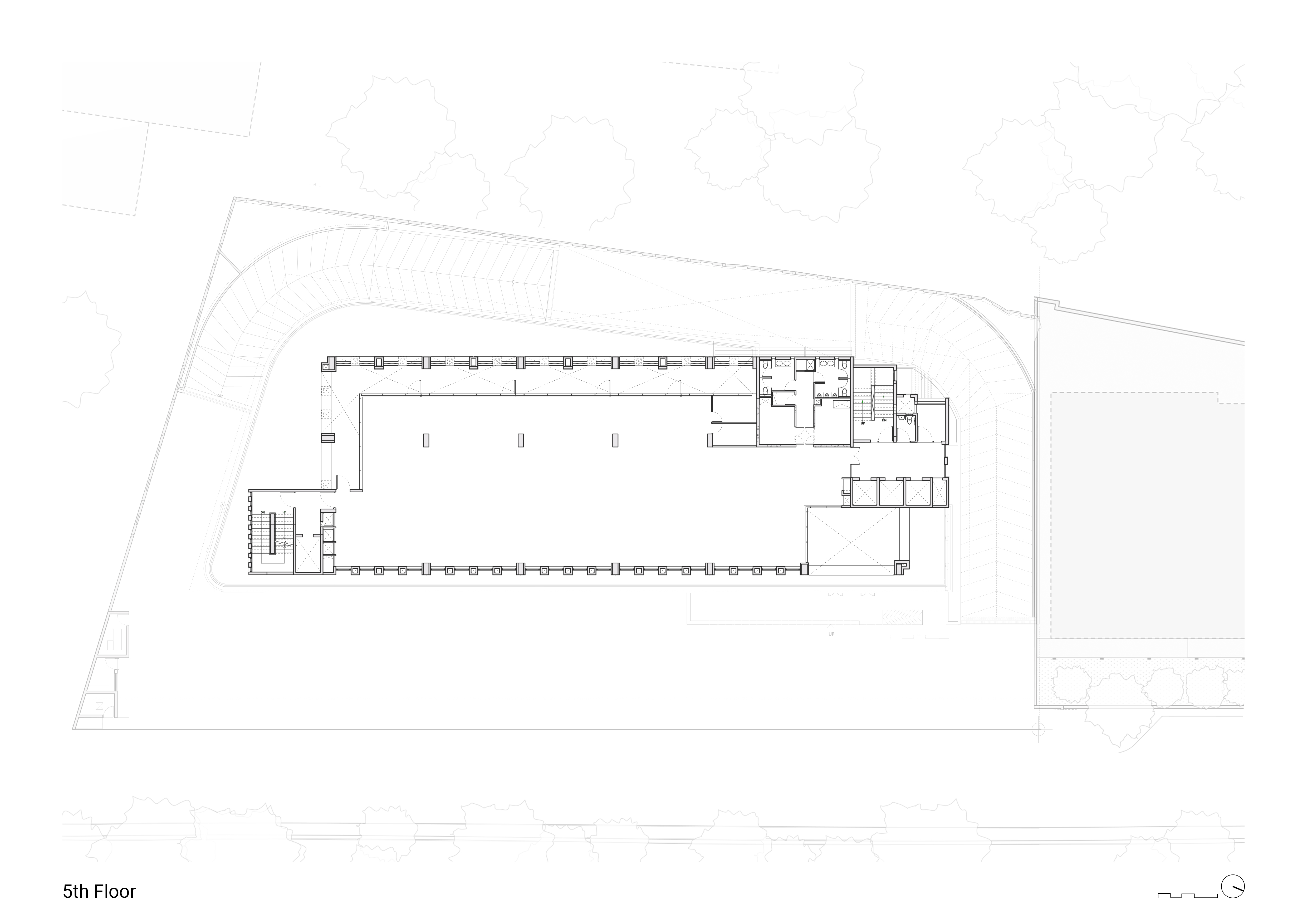
5th Floor Plan © Studio Lotus
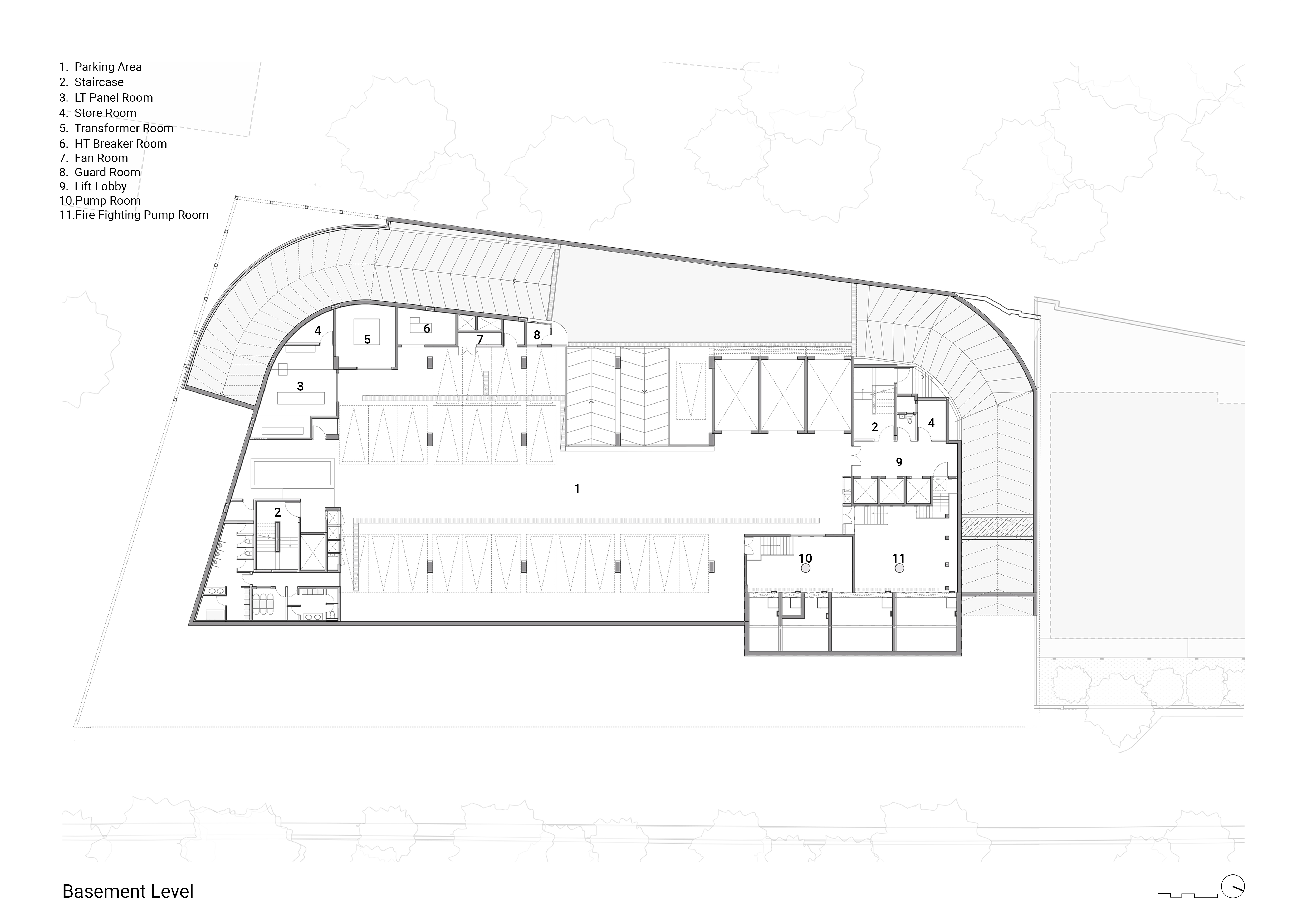
Basement Floor Plan © Studio Lotus
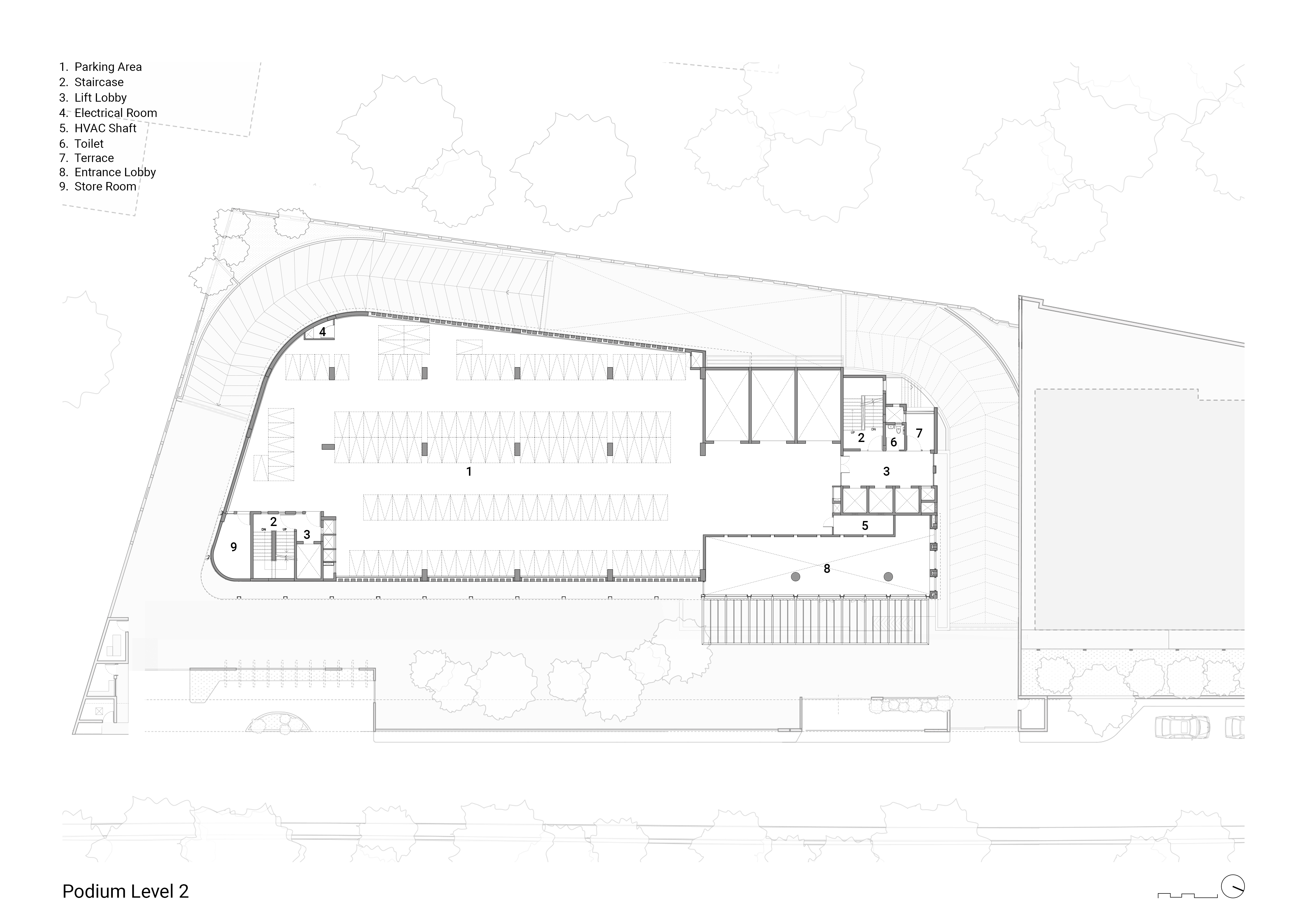
Podium 2 © Studio Lotus
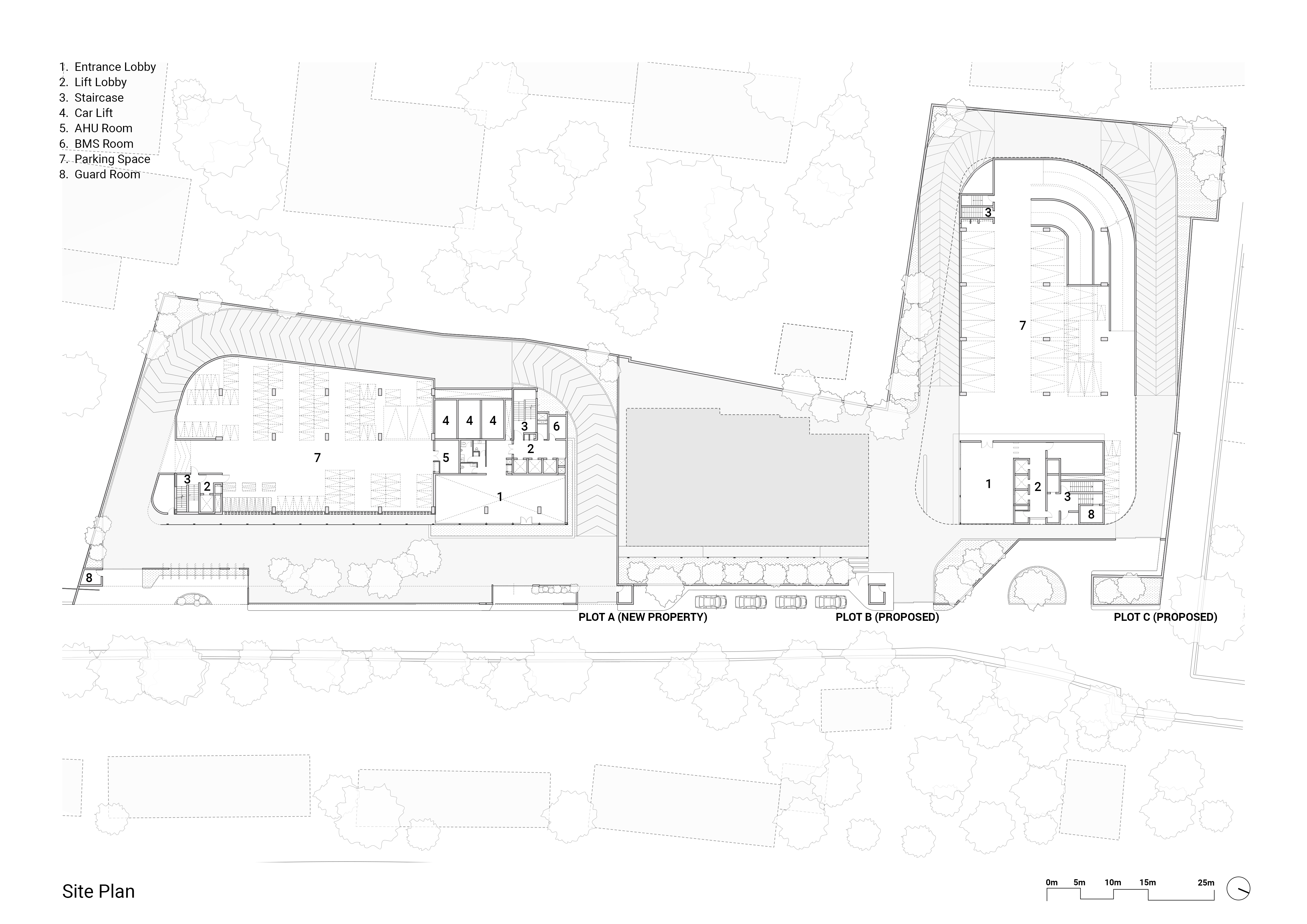
Site Plan © Studio Lotus
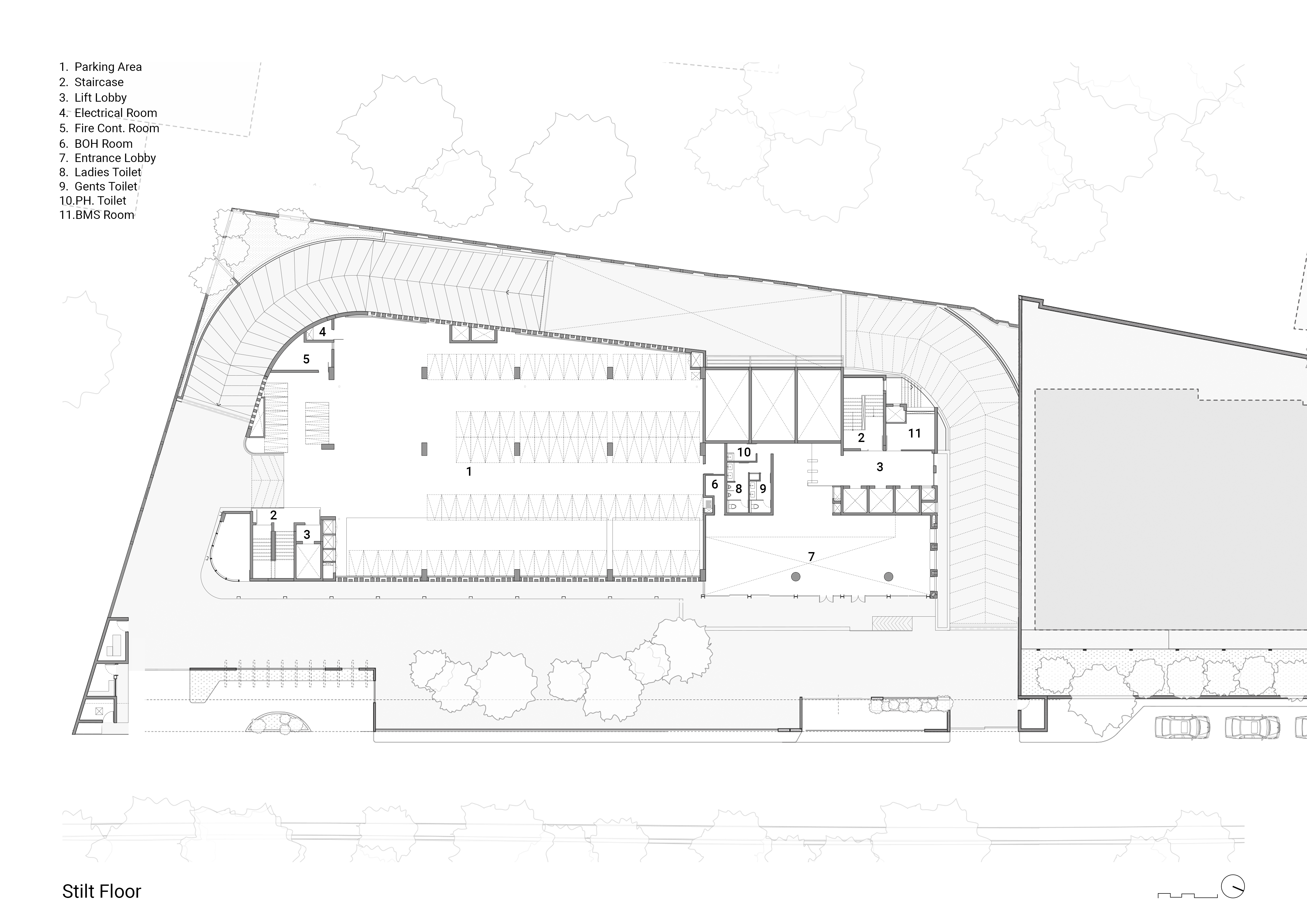
Stilt Entry Floor Plan © Studio Lotus
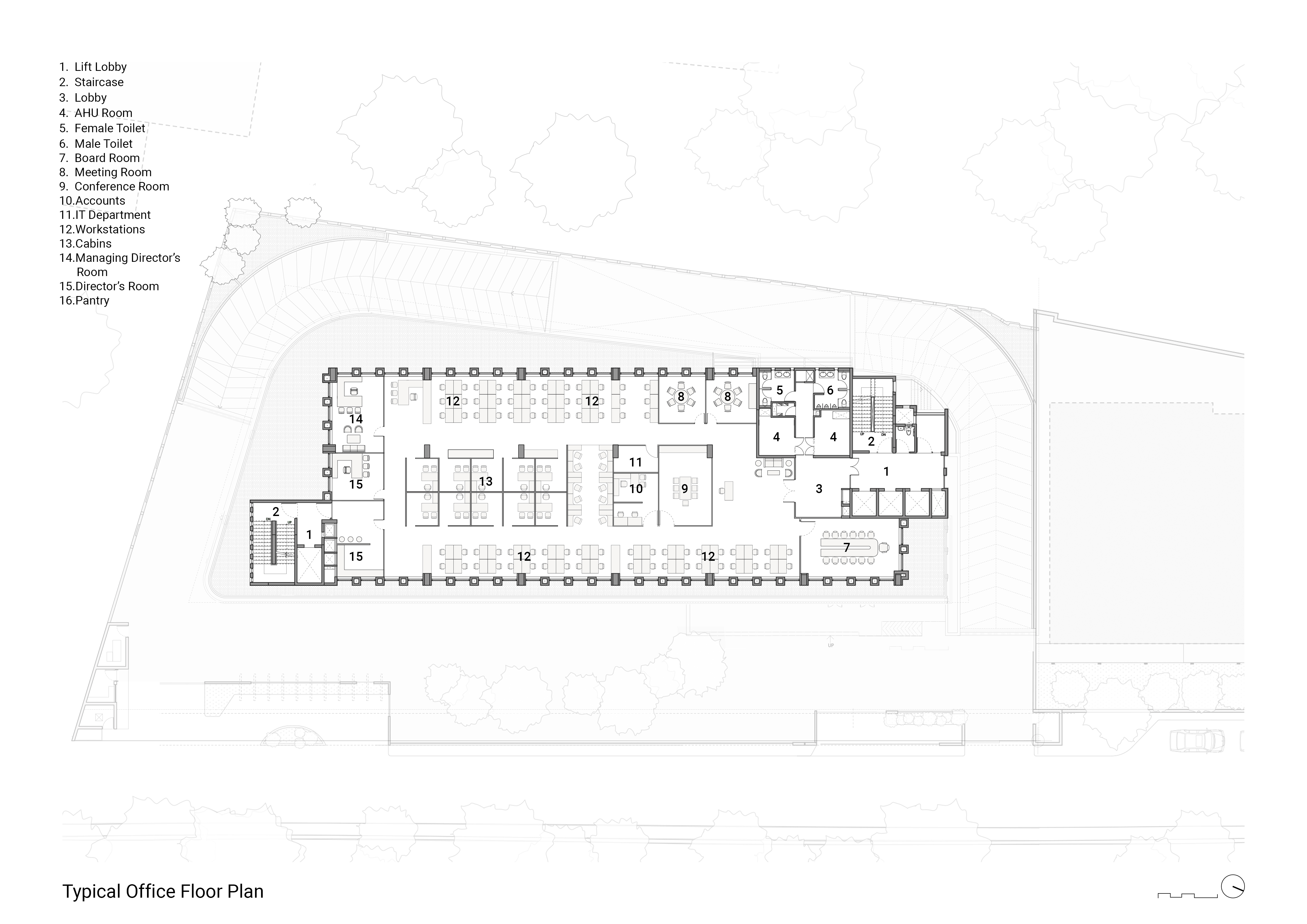
Typical Office Floor Plan © Studio Lotus
The building envelope is designed using a two-pronged strategy to regulate the ingress of heat. The façade is composed of hollow brick masonry, insulated spandrel panels, and double-glazed glass units, significantly lowering operating costs. The narrow floor plates ensure that over seventy-five per cent of the occupied floor area receives optimal daylight across all building floors. Spill-out areas facilitate fresh air circulation to occupied spaces by at least thirty per cent above the minimum rates required by the American Society of Heating, Refrigerating and Air-Conditioning Engineers (ASHRAE) Standard 62.1-2010. As many as eighty-two high solar reflective index (SRI) tiles will be installed on the roof to minimize the impact on the micro-climate and reduce heat gain and loss through the built volume.
Through the integration of passive design principles, use of renewable and low impact materials and technology to optimise both energy and water consumption, the building has received a LEED GOLD certification.
Max House marks a pronounced shift from the sea of soulless glass towers sprouting across Delhi’s business districts. In doing so, the project attempts to create an alternative benchmark for commercial architecture in the Indian context.


Stöng - (Re)interpretation | SP(R)INT STUDIO
厦门五缘湾湿地公园公交导向型开发 (TOD) 项目 | AECOM

Irwell Hill Residences | MVRDV
Beer Garden丨Studio Lotus+Studio Vikhroli
Villa in the Woods丨Studio Lotus

Max House | Studio Lotus

Las Golondrinas | PPAA (Pérez Palacios Arquitectos Asociados)

设计之间 - 观夏闲庭 | F.O.G.建筑事务所

气泡宇宙 | VAVE Studio

订阅我们的资讯
切勿错过全球大设计产业链大事件和重要设计资源公司和新产品的推荐
联系我们
举报
返回顶部